
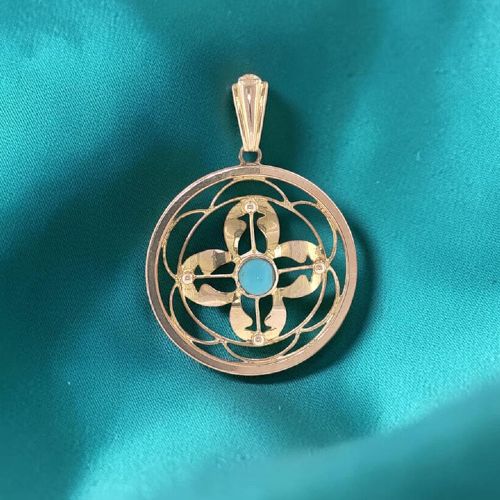
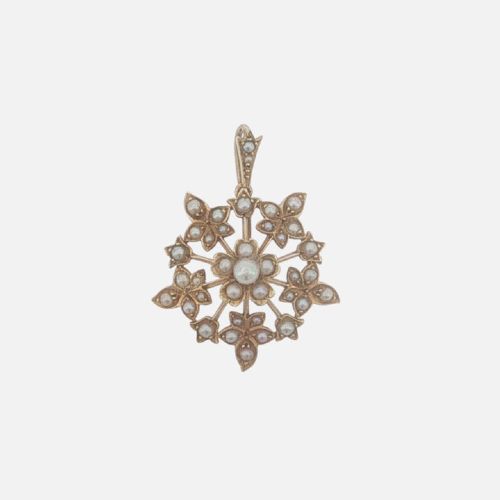
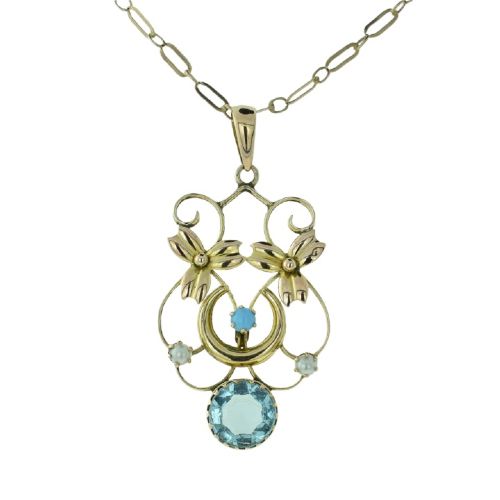
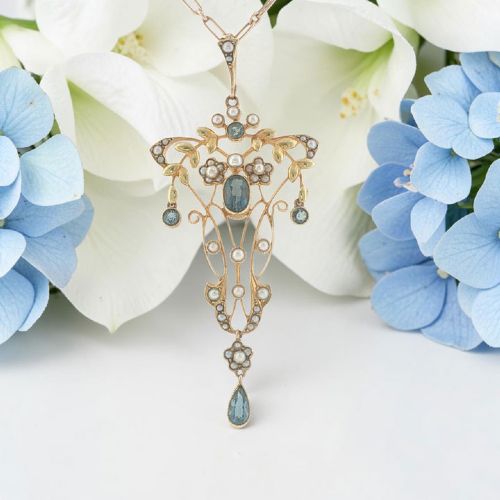
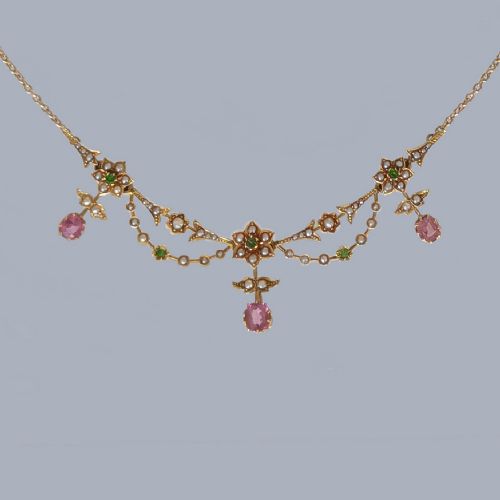


Edwardian Gold Floral Necklace
An edwardian gold floral necklace brings together delicate metalwork and natural gems, offering a wearable piece of botanical elegance that collectors prize.
Edwardian Gold Floral Necklace
When you search for an edwardian gold floral necklace, you are looking at pendant necklaces and drop pendants created during the early twentieth century. These pieces frequently feature botanical and foliate motifs such as floral wreaths, scrolls, and leaves.
The version you are most likely to meet on this page combines 9ct or 15ct gold with seed pearls and coloured stones like peridot, aquamarine, and amethyst. They capture the lighter, airier aesthetic that succeeded heavy Victorian designs.
Materials and construction
Goldsmiths utilised 9ct and 15ct yellow and rose gold, occasionally incorporating platinum for specific settings, to construct lightweight frames. Seed pearls were meticulously split, drilled, and secured with tiny pins or adhesive to form delicate floral clusters.
Gemstones including aquamarine, peridot, amethyst, and pink sapphire were collet set or claw set within symmetrical openwork frames. Enamel work and delicate wire scrollwork frequently enhanced the botanical designs.
Current listings feature 9ct and 15ct gold pendants alongside rarer 18ct examples, set with seed pearls, aquamarines, peridots, and amethysts.
Quality variations
The distinction between standard examples and the finest pieces rests on the complexity of the gold wirework and the matching of the gemstones. Superior pendants display hand-formed scrolls and precisely calibrated natural pearls rather than uniform mass-produced elements.
The choice of gold carat and secondary stones also divides the range, with 15ct and 18ct gold pieces housing fine demantoid garnets or diamonds sitting at the higher end. Original components, including matching chains and intact enamel, elevate the integrity of the piece.
S. Blanckensee & Son
The Edwardian Gold Floral Necklace Glossary
- Seed pearl
- A very small natural or cultured pearl, typically under two millimetres in diameter, used extensively in cluster and floral jewellery. They are threaded or pinned closely together to create shimmering surfaces.
- Collet setting
- A flat band of metal soldered around the perimeter of a gemstone to hold it securely in place. This technique creates a clean, flush border common in Edwardian mountings.
- Foliate
- Designed using leaf or foliage motifs, reflecting a naturalistic style. It appears frequently in scrolls and wreaths.
- Pietra dura
- An artistic technique involving the assembly of cut and fitted polished coloured stones to create pictures. It appears on certain Victorian and Edwardian pendants.
Edwardian Gold Floral Necklace: Frequently Asked Questions
How do I care for my necklace?
Store your necklace flat in a lined box away from other pieces to prevent the delicate gold wirework and seed pearls from catching or scratching. Clean it gently with a dry, soft cloth and avoid immersion in liquid cleaners, which can loosen pearls and damage glued settings.
Perfumes, lotions, and hairsprays should be applied well before putting on the necklace to protect the surface of the pearls and the lustre of the gold. Regular inspection by a professional jeweler ensures that the tiny claws and pins holding the stones remain secure.
Can I wear these necklaces daily?
These antique pieces require mindful handling because of their delicate construction and age. While sturdy enough for occasional daytime or evening wear, they are not suited for rough physical activities or constant daily use.
Seed pearls and softer stones like peridot and amethyst are sensitive to heavy knocks and pressure. Removing the necklace before sleeping or exercising preserves the structural integrity of the delicate gold scrolls and mounts.
Are the chains original to the pendants?
Finding a pendant attached to its original matching chain is uncommon, as many necklaces were paired or altered over the decades. Most pieces consist of the period pendant matched with a compatible antique or period-style gold chain.
When examining a listing, check the description for details regarding the chain and pendant combination. Mixed carats between the pendant and the accompanying chain often indicate a later pairing.
How do I distinguish Edwardian from Victorian pieces?
Edwardian jewellery tends to feature lighter, more openwork designs with platinum or higher carat gold settings, focusing on pastel gemstones and symmetrical floral motifs. Victorian pieces often display heavier proportions, darker gold tones, and denser arrangements of stones.
Stylistic shifts around nineteen hundred marked a move away from mourning jewellery and heavy gemstone clusters toward airy garlands and lace-like wirework. However stylistic periods frequently overlapped, meaning transitional pieces share traits from both eras.