




Edwardian Gold Diamond Pin
An edwardian gold diamond pin combines delicate metalwork with old-cut stones, offering a wearable piece of early twentieth-century jewellery.
Edwardian Gold Diamond Pin
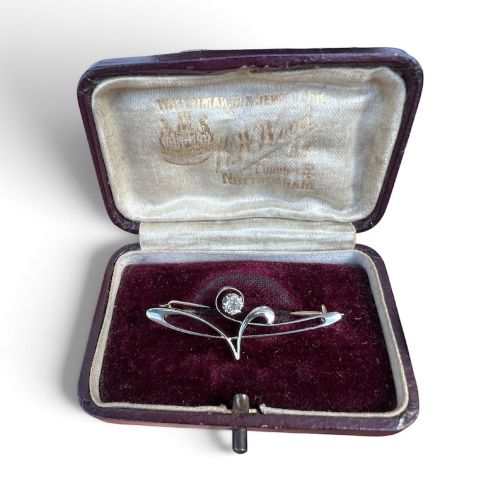
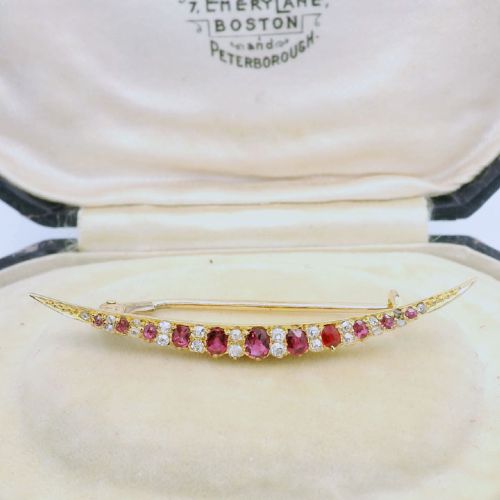
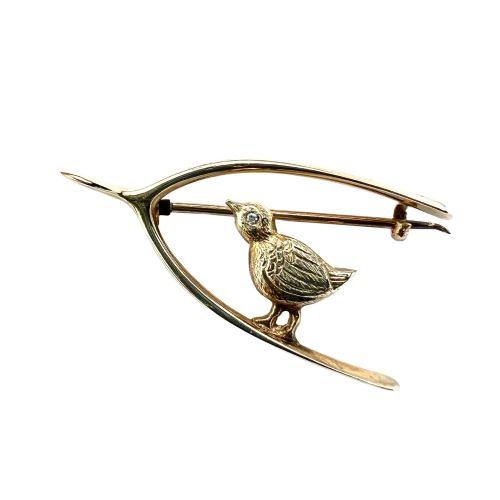
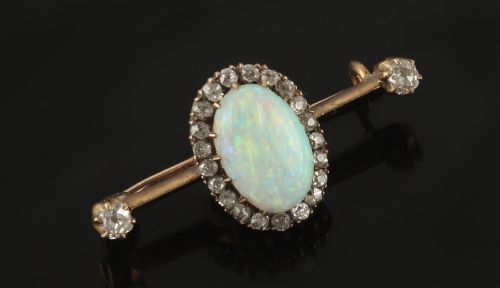
An edwardian gold diamond pin typically takes the form of a bar brooch, floral spray, or whimsical motif such as a swallow, crescent, or wishbone. These ornaments were pinned to lapels, collars, or bodices during the early decades of the twentieth century.
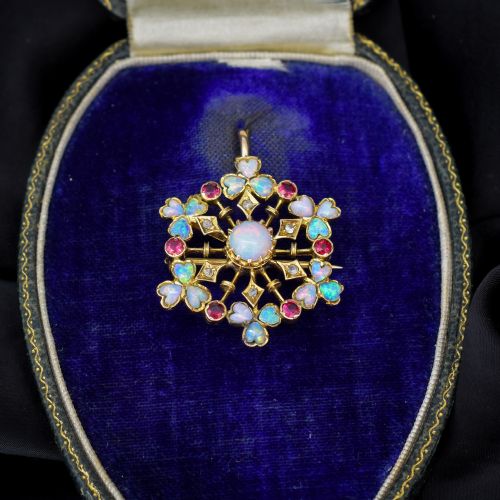
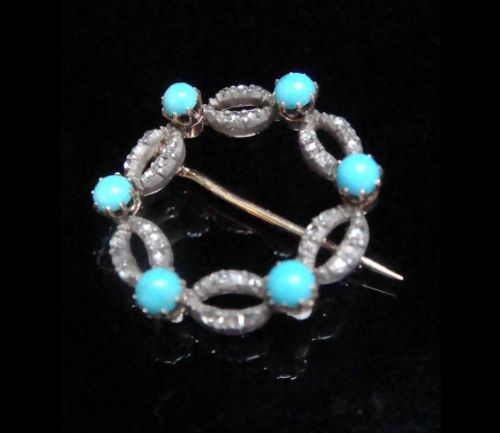
The pieces appearing on this page span the late nineteenth century through the Art Deco period, encompassing Victorian roots and subsequent design shifts. Alongside dedicated stick pins, many examples function as convertible pendants or carry accent gems like rubies, pearls, and turquoise.
Meticulous openwork frames and naturalistic subjects dominate the selection, reflecting the transition from ornate Victorian styling into lighter, platinum-topped Edwardian creations.
Materials and Technique
Goldsmiths utilised varying carat weights of yellow, rose, and white gold, often backing settings in platinum or silver to enhance the brilliance of the mounted diamonds. This dual-metal technique placed dark silver or bright platinum at the front to frame the stones while retaining warm gold for the structural pin stem.
Stones feature hand-cut facets typical of the period, including rose-cut and old European-cut diamonds, secured via claw or millegrain settings. Accompanying coloured gems such as sapphires, emeralds, and natural pearls were integrated using traditional bezel and flush techniques.
Current listings feature pieces spanning the 1880s to the 1930s, incorporating platinum, silver, and gold across multiple carats.
Distinctions in Execution
The degree of hand-finishing defines the upper tier of these jewels, visible in crisp millegrain edges and detailed engraving on the reverse. Master jewellers achieved structural lightness without sacrificing durability, balancing slender gold mounts securely against the weight of larger diamond clusters.
Stone selection introduces further differentiation, where symmetrical old-cut diamonds with clean facets and well-matched natural pearls command greater regard than unevenly matched accent stones.
The Edwardian Gold Diamond Pin Glossary
- Millegrain
- A decorative technique featuring a raised line of tiny rounded beads along the edge of a metal setting. It softens the transition between metal and stone.
- Old European-cut
- A round diamond cut popular from the late nineteenth into the early twentieth century, characterised by a small table, high crown, and a large open culet. These stones catch candlelight effectively.
- Rose-cut
- A diamond or gemstone cut with a flat base and a faceted dome that tapers to a point. It resembles an unopened rosebud.
- Bar brooch
- A slender horizontal metal rod configured with a pin stem on the reverse, often embellished with central stone clusters or motifs. It represents one of the most common surviving formats.
- Plique-a-jour
- An enamelling technique where the enamel is applied without a backing, resembling miniature stained glass. Light passes directly through the translucent coloured material.
Edwardian Gold Diamond Pin: Frequently Asked Questions
How do I wear an antique pin safely?
Secure the pin using its original fastening mechanism, ensuring the safety catch or C-clasp holds the stem firmly against the back bar. For delicate modern fabrics, consider placing a small backing disc behind the material to support the weight.
Store the jewel in a dedicated box when not in use to prevent the pin stem from bending or catching on other items in a collection.
Can these brooches be worn as pendants?
Many examples feature integrated loops or hinged bails tucked behind the main frame, allowing the ornament to suspend from a chain. Convertible pieces serve both functions without altering the original antique structure.
Checking the reverse reveals whether a hidden loop exists for this dual purpose.
How do I date an Edwardian pin?
Examine the metal combination, as platinum-topped gold settings point directly to the Edwardian and Belle Epoque eras around the turn of the twentieth century. Stylistic motifs like garlands, ribbons, and naturalistic insects also signal this specific window.
Hallmarks stamped on the pin stem or reverse frame provide further clues regarding assay offices and precise manufacturing years.
What is the difference between Victorian and Edwardian styles?
Victorian pieces tend toward heavier gold weights, romantic symbolism, and robust coloured gemstone clusters. Edwardian design introduces lighter platinum settings, airier openwork, and a distinct preference for white-on-white diamond sparkle.
Overlaps occur in pieces made during the transitional years around nineteen hundred, blending elements from both eras.