
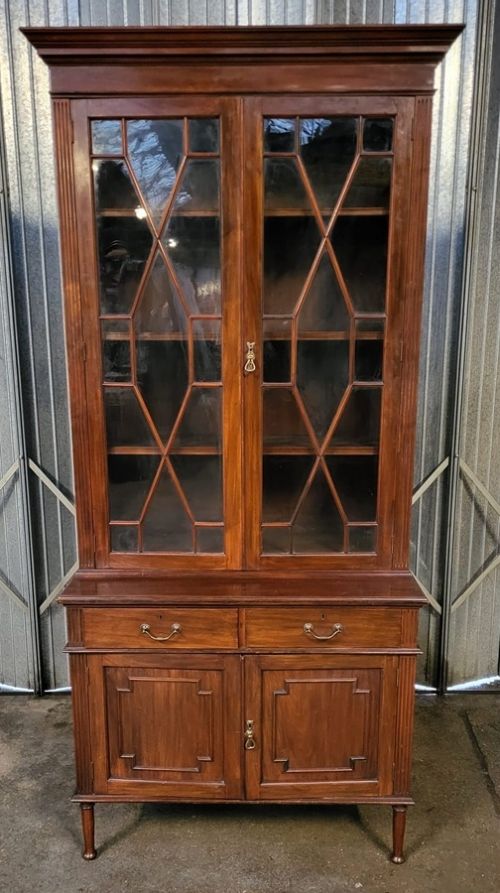


Edwardian Glazed Dresser
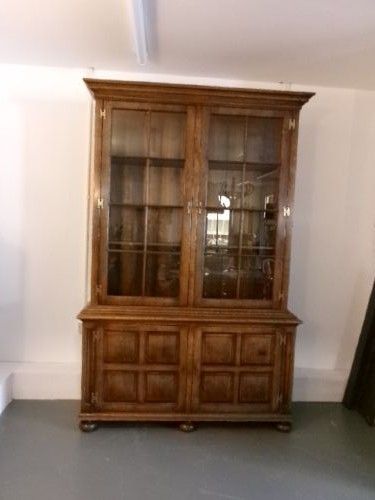
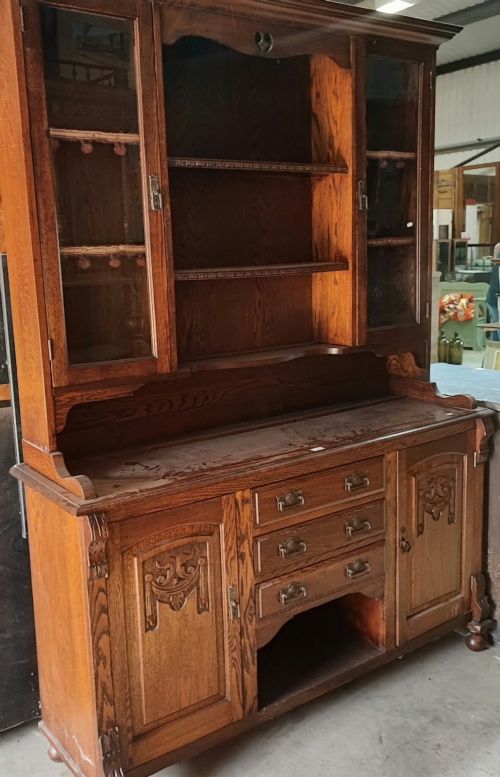
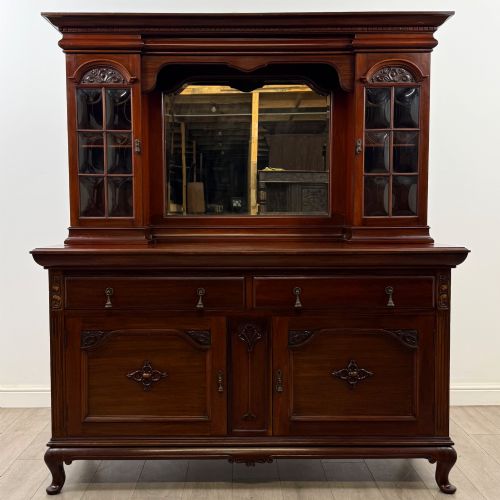
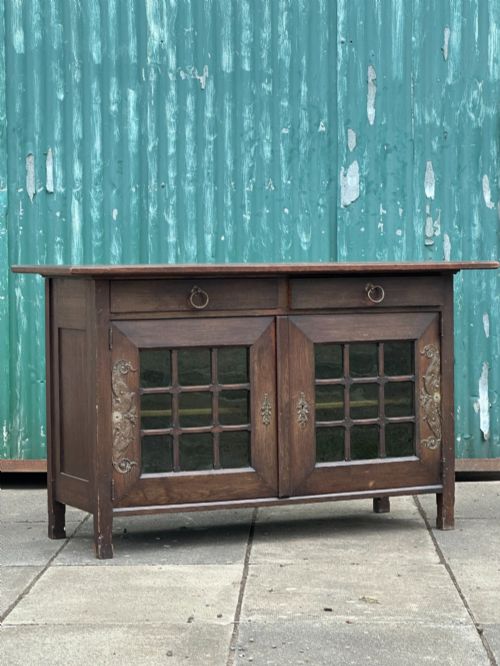
An Edwardian glazed dresser brings utility and display together through timber framing and glass panels.
Edwardian Glazed Dresser
An edwardian glazed dresser combines storage compartments with transparent door panels designed to hold books or display objects. The pieces appearing in this category span the Edwardian period alongside related Victorian, 19th-century, and 1930s forms such as sideboards, bookcases, and side cabinets.
Makers and workshops constructed these storage units in oak, mahogany, walnut, and pine, frequently incorporating mirror glass, brass, and lead details. Stylistic influences across the selection range from Arts & Crafts and Secessionist to Jacobean Revival and Hepplewhite Revival.
What varies in quality
The choice of timber grain and the precision of the cabinet construction set different pieces apart. Selected hardwoods like mahogany and tiger oak indicate higher workshop standards than painted pine or utility variants.
Decorative details such as inlaid banding, carved mouldings, and leaded glass doors demonstrate the level of craftsmanship invested in the individual cabinet.
Some pine kitchen dressers arrive bearing traces of old wax or paint from decades of domestic service.
Liberty & Co.·Maple & Co.·J R Mally & Co
The Edwardian Glazed Dresser Glossary
- Glazed
- Fitted with glass panes to enclose shelves while keeping the contents visible. This method protects books and decorative objects from dust.
- Dresser
- A piece of furniture incorporating shelving, cupboards, or drawers for storage and display. Versions range from kitchen storage units to library bookcases.
- Arts & Crafts
- A design movement prioritising traditional craftsmanship and simple forms over mass-produced ornamentation. Pieces in this style often highlight the natural grain of oak.
- Hepplewhite Revival
- A late 19th or early 20th-century interpretation of 18th-century furniture designs associated with George Hepplewhite. These items typically feature refined proportions and polished mahogany surfaces.
- Lead came
- Soft metal strips used to hold individual pieces of glass together in leaded windows and cabinet doors. This technique allows for geometric or decorative patterns.
Edwardian Glazed Dresser: Frequently Asked Questions
What is an edwardian glazed dresser used for?
An edwardian glazed dresser functions primarily as a combination storage unit and display cabinet for domestic interiors. Owners traditionally stored china, glassware, or books behind the glass doors while keeping other items concealed in the lower cupboards.
Today these pieces serve similar organisational purposes in dining rooms, living spaces, or libraries. The upper display section allows decorative collections to remain visible and protected.
How do I identify an edwardian piece?
Edwardian furniture generally dates from the reign of King Edward VII between 1901 and 1910, though pieces from adjacent years share similar characteristics. Stylistic cues include lighter timber tones, refined proportions, and revivals of earlier Georgian or Sheraton designs.
Makers working in this era also drew heavily on Arts & Crafts principles. Examining construction methods, handles, and internal timbers helps separate these pieces from earlier Victorian examples.
Are these dressers made of solid wood?
Construction materials vary across individual pieces depending on the workshop and the intended function. Listings include items built from solid oak, mahogany, walnut, and pine, alongside veneered surfaces over secondary timbers.
Cabinet makers frequently combined solid framing with panelled elements to ensure stability. Timber selection often reflects whether the piece was designed as a fine reception room cabinet or a practical kitchen storage unit.
How do I clean and maintain the wood?
Maintenance involves regular dusting with a soft, dry cloth to prevent dirt accumulation on polished timber surfaces. Avoiding direct sunlight and excessive moisture helps preserve the original polish and prevents wood from warping.
Applying appropriate wax or polish periodically nourishes hardwoods such as oak and mahogany. Glass panels and mirrors require standard non-abrasive glass cleaner applied to a cloth rather than sprayed directly near the wood.