
Edwardian Glass Table
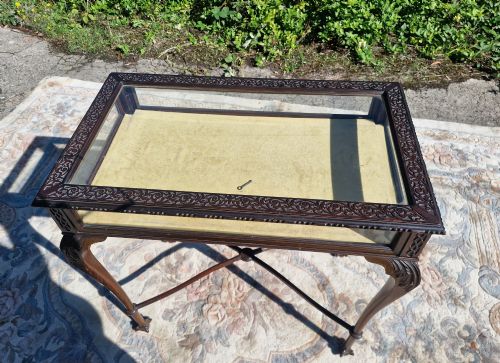
When searching for an edwardian glass table, collectors encounter glazed display cabinets, bijouterie vitrines, and mahogany stands framed with glass tops.
Edwardian Glass Table
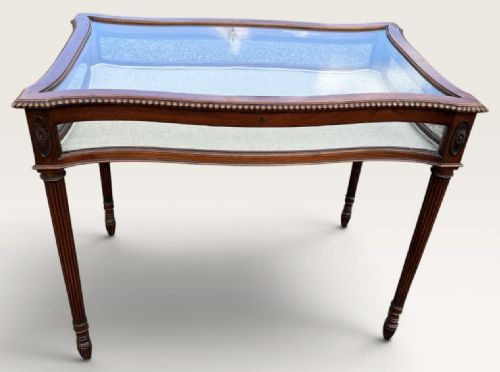
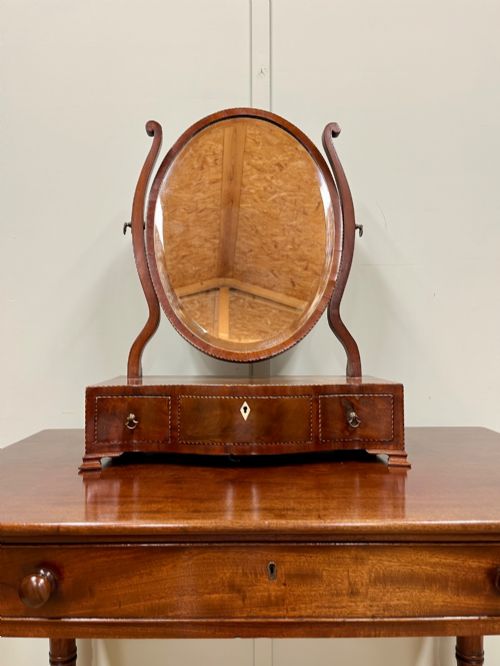
An edwardian glass table encompasses mahogany bijouterie display tables, oval or serpentine vitrines with glass tops, and occasional tables with removable glass serving trays. These pieces served to exhibit small treasures, silver trinkets, and collector pieces within drawing rooms and parlours. The form prioritises visibility, pairing glazed surfaces with timber frames.
The materials span solid and inlaid mahogany, walnut, and satinwood, frequently elevated on slender legs or structured as display cabinets at table height. Variations include kidney-shaped tops, Chippendale-style carving, and simpler occasional stands fitted with bevelled glass. Buyers encounter both rectangular and curved profiles designed for domestic display.
How they were made
Cabinet makers utilised mahogany and walnut as foundational timbers, often applying satinwood inlay, brass or ormolu mounts, and delicate stringing to the frame. Glass tops and panelled sides were bevelled and set securely into hinged or fixed wooden surrounds. Joinery relied on traditional techniques to support the weight of display glass and internal linings.
Metal elements such as brass hinges, silver-plated handles, and cast mounts were integrated into the cabinetry to secure lids and trays. Secondary woods line the interiors of compartmented display wells, while finishes range from polished French polish to waxed mahogany surfaces.
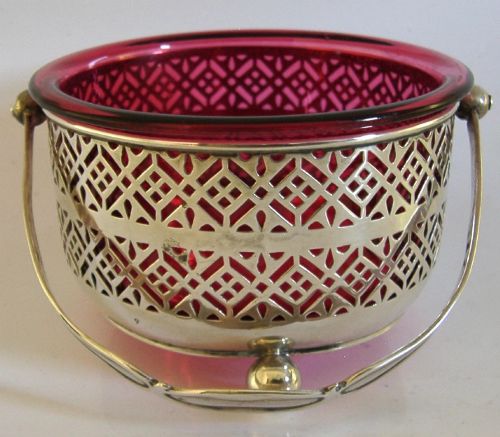
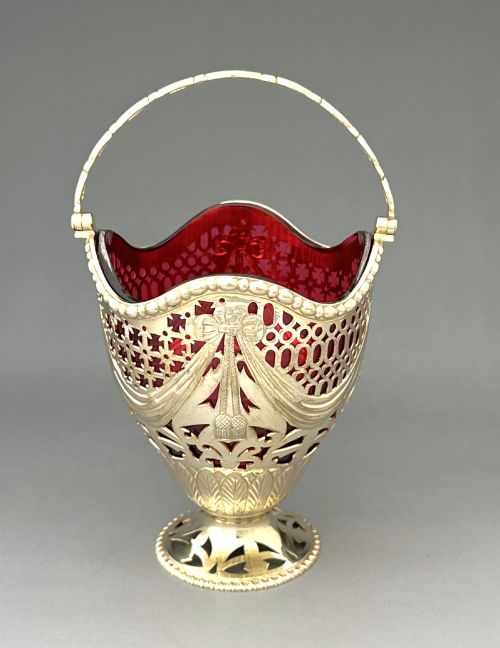
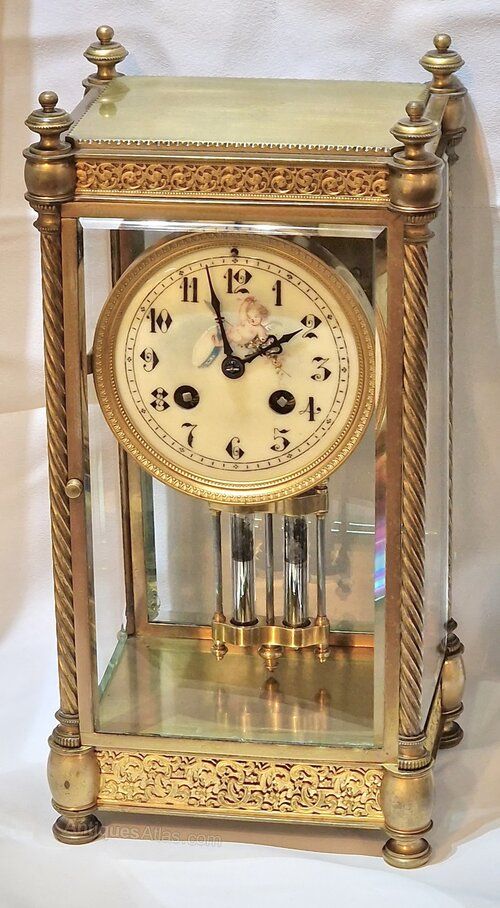
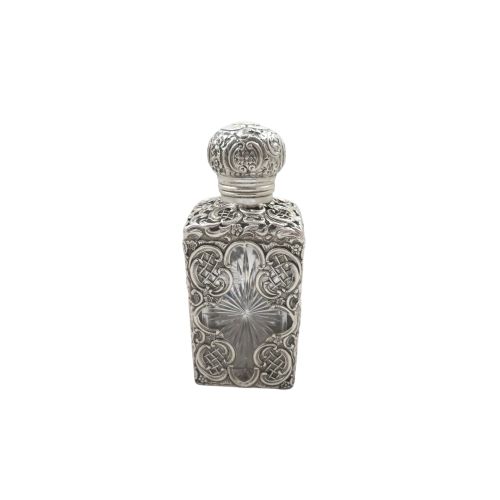
Cherub dials peer out from mantel clocks while silver baskets cradle cranberry glass liners.
What varies in quality
The standard of an edwardian glass table rests upon timber selection, the precision of satinwood inlay, and the clarity of the bevelled plate glass. Superior examples feature figured mahogany veneers, substantial brass or ormolu mounts, and intricate carving on the legs and frieze. Lesser pieces rely on plain timber with minimal embellishment and simpler glass settings.
Construction integrity distinguishes workshop output, seen in the smooth operation of hinged display lids and the snug fit of removable serving trays. The balance between the delicate glazed upper structure and stable framing determines the enduring quality of each piece.
Henry Clifford Davis·A. Bromet & Co·Stevens & Williams·Robert Pringle & Sons·Synyer & Beddoes·Walker & Hall·Goldsmith & Silversmith's·Heal & Sons·Tiffany & Co.
The Edwardian Glass Table Glossary
- Bijouterie table
- A glazed display table designed specifically for showcasing small valuables, medals, and decorative objects beneath a glass top. These tables often feature velvet-lined interior wells.
- Vitrine
- A glass-panelled cabinet or display case mounted on legs, allowing 360-degree viewing of contents. In this context, it refers to tabletop and freestanding glass display forms.
- Satinwood inlay
- Decorative woodwork technique utilising contrasting pale satinwood strips embedded into darker mahogany surfaces. It creates geometric borders and floral motifs along table edges.
- Ormolu
- Gilded bronze mounts and decorative feet applied to furniture and decorative objects. This technique added metallic lustre and French-influenced styling to Edwardian pieces.
- Bevelled glass
- Glass panes with angled, polished edges that catch and refract light. This treatment adds depth and refinement to table tops and display lids.
Edwardian Glass Table: Frequently Asked Questions
What is a bijouterie table?
A bijouterie table is a specialised display piece featuring a glazed top and often a glass-sided well designed for exhibiting small ornaments and trinkets.
These tables were placed in reception rooms so hosts could display curated collections to guests under protective glass.
How do you style an edwardian glass table?
These tables function as central display surfaces in drawing rooms, studies, or hallways where their glass tops can reflect light.
Owners typically keep the interior wells sparsely populated with small silver items, porcelain, or textiles to maintain visual balance.
What woods were used for these tables?
Mahogany served as the primary timber, often enhanced with satinwood inlay, walnut framing, or rosewood details.
Cabinet makers selected these hardwoods for their strength and grain patterns, which suited polished Edwardian interiors.
Are the glass tops removable?
Some occasional and tea tables feature removable glass serving trays set into wooden frames, while display vitrines have hinged lids.
Hinged lids allow access to lined storage compartments beneath, whereas tray tops double as functional serving equipment.