
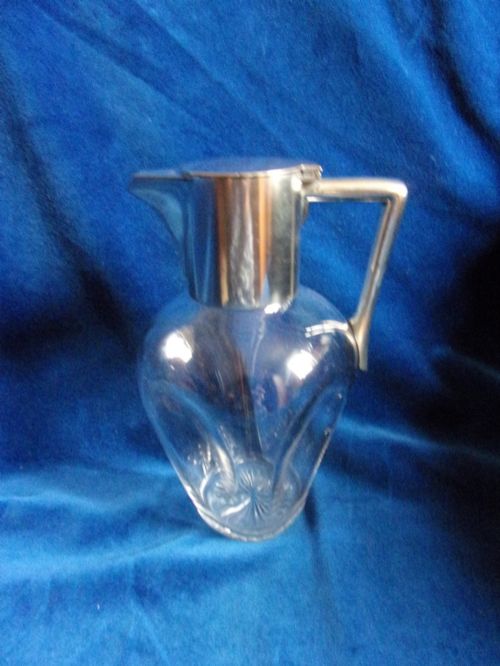
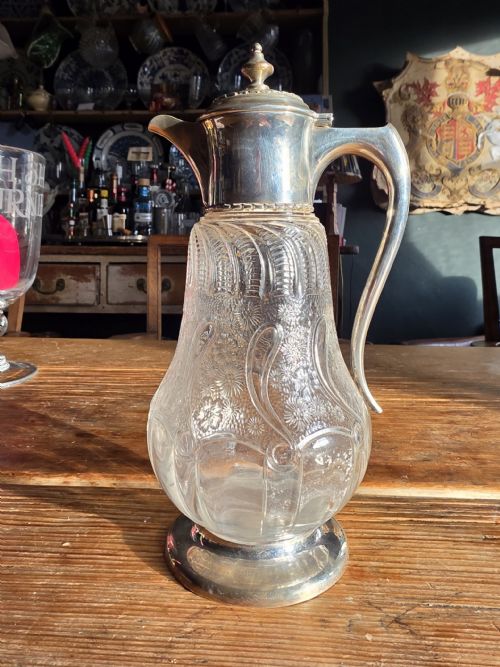
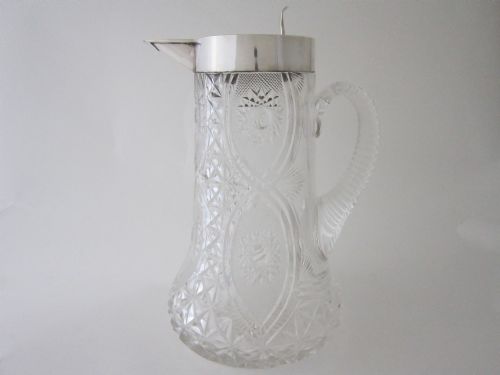
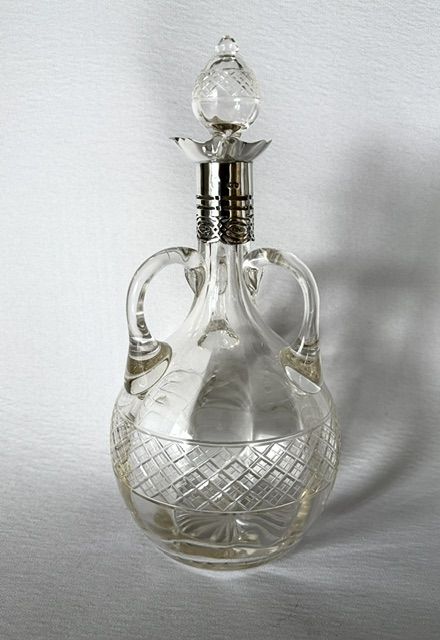
Edwardian Glass Jug
When you look for an edwardian glass jug, you seek a functional piece of dining table history defined by heavy cutting and metal mounts.
Edwardian Glass Jug
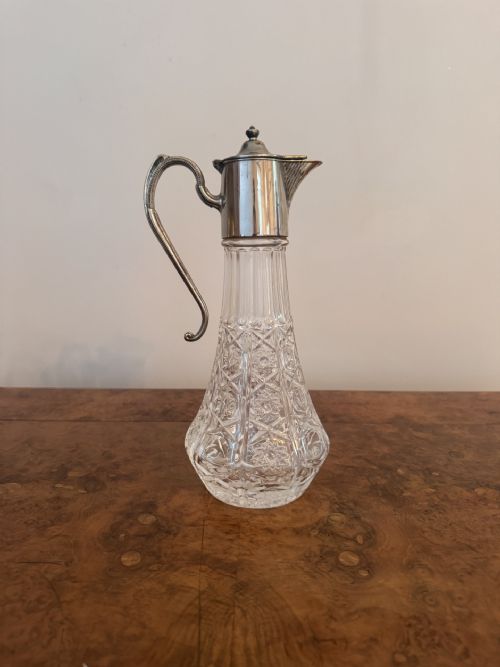
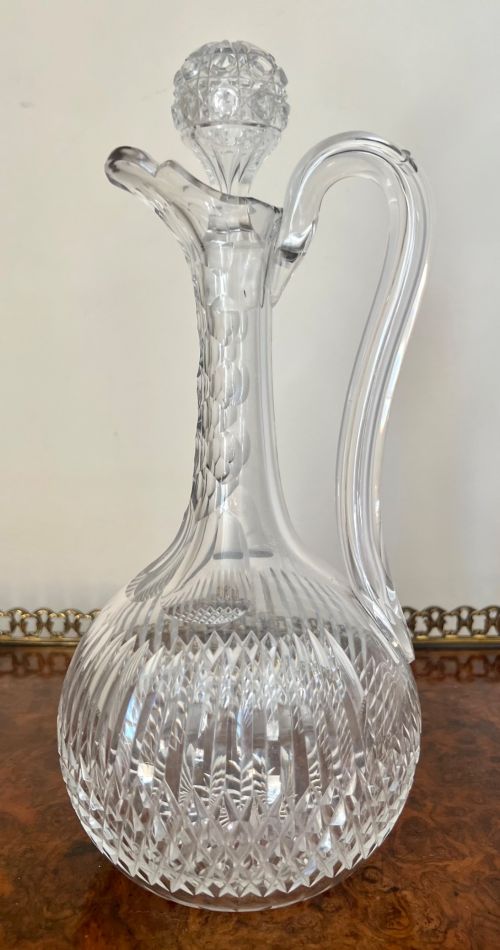
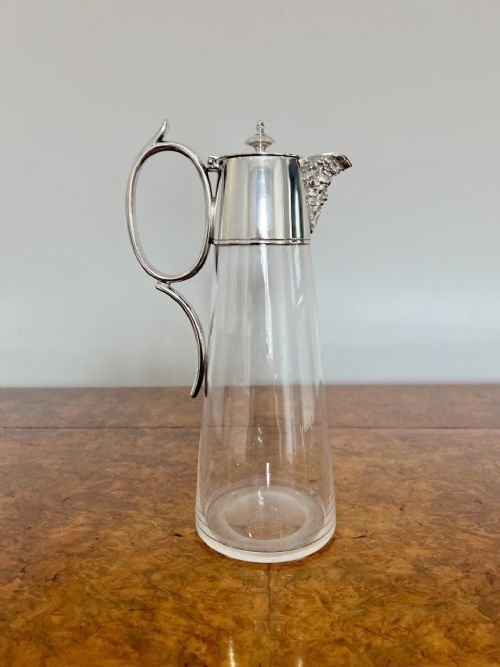
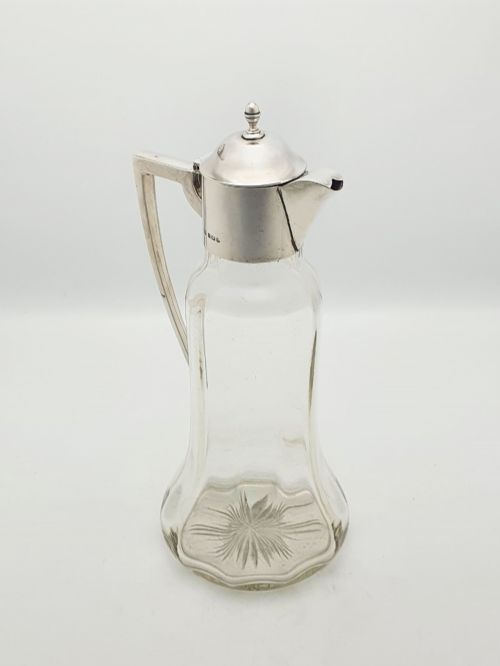
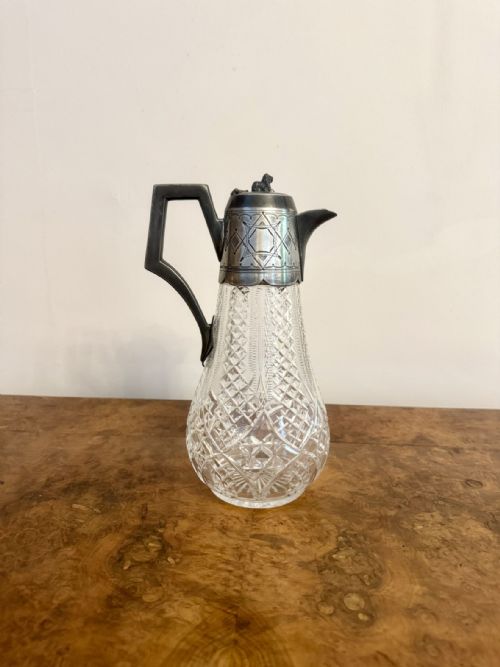
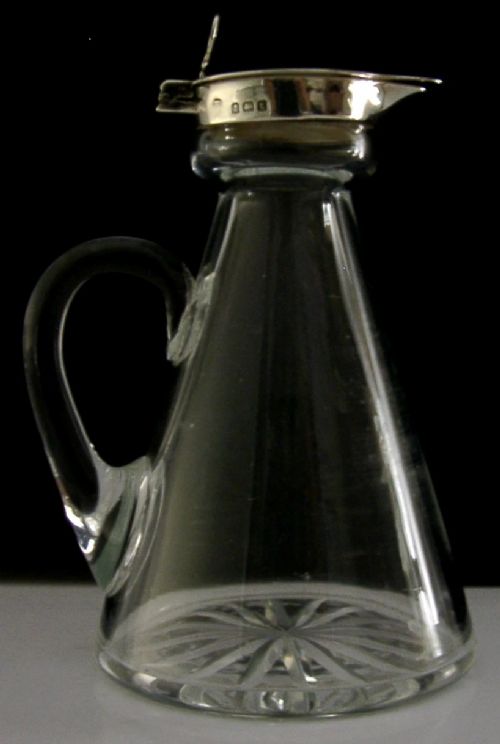
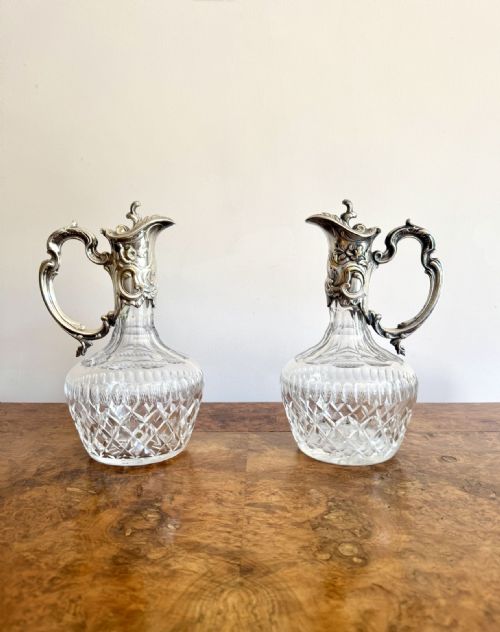
An edwardian glass jug encompasses tall claret decanters, water pitchers, and small whisky noggins produced around the turn of the twentieth century. The primary form met on this page is the silver-mounted cut glass claret jug, designed for serving wine or iced water at the formal dining table.
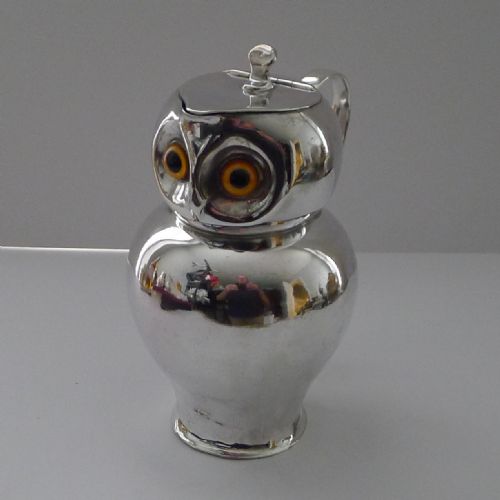
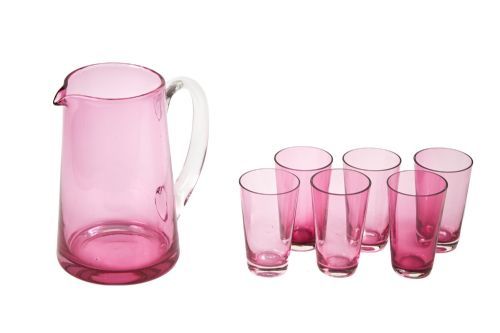
Beyond standard vessels, the inventory includes novelty pieces shaped as animals, amber or cranberry coloured water jugs, and matching sets paired with tumblers. These vessels combine domestic utility with decorative display, reflecting the lavish tables of the period.
Materials and Craftsmanship
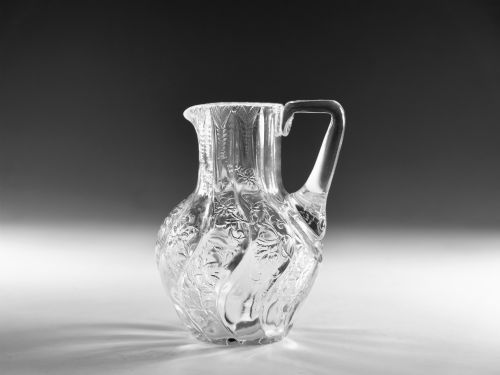
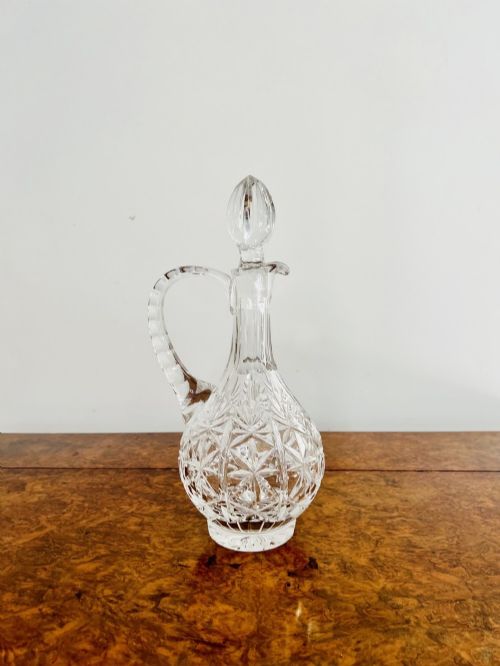
The body of each vessel relies on clear glass, lead crystal, or coloured glass shaped by blowing and heavy wheel-cutting. Artisans applied deep geometric incisions to refract light, alongside delicate wheel-engraving or acid-etching for floral and avian motifs.
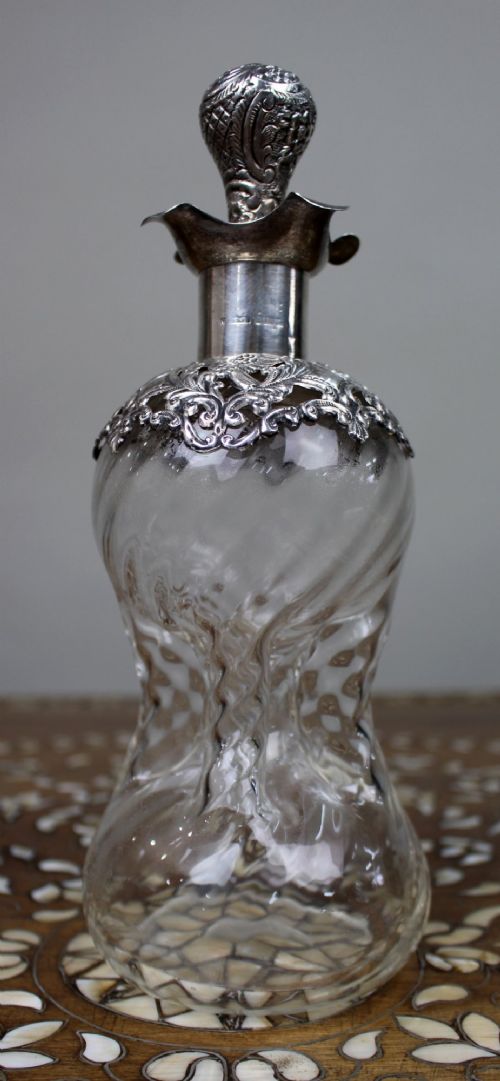
Metal mounts require either sterling silver or silver plate, frequently bearing hallmarks that date the piece precisely. Specialised workshops incorporated pewter or mounted hinged lids and spouts directly onto the glass necks.
Listings feature Victorian, Edwardian, and George V periods, spanning materials from cranberry glass and amber glass to sterling silver and cut crystal.
Factors of Distinction
Quality rests upon the weight and clarity of the crystal body and the depth of the hand-cut facets. Sharper, crisper cutting indicates superior craftsmanship compared to shallow or moulded patterns.
The metalwork further divides the standard from the exceptional. Heavy cast silver mounts, substantial hinges, and maker attributions elevate a vessel above mass-produced silver-plated alternatives.
Stevens and Williams·Webb Corbett·Powell glass·Archibald Knox for Liberty Co·Hukin and Heath·Elkington and Co·Asprey·Robert Pringle
The Edwardian Glass Jug Glossary
- Claret jug
- A pouring vessel specifically created for serving red wine at the dining table. They typically feature a handle and a hinged metal lid.
- Whisky noggin
- A small individual decanter or jug designed to hold a single measure of spirits. These often include a matching silver label.
- Cut glass
- Glassware shaped and patterned by holding the vessel against a rotating abrasive wheel. This technique creates deep, light-catching facets.
- Silver plate
- A base metal, such as copper or Britannia metal, coated with a thin layer of silver. This process provided the appearance of solid silver at a lower cost.
- Ewer
- A large jug with a wide spout and a sweeping handle, historically used for water. In Edwardian contexts, it describes ornate serving vessels.
Edwardian Glass Jug: Frequently Asked Questions
What is an edwardian glass jug used for?
These vessels served various functions at the dining table, primarily holding claret, water, lemonade, or whisky. Larger ewers managed water for washing or general refreshment, while smaller noggins held individual portions of spirits.
Today, they function as decorative table centrepieces or serve drinks during formal gatherings, bridging historical utility with modern entertaining.
How do I clean an antique glass jug?
Cleaning requires lukewarm water and mild dish soap, avoiding harsh scrubbing brushes that might scratch the old glass surface or damage silver mounts. Wooden bottle brushes with soft bristles help reach the interior base without scratching.
Silver mounts should be polished carefully with a cloth, keeping cleaning pastes away from the glass to prevent residue buildup in the cut facets.
Are silver mounts solid silver or plated?
Mounts appear in both sterling silver and silver-plated metals. Sterling silver components feature hallmarks indicating the assay office, date letter, and maker.
Plated items utilise base metals coated in silver and lack these official assay marks, though they often display maker stamps or patent numbers.
How can I tell an Edwardian jug from a Victorian one?
Edwardian vessels, dating from roughly 1901 to 1910, often lean towards lighter, airier Art Nouveau aesthetics or crisp geometrical cutting. Victorian examples tend to be heavier, featuring more ornate, dense floral etching and darker tones.
Examining silver hallmarks provides the most reliable dating method, giving the exact year the metal mount was assayed.