
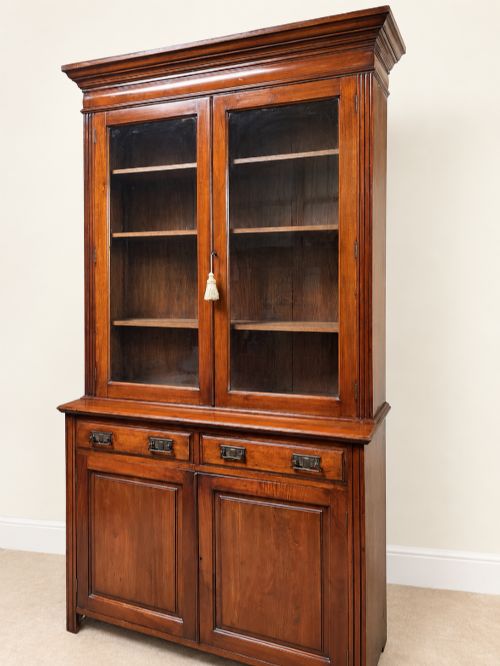
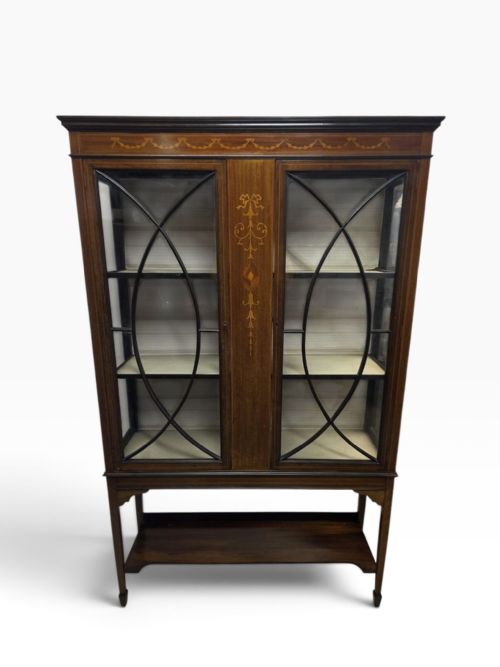
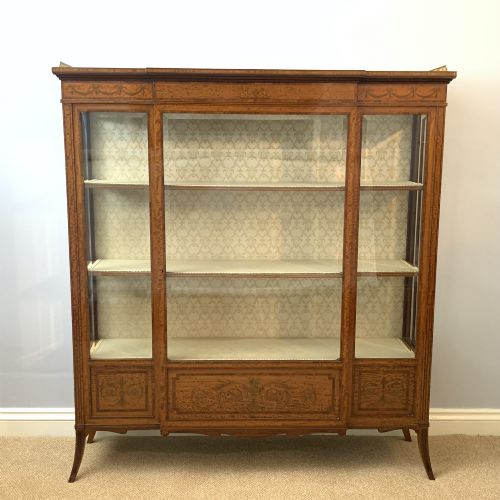
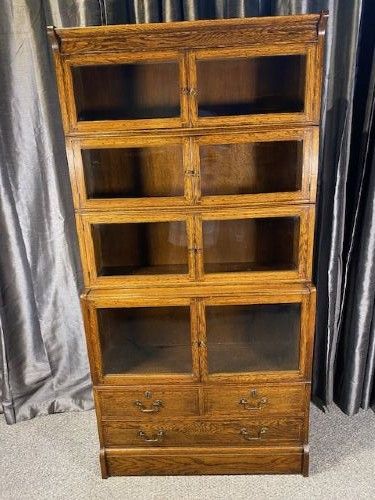
Edwardian Glass Front Bookcase
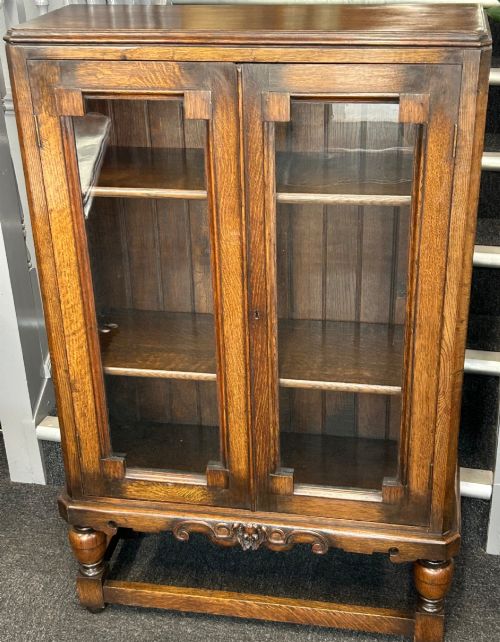
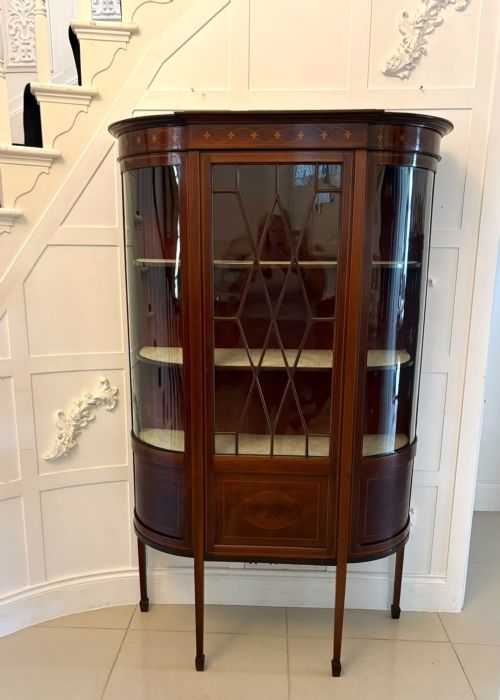
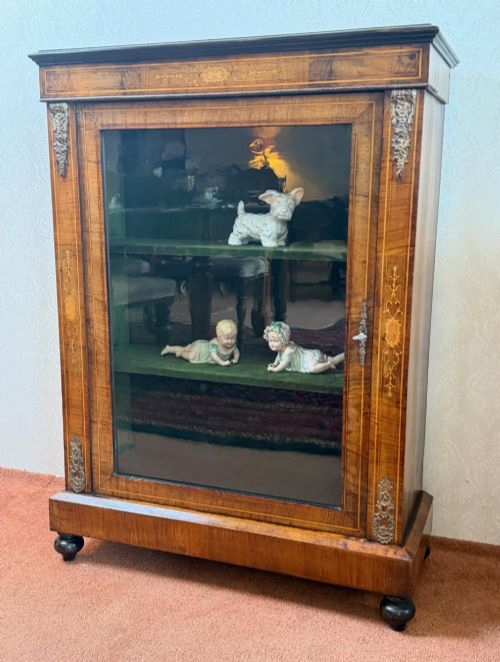
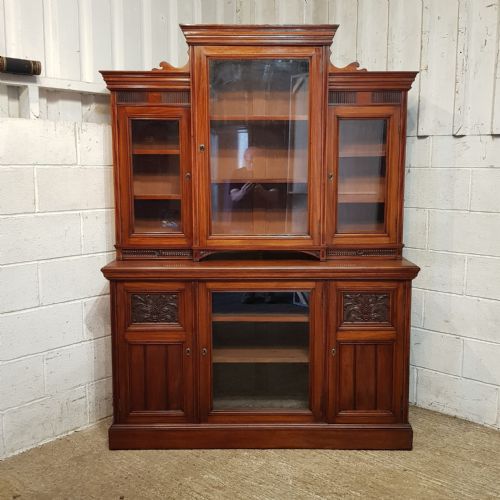
When you want an edwardian glass front bookcase, you are looking at glazed cabinets that keep volumes tidy while displaying bindings.
Edwardian Glass Front Bookcase
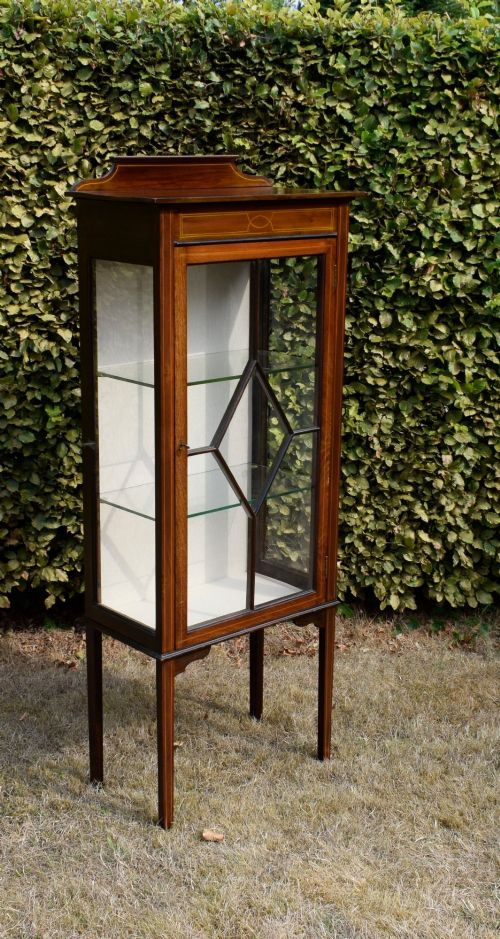
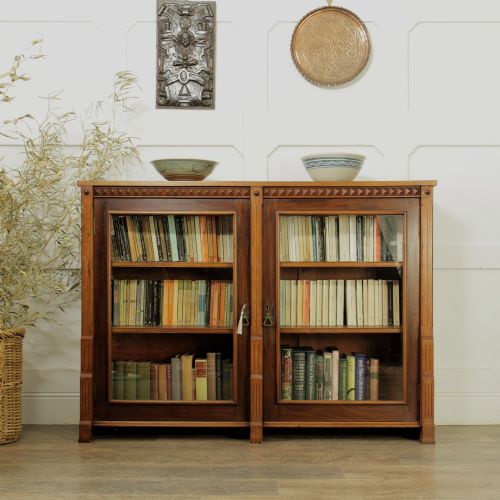
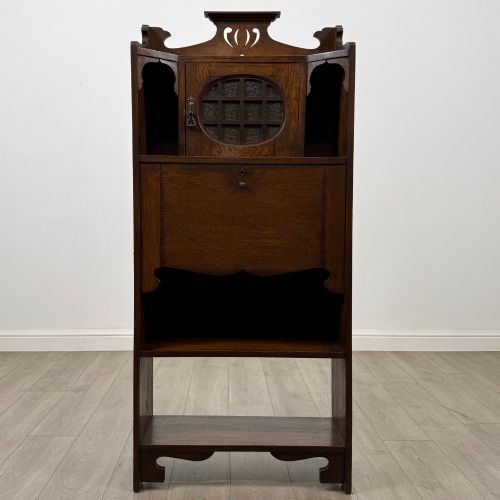
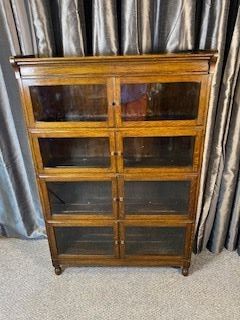
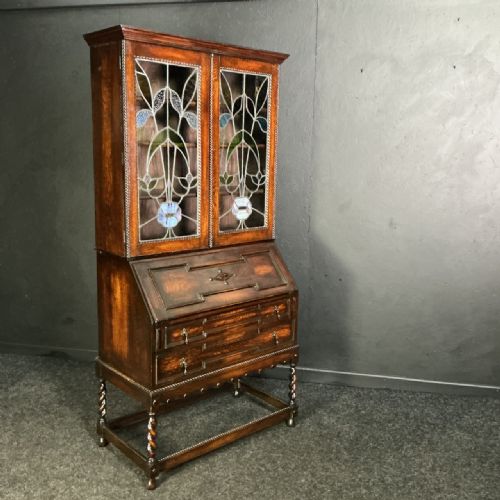
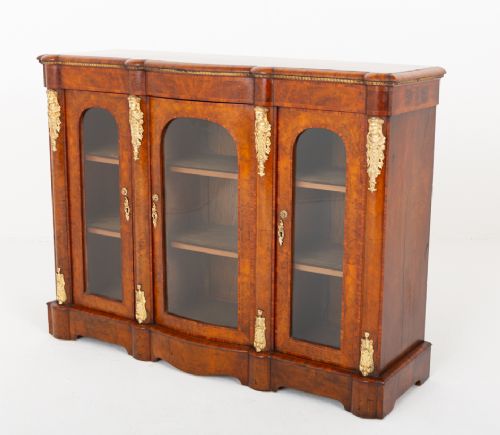
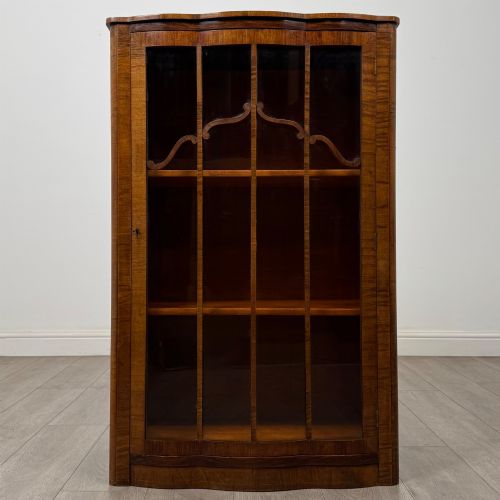
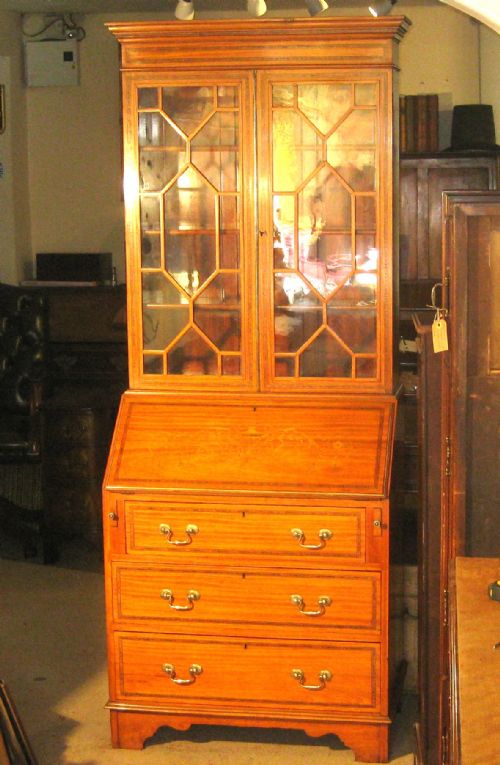
An edwardian glass front bookcase typically combines glazed upper doors with timber cabinetry, spanning periods from the late nineteenth century into the twentieth. You will encounter display cabinets, bureau bookcases, and sectional stacking formats on this page.
The dominant timbers include mahogany, oak, and satinwood, frequently enhanced by delicate inlay work or classical revival motifs. These pieces served domestic libraries and drawing rooms, designed to protect books from dust while maintaining visibility.
Makers such as Edwards & Roberts, Maple & Co., and Globe Wernicke contributed to this output, alongside firms like Lebus. Their constructions range from tall sectional barrister units to bow-ended display pieces.
Materials and Joinery
Cabinet makers utilised solid and veneered mahogany, oak, and burr walnut, laid over sturdy secondary woods. Glass panes were fitted into timber frames or secured with lead cames in sectional barrister designs.
Decorative surfaces relied on contrasting satinwood inlays and brass hardware, while structural integrity depended on tight dovetail joints and traditional panel construction.
Materials recorded across the inventory include mahogany, oak, satinwood, burr walnut, brass, and lead.
Distinctions in Quality
The tier of workmanship depends on the selection of timber figures, such as figured walnut and richly grained mahogany, matched across door panels and drawer fronts. Finer examples display meticulous marquetry and subtle stringing rather than printed or stencilled decoration.
Structural refinement appears in the precision of the glazed doors, the smooth operation of sectional stacking mechanisms, and the retention of original brass fittings and glass panes without distortion.
Edwards & Roberts·Maple & Co.·Globe Wernicke·Lebus
The Edwardian Glass Front Bookcase Glossary
- Astragal
- Moulding strips that divide panes of glass within a door frame. These slender wooden bars form geometric patterns across the glazed front.
- Sectional bookcase
- A modular shelving unit built in stacked tiers with upward-lifting glass doors. Also known as a barrister or stacking bookcase.
- Pier cabinet
- A slender display cabinet designed to fit narrow wall spaces between windows. They frequently feature glass doors and velvet-lined interiors.
- Bureau bookcase
- A writing desk combined with a shelved upper cabinet behind glass doors. The fall-front desk section conceals pigeonholes and small drawers.
Edwardian Glass Front Bookcase: Frequently Asked Questions
What is an edwardian glass front bookcase?
An edwardian glass front bookcase is a timber cabinet with glazed doors designed to store books while displaying their spines.
These pieces emerged during the early twentieth century and Victorian periods, utilising mahogany, oak, and satinwood.
How do sectional bookcases work?
Sectional bookcases consist of individual stacking tiers with glass doors that lift and slide inside the case.
This modular design allows units to be added or rearranged as a library grows.
Which timbers were commonly used?
Cabinet makers predominantly used mahogany, oak, and satinwood for these bookcases.
Finer examples also incorporate burr walnut veneers and contrasting string inlay.
How do I identify a revival style?
Revival styles draw on eighteenth-century design motifs, such as Sheraton satinwood banding and classical proportions.
Cabinet makers during the Edwardian period frequently reinterpreted these earlier aesthetics.