





Edwardian Glass Decanter Set
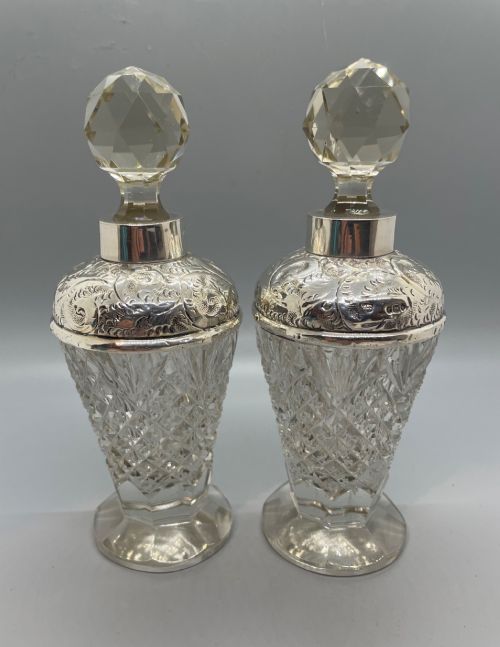
An edwardian glass decanter set brings period hospitality into the room with matching bottles held securely in frames.
Edwardian Glass Decanter Set
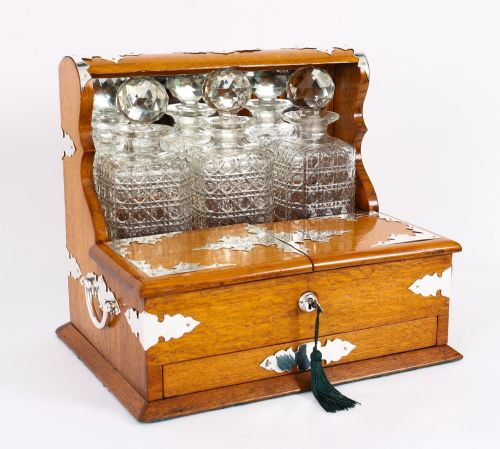
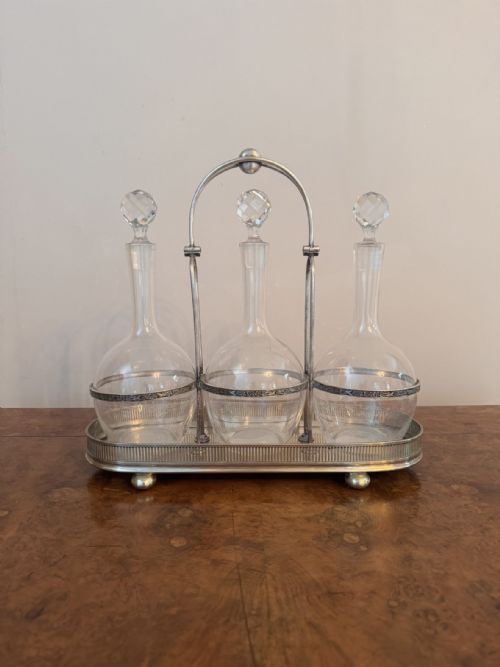
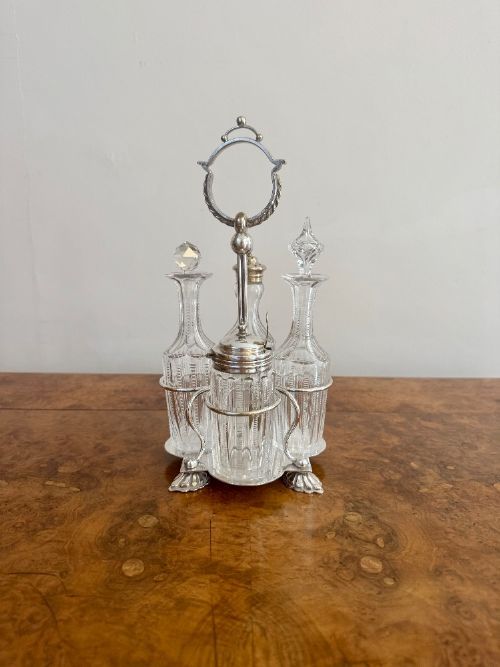
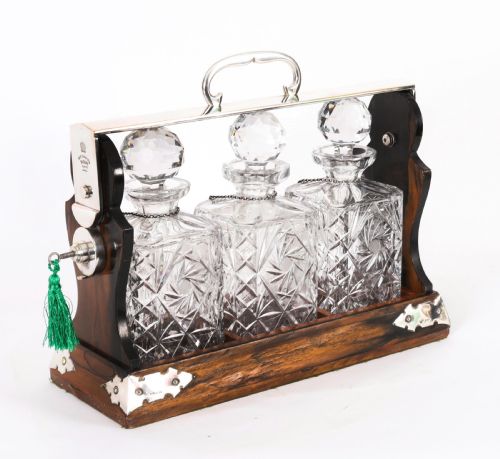
An edwardian glass decanter set gathers cut crystal or glass bottles together on silver plated stands, trays, or locking frames known as tantaluses.
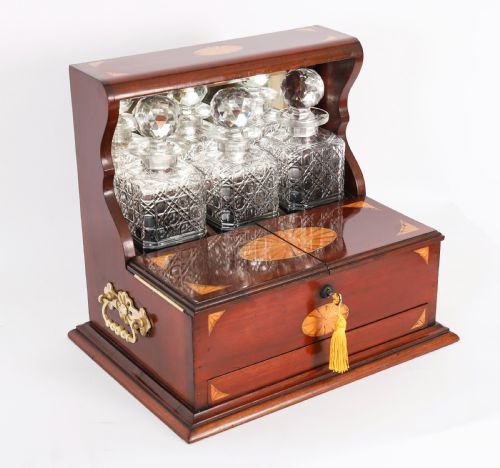
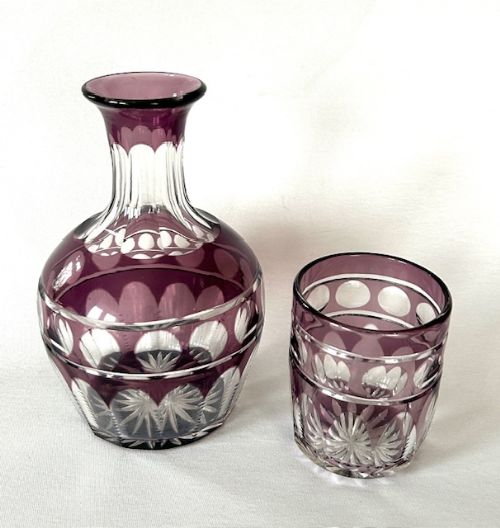
Buyers will frequently find oak or mahogany frames fitted with three bottles alongside paired rubylined or clear glass examples.
The objects extend from simple barware services to elaborate games compendiums with integrated decanters.
Origins stretch across the Edwardian era and Victorian periods into the early twentieth century.
Materials and construction
Maker workshops utilised cut crystal and glass alongside silver plate, brass, and sterling silver mounts.
Cabinetmakers constructed wooden frames and tantalus boxes from oak, walnut, satinwood, coromandel, and blonde oak.
Glass vessels received hand engraving, optical blowing, or intaglio cutting while metal frames gained silver plating and brass fittings.
Listings feature oak, coromandel, and walnut cabinetry housing cut crystal and silver plated frames spanning the Victorian and Edwardian eras.
Quality factors
Distinction across the range rests upon the depth of the glass cutting, the weight of the crystal, and the substance of the silver plating.
Complex woodwork with marquetry stringing, games compartments, and working locks elevate the standing of a piece.
Matched sets where every decanter and stopper share identical facet patterns command greater regard than assembled groups.
Betjemann’s·Webb Corbett·James Powell·Mappin & Webb·Hukin and Heath
The Edwardian Glass Decanter Set Glossary
- Tantalus
- A locking wooden frame that secures spirit decanters behind a metal bar to prevent unauthorized pouring while displaying the bottles. The clever locking mechanism holds the stoppers firmly in place.
- Cut Crystal
- Glass containing lead oxide that receives deep geometric facets through wheel cutting to maximise brilliance and light refraction. This heavy material produces a clear ringing tone when struck gently.
- Silver Plate
- A thin layer of silver fused over a base metal foundation such as copper or nickel brass, common on nineteenth and twentieth century frames and trays. It provides the appearance of solid silver at a different cost.
- Cruet Set
- A table stand holding small glass bottles or jars for condiments, oils, and vinegars. These frames often mirror the design language of larger drinks services.
- Games Compendium
- A fitted box containing boards and accessories for pastimes alongside a drinks service or decanter set. They represent typical multifunctional luxury goods of the period.
Edwardian Glass Decanter Set: Frequently Asked Questions
What is an Edwardian tantalus?
A tantalus is a locking wooden frame designed to hold glass decanters securely while allowing the bottles to remain visible.
The locking mechanism prevents access to the spirits without a key, a common household accessory in large period homes.
How do I date a decanter set?
Dating relies on the style of the wooden frame, the hallmarks on silver mounts, and the manufacturing methods of the glass.
Edwardian pieces often feature crisp silver plate and oak framing, whereas Victorian examples tend toward heavier carving and darker woods.
Are the stoppers original?
Original stoppers generally match the cut pattern, tint, and internal wear marks of the decanter body.
Collectors look for matching batch numbers etched into the base of the bottle and the underside of the stopper.
How were these sets used?
Hosts utilised these decanter sets in dining rooms and libraries to serve brandy, whisky, and wine to guests.
Locking frames kept expensive spirits secure from household staff while presenting them attractively on a sideboard.