
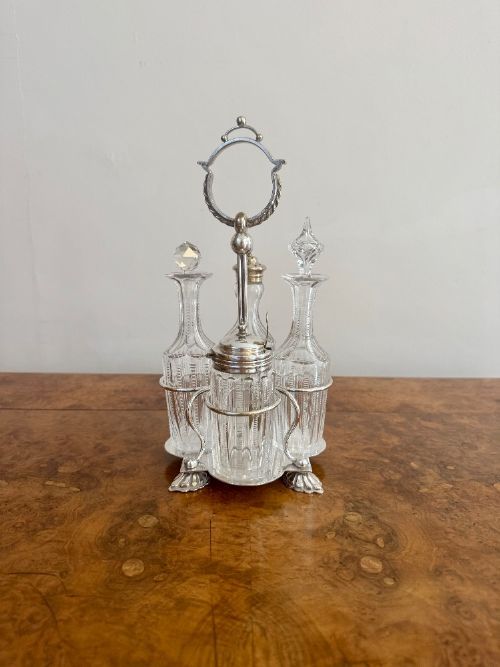
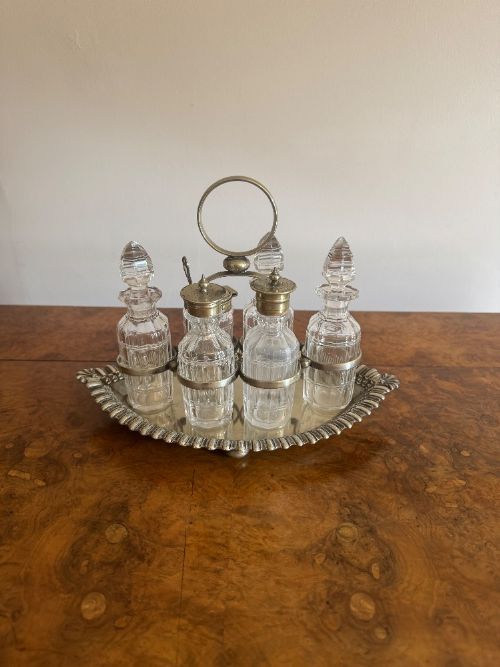
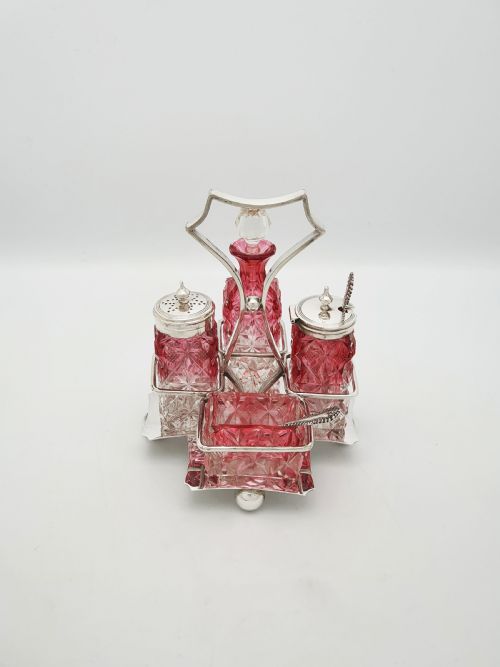


Edwardian Glass Cruet Bottles
Edwardian glass cruet bottles bring table-top elegance from the early twentieth century, combining cut glass and silver plate for formal dining.
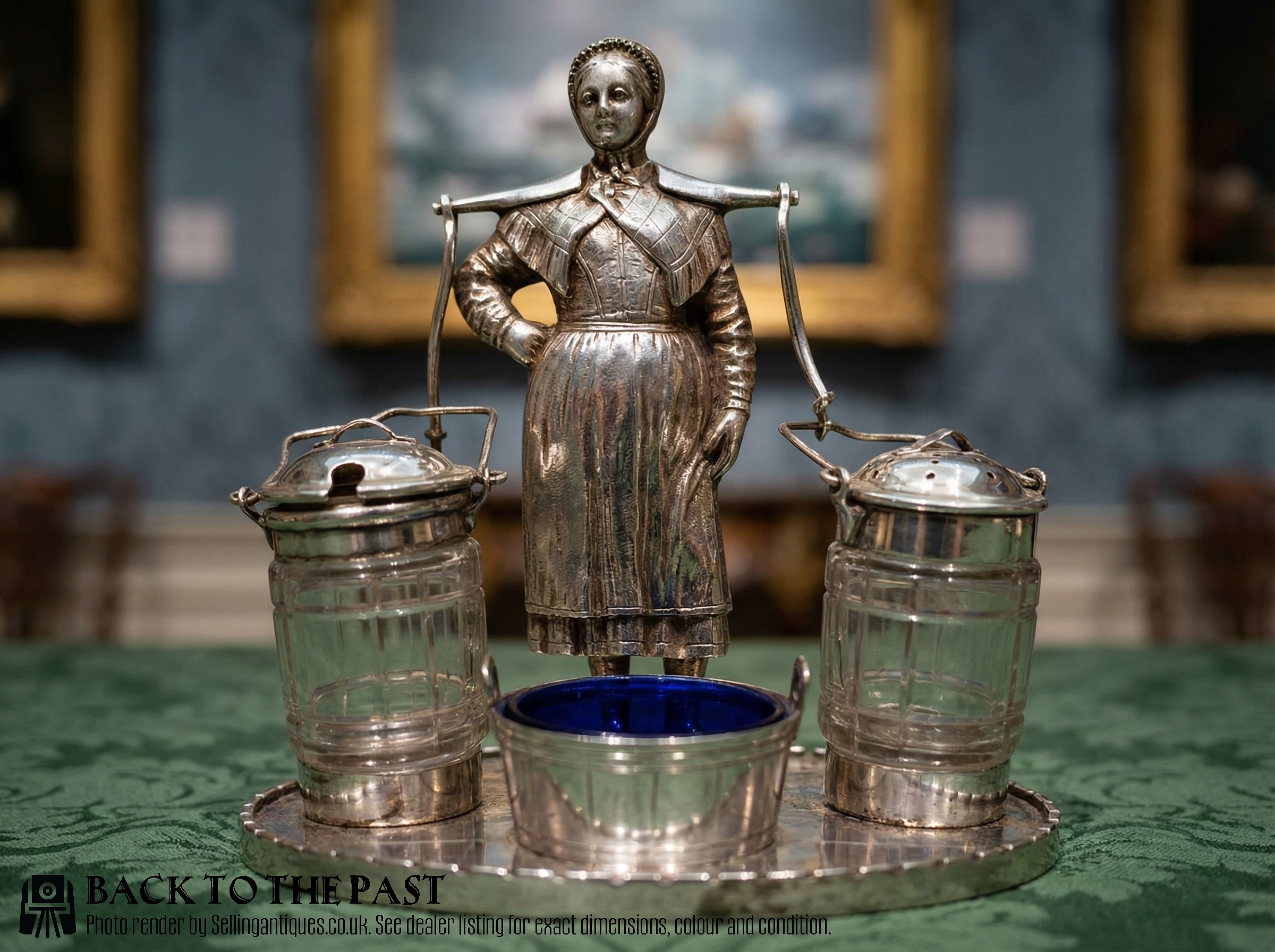
Edwardian Glass Cruet Bottles
When you search for edwardian glass cruet bottles, you are looking at table-top condiment containers designed for oils, vinegars, and sauces during formal meals. The examples found here primarily date from the Edwardian period and Victorian eras, often taking the form of complete cruet sets held within silver plated stands.
You will most commonly meet multi-bottle configurations on this page, ranging from bachelor sets to larger six and eight-piece cruet stands. These vessels sit in frames equipped with carrying handles, making them practical service items for the dining table.
How they were made
The manufacture of these pieces relies on the combination of heavy moulded or cut glass and durable silver plate or sterling silver. Craftsmen shaped the glass bottles with geometric facets or flash colouring to catch the light on the dining table.
Metal stands and bottle mounts were produced using silver plating techniques over base metals, alongside occasional solid sterling silver frames. Makers fitted the bottle necks with stoppers and mounts designed to withstand daily domestic use.
Listings feature items spanning the Victorian, Edwardian, and Art Deco periods, utilising materials such as cranberry glass, cut glass, and silver plate.
What varies in quality
The standard of an edwardian glass cruet set depends heavily on the clarity and depth of the glass cutting. Pieces with crisp facets and heavier metal frames demonstrate superior craftsmanship compared to simpler moulded alternatives.
Completeness and the retention of matching original bottles dictate the standing of a set. Cruet frames that retain their full complement of undamaged glass bottles command greater attention from collectors.
Walker And Hall
The Edwardian Glass Cruet Bottles Glossary
- Silver Plate
- A thin layer of silver bonded to a base metal, typically nickel silver or Britannia metal. This technique provided the appearance of solid silver at a lower cost.
- Cranberry Glass
- A rich pinkish-red glass produced by adding gold chloride to the molten batch. It appears frequently in decorative tableware from the late nineteenth and early twentieth centuries.
- Cut Glass
- Glass decorated by hand on a wheel to create deep geometric patterns. This process enhances the refractive quality and weight of the vessel.
- Cruet Set
- A matched collection of condiment bottles and jars held within a dedicated stand. They were utilised at the dining table for holding oils, vinegars, and seasonings.
- Sterling Silver
- An alloy of silver containing 92.5 percent pure silver and 7.5 percent other metals, usually copper. It is marked with hallmarks to guarantee its standard.
Edwardian Glass Cruet Bottles: Frequently Asked Questions
What are edwardian glass cruet bottles?
These are small glass containers designed to hold condiments like oil, vinegar, and sauces at the dinner table. They were typically housed in metal stands for easy service.
Most surviving examples date from the Edwardian period and feature cut glass bodies paired with silver plated frames.
How were cruet sets used?
Hosts placed these sets in the centre of the dining table so guests could season their food individually during meals. The bottles held liquids and powders that complemented the dishes served.
Servants would also use the carrying handle on the stand to transport the entire collection between the dining room and the sideboard.
How do I clean antique glass?
Wash the glass bottles gently in warm soapy water using a soft brush to reach inside the narrow necks. Avoid harsh abrasive cleaners that might scratch the surface.
Dry the pieces thoroughly and keep silver plated mounts polished with appropriate non-abrasive metal creams.
Can I use them today?
Many people continue to use these glass bottles for serving oils and vinegars during family meals and dinner parties. Their classic designs fit neatly onto modern dining tables.
Careful handling ensures the antique glass and delicate silver plating remain protected during regular domestic use.
How do I spot Victorian pieces?
Items from the Victorian era often feature heavier ornamentation and deeper decorative engraving on both the glass and the metal frames. Their aesthetic leans towards ornate floral and geometric patterns.
Edwardian pieces tend to display lighter, more restrained designs with influences from earlier classical revivals.