
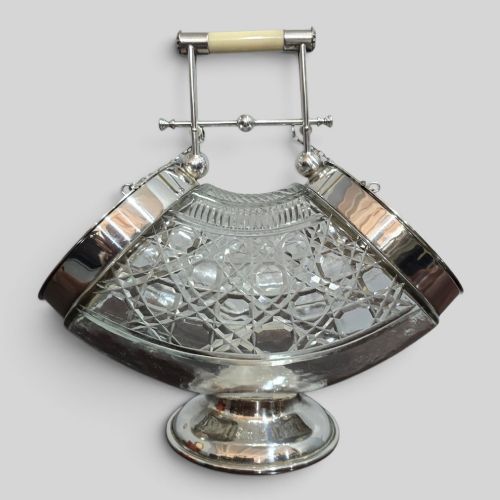
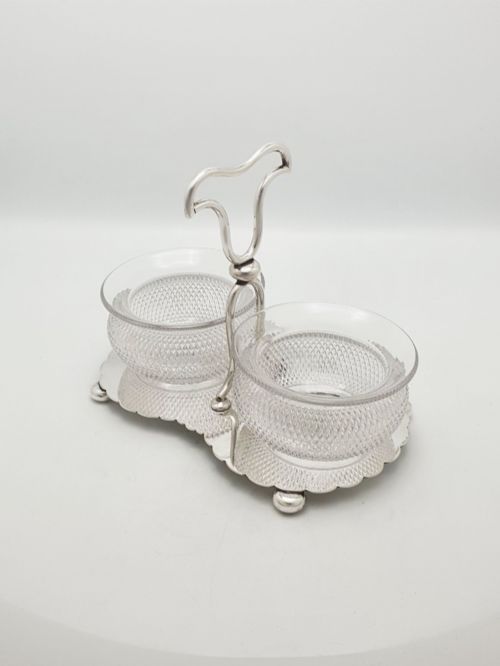
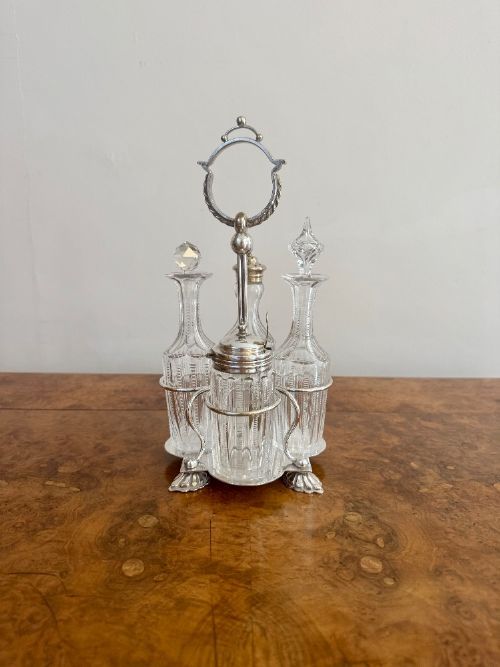

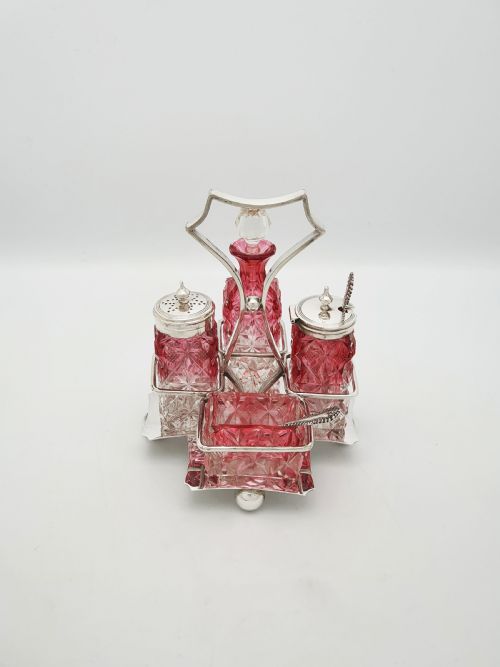


Edwardian Glass Caddy
These edwardian glass caddy pieces bring cut glass, silver plate and polished oak together for the dining table.
Edwardian Glass Caddy
An edwardian glass caddy encompasses functional vessels and tabletop containers designed for biscuits, tea, preserves and condiments. The selection spans the Edwardian period alongside Late Victorian and early twentieth century examples.
The objects take diverse forms ranging from silver plated cruet sets and condiment stands with twin glass bowls to biscuit barrels, tea caddies and multi-bottle tantalus frames. Cut crystal inserts and glass liners sit within pierced or solid silver plated mountings.
Pieces from this era reflect domestic dining habits of the early nineteen hundreds. Oak frames with brass mounts and walnut structures appear alongside glass bodies finished with hobnail cutting or cranberry flashing.
The standard of execution
Distinction in these objects rests on the depth of the glass cutting and the weight of the metal mountings. Crisply rendered hobnail facets and substantial silver plating separate finer examples from simpler production.
The harmony between the glass body and its fitted frame dictates overall success. Tighter tolerances in the carpentry of oak tantalus frames and cleaner piercing on silver plated stands indicate superior workshop origins.
Certain biscuit boxes feature automated mechanisms that pop the lid open when the handle is pressed.
The Edwardian Glass Caddy Glossary
- Cruet set
- A matched collection of glass bottles or cruets for condiments held in a metal frame. These typically feature silver plated stands with multiple glass receptacles.
- Tantalus
- A locked wooden frame securing decanters so the contents remain untouched. Oak and walnut versions often incorporate brass mounts and three glass decanters.
- Biscuit barrel
- A covered container designed for storing dry biscuits on the dining table. Examples frequently combine cut glass bodies with silver plated covers and swing handles.
- Cranberry flashed
- Glass coated with a thin layer of red glass before being cut or blown. This technique creates a rich colour contrast when polished.
- Hobnail cut
- A raised pyramidal pattern cut into the surface of glassware. It provides tactile grip and catches candlelight effectively.
Edwardian Glass Caddy: Frequently Asked Questions
What is an edwardian glass caddy used for?
These pieces served as decorative containers for tea, biscuits, and condiments during formal meals. They sat upon the dining table or sideboard for guests.
Over time, many of these vessels shifted from active dining service into display pieces. Their cut glass and silver plate remain suited for modern interiors.
How do I date an edwardian glass caddy?
Dating relies on stylistic markers, hallmarks on the silver plate, and the combination of materials like oak and cut crystal. Edwardian pieces generally date between nineteen hundred and nineteen ten.
Late Victorian examples show heavier proportions, while early twentieth century pieces embrace cleaner lines. Comparing mountings helps establish the exact era.
Are the glass inserts original?
Many listings retain their original cut glass bowls, jars, and decanters. The fit between the glass and the metal frame often indicates originality.
Hand-blown or heavy cut glass liners show specific wear patterns matching the frame. Inspecting the base reveals age-appropriate surface marks.
How should I clean silver plated mounts?
Silver plate requires gentle polishing with a non-abrasive cloth to preserve the finish. Harsh chemical dips can strip the underlying plating.
Glass components lift out easily for washing in warm soapy water. Keeping the oak or walnut frames away from excess moisture protects the wood.