



Edwardian Garden Painting
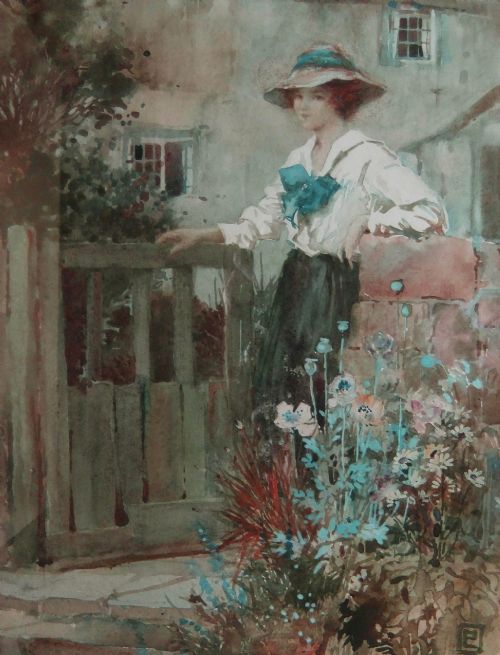
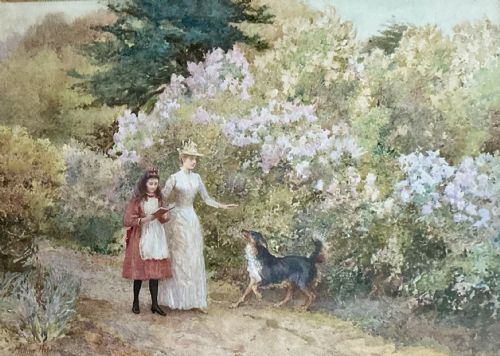
These Edwardian garden paintings capture quiet English horticultures on paper with watercolour pigment under glass.
Edwardian Garden Paintings
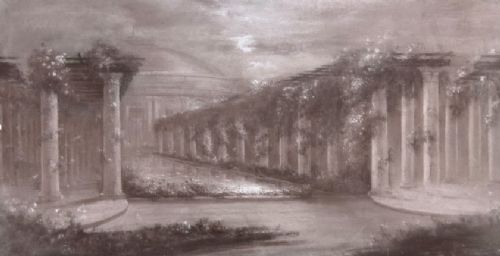
An edwardian garden painting records verdant borders, walled plots and sunlit pathways from the early twentieth century. These works capture the domestic horticulture of the era through delicate washes and careful draughtsmanship.
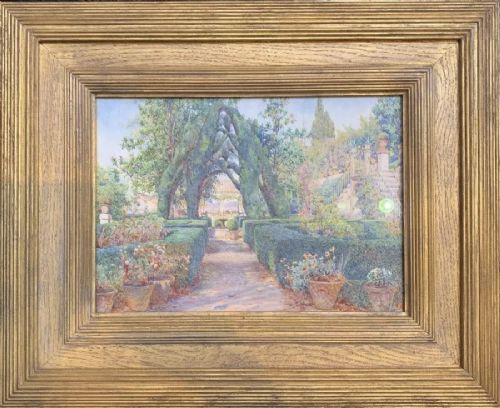
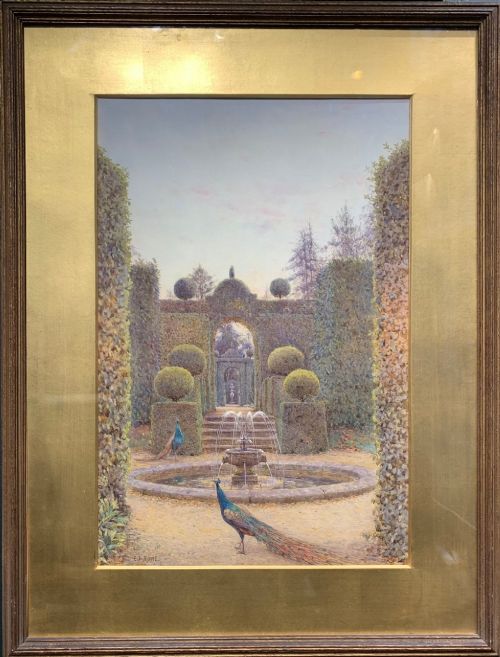
Most pieces on this page take the form of framed watercolour paintings on paper, preserved behind glass in wooden frames. The subjects focus on specific English landscapes, country vicarages and stately flower gardens.
The periods represented stretch from Victorian origins through Edwardian sensibilities into the nineteen-twenties and nineteen-forties. Artists such as Lilian Stannard, George F Pennington, Ernest Arthur Rowe and Minnie Smythe dominate these scenes.
Materials and Technique
Artists used watercolour paint and pigment applied to paper sheets to build translucent layers of colour. This medium allowed for soft gradations in depicting foliage, skies and floral arrangements.
Finished works were typically mounted beneath glass and housed in wooden frames to protect the fragile paper surface from moisture and light damage.
Retail Price Guide 2026
Typical UK retail prices for edwardian garden painting, calculated from the Sellingantiques database of over a million retail prices indexed since 2003. This retail price guide relies exclusively on Sellingantiques data; no external sources or auction records are used, so the figures do not describe the wider market.
Markers of Quality
Quality rests upon the artist's command of light and botanical accuracy within the watercolour medium. Stronger works display confident brushwork that defines floral structures without heavy reliance on ink outlines.
The preservation of the paper and the vibrancy of the original pigment dictate the visual success of each piece. Superior examples retain their subtle colour tones without excessive fading from exposure to sunlight.
Ernest Arthur Rowe·George F Pennington·Lilian Stannard·Minnie Smythe
The Edwardian Garden Painting Glossary
- Watercolour
- A painting method where natural pigments are suspended in a water-based solution and applied to paper. This technique creates transparent washes that lend luminosity to botanical scenes.
- Framed Artwork
- A finished piece of visual art enclosed within a protective wooden structure and glazed with glass. It ensures the paper remains flat and shielded from atmospheric dirt.
- Verso
- The back surface of a painting or its supporting paper. Titles or signatures are frequently inscribed in this location by the artist.
- Monogram
- A motif made by overlapping or combining letters to form a single symbol used by an artist to sign a work. This shorthand identification often appears discreetly in the corner of early twentieth-century watercolours.
Frequently Asked Questions
What subjects appear in these paintings?
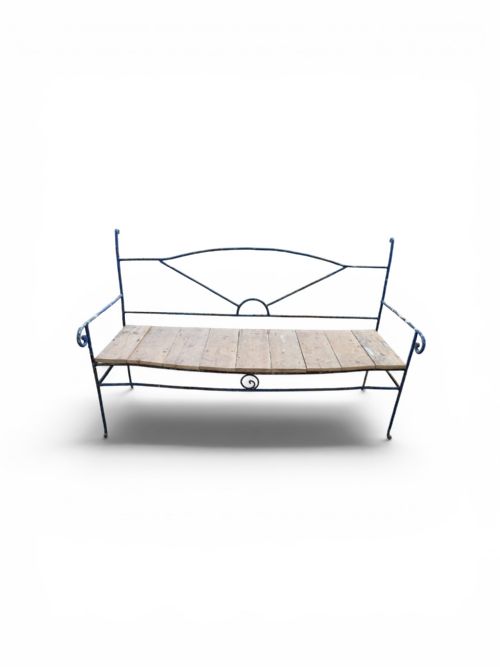
These works depict walled summer gardens, vicarage grounds, flower borders and old garden seats. The compositions focus on domestic horticulture and tranquil English landscapes.
Artists recorded specific estates and country gardens, capturing the seasonal blooms of Michaelmas daisies and established floral beds.
How should I display watercolour paintings?
Watercolours require placement away from direct sunlight to prevent the pigments from fading over time. Maintaining stable indoor humidity levels also protects the paper support.
Keep the original glass and wooden frame intact where possible to preserve the historical context of the piece.
How do I identify the artist?
Look for a signature or monogram located in the corners of the painted surface. Artists frequently signed their work directly onto the paper using watercolour or ink.
Check the reverse side of the work, known as the verso, because titles and attribution notes are often written there.
What periods do these artworks represent?
The pieces span from Victorian foundations through the Edwardian era into the nineteen-twenties and nineteen-forties. Each period brings a distinct approach to capturing natural light and garden design.
Stylistic influences frequently cross between Edwardian tastes and Arts and Crafts movements.