


Edwardian Freestanding Mirror
Edwardian freestanding mirror designs offer tilting glass panels framed in mahogany and oak, bringing period elegance to dressing rooms and hallways.
Edwardian Freestanding Mirror
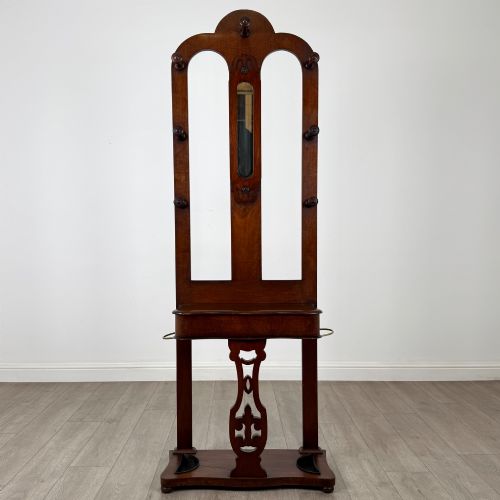
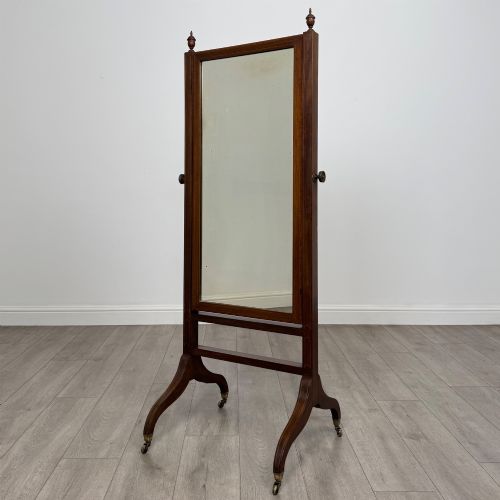
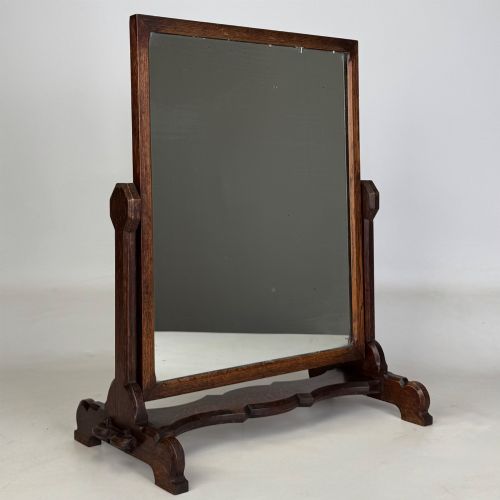
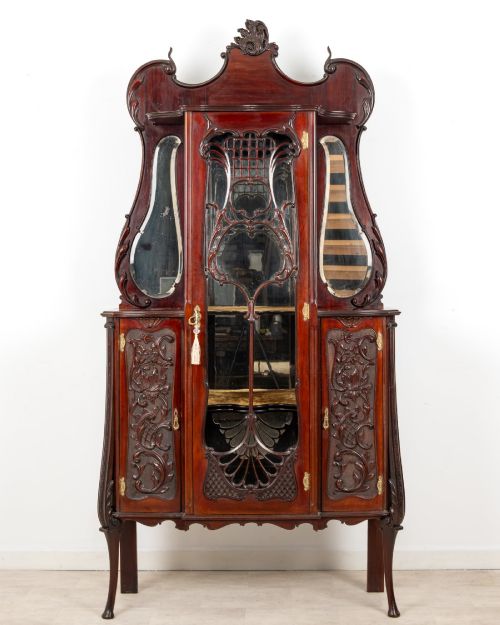
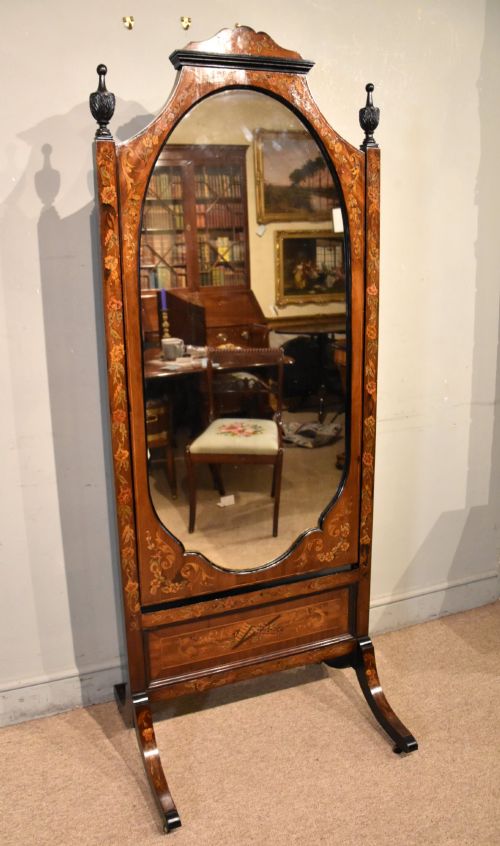
When searching for an Edwardian freestanding mirror, you encounter tall cheval glasses designed for full-length viewing alongside smaller table-top dressing variants. These pieces stand independently on frames or pedestals rather than hanging from walls, often featuring adjustable pivoting mechanisms to angle the glass.
The selection here encompasses substantial mahogany and oak floor-standing examples alongside compact dressing table mirrors from the early twentieth century. Alongside formal Edwardian items, related nineteenth-century Victorian and Regency cheval glasses appear, sharing the same practical function of movable reflection.
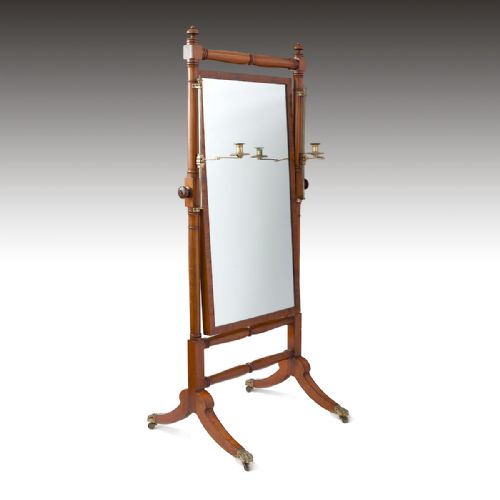
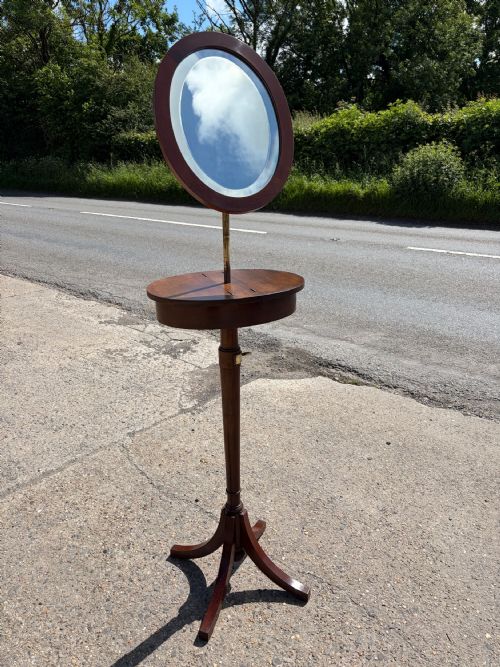
Makers of this era produced these mirrors for bedrooms, dressing rooms, and halls, where checking attire required a mobile glass panel. The forms range from simple swing frames on trestle supports to elaborate inlaid structures and tripod stands.
Judging Quality
The distinction between standard examples and superior pieces rests upon the selection of timber and the sophistication of the joinery. Dense, well-figured mahogany or quarter-sawn oak combined with crisp carving elevates a piece above simpler utilitarian versions.
Hardware and stability also define the standard of manufacture. Robust brass pivoting mechanisms that hold the glass firmly at any angle without slipping indicate superior original construction.
Waring and Gillow·WMF·Fischel
The Edwardian Freestanding Mirror Glossary
- Cheval mirror
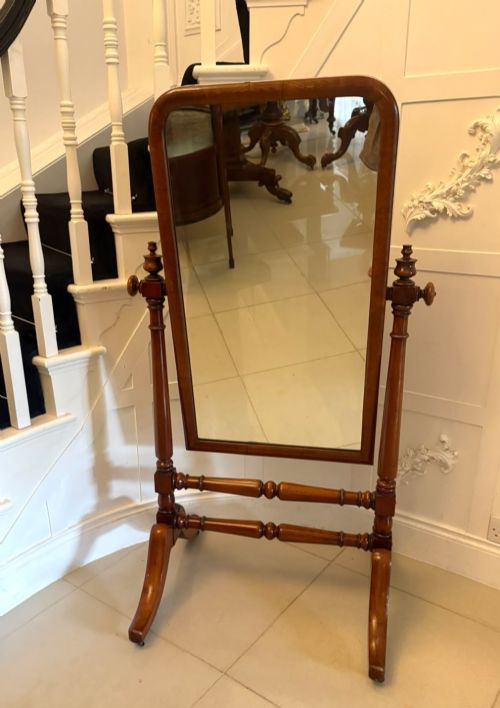
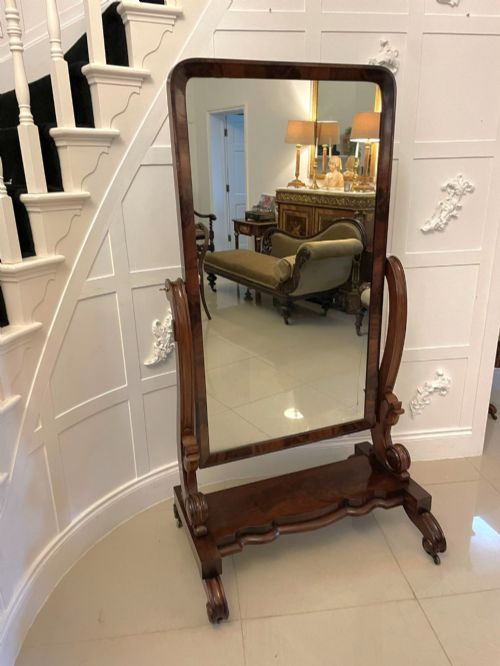
- A large freestanding mirror supported by a frame with vertical pillars and pivoting pins that allow the glass to swing. This design emerged to provide a full-length reflection in bedrooms and dressing rooms.
- Inlay
- A technique where pieces of contrasting wood, such as satinwood or lighter veneers, are fitted into the primary timber surface to create decorative patterns. Edwardian makers frequently applied this to mahogany frames.
- Shaving stand
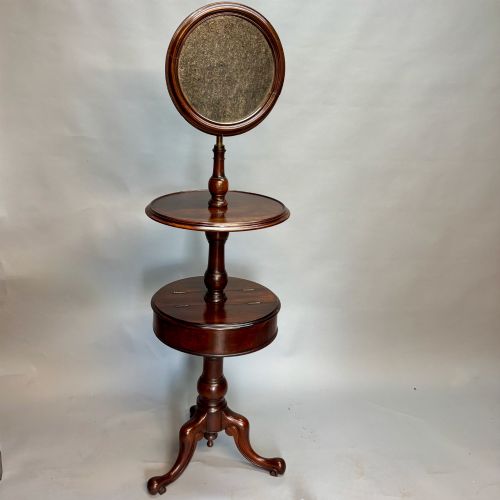
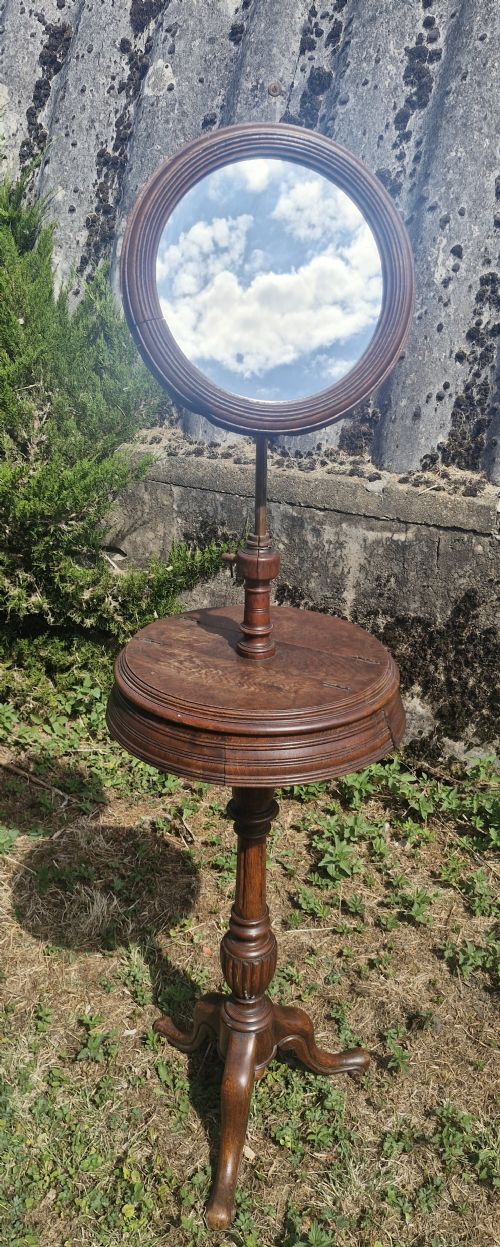
- A specialised piece combining a mirror with a small table, drawers, or adjustable heights for grooming. These often include tripod bases or small cabinets.
- Arts and Crafts
- A design movement emphasising simple forms, visible construction, and honest use of materials like oak. Pieces from this style reject heavy factory ornamentation in favour of hand-finished integrity.
- Tripod base
- A three-legged support structure commonly found beneath adjustable shaving mirrors and smaller stands. This configuration provides stability on uneven floors.
Edwardian Freestanding Mirror: Frequently Asked Questions
Where should I place a freestanding mirror?
These mirrors suit bedrooms, dressing rooms, and hallways where a full-length reflection or quick check before leaving the house is useful. Their independent design means they require no wall fixtures and can be repositioned easily.
Positioning them near natural light sources helps brighten a room while making the glass functional. Ensure the floor is reasonably level so the pivoting frame operates smoothly.
How do I adjust the mirror angle?
Most cheval and dressing mirrors use lateral pivot screws or pins set into the upright side posts. Tightening or loosening these brass fixtures controls the tension that holds the glass in place.
Check that the support frame remains stable on its base before adjusting the tilt. Do not force stiff mechanisms; a light application of appropriate lubricant on the metal threads often eases movement.
Are these mirrors heavy to move?
Floor-standing cheval mirrors constructed from solid mahogany or oak possess considerable weight due to the dense timber and thick glass panels. Table-top versions lift easily, but large frames require two people to relocate safely.
When moving a heavy piece, grasp the main vertical supports rather than the delicate top crest or the glass frame itself. Removing detachable parts or securing the swinging glass first prevents accidental damage.
How do I distinguish Edwardian from Victorian mirrors?
Edwardian pieces generally exhibit lighter proportions, simpler lines, and restrained satinwood inlay compared to earlier Victorian designs. Victorian examples often feature darker, heavier mahogany, richer carvings, and more exuberant ornamentation.
Stylistic overlaps occur around the turn of the century, as seen in transitional Arts and Crafts or Art Nouveau pieces. Examining the secondary woods, backboards, and overall hardware helps clarify the period of manufacture.