




Edwardian Free Standing Mirror
These edwardian free standing mirror pieces offer adjustable glass in mahogany, satinwood and brass, built to anchor a bedroom or dressing room with practical grace.
Edwardian Free Standing Mirror
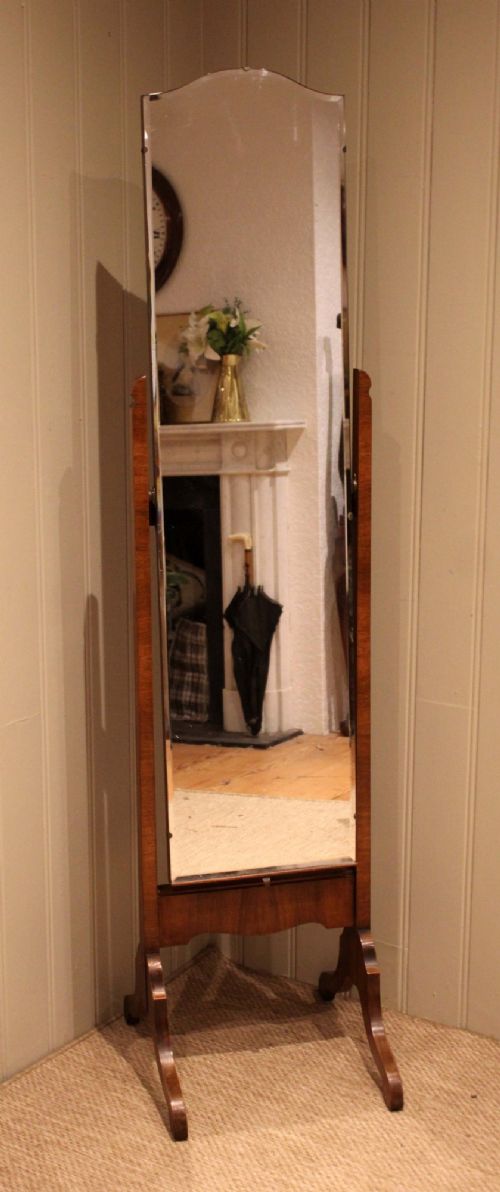
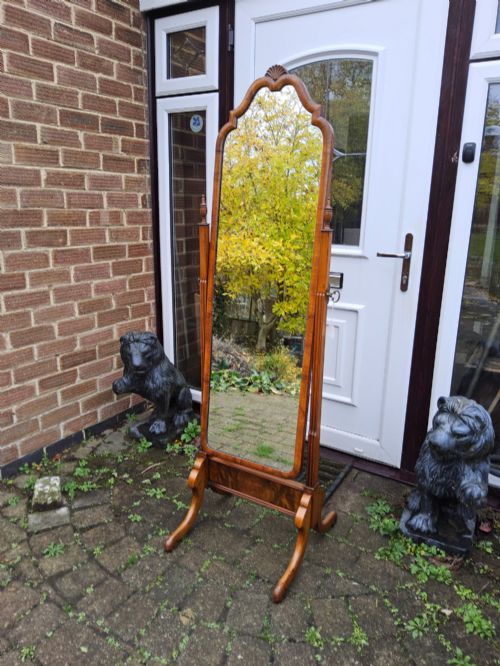
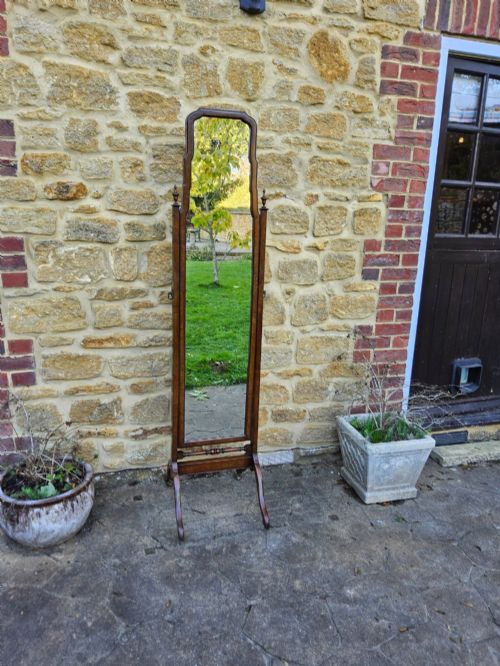
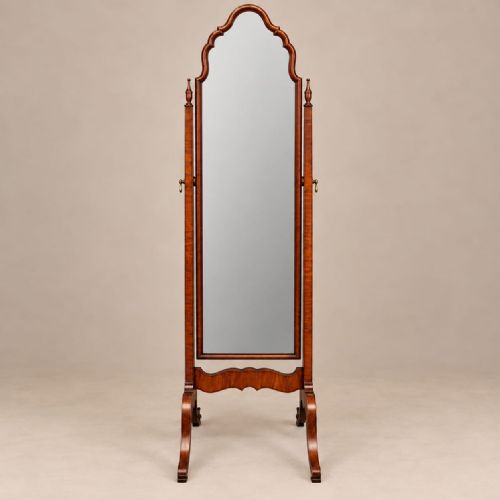
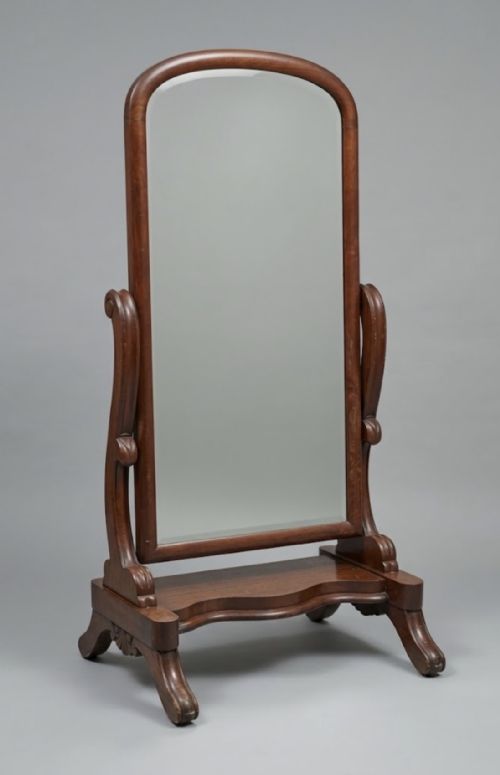
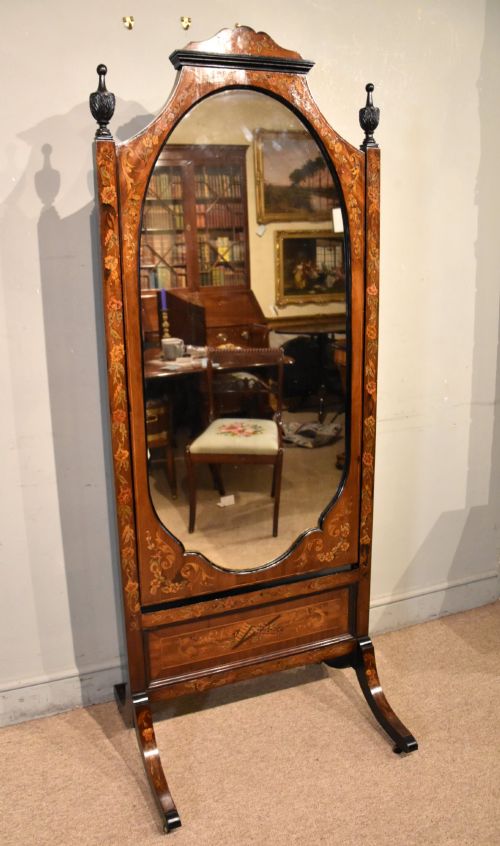
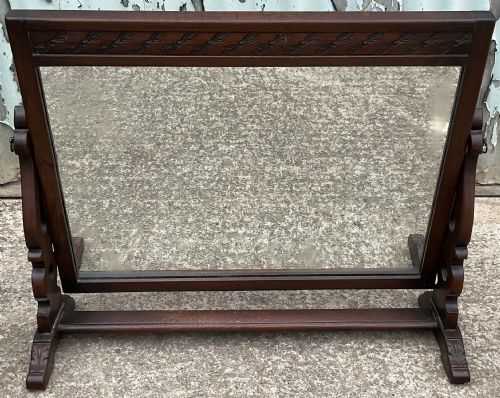
An edwardian free standing mirror is primarily represented by large floor-standing cheval mirrors and smaller dressing table mirrors made of mahogany, satinwood, oak and brass. These tall swing glasses permit a full-length view, anchored by stable floor frames or rested upon tabletops.
The selection extends beyond the strict Edwardian period to encompass Victorian, Regency and early twentieth century examples. Formats vary from simple oval brass dressing mirrors to large marquetry inlaid satinwood cheval frames and specialised shaving stands.
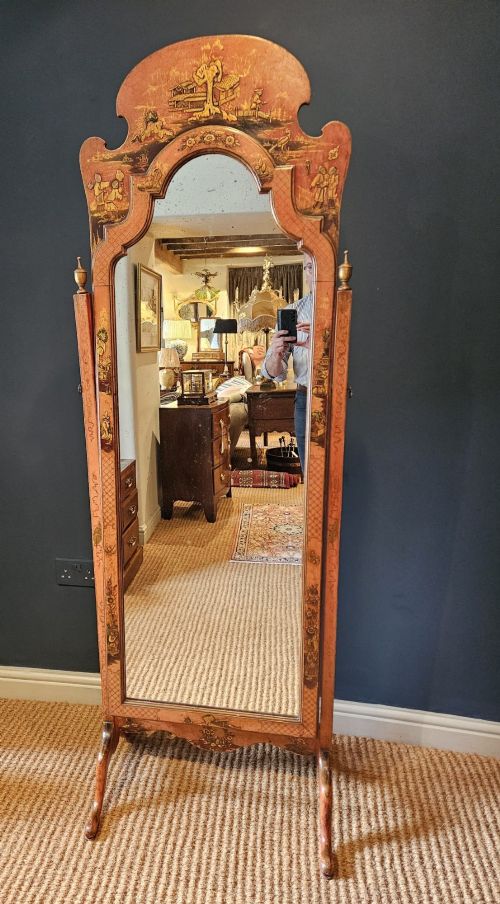
Makers and workshops utilised diverse stylistic influences, producing Chinoiserie decoration, Arts and Crafts simplicity and classical Regency lines. Buyers encounter pieces intended for bedrooms, dressing rooms and hallways alike.
How they were made
Timbers such as mahogany, oak, pitch pine and satinwood provide the structural integrity for these frames, frequently enhanced by decorative marquetry inlay. Brass fittings secure the adjustable glass plates, allowing the mirror to tilt smoothly on its pivots.
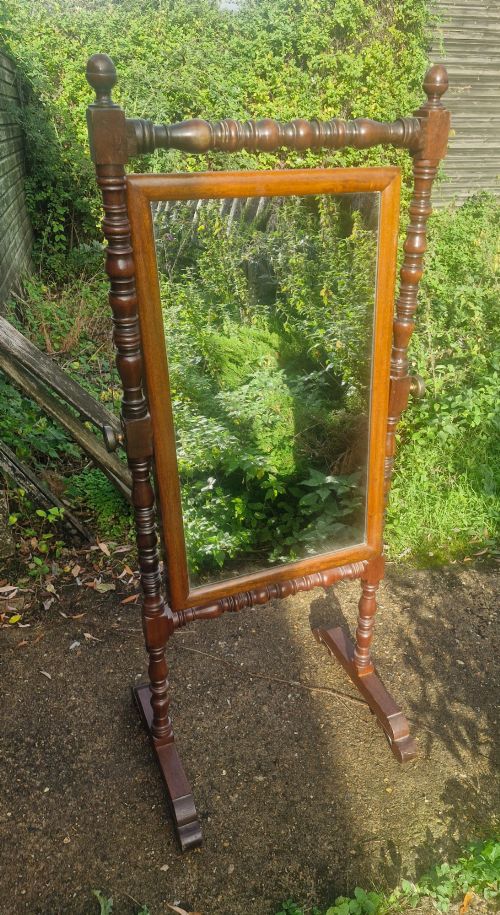
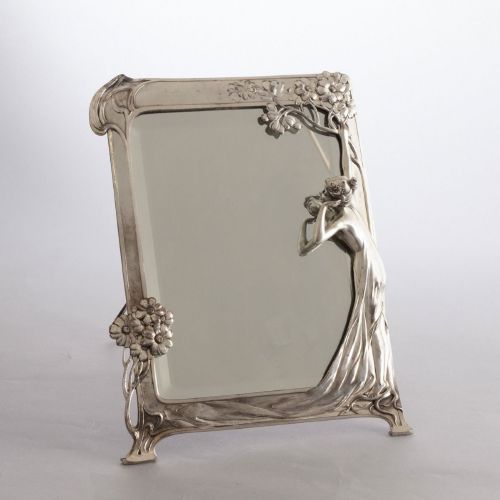
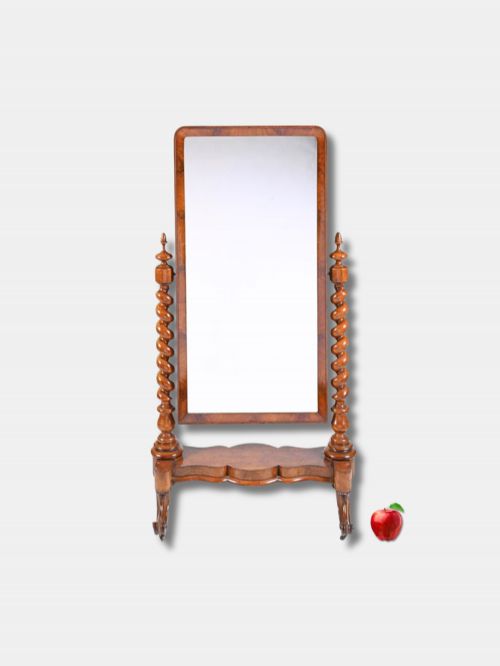
Specialist techniques include the turning of wooden supports, such as barley twist columns on Victorian examples, alongside hand-applied lacquered wood finishes. Pewter is also utilised in specific continental pieces, bearing manufacturer stamps.
Edwardian Free Standing Mirror Retail Price Guide 2026
Typical asking prices for edwardian free standing mirror among the pieces listed under this phrase on Sellingantiques today, from the lower quarter to the upper quarter. They describe what is for sale here now, not the wider market.
The inventory records periods from the eighteenth century through to the 1930s, including Regency and Victorian eras.
What varies in quality
Quality rests upon the selection of timber figures, from burr walnut to figured mahogany, and the precision of the marquetry inlay. Superior cabinetwork is visible in the stability of the floor frames and the robust construction of the pivoting mechanisms.
The integration of style dictates distinction, whether through finely turned barley twist supports or hand-painted Chinoiserie decoration. Original brass hardware and clean mirror glass further separate the finer examples from standard production.
WMF
The Edwardian Free Standing Mirror Glossary
- Cheval mirror
- A large floor-standing mirror supported in a frame that allows it to swing. This form became popular for full-length dressing reflections.
- Dressing mirror
- A smaller mirror designed to sit upon a table or dressing chest. These often incorporate small drawers within the base structure.
- Marquetry
- Decorative woodwork where pieces of veneer are fitted into a ground material to form designs. Satinwood and mahogany items frequently display this technique.
- Barley twist
- A spiral turning carved into wooden uprights or supports. This decorative turn appears frequently on Victorian mirror frames.
- Chinoiserie
- European interpretation of Chinese and East Asian artistic traditions. It manifests on frames through painted motifs and lacquered wood surfaces.
Edwardian Free Standing Mirror: Frequently Asked Questions
What is a cheval mirror?
A cheval mirror is a tall floor-standing glass mounted within a frame on pivots, allowing the entire plate to tilt. The design permits a full-length view for dressing.
These pieces stand independently on the floor, supported by four legs or a solid platform base, making them practical movable furniture for bedrooms.
How do I use a dressing mirror?
Dressing mirrors are designed to rest upon tables, chests of drawers or specialised vanity stands. They provide an adjustable facial and upper-body reflection for grooming.
Many examples include small drawers in the base plinth for storing pins, trinkets or everyday accessories.
Where should I place a floor-standing mirror?
Floor-standing mirrors suit bedrooms, dressing rooms and hallways where natural light can be captured and reflected across the space. Their proportions require sufficient floor area to allow the swing mechanism to operate freely.
Positioning them opposite a window maximises the distribution of light in a room.
How do I date an antique mirror?
Dating relies upon timber selection, construction methods, hardware and stylistic cues such as Regency curves or Edwardian inlay. Secondary woods and assembly marks often reveal the period of manufacture.
Glass characteristics, including bevels and silvering methods, provide further clues alongside recorded historical styles.