


Edwardian Folding Muffin Stand
An edwardian folding muffin stand is a tiered wooden helper designed to present afternoon tea compactly, folding flat when the entertaining is done.
Edwardian Folding Muffin Stand
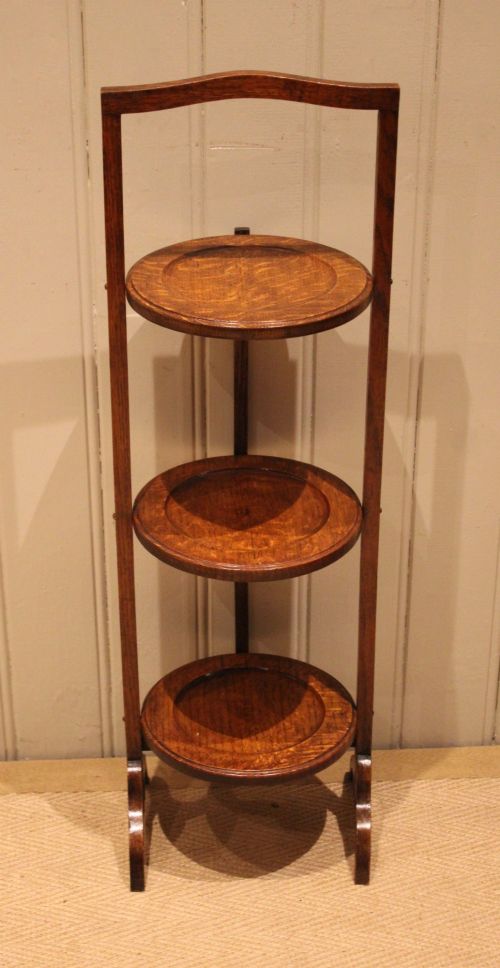
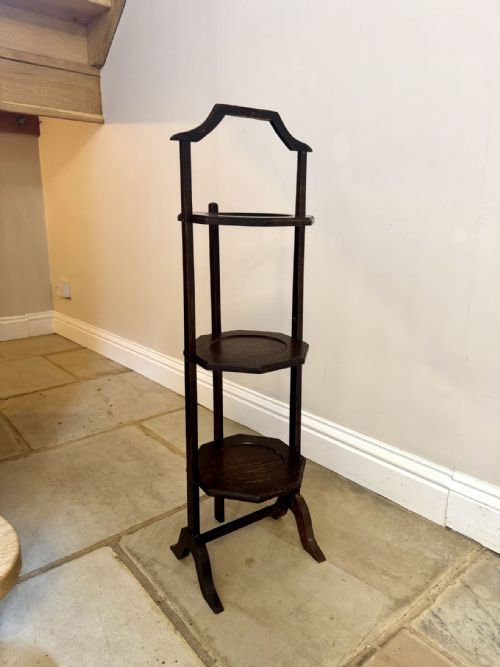
When you search for an edwardian folding muffin stand, you are looking at tiered serving pieces primarily built during the Edwardian period and the opening decades of the twentieth century. These tier stands and cake stands take the form of upright wooden frames fitted with multiple pivoting or folding shelves to hold baked goods. Most examples on the market appear in mahogany or oak, reflecting the domestic tastes of the period between nineteen hundred and nineteen twenty.
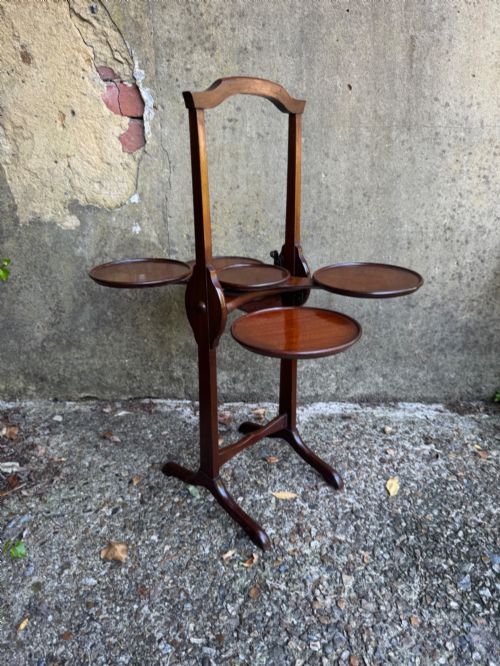
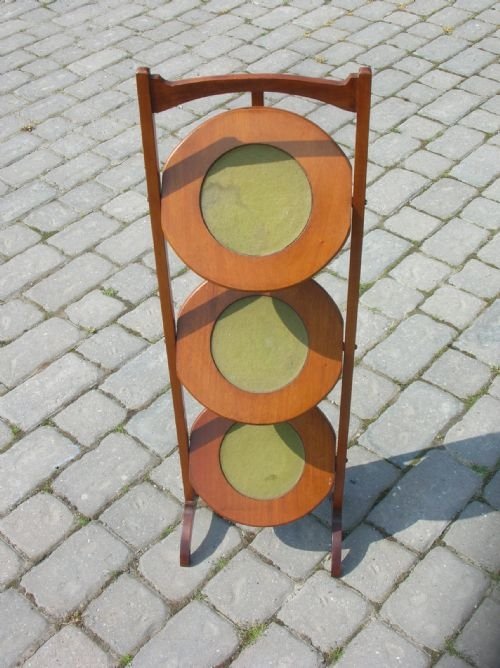
The practical genius of these stands lies in their hinged or pivoting tier mechanism, which allows the horizontal platforms to swing flat against the central support post. This design saved precious floor space in Edwardian drawing rooms once tea service concluded and the treats were cleared away. You will encounter both three-tier and four-tier formats across the inventory, each offering graduated shelves that narrow toward the top.
How they were made
Cabinetmakers constructed these stands using solid hardwoods like mahogany, oak, and walnut, frequently selecting satinwood for subtle inlay accents or banding. The central stems were often turned on a lathe to create slender, elegant columns topped with a carrying handle or ring.
The folding action relies on clever brass hinges or pivoting wooden dowels that join the circular or shaped trays to the main vertical shaft. Metal fixtures were securely embedded into the wood to ensure the tiers remained level when open and dropped smoothly flat when lifted.
Current listings span the Edwardian period, nineteen hundred, nineteen ten, nineteen twenty, and the nineteenth century, using mahogany, oak, walnut, and brass.
What varies in quality
The distinction between ordinary utility pieces and finer examples rests on the choice of timber and the crispness of the turning on the central column. Superior stands display carefully selected mahogany or figured walnut grain across every tier, whereas basic models utilise plain oak or softer woods.
Hardware and joinery integrity define the enduring usability of each piece, particularly the snugness of the brass hinges and the stability of the pivoting arms. A better-made stand maintains rigid alignment when fully opened, without the wobble that plagues cheaper or heavily worn specimens.
The Edwardian Folding Muffin Stand Glossary
- Tiered stand
- A piece of furniture featuring multiple horizontal platforms arranged vertically above one another. These levels allow for the efficient display of small items or food.
- Mahogany
- A durable tropical hardwood prized for its rich reddish-brown colour and smooth grain. It remained a dominant material for fine Edwardian household furniture.
- Satinwood
- A luminous, yellowish wood frequently utilised for decorative stringing and inlay work. Craftsmen deployed it to create subtle contrasts against darker cabinet timbers.
- Turning
- The technique of shaping wood on a rotating lathe using cutting tools. This process produced the slender central stems and decorative columns seen on these stands.
Edwardian Folding Muffin Stand: Frequently Asked Questions
What is an edwardian folding muffin stand?
It is a portable wooden tiered furniture piece designed to hold cakes, pastries, and afternoon tea items in Edwardian homes.
The hinged shelves allow the entire structure to collapse into a slim profile for storage when not in use.
How were these stands used?
Hosts placed them beside tea tables to expand serving space without cluttering the main room with extra furniture.
Each graduated tier held a different plate of cakes, scones, or muffins during afternoon gatherings.
How do I care for the wood?
Keep the timber away from direct heat sources and sudden humidity shifts to prevent the joints from loosening.
Occasional treatment with appropriate furniture wax maintains the natural lustre of the mahogany or oak finish.
How many tiers do they have?
Most surviving examples feature either three or four circular wooden shelves mounted on a central column.
The shelves typically decrease in diameter from the bottom tray up to the top.