


Edwardian Floral Pearl Necklace
An edwardian floral pearl necklace is a delicate, nature-inspired jewel that brings grace to any neckline through intricate seed pearl work and precious metal settings.
Edwardian Floral Pearl Necklace
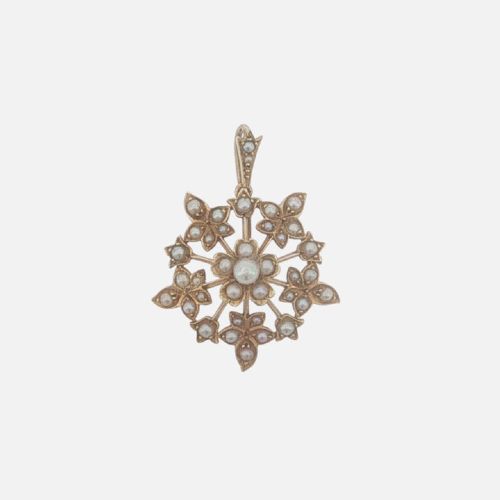
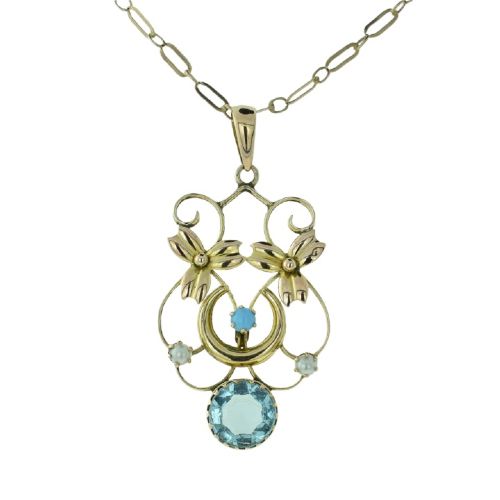
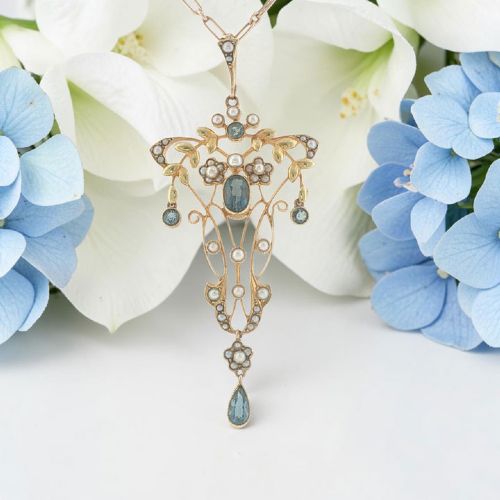
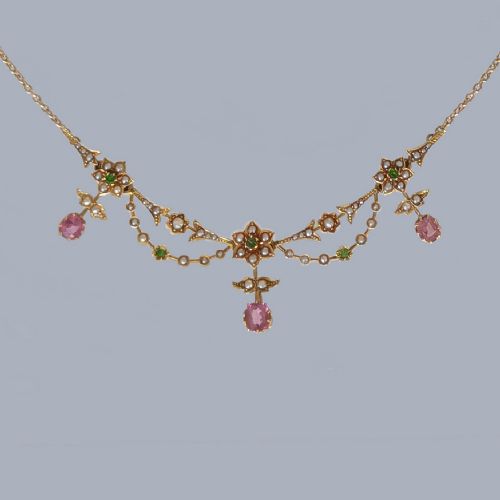
An edwardian floral pearl necklace captures the delicate botanical motifs of the early twentieth century, drawing on natural forms such as wreaths, scrolls, and leaves. You encounter these most frequently as pendant necklaces suspended from fine gold chains, often integrating floral clusters.
The aesthetic bridges late Victorian exuberance and the sweeping lines of Art Nouveau, leaning heavily into symmetric and asymmetric floral arrangements. Seed pearls form the petals and leaves, frequently paired with coloured gemstones like peridot, aquamarine, amethyst, and pink sapphire.
Most examples originate from the Edwardian era and surrounding decades, spanning the late nineteenth century to the interwar period. They range from simple foliate drops to elaborate fringe and convertible pendant-brooch designs.
How they were made
Goldsmiths utilised 9ct and 15ct gold, along with rose gold and platinum, shaping the metal into slender wirework frames that support intricate stone settings. Seed pearls are individually drilled and secured onto fine pins or threaded onto silk within the hollow or open-backed gold cavities.
Gemstones including diamond, aquamarine, peridot, and amethyst are bezel or collet set by hand, anchoring the central focal points of the floral designs. Enamel work occasionally reinforces the botanical palette, adding permanent colour to leaves and stems.
What varies in quality
The refinement of the metalwork dictates the upper tier of these pieces, distinguishing hand-wrought wire scrolls from simpler stamped components. Goldsmiths who achieved seamless integration between the gold structure and the pearl clusters created more durable, cohesive jewels.
The uniformity, lustre, and complete retention of the seed pearls alter the visual impact significantly. Pieces retaining matched natural seed pearls alongside clean, well-cut coloured gemstones command greater appreciation than those with mismatched or replaced elements.
S. Blanckensee & Son
The Edwardian Floral Pearl Necklace Glossary
- Seed pearl
- A tiny, naturally occurring or cultured pearl, typically under two millimetres in diameter. These tiny spheres form the delicate floral petals characteristic of the period.
- Fringe necklace
- A necklace featuring vertical drops suspended at intervals along the lower edge of the main chain. This layout showcases cascading gem-set clusters.
- Foliate pendant
- A pendant shaped to resemble leaves, vines, and plant foliage. Such designs define the botanical aesthetic of Edwardian jewellery.
- Collet setting
- A metal collar that encircles the girdle of a gemstone to hold it securely in place. This technique provides a clean, low-profile edge around central stones.
Edwardian Floral Pearl Necklace: Frequently Asked Questions
How do I care for my necklace?
Seed pearls require gentle treatment because organic material is sensitive to harsh chemicals, perfumes, and cosmetic lotions. Wipe them clean with a soft dry cloth after wearing and store them flat away from harder metals.
Avoid immersing antique gold and pearl pieces in ultrasonic cleaners or liquid chemical dips. Professional cleaning should remain minimal to protect the delicate seed pearl mountings.
Are these necklaces fragile?
The fine wirework and tiny seed pearls demand mindful handling during daily wear and storage. While sturdy enough for occasional outings, they benefit from not being worn during vigorous physical activity.
Many pieces utilise fine gold chains that complement the pendant weight without overpowering the delicate floral composition. Inspect the jump rings and clasp connections periodically to ensure secure fastening.
How do I distinguish Edwardian from Victorian pieces?
Edwardian designs typically favour lighter, airier platinum and yellow gold frameworks with pastel stones like peridot and aquamarine. Victorian equivalents often display heavier metal weights and deeper coloured stones with more solid backing.
Floral motifs persisted across both eras, but Edwardian jewellers leaned towards naturalistic garlands and bow motifs executed in lighter openwork. Hallmarks and stylistic nuances help clarify the exact period of manufacture.
Can these pendants double as brooches?
Certain antique examples incorporate hidden pin stems and safety catches on the reverse, allowing them to function as both pendants and brooches. This convertible engineering offered Victorian and Edwardian wearers versatile fastening options for different garments.
Examining the reverse reveals whether a hinge and pin mechanism accompanies the suspension loop. Such dual-purpose items highlight the inventive craftsmanship of the period.