
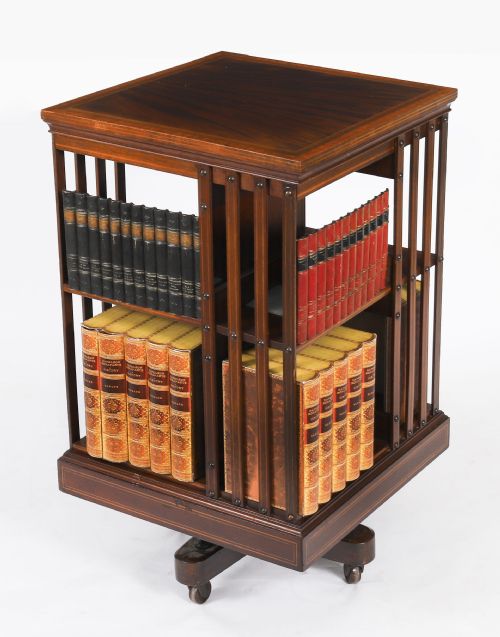
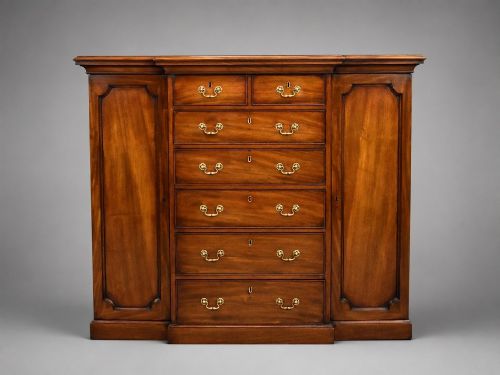
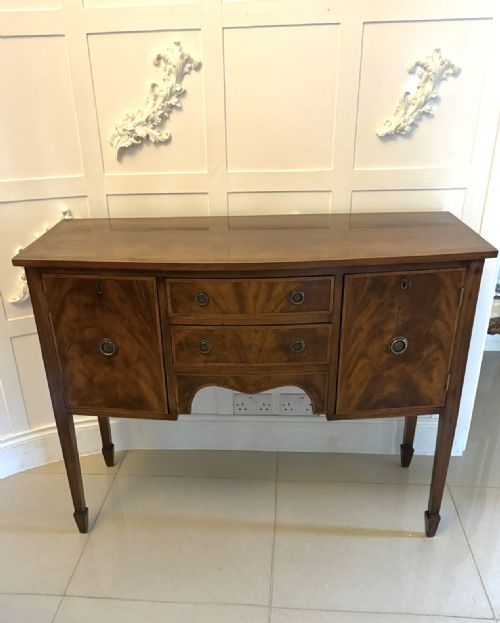

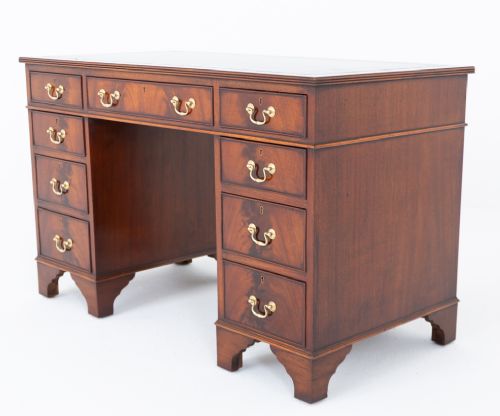
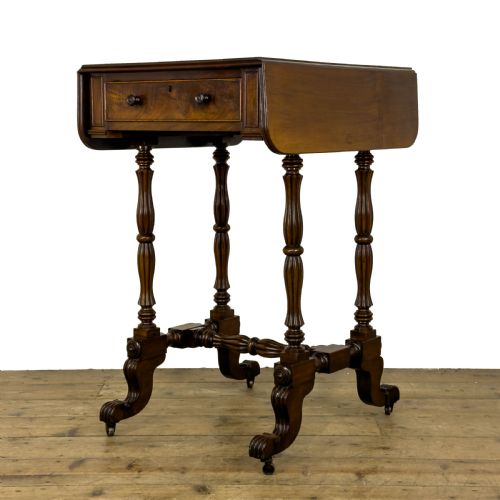
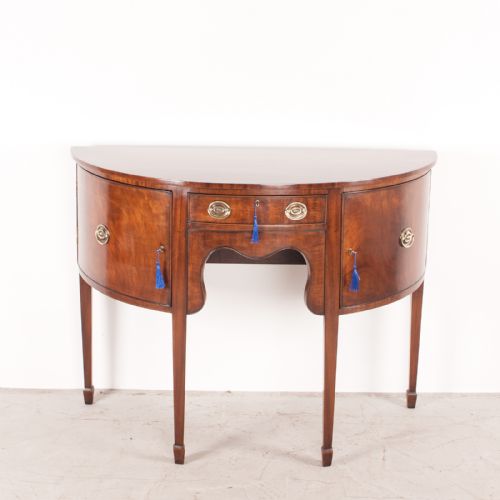
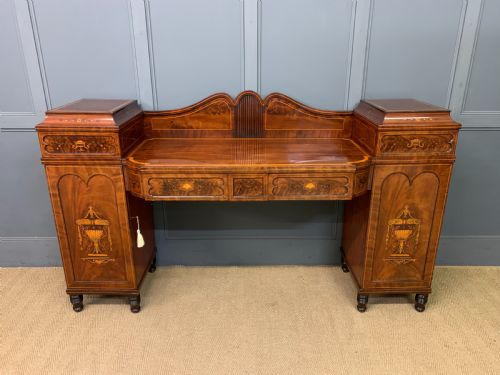
Edwardian Flame Mahogany Table
These edwardian flame mahogany table pieces bring dramatic timber figuring and refined proportion into a room.
Edwardian Flame Mahogany Table
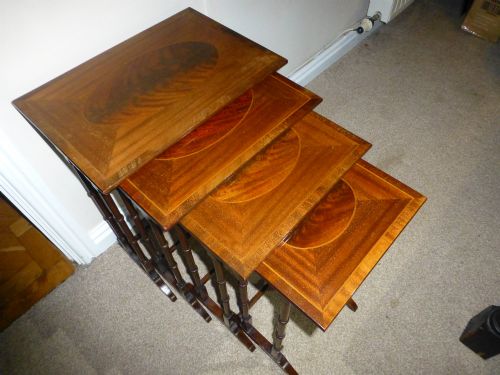
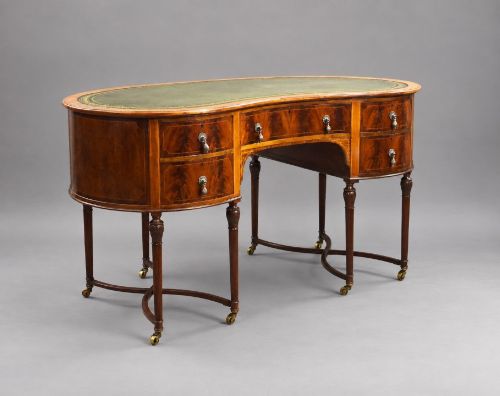
An edwardian flame mahogany table typically manifests as a writing desk, an occasional stand or an extending dining board produced in the early twentieth century. The period favoured lighter proportions than the preceding Victorian era, often adopting Sheraton or Georgian revival motifs alongside the characteristic striking wood grain.
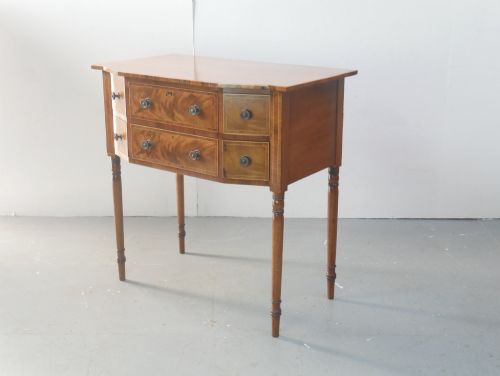
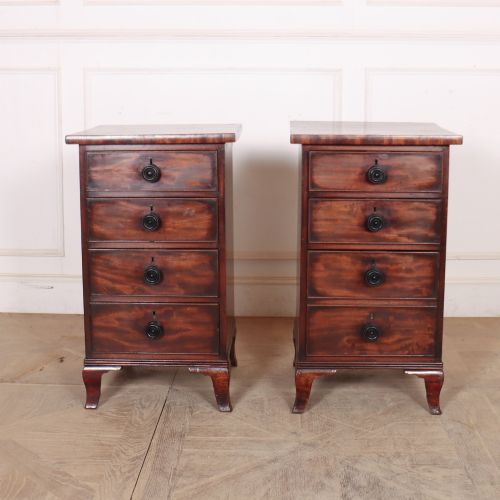
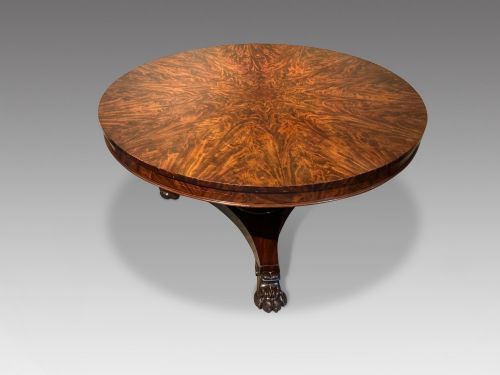
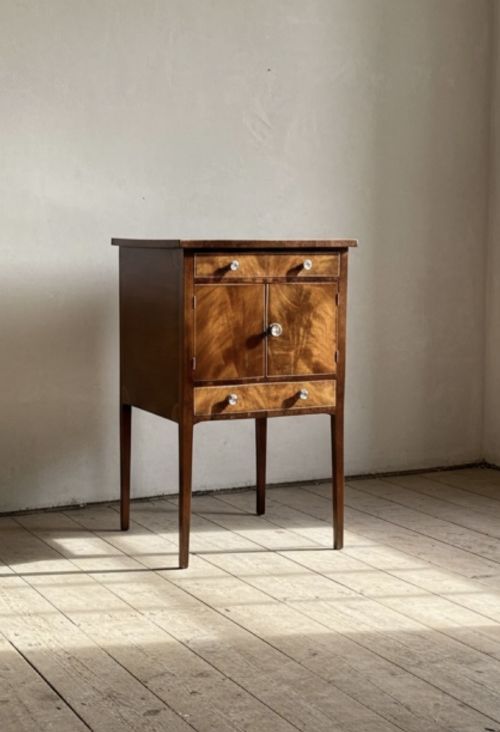
The inventory demonstrates a strong representation of smaller occasional stands, circular coffee tables and writing furniture. These forms suited the drawing rooms and boudoirs of the period, offering utility combined with decorative timber surfaces.
While the search specifies the Edwardian period, related pieces in the archive span the nineteenth century and earlier revivals. This continuity shows how cabinet makers returned repeatedly to the same figured veneers and classical forms over generations.
How they were made
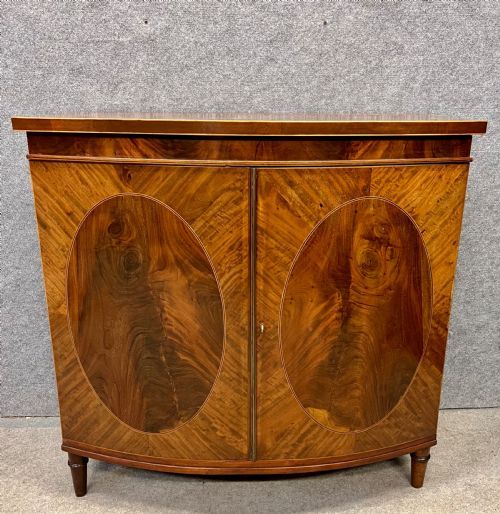
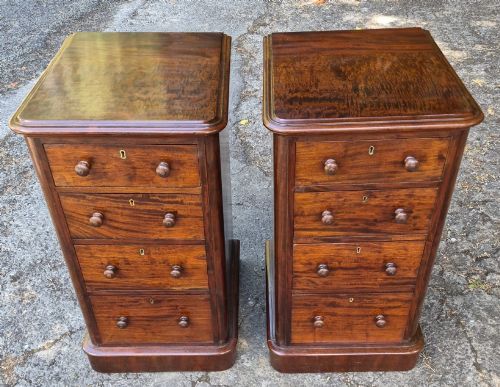
Makers constructed these pieces using solid mahogany for structural framing alongside carefully selected veneers applied to carcases and tabletops. Flame mahogany veneer derived from the fork of the tree, where the grain grew in undulating, fiery patterns that required expert sawing and matching.
Workshops integrated decorative stringing and banding using contrasting timbers such as boxwood and satinwood to frame the central figured panels. Brass fittings, leather inserts and subtle inlay work completed the construction, relying on traditional joinery techniques passed down through generations of cabinet makers.
Current listings and past archives feature mahogany, brass, leather, satinwood, boxwood and glass across Victorian, Edwardian, Regency and Georgian periods.
What varies in quality
Quality rests primarily on the selection and symmetry of the veneer and the integrity of the underlying timber framework. Superior examples display mirrored flame patterns that flow evenly across the surface without disruption or poor patching.
The refinement of the secondary timbers, such as oak drawer linings, and the crispness of any boxwood or satinwood stringing separate standard workshop production from finer cabinet work. Structural stability and untouched original surfaces further distinguish the higher tier of surviving pieces.
Waring and Gillows·Robson and Sons·Gillows·George Hepplewhite
The Edwardian Flame Mahogany Table Glossary
- Flame mahogany
- A veneer taken from the fork of the mahogany tree where the grain produces a distinctive flamelike pattern. This highly decorative figuring defined the most prestigious surfaces of the period.
- Stringing
- Thin lines of contrasting timber inlaid into grooves on tabletops and drawer fronts. It created geometric borders that framed the primary mahogany veneers.
- Satinwood
- A pale, yellow-toned timber utilised for banding and inlay work. It provided a bright contrast against the dark reddish-brown tones of the surrounding mahogany.
- Demi-lune
- A half-moon shape characteristic of side tables and cabinets designed to sit flush against a wall. This format maximised floor space in smaller Edwardian rooms.
- Occasional table
- A small, movable stand designed for light domestic use such as holding books or tea. These pieces appeared in numerous forms across the Edwardian interior.
Edwardian Flame Mahogany Table: Frequently Asked Questions
How do I care for flame mahogany?
Keep the wood away from direct sunlight and steady sources of heat to prevent the veneer from drying out or splitting.
Apply a traditional beeswax polish occasionally and buff gently with a soft cloth to maintain the natural lustre of the surface.
Are these tables suitable for daily use?
Most occasional and writing tables function well for everyday tasks provided you use coasters and protective pads against moisture and heat.
Heavier dining formats handle regular gatherings easily, though the delicate veneered surfaces still benefit from sensible precautions.
How do I spot Edwardian style?
Edwardian pieces generally feature lighter framing and more restrained ornamentation than heavy Victorian furniture, often drawing inspiration from eighteenth-century Sheraton designs.
Look for symmetrical flame veneers paired with subtle stringing rather than heavy carving or bulky proportions.
What is flame mahogany veneer?
This veneer comes from the point where a branch joins the main trunk, creating a swirling, fiery grain pattern that catches the light.
Cabinet makers laid these thin slices of timber across tabletops and drawer fronts to create striking decorative centerpieces.