




Edwardian Fireside Log Box
An Edwardian fireside log box keeps fuel close at hand beside the hearth while adding period character to a room.
Edwardian Fireside Log Box
When searching for an Edwardian fireside log box, a buyer encounters practical fuel containers that double as decorative furnishings for the hearth. These pieces serve to store logs, coal, or kindling neatly away from the floor while complementing the fireplace.
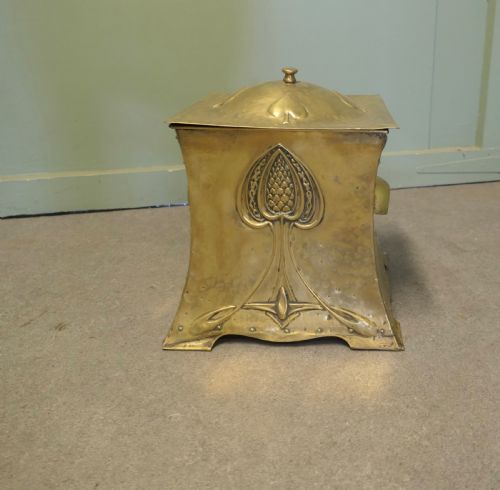
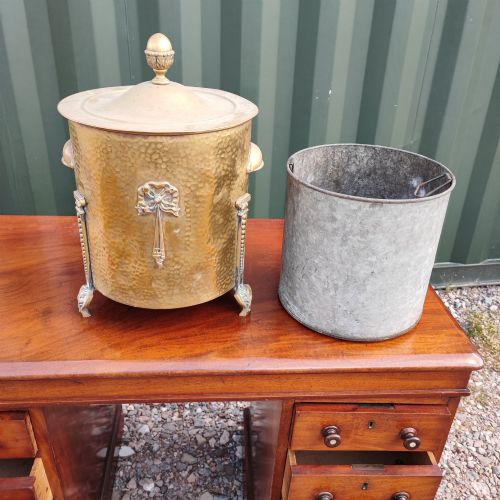
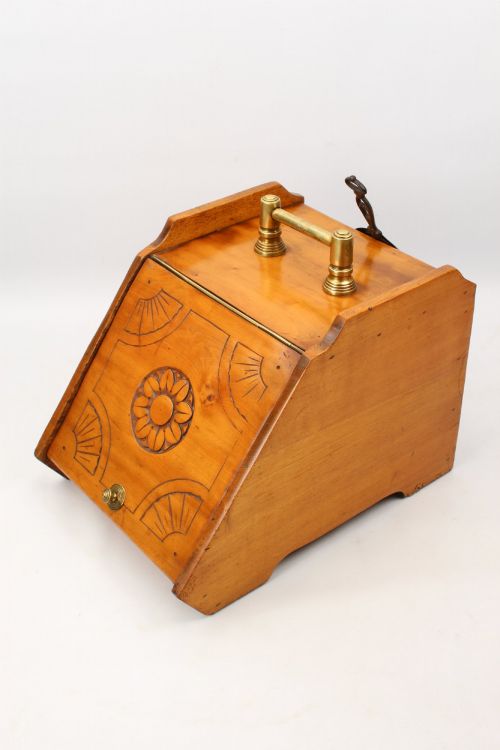
The selections available here range from solid timber cabinets and bins to hammered metal buckets and scuttles. The forms encompass traditional purdoniums, lidded boxes, and open bins designed to sit beside the grate.
Makers of this era drew upon established forms from the Victorian period alongside newer designs from the Arts and Crafts and Art Nouveau movements. Buyers find both simple utilitarian boxes and more ornate vessels featuring inlaid wood or decorative metal panels.
Materials and construction
Cabinet makers utilised sturdy timbers such as oak, mahogany, and walnut to construct the primary bodies of wooden log boxes and purdoniums. These wooden forms frequently incorporate carved details or delicate string inlay.
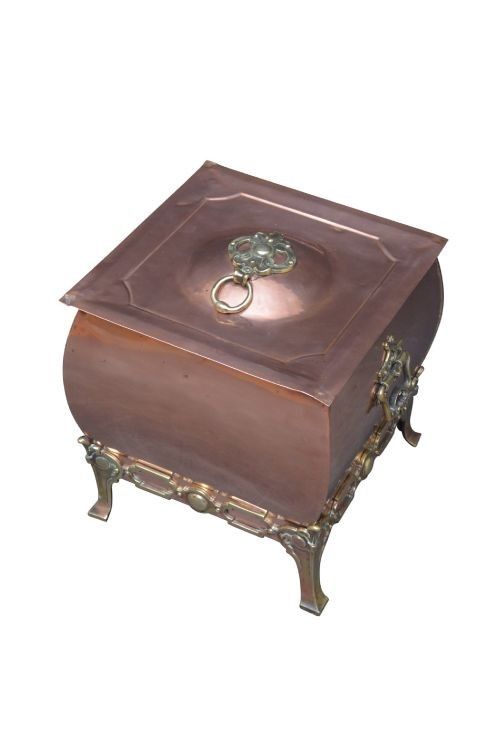
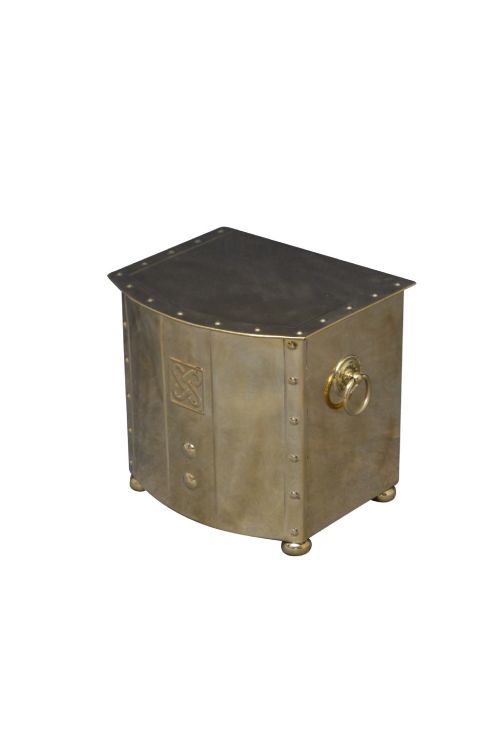
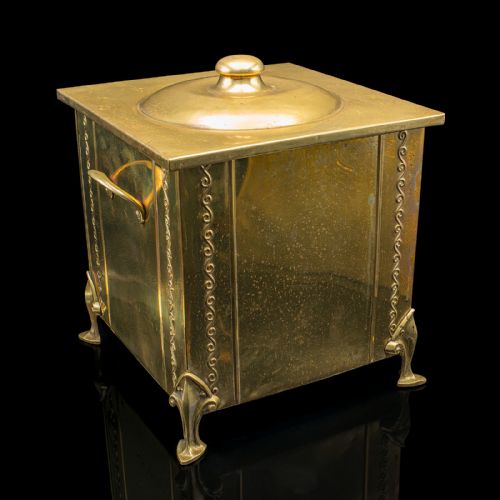
Metalworking played a central role in these fireside accessories, with brass and copper forming bodies, linings, and decorative accents. Craftsmen shaped these metals through beating, repoussé work, and riveting, often combining them with wrought iron.
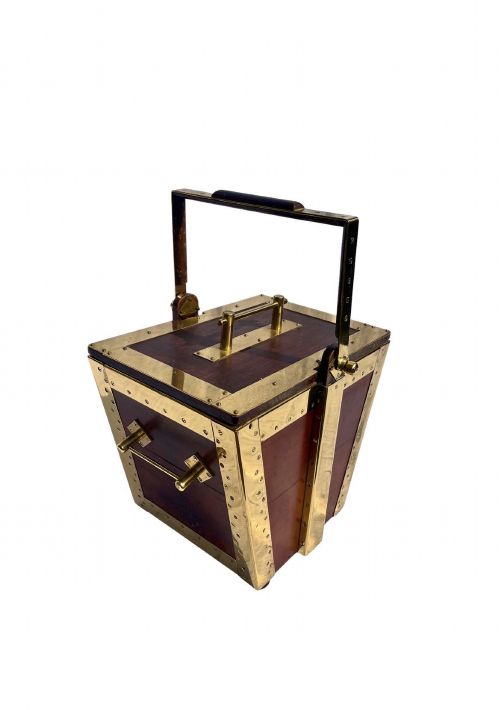
Many designs combined both timber and metal, placing copper panels onto oak frames or mounting brass handles and hinges onto wooden boxes. This mixed-material approach provided both the warmth of wood and the durability of metal.
Listings feature brass, copper, oak, mahogany, and wrought iron across Victorian, Edwardian, and Art Deco periods.
Distinctions in quality
The calibre of a fireside box rests on the integrity of its construction and the weight of its materials. Substantial gauge copper, thick brass fittings, and solid timber framing separate robust pieces from lighter, more flimsy examples.
Hand-worked detail elevates the better pieces above standard utility items. Crisp carving on oak panels, skilful hand-beating on copper surfaces, and refined inlay work indicate superior craftsmanship during production.
The survival of original internal metal liners and matching shovels or coal spades preserves the integrity of the piece. Well-executed joinery and sturdy hardware ensure the vessel handles heavy loads of fuel without loosening.
Liberty London
The Edwardian Fireside Log Box Glossary
- Purdonium
- A specialised cabinet or box designed for storing coal or logs beside the fireplace, typically featuring a drop-down front or a sloping lid. This form became popular in the Victorian period and continued into the Edwardian era.
- Arts and Crafts
- A design movement that prioritised traditional craftsmanship, visible construction, and natural materials over mass production. Pieces from this style often feature hand-hammered copper and simple geometric forms.
- Repoussé
- A metalworking technique where the artisan hammers the design from the reverse side to form a raised pattern on the front. This method frequently appears on the copper panels of Edwardian fireside boxes.
- Coal scuttle
- A bucket or vessel designed for carrying coal to the fire, often equipped with a swinging handle and a matching shovel. These items were made in brass, copper, and iron.
- Inlay
- A decorative technique where pieces of contrasting wood or other materials are inserted into depressions in the base wood. Edwardian cabinets frequently utilise this method to add borders or floral motifs.
Edwardian Fireside Log Box: Frequently Asked Questions
What is a purdonium?
A purdonium is a dedicated fireside cabinet or box built to hold fuel such as coal or wood. These containers often include a hinged or drop-down lid and sometimes house a removable metal liner.
They allowed households to keep fuel tidy and accessible in the principal rooms without spilling dust on the carpet.
How do I clean copper log boxes?
Copper surfaces benefit from gentle dusting with a soft cloth to remove everyday soot and debris. Avoid harsh abrasive cleaners that strip away the aged surface character.
Many collectors prefer to leave a natural darkened patina rather than polishing the metal to a bright shine.
Where should I place a fireside box?
These boxes sit directly on the hearth or floor immediately beside the fireplace or wood-burning stove. Their primary purpose is keeping dry logs or kindling within arm's reach of the grate.
Positioning them away from direct excessive heat protects the timber joints and prevents the wood from drying out.
How do I distinguish Edwardian from Victorian boxes?
Victorian fireside pieces tend to feature heavier, more ornate carving and darker finishes, alongside robust brass ornamentation. Edwardian examples often lean towards lighter timbers, refined inlay, and clean Arts and Crafts lines.
Overlaps occur because late Victorian designs continued into the Edwardian decades without abrupt changes.