



Edwardian Epergne
An edwardian epergne brings dramatic vertical centrepieces to the dining table, combining cut glass and silver for striking floral displays.
Edwardian Epergne
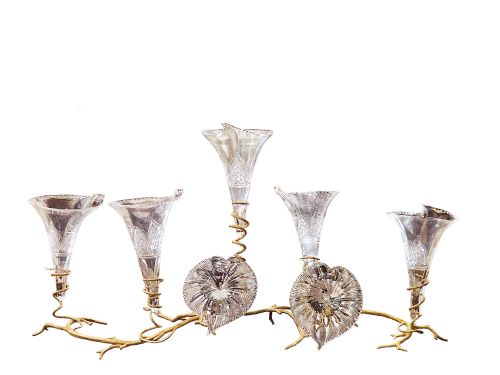
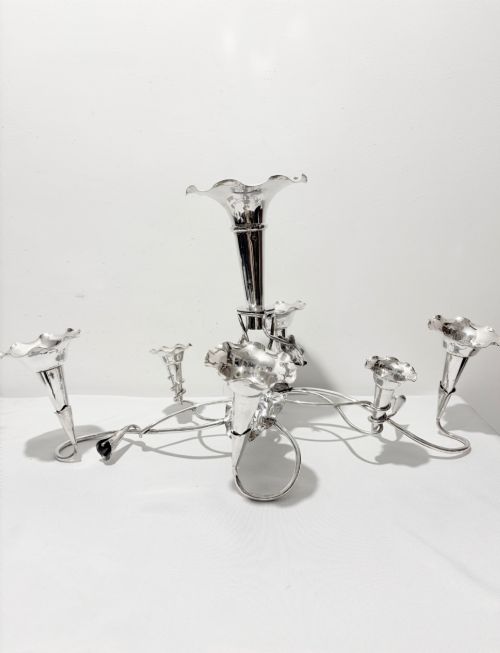
An edwardian epergne is a table centrepiece designed to hold flowers aloft through a central trumpet and surrounding detachable flutes, creating a tiered display. The pieces appearing on this page span the Edwardian era alongside earlier Victorian and later George V examples, often taking the form of large multi-branch table centrepieces.
Most examples rely on a combination of silver plate or sterling silver frames supporting blown glass elements such as cranberry or pearlescent flutes. Alongside traditional multi-trumpet epergnes, related forms include silver plated flower pot stands and mirrored plateau bases designed to reflect the glass above.
How they were made
Silversmiths constructed the metal framework using sterling silver or electroplated nickel silver, frequently employing piercing techniques to lighten large proportions. Frames often incorporate cast and chased decorative mounts to secure the detachable glass receptacles safely.
Glassmakers shaped coloured, clear, and pearlescent glass into slender flutes and trumpets, sometimes applying ruffled rims or cutting geometric patterns into the body. These glass elements drop into designated sockets on the metal base, allowing easy removal for cleaning.
Edwardian Epergne Retail Price Guide 2026
Typical asking prices for edwardian epergne among the pieces listed under this phrase on Sellingantiques today, from the lower quarter to the upper quarter. They describe what is for sale here now, not the wider market.
What varies in quality
Quality rests in the balance between the weight of the metal base and the delicacy of the glass flutes, where substantial sterling silver frames support undamaged, evenly coloured glass. Finer examples display crisp piercing on the silver work and perfectly matched glass trumpets without replacement elements.
The sophistication of the silhouette defines the upper tier of pieces, where multiple branches distribute weight harmoniously without appearing clumsy. Greater craftsmanship shows in integrated mirror bases and fitted ceramic pots bearing maker marks.
James Dixon & Sons·Royal Worcester
The Edwardian Epergne Glossary
- Epergne
- A large table centrepiece featuring multiple branches or receptacles for fruit, sweets, or flowers. These items dominated formal dining tables during the nineteenth and early twentieth centuries.
- Flute
- A tall, slender glass vase designed to slot into the arms of an epergne framework. They create the characteristic vertical height of the arrangement.
- Sterling silver
- A silver alloy containing 92.5 percent pure silver by mass, denoted by hallmarks on quality tablewares. It provides a durable and prestigious metal structure for finer pieces.
- EPNS
- Electroplated nickel silver, a common base metal method using a thin coating of pure silver over a nickel brass core. This technique allowed makers to produce impressive large proportions economically.
- Cranberry glass
- A rich red-pink glass coloured with gold chloride during manufacture. It became highly popular for decorative tablewares during the Victorian and Edwardian periods.
Edwardian Epergne: Frequently Asked Questions
What were epergnes used for?
These tall table centrepieces held cut flowers, sweetmeats, or small fruits to decorate formal dining settings. Their tiered design allowed diners to converse beneath the branching glass flutes.
Hosts used them to create a dramatic focal point at the centre of the table, often pairing them with matching mirrored plateau bases to amplify the display.
How do I clean an epergne?
The glass flutes lift out from the metal framework, allowing them to be washed separately in warm soapy water. Care must be taken with antique glass rims and delicate silver plate.
Silver components require gentle polishing with a suitable cloth to maintain their finish without wearing away thin electroplated layers on older pieces.
Are all the glass flutes original?
Because glass elements suffered accidental breakages over decades of use, many pieces feature replacement flutes sourced to match the original style and colour. Examining the fit inside the metal sockets and looking for minor variations in glass tone helps indicate originality.
Matching glass thickness and colour across every trumpet remains a key consideration when assessing the integrity of an epergne.
How do I tell Edwardian pieces apart from Victorian ones?
Edwardian designs generally favour lighter proportions, cleaner lines, and softer pearlescent or pastel glass tones influenced by early Art Nouveau tastes. Victorian examples often display heavier, richer cranberry glass and more ornate, robust silver plate mounts.
Hallmarks and registration numbers stamped on the metal base provide precise dating evidence to separate the two eras.