
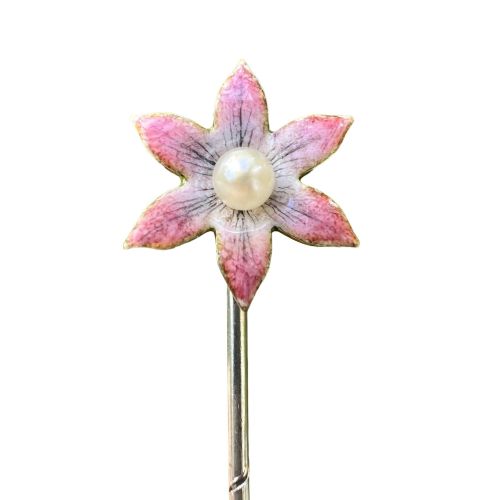


Edwardian Enamel Gold Brooch
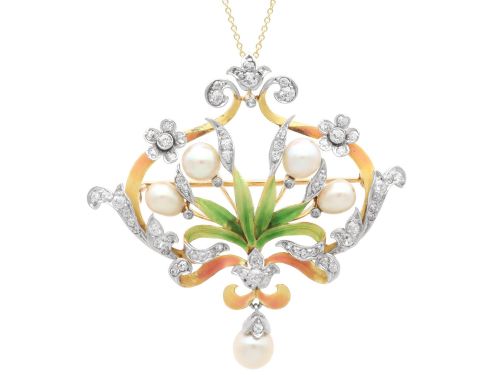
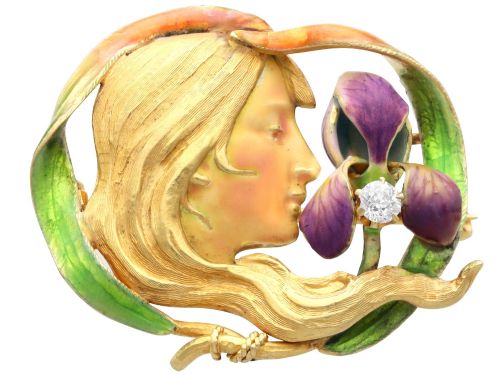
An edwardian enamel gold brooch combines fine metalwork with vitreous colour, offering wearable miniature art from the early twentieth century.
Edwardian Enamel Gold Brooch
An edwardian enamel gold brooch spans periods from the late nineteenth century into the nineteen thirties, encompassing Edwardian, Art Nouveau, Arts and Crafts, and Art Deco designs. Buyers searching this phrase encounter bar brooches, floral clusters, and naturalistic animal motifs worked in precious metals.
The material palette draws heavily on yellow gold, fifteen carat gold, eighteen carat gold, and silver gilt, frequently paired with diamonds, pearls, rubies, garnets, opals, and platinum. Forms range from simple stick pins to complex hearts and winged creatures.
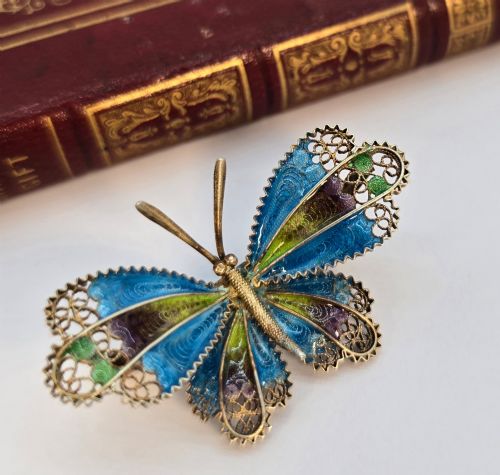
Bird and insect subjects dominate the selection, with ducks, cockerels, chicks, owls, swallows, and butterflies rendered in coloured enamel. These pieces reflect the prevailing naturalist tastes of the eras in which they were made.
Materials and Technique
Goldsmiths utilised yellow gold and higher carat alloys as the foundational structure for these jewels, often combining silver or platinum to mount diamonds and pearls securely. Enamel was applied to metal bases to create vibrant coloured surfaces, ranging from opaque shades to translucent translucent layers.
Techniques such as plique-à-jour permitted light to pass directly through the enamel cells without a backing, mimicking stained glass within a gold framework. Gemstones including natural pearls, rose cut diamonds, and amethysts were hand set to accentuate the central enamelled elements.
Flying ducks and perched chicks offer enduring charm in miniature.
Quality and Execution
Execution separates standard production from exceptional work, particularly in the precision of the enamelling and the delicacy of the surrounding gold wirework. Superior examples display smooth, evenly fired enamel surfaces free from stress fractures or modern repairs.
The integration of secondary stones, such as natural pearls and diamonds, dictates the distinction between simpler bar brooches and complex sculptural forms like winged birds or plique-à-jour hearts. Maker attribution, such as work by Murrle Bennet and Company, further distinguishes specific pieces.
Murrle Bennet and Co
The Edwardian Enamel Gold Brooch Glossary
- Plique-a-jour
- An enamelling technique where the enamel is applied within a open framework of metal, lacking a backing metal to let light shine through the transparent or translucent colour.
- Silver gilt
- Silver that has been coated with a thin layer of gold over its surface, providing the warm tone of gold while utilising a silver base.
- Bar brooch
- A narrow, elongated pin format popular across the Edwardian and Victorian periods, often set with central motifs like birds or clusters.
- Cluster brooch
- A design where multiple gemstones or enamel elements cluster tightly around a central stone or focal point, creating a compact and balanced display.
Edwardian Enamel Gold Brooch: Frequently Asked Questions
What periods do these brooches come from?
The evidence shows items originating from the Edwardian era, the Victorian period, and stretching into nineteen thirty.
Design influences span Art Nouveau, Arts and Crafts, and Art Deco styles alongside traditional Edwardian aesthetics.
What animal motifs appear most frequently?
Birds and insects form a major part of the design repertoire, including ducks, cockerels, chicks, owls, swallows, and butterflies.
Floral subjects and abstract heart shapes also feature prominently among the available formats.
How do stick pins differ from brooches?
Stick pins feature a long pin shaft designed to secure neckties, lapels, or hats with a decorative terminal head.
Brooches utilise a hinged pin and catch mechanism on the reverse to fasten directly onto heavier fabrics and garments.