
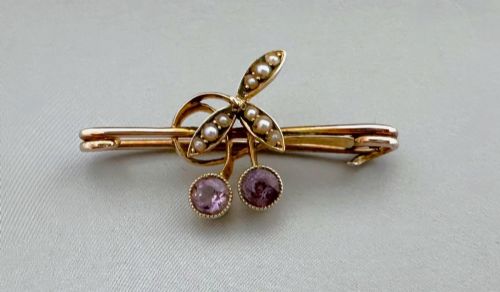


Gold Botanical Brooch Pin
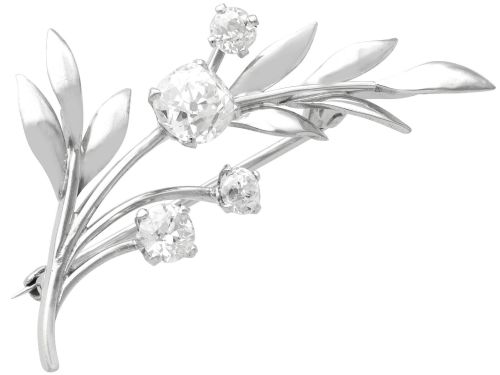
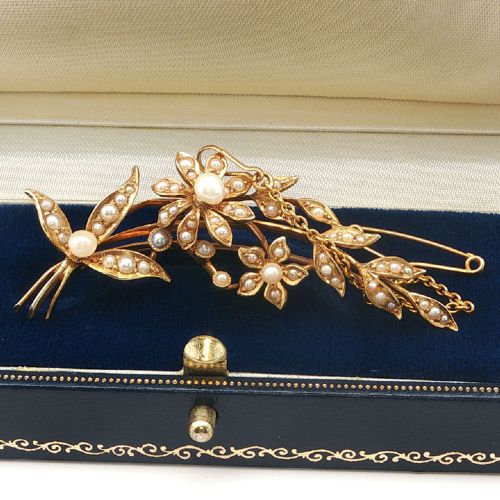
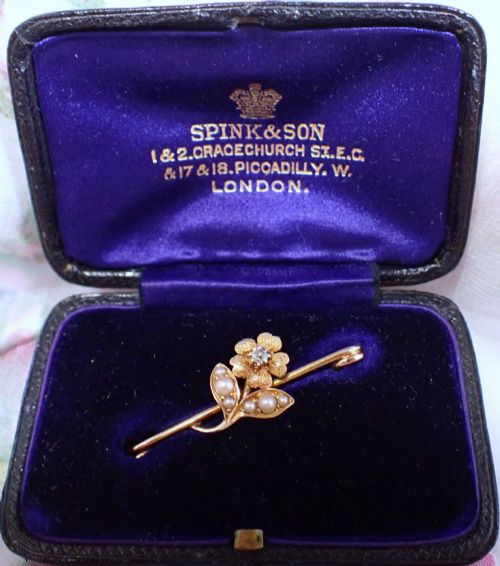
These gold botanical brooch pin pieces bring garden forms to the lapel, crafted in gold and silver with pearls and diamonds.
Gold Botanical Brooch Pin
A gold botanical brooch pin takes the form of leaves, flowers, clovers, and sprays, designed to fasten to garments. These ornaments appear across periods from the Victorian era through Edwardian and Art Nouveau designs up to mid-century Scandinavian work.
Buyers encounter Victorian flower sprays alongside tiny Art Nouveau leaf pieces and enamel clover designs. Materials span nine carat, fifteen carat, and eighteen carat gold, often paired with silver, diamonds, pearls, and enamel.
The selection ranges from early nineteenth century flower brooches to mid-century silver gilt and enamel pieces. Forms are primarily brooches shaped as natural foliage and blooms.
Materials and construction
Goldsmiths shaped these items using nine carat, fifteen carat, and eighteen carat gold, frequently combining gold with silver settings for stones. Plique-a-jour enamel and standard enamel add colour to botanical petals and leaves.
Gems such as diamonds, seed pearls, and opals are set into the metalwork to highlight floral centres and leaf veins. Essex crystal appears in yellow gold mounts for specific miniature depictions.
Listings feature items from the Victorian, Edwardian, and Art Nouveau periods, alongside mid-century Scandinavian work.
Assessing quality
Quality rests on the fineness of the metalwork, whether in the delicate detail of an Art Nouveau leaf or the secure setting of diamonds and pearls. Enamel work demonstrates skill through translucent Plique-a-jour techniques that let light pass through the colour.
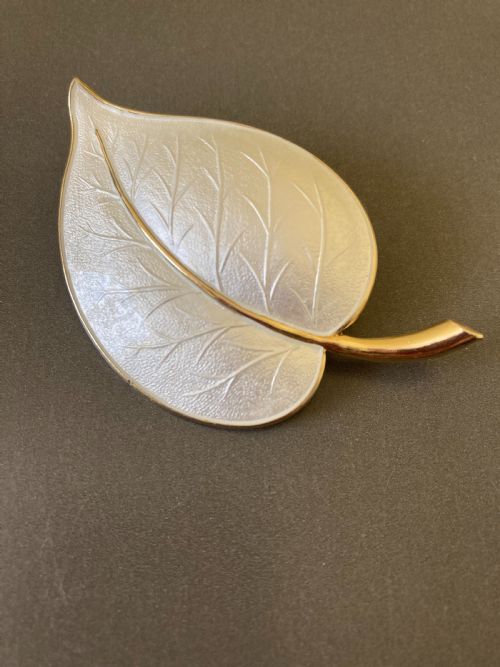
The harmony between naturalistic plant forms and the precious materials determines the success of each piece. Maker attribution, such as Norwegian silver gilt work by Aksel Holmsen, adds documented provenance to the construction.
Aksel Holmsen
The Gold Botanical Brooch Pin Glossary
- Plique-a-jour
- An enamelling technique where enamel is applied in cells without a backing, resembling miniature stained glass. This lets light shine directly through the coloured areas of a botanical design.
- Seed pearl
- Very small natural or cultured pearls used in tight clusters to form flower petals and buds. They require careful drilling and mounting on fine wire or pins.
- Silver gilt
- Silver that has been coated with a thin layer of gold on the surface. This technique provides the warm tone of gold combined with the working properties of silver.
- Essex crystal
- Reverse-crystal intaglio where a subject is carved into the back of a domed rock crystal and painted. The curved crystal magnifies the painted botanical detail beneath.
Gold Botanical Brooch Pin: Frequently Asked Questions
What periods do these botanical brooches come from?
The pieces span multiple eras, including the Victorian period, Edwardian years, and Art Nouveau movements. Later examples stretch into the mid-century Scandinavian style.
Designs reflect the aesthetic preferences of their decade, moving from naturalistic Victorian flower sprays to stylized Art Nouveau plant motifs.
How are pearls used in these designs?
Pearls and seed pearls form the petals, flower centres, and bud clusters in floral spray motifs. They provide a soft, luminous contrast against yellow gold and silver settings.
Jewellers secured these small pearls onto fine wire frameworks to create realistic botanical shapes.
What metals support these gemstone settings?
Makers utilised various purities of gold, ranging from nine carat and fourteen carat up to fifteen carat and eighteen carat yellow gold. Silver was also utilised, sometimes combined with gold or finished as silver gilt.
These metals provided the structural strength needed to hold diamonds, opals, and enamel work securely.
How do I style a botanical brooch today?
These pieces fasten easily to jacket lapels, collars, scarves, or hats to add a touch of historic flora to modern attire. Their varied sizes mean smaller leaf pins suit delicate fabrics while larger diamond and pearl sprays anchor heavier wools.
Pin them securely through sturdy weaves to support the weight of gold and gemstones.