

Edwardian Easel Photo Frame
When you handle an edwardian easel photo frame, you hold a piece designed to display family likenesses on dressing tables and writing desks.
Edwardian Easel Photo Frame
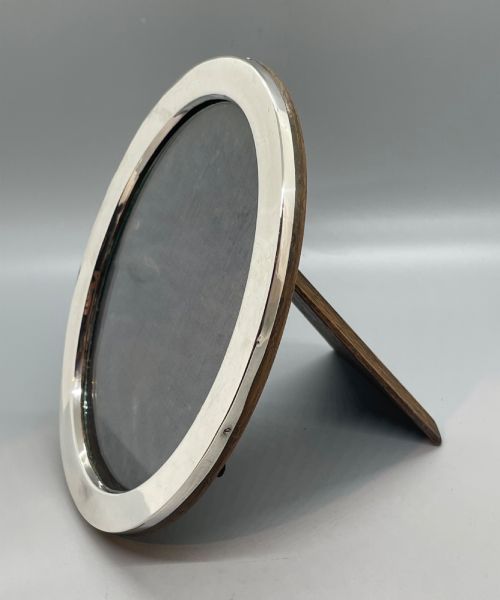
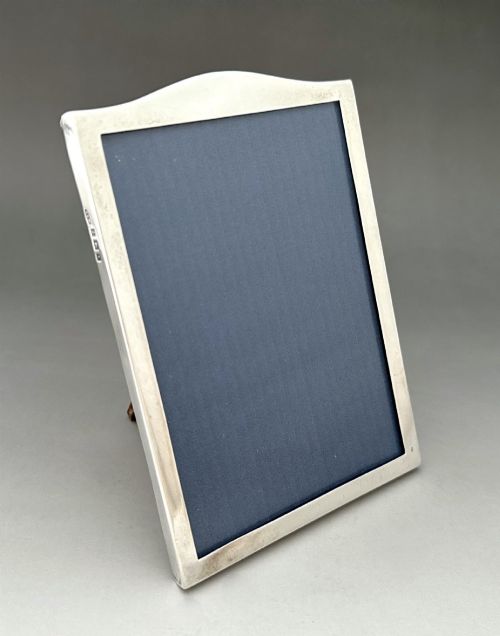
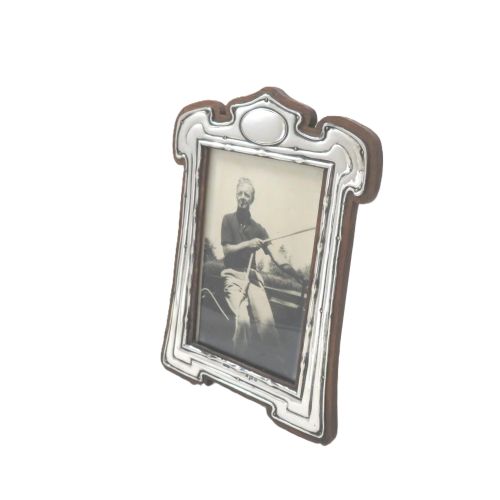
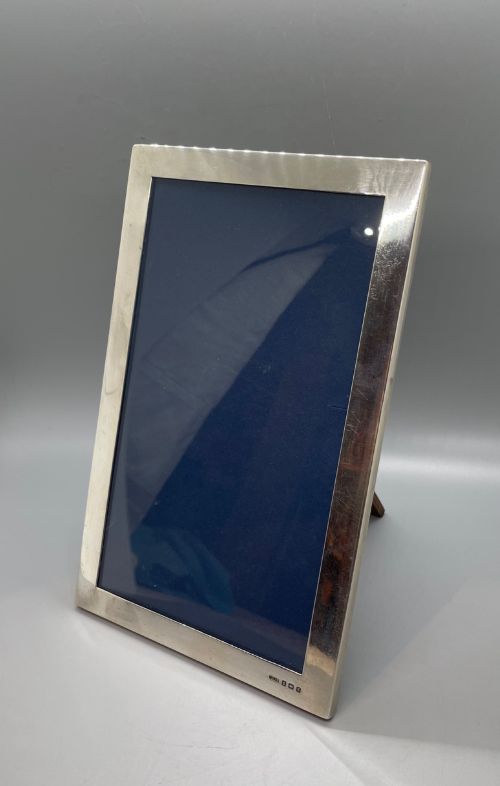
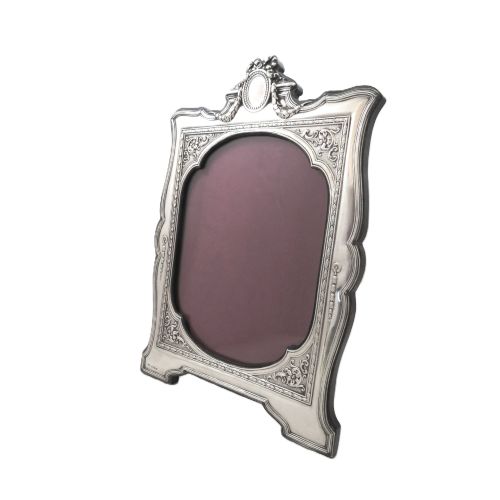
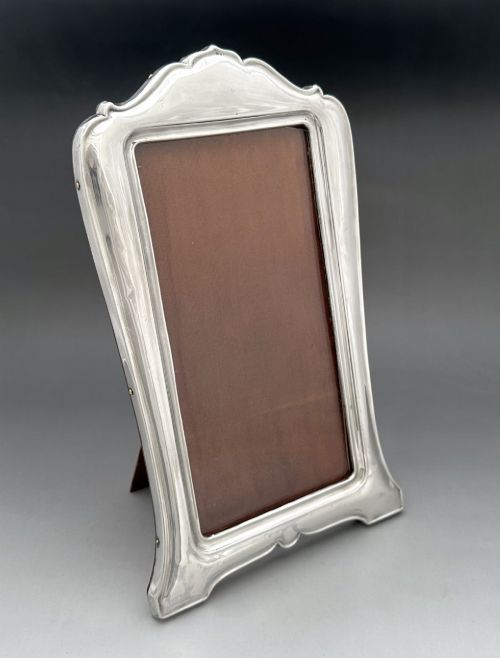
An edwardian easel photo frame is a desktop accessory intended to hold a portrait or landscape photograph upright using a rear support stand. The pieces gathered under this phrase span the late Victorian period through the Edwardian era and into the George V and Art Deco years.
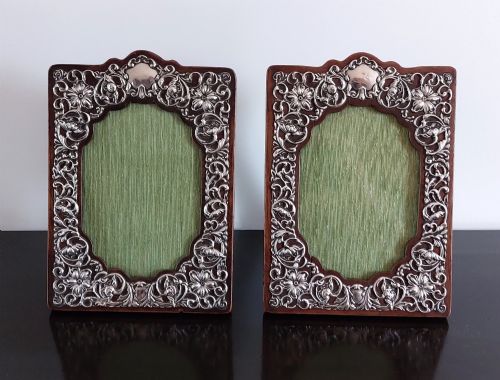
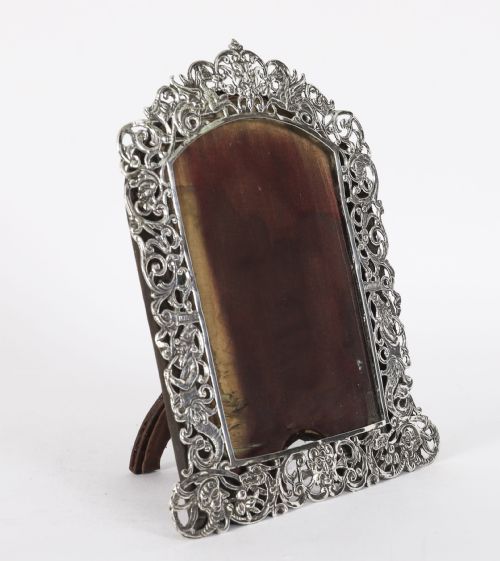
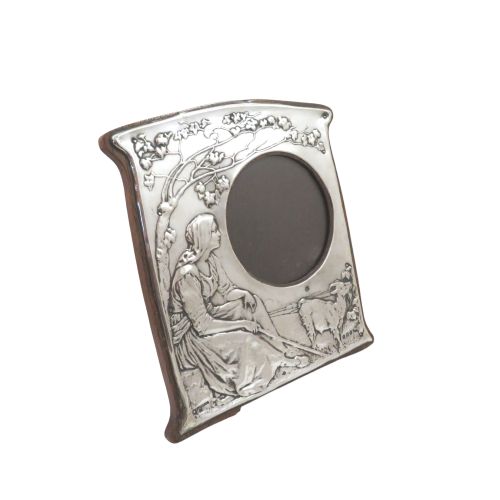
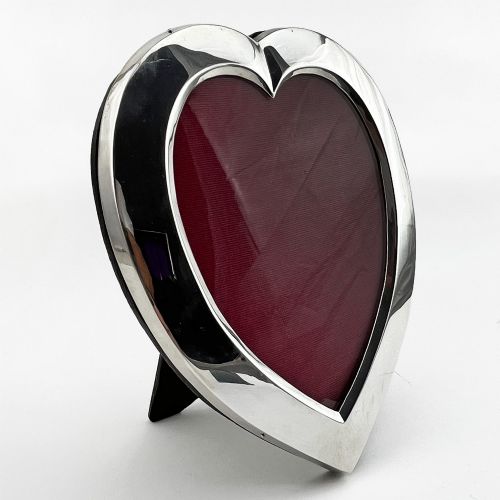
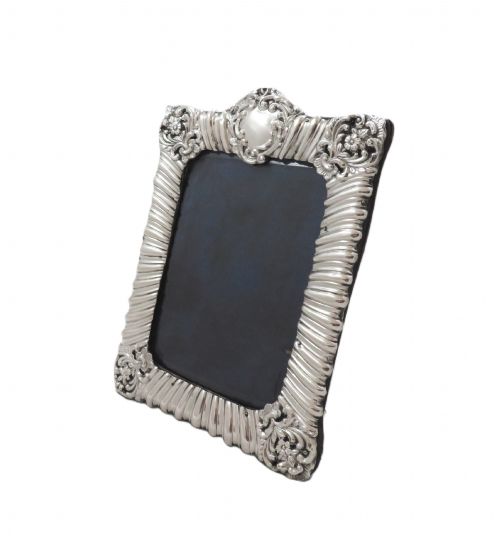
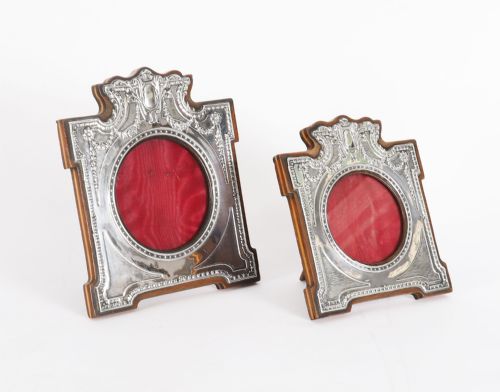
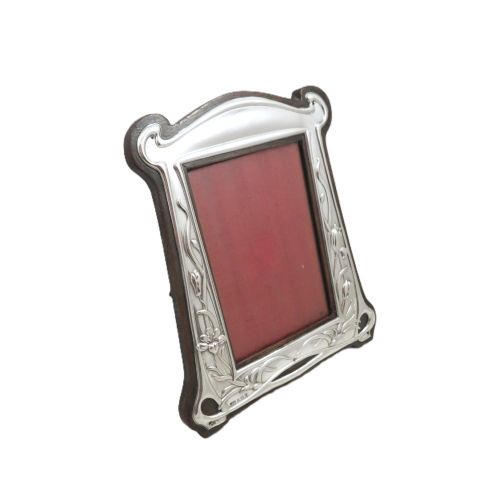
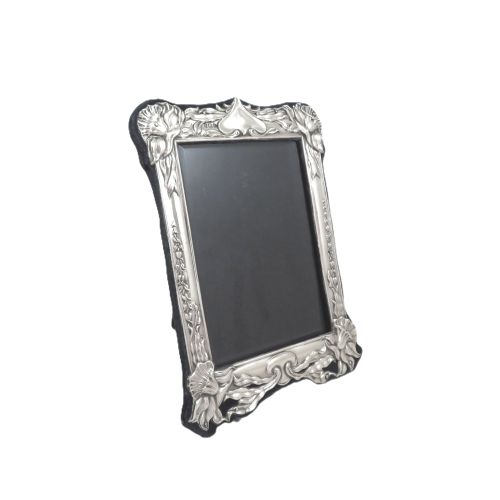
The form appears most frequently in sterling silver, often paired with wooden or leather backs and glass fronts. You will encounter rectangular, oval, heart-shaped, and circular formats alongside characteristic Art Nouveau designs featuring flowing lines and natural motifs.
Makers utilised assay offices in Birmingham, Chester, Sheffield, and London to hallmark these items, dating their manufacture precisely. Surviving examples demonstrate how households of the period preserved images of relatives and significant events.
How they were made
Silversmiths constructed the outer mounts from sterling silver sheets, employing embossing, chasing, and engraving to apply floral, ribbon, or abstract patterns. The metal was then secured over a wooden core or fitted with a robust timber or iron backing.
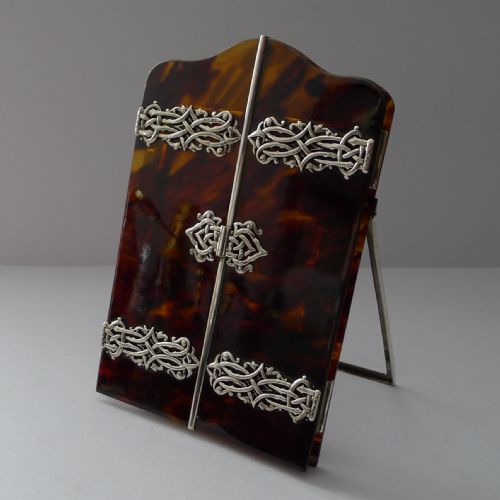
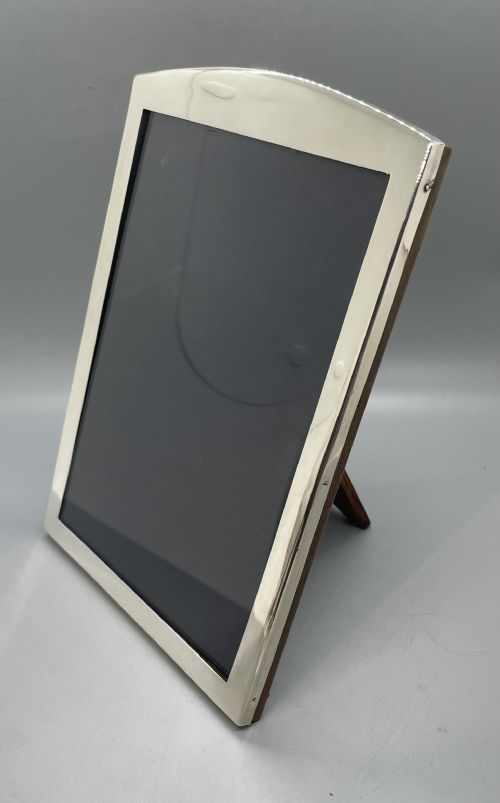
The hinged easel stand at the rear, typically fashioned from oak, wood, or metal, allows the frame to tilt stably on a flat surface. Back panels are frequently lined with velvet, leather, or fabric to protect the interior aperture where the glass and photograph are inserted.
Edwardian Easel Photo Frame Retail Price Guide 2026
Typical asking prices for edwardian easel photo frame among the pieces listed under this phrase on Sellingantiques today, from the lower quarter to the upper quarter. They describe what is for sale here now, not the wider market.
Object types include standalone picture frames, photograph frames, and vanity mirrors produced across British assay offices.
What varies in quality
The distinction between ordinary and superior pieces rests on the weight of the sterling silver mount and the crispness of the chased or embossed detailing. Heavier gauge metal resists bending and maintains structural integrity around the glass aperture.
Makership and origin also separate examples, with documented pieces bearing marks from notable firms commanding greater interest. The preservation of the original wooden or leather backing and the integrity of the easel hinge contribute substantially to the overall standard of a piece.
Rosenthal Jacob And Co·William Comyns·Mappin Bros·Henry Matthews·Deakin And Francis
The Edwardian Easel Photo Frame Glossary
- Easel back
- A hinged rear support leg that props the frame upright on a desktop or mantelpiece. This mechanism allows the display angle to remain fixed.
- Hallmark
- A series of official stamps applied to silver objects indicating the metal standard, assay office, and year of manufacture. These marks provide the primary evidence for dating an antique.
- Sterling silver
- An alloy containing 92.5 percent silver by mass, with the remainder usually copper. This composition provides the necessary durability for detailed silversmithing.
- Art Nouveau
- A decorative style prevalent around the turn of the twentieth century, characterised by asymmetrical organic forms, whiplash lines, and depictions of flora and fauna.
- Assay office
- A statutory body that tests the purity of precious metals and stamps them with official marks. Offices in Birmingham, Chester, Sheffield, and London handled domestic silver production.
Edwardian Easel Photo Frame: Frequently Asked Questions
How do I insert a photograph?
Most antique frames use a removable wooden or leather backboard held in place by small metal turn-buttons or pins. You slide these fasteners aside to lift out the backing, glass, and aperture card.
Place your photograph behind the glass and reassemble the layers carefully before securing the backboard. Avoid forcing tight components to prevent damaging the fragile silver border or old glass.
How do I clean the silver mount?
Clean the silver using a soft cloth and a gentle, non-abrasive polish formulated specifically for precious metals. Work around the embossed details carefully to avoid rubbing away the definition of the chased pattern.
Keep polish away from the backing materials, velvet linings, and old glass to prevent staining or degradation. Regular dusting with a dry microfiber cloth is often sufficient for routine maintenance.
How do I date the piece?
Examine the hallmarks stamped into the silver border, which typically include a maker's mark, a lion passant indicating sterling standard, an assay office symbol, and a date letter. Each assay office used a specific sequence of fonts and shield shapes for its annual date letters.
Compare these stamped letters against standard assay office reference tables to determine the exact year the item was tested and hallmarked.
Were these frames meant for travel?
These accessories were designed primarily for stationary domestic display on dressing tables, desks, and mantelpieces rather than for transit. The folding easel leg allowed owners to adjust the viewing angle in a fixed room setting.
While some smaller examples were packed into luggage by Edwardian travellers, the delicate glass fronts and weighted silver mounts made them more suited to permanent home placement.