




Edwardian Drinking Glasses
Edwardian drinking glasses combine practical service with crisp wheel-cut detail, offering a tangible link to the formal hospitality of the early twentieth century.
Edwardian Drinking Glasses
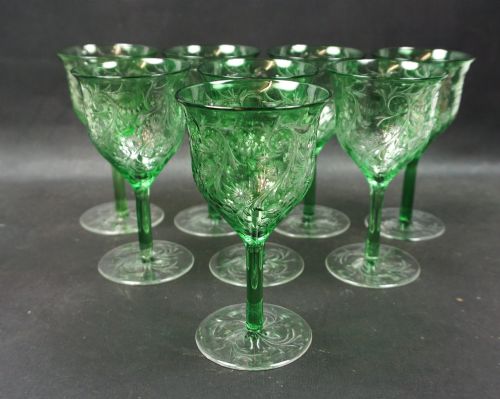
When searching for Edwardian drinking glasses, buyers encounter serviceable crystal pieces alongside complete barware sets and serving decanter combinations. The selection ranges from tall turquoise wine goblets to engraved ale glasses and matched sets of Bristol green vessels.
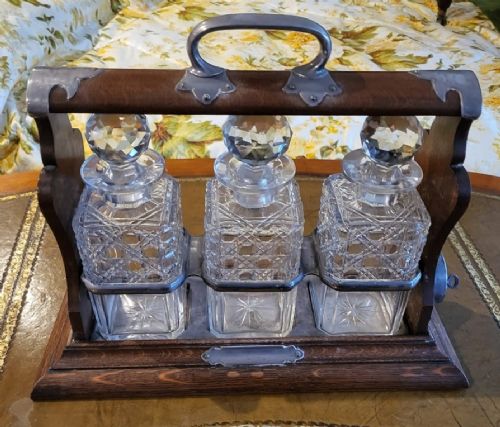
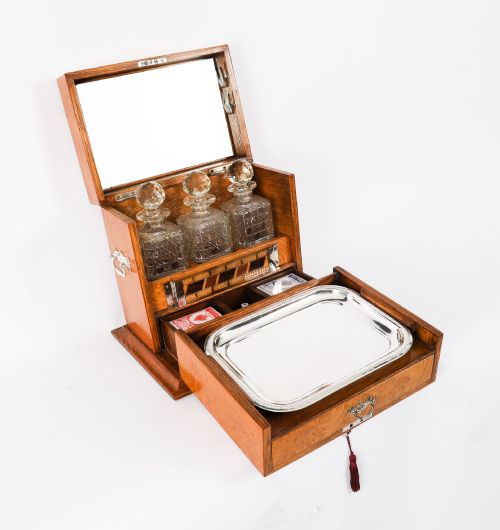
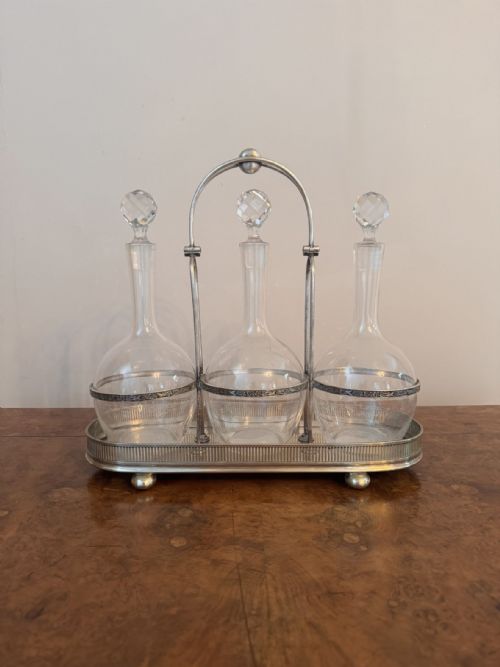
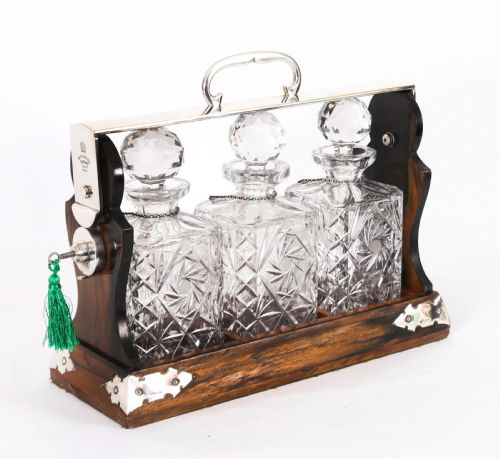
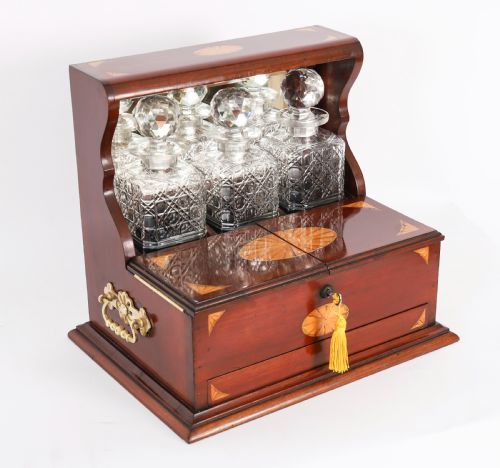
Many examples arrive paired with silver-plated stands, decanters, or larger drinks furniture like oak tantalus cabinets designed to house glassware securely.
Production spans the turn of the century into the 1910s, reflecting the period's preference for structured home entertaining and hospitality.
How they were made
Glass is blown and moulded into form, utilising lead crystal for clarity and weight. Cut glass elements receive deep wheel-cut decoration, creating geometric facets that catch the light.
Engraved motifs rely on precision hand-scribing to produce floral or linear patterns across the surface of ale glasses and goblets. Associated metal mounts incorporate sterling silver, silver plate, and brass hardware fixed to oak, mahogany, or coromandel frameworks.
Edwardian Drinking Glasses Retail Price Guide 2026
Typical asking prices for edwardian drinking glasses among the pieces listed under this phrase on Sellingantiques today, from the lower quarter to the upper quarter. They describe what is for sale here now, not the wider market.
Listings feature oak, mahogany, coromandel, and satinwood alongside lead crystal, sterling silver, and brass mounts.
What varies in quality
Quality rests in the crispness of the glass cutting and the weight of the metal components. Heavy lead crystal with sharp, deep facets distinguishes finer drinking vessels from lighter, pressed alternatives.
Completeness dictates overall standing, particularly when glasses form part of a matched drinking service or are housed alongside decanters within a locking tantalus frame.
Webb Corbett·Hukin & Heath·James Dixon·George Ernest Hawkins
The Edwardian Drinking Glasses Glossary
- Tantalus
- A locking wooden cabinet fitted with a brass bar that secures decanters without hiding them from view. It earned its name because the contents remain visible yet physically out of reach.
- Cut crystal
- High-clarity glass shaped by deep wheel-cutting. The process produces sharp, light-reflecting facets across the surface.
- Intaglio
- A design carved into the surface of the glass rather than raised in relief. It requires steady hand-cutting to achieve clean depth.
- Tyg
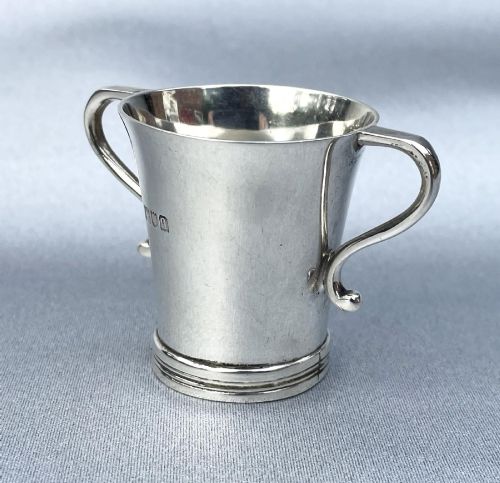
- A large drinking vessel featuring multiple handles, designed to be passed around a company. The form dates back centuries but appears in solid silver and cut glass during this era.
Edwardian Drinking Glasses: Frequently Asked Questions
Are these glasses suitable for daily use?
Many Edwardian drinking glasses remain robust enough for regular service, provided they are handled with care and washed by hand. Their sturdy lead crystal construction handles moderate everyday dining well.
For pieces featuring deep hand-engraving or delicate stems, reserve them for special occasions to preserve the antique surfaces.
What defines Edwardian glass style?
Edwardian glass design favours bright clarity, precise geometric cutting, and refined floral intaglio motifs. It moves away from heavy Victorian ornamentation towards lighter, balanced forms.
Colour appears selectively, from deep Bristol green to vivid turquoise, often paired with silver-plated or sterling mounts.
How do I store a tantalus securely?
Keep the cabinet on a level surface away from direct sunlight and fluctuating heat sources that could dry out the wood. Ensure the locking mechanism operates smoothly without forcing the brass retaining bar.
Store the decanters upright inside the frame to prevent pressure on the stoppers and glass rims.