


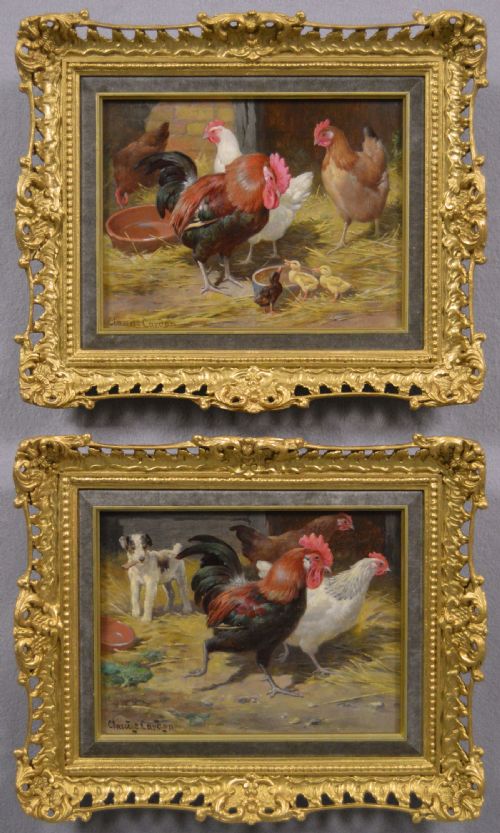


Edwardian Dog Art
Edwardian dog art captures canine companions through oil paintings, watercolours, etchings and pastels spanning the turn of the twentieth century.
Edwardian Dog Art
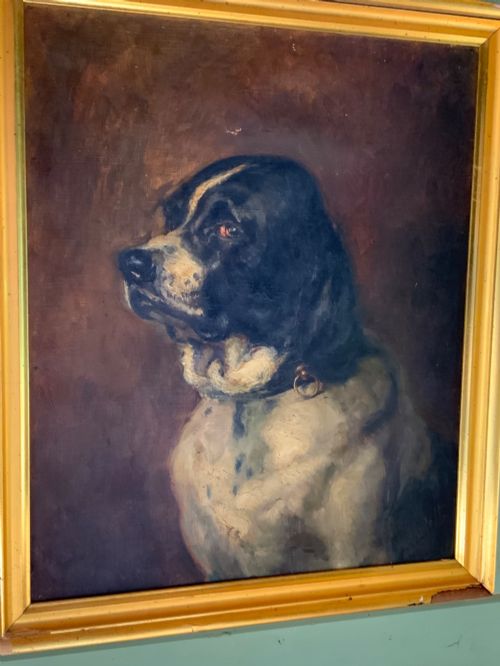
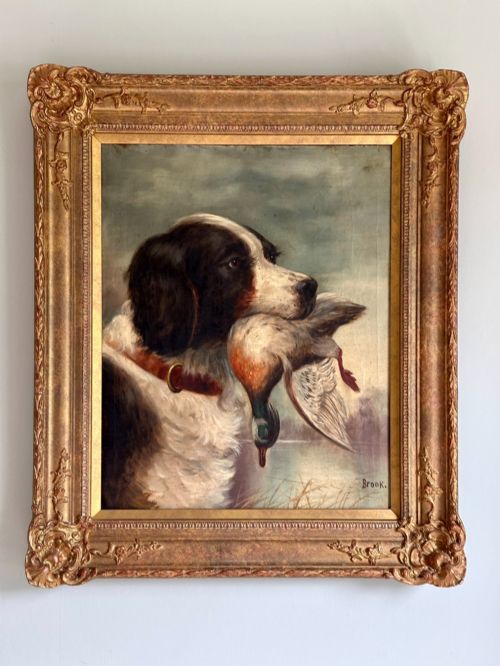
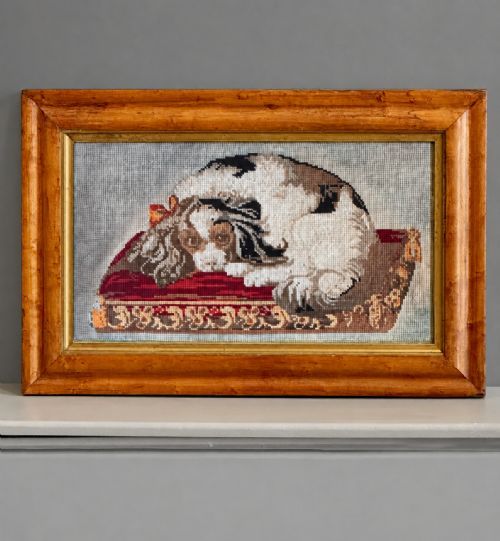
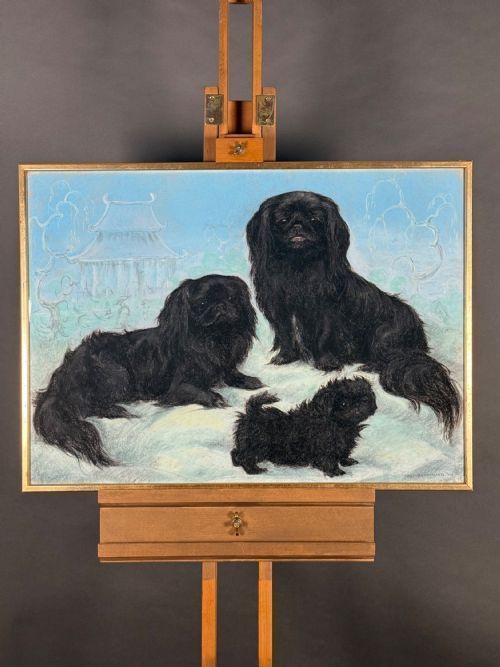
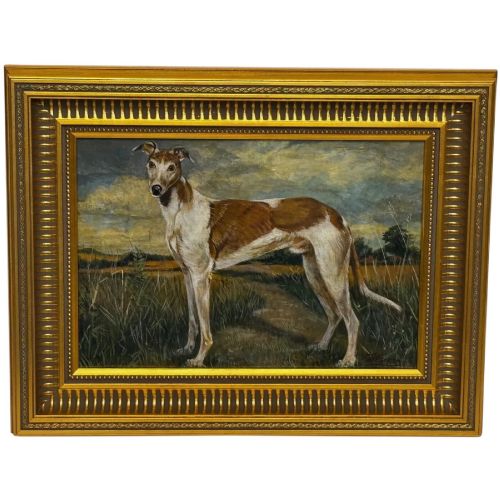
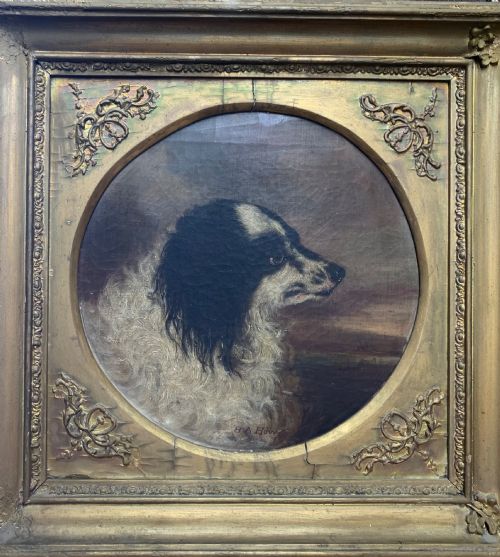
When you examine Edwardian dog art, you encounter a range of fine art and domestic depictions focusing on various breeds from spaniels to terriers. These pieces encompass oil on canvas, pastel drawings, watercolours and original etchings created around the early twentieth century.
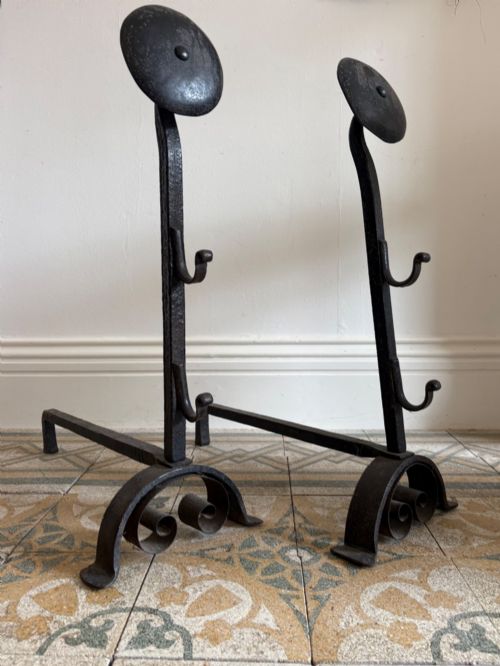
You will also find related decorative objects including wrought-iron and brass fire dogs, alongside ceramics, that incorporate canine motifs into period interiors. The selection leans heavily toward British sporting art and individual animal portraits executed with traditional academic skill.
Materials and construction methods
The paintings and drawings utilise oil paint, watercolour or pastel applied to canvas, wood panels or paper, frequently housed within original frames of burr maple, wood or giltwood with gold leaf accents.
Printed works rely on original etching techniques on paper, capturing fine lines through metal plates. Metal items such as fire dogs and andirons are formed from hand-forged wrought iron or cast brass.
Edwardian Dog Art Retail Price Guide 2026
Typical asking prices for edwardian dog art among the pieces listed under this phrase on Sellingantiques today, from the lower quarter to the upper quarter. They describe what is for sale here now, not the wider market.
Listings feature works from the nineteenth century through the Edwardian era, predominantly comprising oil paintings, watercolours, original etchings and cast metal fire accessories.
Factors influencing quality
Quality rests upon the anatomical accuracy and expressive character captured by the artist, distinguishing skilled observation from stiff or generic rendering. The handling of medium, whether the loose confidence of brushwork in an oil portrait or the crisp precision of an original etching, dictates the distinction of the piece.
The preservation of the work, including the condition of the canvas, paper stability and the integrity of period frames such as burr maple or giltwood, contributes significantly to the standing of an individual item.
Herbert Dicksee·John Emms·Thomas Blinks·Valentine Thomas Garland·John Trivett Nettleship
The Edwardian Dog Art Glossary
- Etching
- A printmaking technique where lines are bitten into a metal plate with acid before ink is applied and transferred to paper. This process allows for great detail in works such as canine portraiture.
- Andirons
- Horizontal metal bars supported by legs, placed in a hearth to raise firewood for better air circulation. Also known as fire dogs, they often feature decorative iron or brass terminals.
- Pastel
- A dry medium consisting of powdered pigment and a binder, pressed into stick form. Applied to paper, it creates soft textures suitable for intimate animal studies.
- Giltwood
- Wood that has been treated with a thin layer of gold leaf or gold paint. Frames finished in this manner frequently accompany formal portraits from the period.
- Sporting art
- Depictions of rural pursuits, hunting scenes and working animals. This genre forms a significant portion of canine portraiture from the nineteenth and early twentieth centuries.
Edwardian Dog Art: Frequently Asked Questions
What subjects appear in Edwardian dog art?
The works feature individual breed portraits, working gundogs with game, terriers and dogs accompanying children in domestic or landscape settings.
Artists focused on capturing the distinct personality and conformation of breeds like spaniels, collies and bulldogs using oils, watercolours and etchings.
How do I identify an original etching?
Original etchings display plate marks where the edge of the metal plate depressed the paper during printing. Under magnification, the ink lines show a slight raised quality rather than the flat dot pattern found in modern reproductions.
These prints often bear pencil signatures and titles from the artist alongside period framing.
Where were fire dogs placed?
Fire dogs, also called andirons, sat inside open hearth fireplaces to support logs above the ash bed. Wrought iron and brass versions stood on the hearth floor, combining utility with decorative metalwork.
In many period rooms, matched pairs flanked the fireplace opening.
How should I care for oil paintings?
Oil paintings on canvas require stable indoor humidity away from direct sunlight and heat sources to prevent cracking of the paint surface. Dusting should be done gently with a soft, dry brush without applying moisture or cleaning solutions.
Maintaining the original wooden or giltwood frame helps protect the edges of the canvas.