

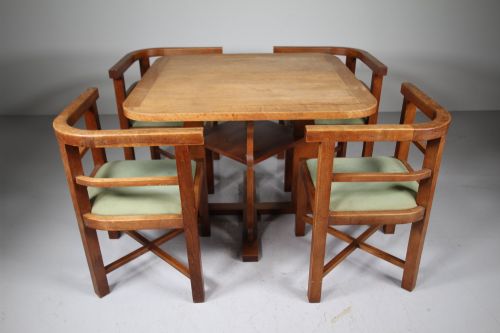


Edwardian Dining Suite
An edwardian dining suite brings together matching tables, chairs, and sideboards crafted across the turn of the twentieth century to anchor a formal interior.
Edwardian Dining Suite
An edwardian dining suite comprises matched groups of furniture built around the turn of the twentieth century, typically featuring large extending tables paired with sets of chairs, alongside ancillary pieces such as sideboards and side tables. These assemblages reflect the domestic entertainments of the period, offering coordinated seating and serving surfaces designed for formal hospitality.
The pieces appearing on this page span the Edwardian era itself, alongside late nineteenth century precursors and revivals dating from 1890 through to 1910. Buyers encounter both complete room sets comprising tables, multiple chairs, and sideboards, as well as extensive dining chair sets accompanied by carver armchairs.
Stylistic variation within these suites ranges from restrained Georgian revival interpretations to carved Jacobean revival oak, linear Arts and Crafts designs, and occasional Edwardian Art Nouveau details. Materiality shifts accordingly between rich dark mahogany and sturdy oak, often augmented by inlaid stringing and upholstered seats.
How they were made
Cabinet makers constructed these suites primarily from solid timber and selected veneers, relying heavily on mahogany and oak as the foundational framing materials. Workshops shaped these woods into high splat backs, extending dining mechanisms, and carved structural elements.
Surface decoration frequently involved string inlay and intricate carving executed in revivalist styles, whilst seating components integrated brass hardware alongside traditional upholstery materials such as leather, velvet, and patterned fabric.
Edwardian Dining Suite Retail Price Guide 2026
Typical asking prices for edwardian dining suite among the pieces listed under this phrase on Sellingantiques today, from the lower quarter to the upper quarter. They describe what is for sale here now, not the wider market.
Listings feature mahogany and oak as the primary woods, accompanied by fabric, leather, velvet, and brass.
What varies in quality
The distinction between standard commercial output and superior workshop production rests upon timber selection and the precision of decorative execution. Suites bearing recognisable maker attributions or complex inlaid stringwork demonstrate higher levels of craftsmanship than utilitarian equivalents.
Structural integrity across extending mechanisms and the consistency of matched chair sets also determine relative merit. Complete suites retaining their original sideboards, auxiliary tables, and uniform upholstery maintain a higher degree of historical coherence.
Shoolbred·George Henry Walton
The Edwardian Dining Suite Glossary
- Carver armchair
- A dining chair featuring integrated armrests, traditionally placed at the head of the table for the host. These pieces usually match the simpler side chairs in a suite.
- Extending dining table
- A table designed with a central mechanism to insert additional leaves, accommodating larger gatherings. This feature is central to Edwardian dining arrangements.
- String inlay
- Fine lines of contrasting wood or light material embedded into the surface of furniture. It defines panels and borders on Edwardian mahogany pieces.
- High splat back
- A chair design featuring an upright vertical central wooden strip within the backrest. This form appears frequently in Arts and Crafts dining chairs from the period.
- Sideboard
- A large low cabinet used for serving food and storing dining utensils. These items form part of comprehensive dining room suites.
Edwardian Dining Suite: Frequently Asked Questions
What pieces belong in a complete suite?
A full dining room suite generally incorporates an extending table, a set of dining chairs including carver armchairs, and matching storage furniture such as sideboards or side tables. Surviving groups sometimes include auxiliary serving pieces designed to match the primary timber and decorative style.
Buyers often find configurations where chairs alone are designated as suites, reflecting the way dining seating was retailed and preserved together over generations.
How do I identify Edwardian styling?
Edwardian furniture often displays lighter proportions than heavy Victorian predecessors, drawing inspiration from earlier periods like the Georgian era alongside contemporary Arts and Crafts movements. Common markers include mahogany construction with delicate string inlay, high splat backs, and subtle revivalist carving.
Stylistic crossover is frequent around the turn of the twentieth century, meaning pieces may blend traditional forms with cleaner lines or early modernist touches.
Are these tables practical for daily use?
Extending dining tables from this period offer functional versatility through mechanical leaves that adjust the surface area for everyday dining or larger dinner parties. Their robust construction in solid mahogany or oak allows them to withstand regular modern use.
Care should be taken with historical timber finishes and original extension runners to ensure smooth operation and preserve the polished surfaces.
What materials are used for upholstery?
Seating components in these suites utilise a range of traditional coverings including leather, velvet, and woven fabric upholstery. These materials were chosen for durability and comfort during long formal meals.
Many surviving pieces retain later replacement coverings while others preserve older textiles that match the aesthetic of the wood frame.