



Edwardian Dining Room Cabinet
An edwardian dining room cabinet provides formal storage and surface space in the dining room, combining practical proportions with refined period timber work.
Edwardian Dining Room Cabinet
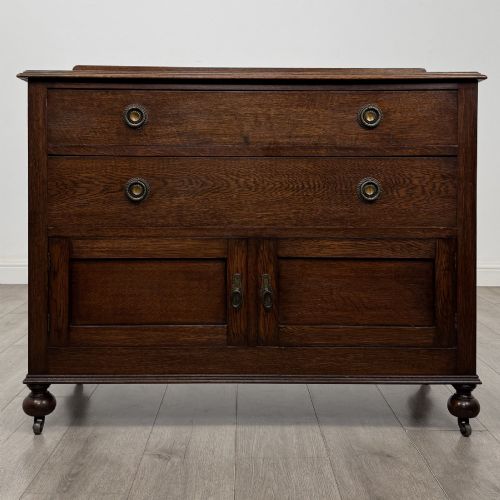
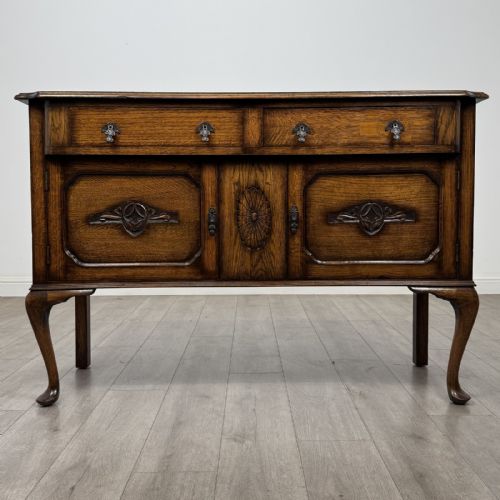
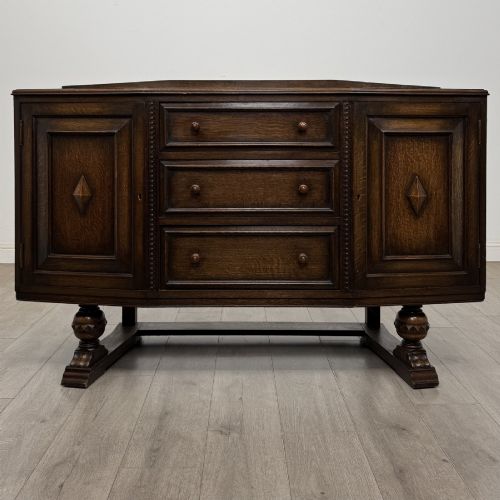
The edwardian dining room cabinet manifests primarily as sideboards, side cabinets, servers, and dressers built during the Edwardian era alongside surrounding periods like the late nineteenth and early twentieth centuries. These pieces serve to hold dining service, cutlery, and glassware while anchoring the room's decorative scheme.
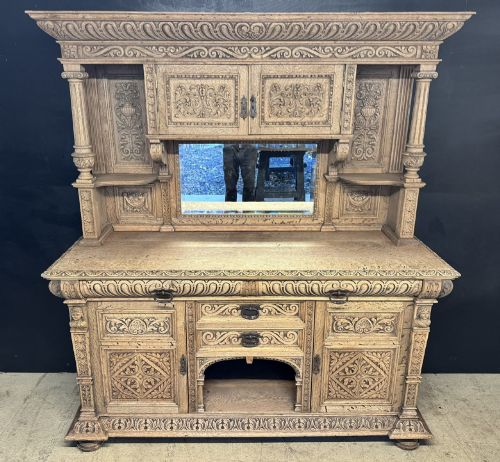
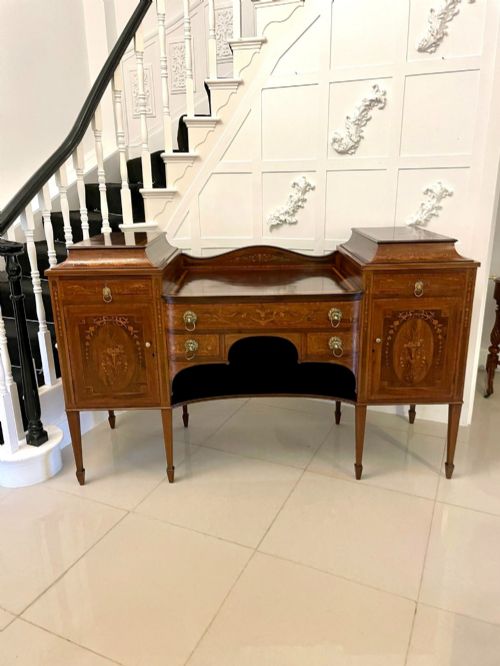
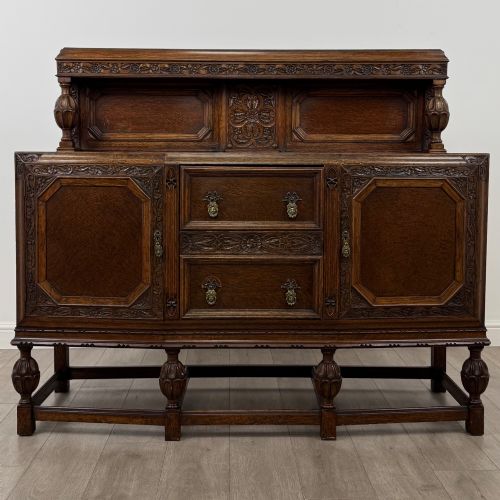
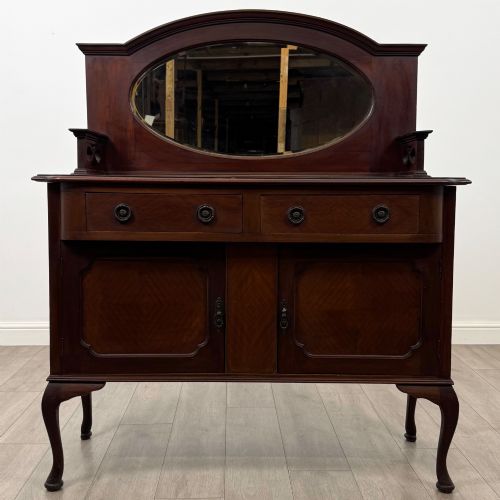
Makers of the period draw heavily on earlier vocabularies, producing pieces in Sheraton Revival, Arts and Crafts, and Chippendale Revival styles. Forms range from compact oak sideboards with mirror backs to large breakfront servers in flame mahogany.
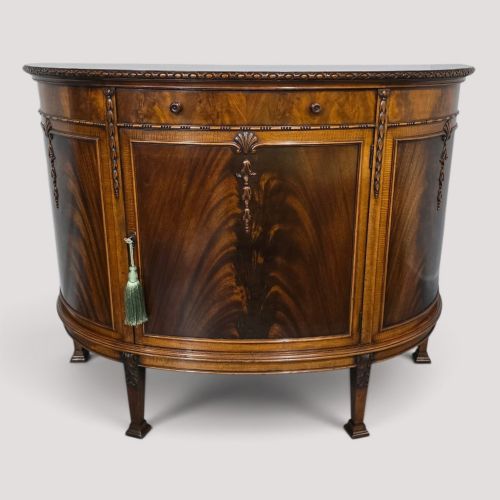
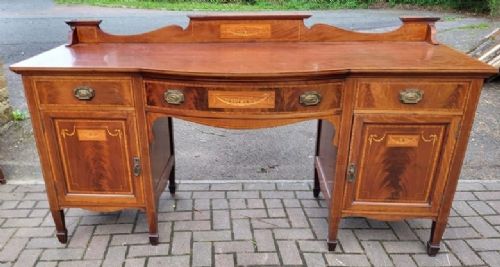
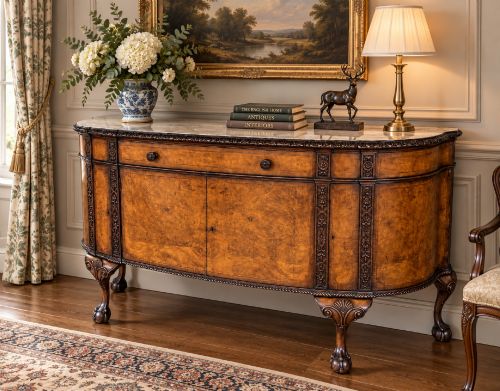
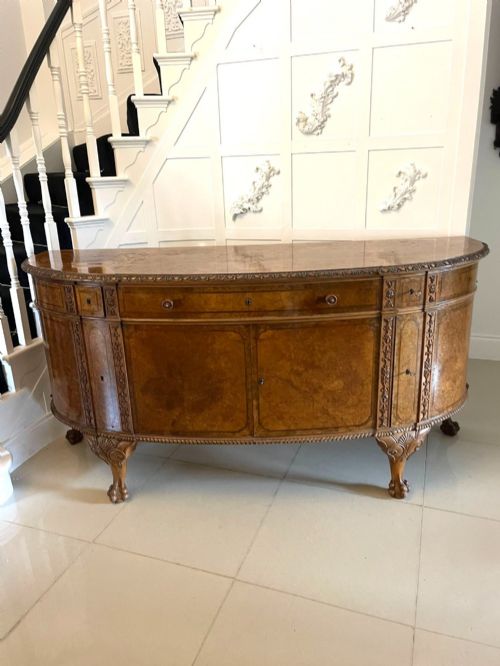
The buyer encounters varied configurations, including bow front profiles, demi-lune shapes, and three-door cupboards fitted with internal shelving and drawers. These layouts reflect the domestic requirements of dining rooms from the period.
Materials and construction
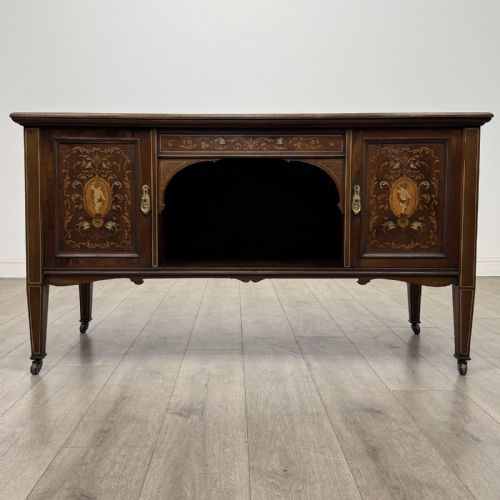
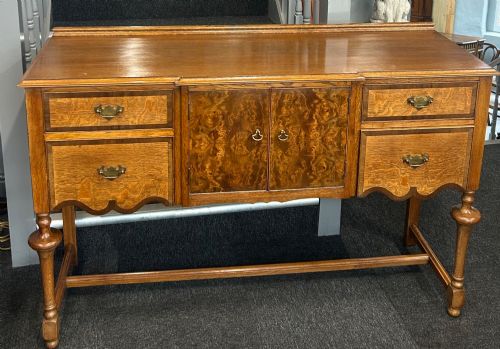
Construction relies heavily on timbers such as mahogany, oak, and walnut, often enhanced through the application of flame mahogany veneer, burr walnut, and satinwood stringing. These woods provide distinct grain patterns and colour variations across the surfaces.
Decorative techniques incorporate marquetry inlay, detailed carving, and the use of brass hardware including face handles and claw and ball feet. Structural elements like barley twist legs and mirror backs appear frequently to punctuate the design.
Edwardian Dining Room Cabinet Retail Price Guide 2026
Typical asking prices for edwardian dining room cabinet among the pieces listed under this phrase on Sellingantiques today, from the lower quarter to the upper quarter. They describe what is for sale here now, not the wider market.
One unexpected sideboard arrives equipped with a matching twelve-piece cutlery set ready for service.
Distinctions in craftsmanship
Quality separates through the selection and matching of timber veneers, where superior pieces display continuous grain across drawer fronts and doors. The execution of marquetry inlay and hand carving also marks the difference between standard production and workshop pieces carrying named provenance.
Internal construction, including solid wood drawer linings and original brass fixtures, distinguishes the higher tiers of cabinet making. Heavier carcases built from figured burr walnut or solid mahogany maintain structural integrity better than simpler golden oak variants.
Hewetsons London·M D Miller and Sons Nottingham·Maple and Co·T Simpson and Son
The Edwardian Dining Room Cabinet Glossary
- Breakfront
- A piece of furniture featuring a central section that projects forward from the flanking sides. This architectural arrangement creates depth and visual interest on large sideboard facades.
- Marquetry
- Decorative patterns formed by the insertion of different coloured wood veneers into a solid ground. Cabinet makers utilise this technique to render floral or geometric motifs across drawer and door panels.
- Demi-lune
- A half-moon shape used for the footprint and top surface of side cabinets and servers. This curve allows the furniture to sit flush against a wall while softening the room's geometry.
- Chiffonier
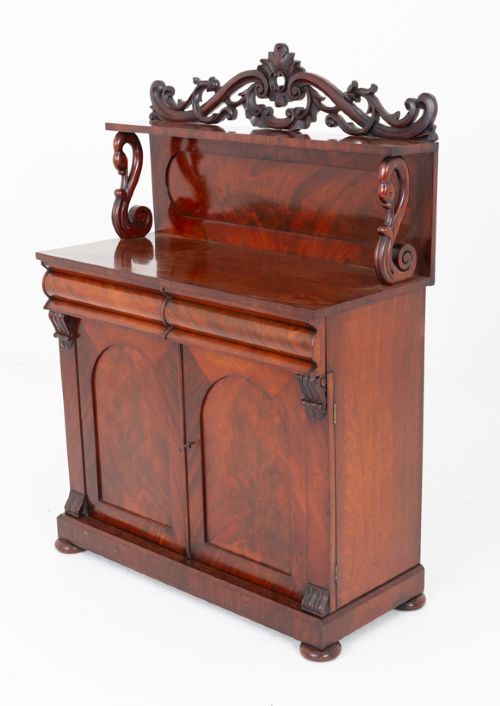
- A low sideboard or cabinet equipped with drawers and shelves, often surmounted by a mirror. The form originates earlier in the nineteenth century and persists into later dining room furniture.
- Flame mahogany veneer
- Timber sliced to reveal a characteristic flickering flame-like grain pattern. Craftsmen apply these veneers symmetrically to primary display surfaces for decorative impact.
Edwardian Dining Room Cabinet: Frequently Asked Questions
What is an edwardian dining room cabinet?
An edwardian dining room cabinet is a piece of case furniture designed to store dining accessories and display serving dishes. These items include sideboards, servers, and dressers originating from the early twentieth century.
They combine practical enclosed storage with decorative timber surfaces, often featuring mirrors, inlaid marquetry, and brass hardware to suit formal dining spaces.
How were these cabinets used?
These cabinets function as storage units for plates, cutlery, table linen, and serving platters within the dining room. The flat top surface also serves as a sideboard for serving food during meals.
Cupboard interiors and internal drawers keep dining paraphernalia organised, while mirror backs on certain models reflect light and display glassware.
How do I care for timber surfaces?
Maintain the wood by keeping the cabinet away from direct heat sources and strong sunlight, which can dry out timber and fade veneers. Regular dusting with a soft cloth preserves the polished finish.
Apply a suitable beeswax periodically to nourish the wood and maintain its natural lustre without building up heavy chemical layers.
How do I distinguish revival styles?
Sheraton Revival pieces often display delicate satinwood inlay, tapered legs, and classical motifs inspired by eighteenth-century designs. Arts and Crafts examples prioritize honest construction, solid oak, and minimal ornamentation.
Chippendale Revival furniture leans towards heavier carved details, ball and claw feet, and darker mahogany tones, reflecting mid-Georgian influences reinterpreted by Edwardian cabinet makers.