
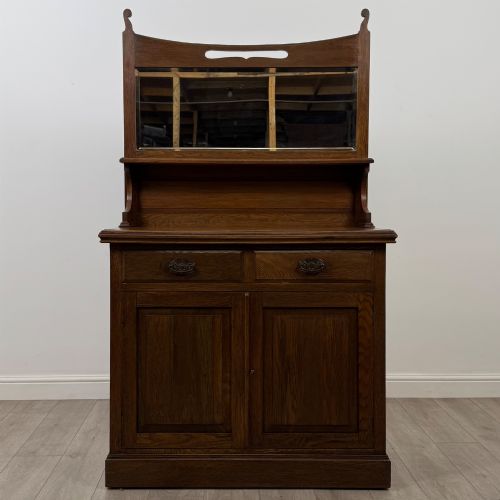
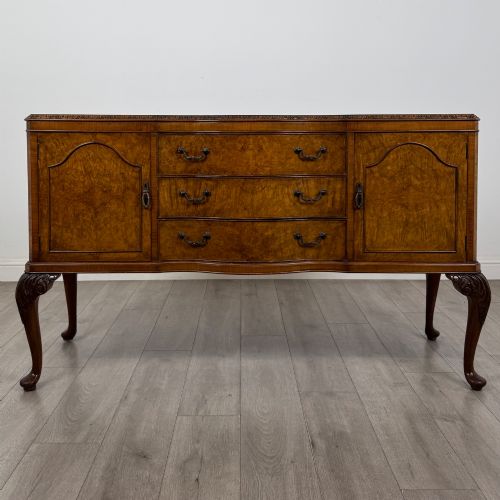
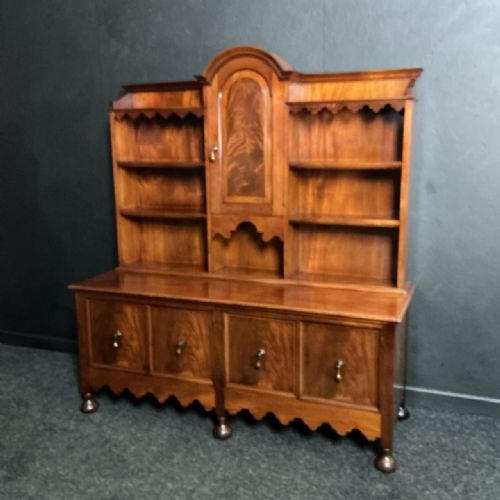
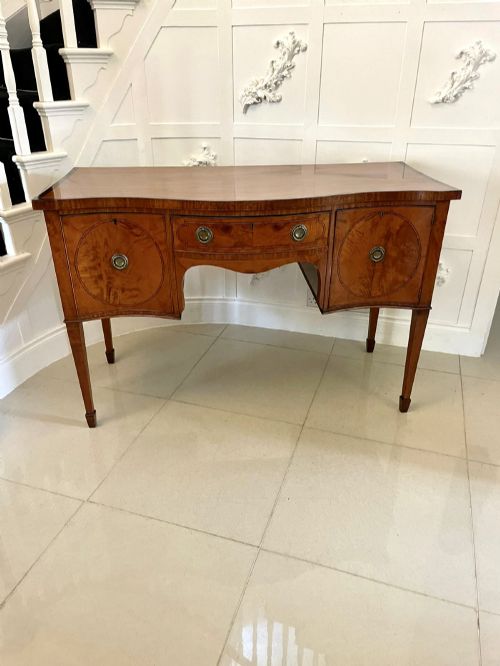
Edwardian Dining Cabinet
These edwardian dining cabinet pieces are sturdy storage furniture built to hold silver and napery while anchoring a formal dining room with period proportion.
Edwardian Dining Cabinet
An edwardian dining cabinet primarily takes the form of a sideboard, server, or buffet designed for the dining room. These pieces provide functional storage through cupboards and drawers while establishing a formal presence in the interior.
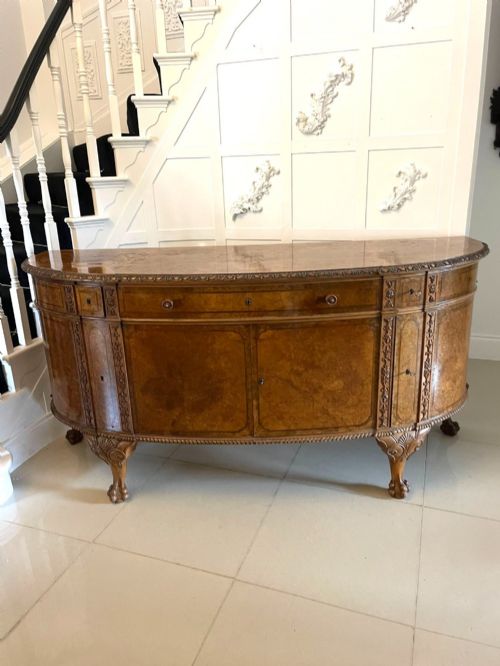
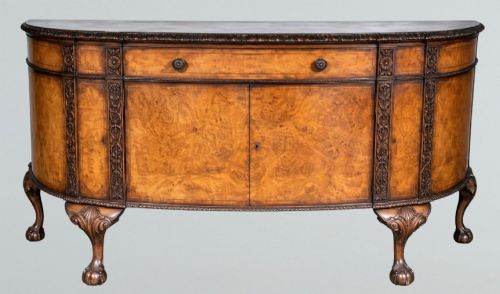
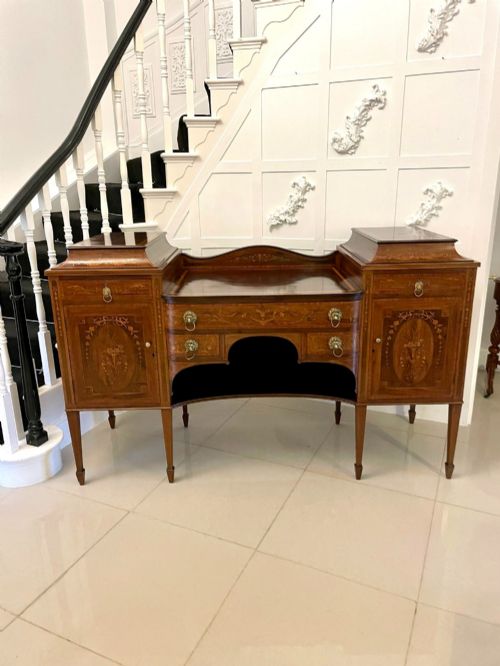
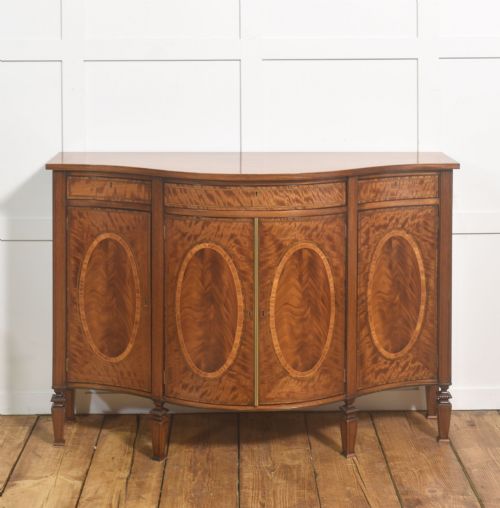
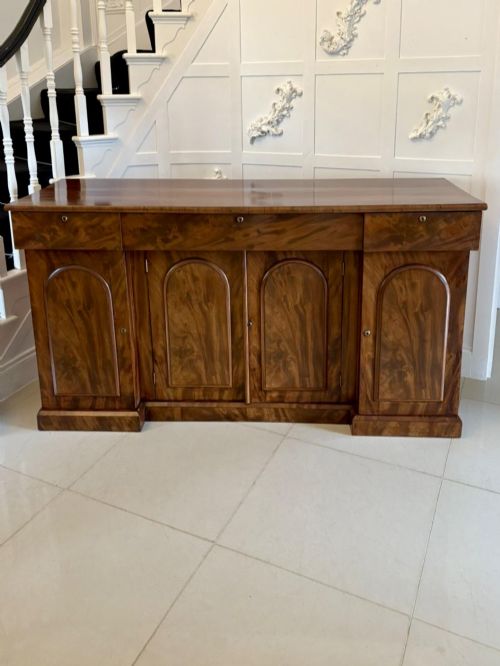
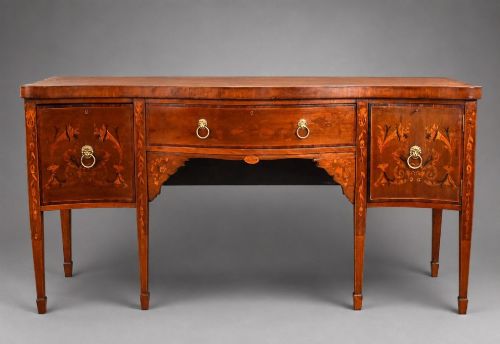
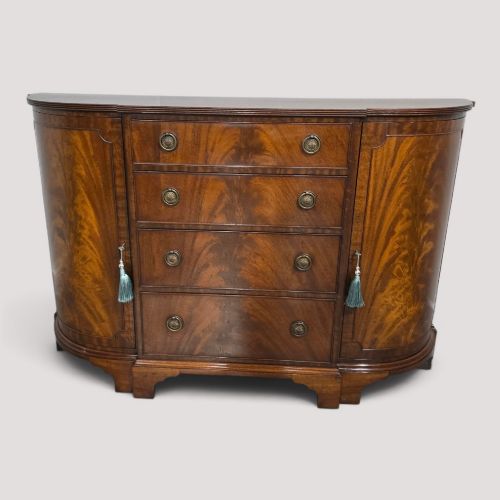
The pieces seen on this page span the Edwardian period alongside neighbouring Victorian and early twentieth-century examples. Sideboards and side cabinets dominate the selection, often featuring bow fronts or breakfront layouts.
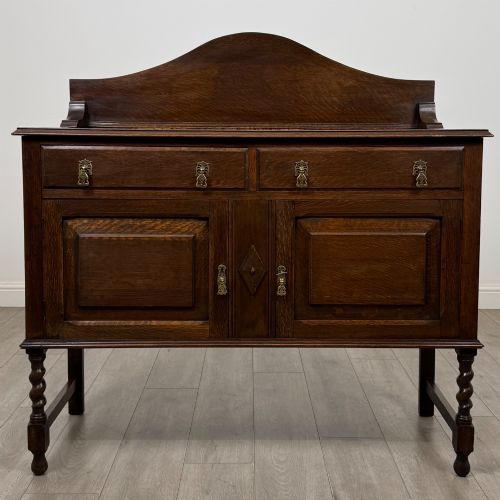
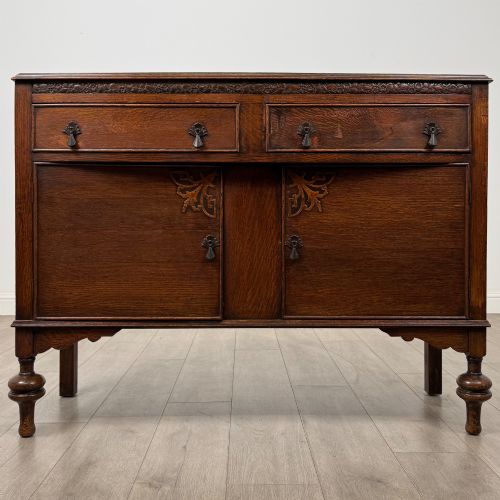
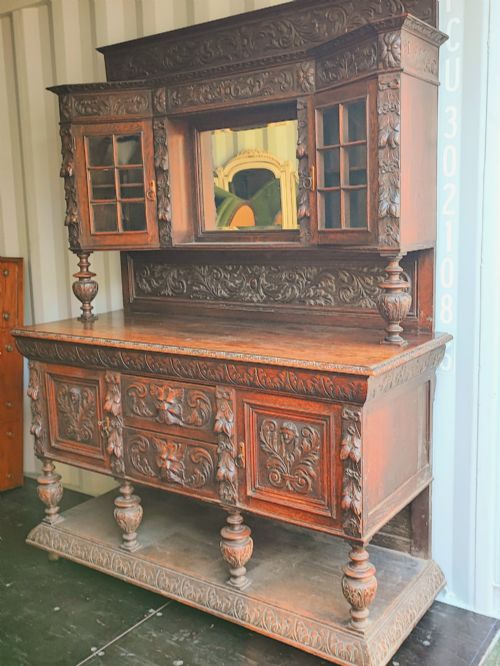
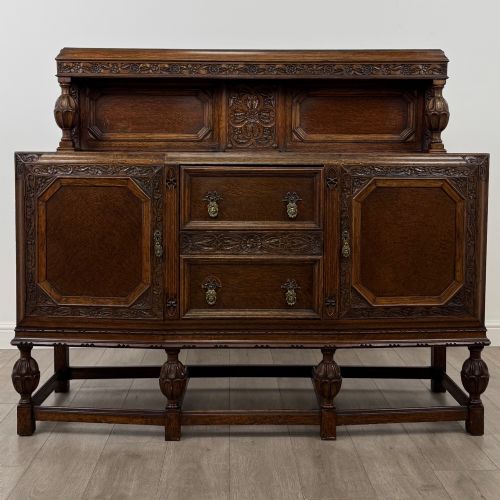
Makers and workshops of the era drew heavily on earlier vocabularies, producing revivals in Sheraton, Queen Anne, and Jacobean styles. Alongside these, Arts and Crafts movements contributed simpler, honest constructions in oak.
Materials and construction
Cabinet makers utilised a range of dense hardwoods, predominantly mahogany, oak, and walnut, often enhanced by burr walnut or flame mahogany veneers. Satinwood frequently appeared as a contrasting timber for crossbanding and detailed inlay work.
Decorative surfaces relied on marquetry, fine brass hardware, and carved details such as barley twists or panel mouldings. Carcasses were joined using traditional cabinet-making methods to support heavy timber tops and internal shelving.
Listings feature woods including mahogany, oak, walnut, satinwood, and brass hardware across Edwardian, Victorian, and early twentieth-century periods.
Assessing quality
Quality in an edwardian dining cabinet rests on the selection of timbers and the precision of the cabinet work. Finely figured grains, balanced veneer matches, and crisp marquetry inlay separate standard production from superior examples.
Structural integrity shows in the weight of the timber, the smooth action of drawers, and the integration of carved elements rather than applied ornamentation. Finer pieces demonstrate careful attention to internal fittings and secondary timbers.
Hewetsons London·M D Miller And Sons Nottingham
The Edwardian Dining Cabinet Glossary
- Bow front
- A convex curved cabinet front that projects outward in the centre, popular in Sheraton Revival and Edwardian dining furniture. This shape softens the room's geometry while adding interior depth.
- Crossbanding
- A narrow band of veneer applied to the border of a furniture surface with the grain running at right angles to the central panel. It creates a neat visual frame around mahogany or satinwood drawers.
- Marquetry
- Decorative patterns formed by fitting together small pieces of tinted wood, shell, or ivory into a veneer sheet. It often decorates the central doors and top surfaces of formal sideboards.
- Chiffonier
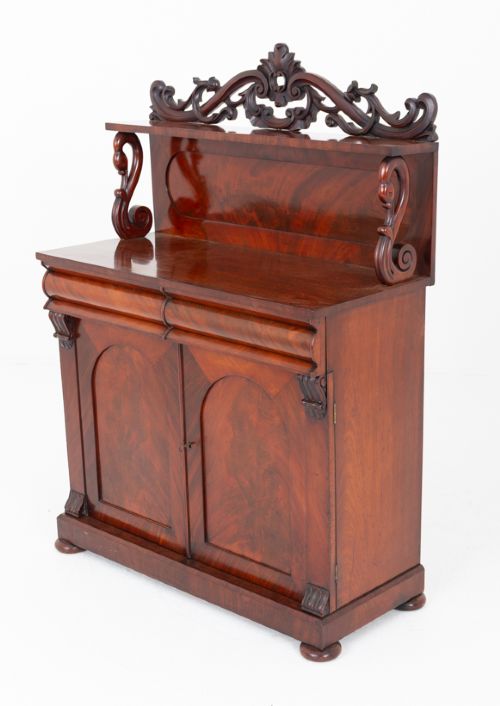
- A low compact sideboard or cabinet featuring shelves or a mirror back above the main storage surface. It provides display space alongside enclosed cupboard storage.
- Serpentine
- A front shape formed by a double curve, concave in the middle and convex at the ends. This undulating profile requires high woodworking skill to execute properly.
Edwardian Dining Cabinet: Frequently Asked Questions
What is an edwardian dining cabinet used for?
These cabinets serve as practical storage for dining rooms, holding tableware, linens, and serving dishes within cupboards and drawers. The top surface provides space for serving food or displaying decorative objects during meals.
Historically, they formed the central organisational hub of the dining room. They kept essential dining items close at hand while adding a formal architectural element to the interior.
Are these cabinets suitable for modern dining rooms?
These pieces integrate well into contemporary spaces by offering substantial enclosed storage for modern tableware and glassware. Their classic timber tones and proportions anchor open-plan dining areas or traditional rooms alike.
Their sturdy construction ensures they withstand daily use. The variety of sizes available, from compact servers to larger breakfront sideboards, allows them to fit different room dimensions.
What is the difference between a sideboard and a buffet?
The terms are often used interchangeably, but a buffet traditionally includes lower storage cupboards and sometimes an upper shelf or tier. Sideboards generally emphasise flat surface area combined with cupboards and drawers.
Both forms belong to the dining room furniture family. The exact nomenclature often depends on the specific era and the presence of upper display architecture.