




Edwardian Desk Trinket Box
These edwardian desk trinket box items are practical containers for small items that bring period character to a workspace.
Edwardian Desk Trinket Box
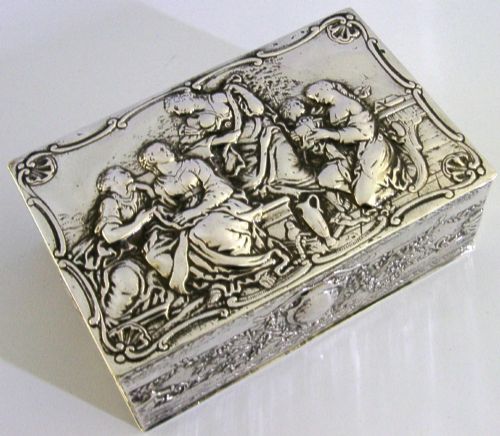
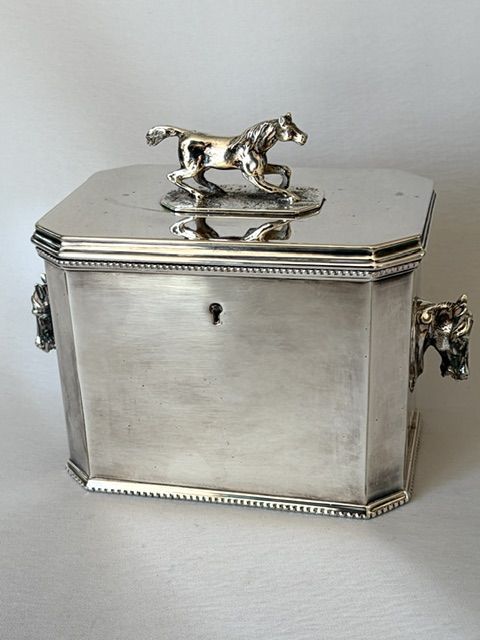
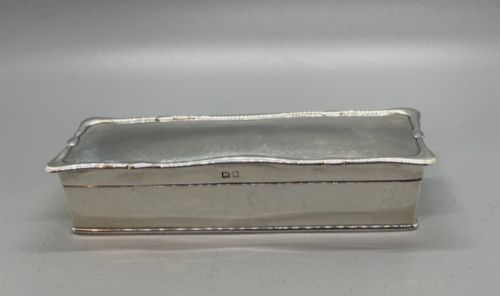
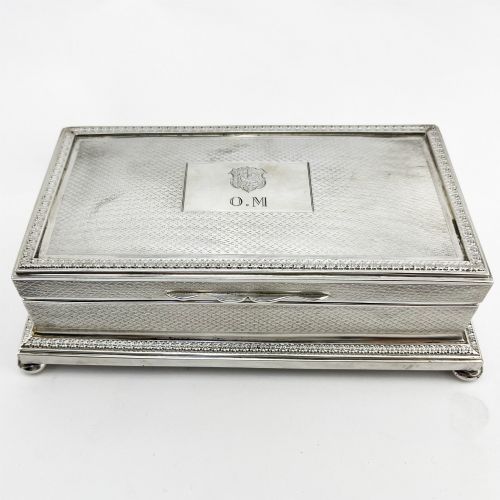
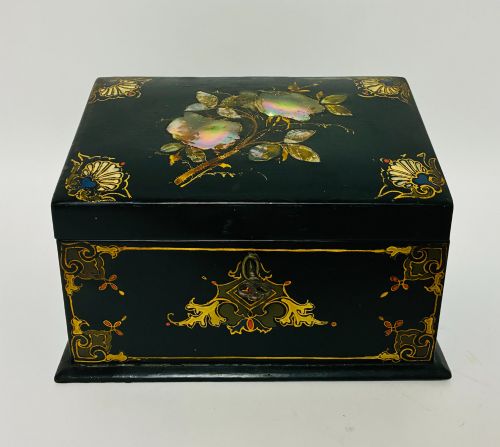
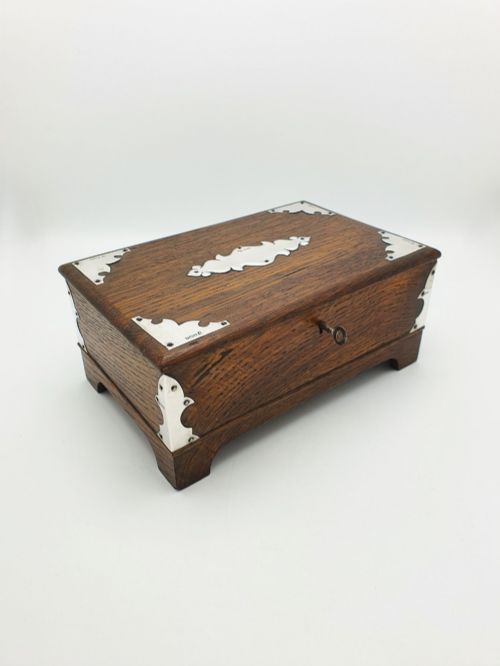
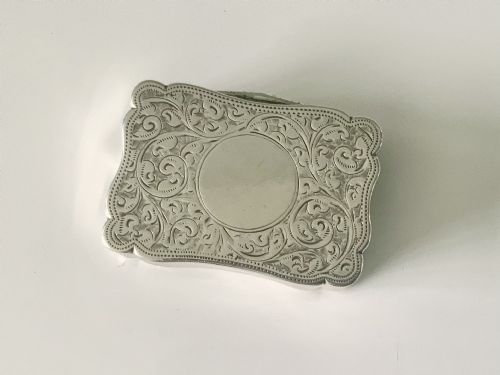
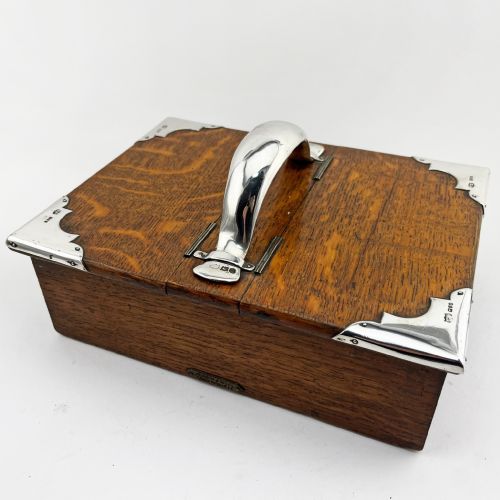
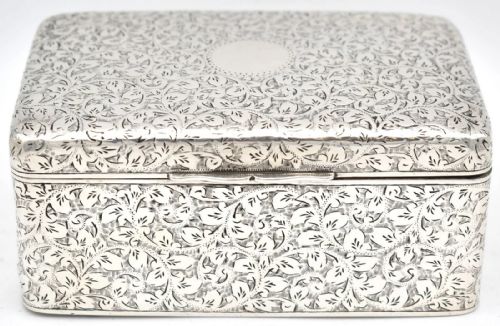
An edwardian desk trinket box sits upon writing tables and surfaces to hold stamps, tobacco, cigars, or small personal effects. The selection spans compact silver containers, wooden humidors, and stationery receptacles from various periods.
Most examples found here combine structural timbers like oak and walnut with metal mounts, or utilise solid silver and plated metals entirely. These pieces reflect the functional needs of nineteenth and early twentieth century studies and desks.
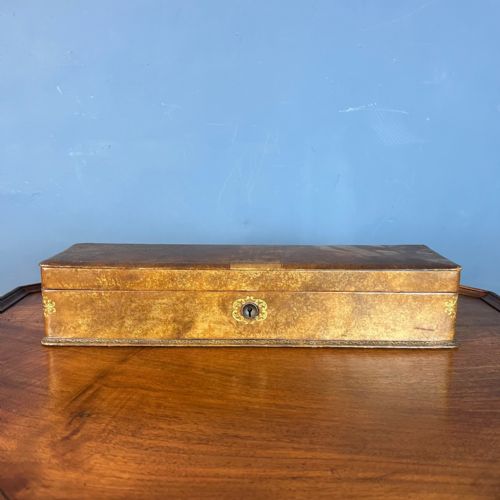
Makers shaped these containers in styles ranging from plain structural forms to pieces bearing neo-rococo or arts and crafts decoration. Buyers encounter everything from simple leather pen boxes to substantial silver-mounted wooden caskets.
Materials and construction
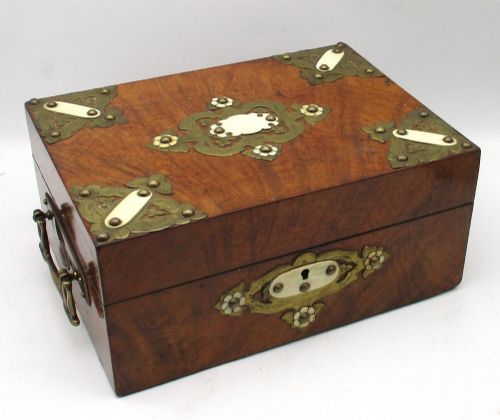
Craftsmen built the wooden boxes from oak, walnut, burr walnut, and mahogany, often incorporating brass hinges, locks, and handles. Many incorporated papier mache or leather coverings over rigid foundations.
Silver components were worked through casting, engraving with floral scrolls, and repousse decoration on copper or solid silver. Mounts were then secured to timber bodies using flush-fitting pins and screws.
Periods represented span the Victorian era, the Edwardian period, and the early twentieth century up to the nineteen-twenties.
Determining quality
Quality rests in the weight of the metal, the selection of timber veneers like burr walnut, and the crispness of hand-engraved scrolls or repousse work. Substantial silver gauge and well-figured grain distinguish finer examples from standard production.
Internal fittings, lining materials, and the precision of the joinery mark the division between utility boxes and high-end desk accessories.
Mappin & Webb·A & J Zimmerman Ltd
The Edwardian Desk Trinket Box Glossary
- Repousse
- Metalworking technique where the design is hammered into relief from the reverse side. This creates tactile surface patterns on copper and silver boxes.
- Humidor
- A moisture-controlled box designed for storing cigars or tobacco. These often feature internal wooden linings such as cedar.
- Tunbridge Ware
- Woodworking technique involving small mosaic tiles of various coloured woods to form geometric or pictorial patterns. Such decoration appears on nineteenth century table boxes.
- Sterling silver
- An alloy containing ninety-two point five percent silver by mass. Hallmarks on these boxes indicate assay office origins and date letters.
Edwardian Desk Trinket Box: Frequently Asked Questions
What were these boxes used for?
These containers held desk accessories, stamps, tobacco, cigars, and small personal valuables. They kept writing desks organised and protected contents from dust.
Larger versions served as stationery boxes or glove boxes while smaller silver pieces functioned as trinket or cigarette containers.
How do I date a box?
Dating relies on silver hallmarks, maker marks, and structural characteristics like timber choices and hardware styles. Edwardian pieces often display distinct floral scroll engraving.
Earlier Victorian examples lean towards heavier brass mounts and burr walnut veneers, while arts and crafts items show hand-worked copper surfaces.
Are the silver boxes solid silver?
Many listings feature solid sterling silver construction, often verified by Birmingham or Chester hallmarks. Other pieces utilise silver plating over base metal.
Wooden boxes frequently incorporate solid silver mounts or shields fixed to the lids and corners.
How do I care for wooden boxes?
Keep wooden boxes away from direct sunlight and extreme humidity changes to protect timber veneers and leather linings. Gentle dusting preserves the polished finish.
Metal mounts benefit from careful cleaning appropriate to silver or brass without abrasive compounds.