





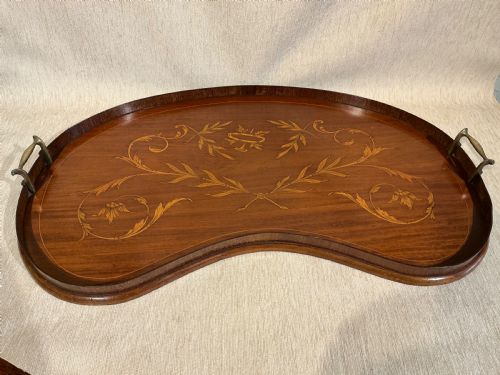


Edwardian Decorative Tray
An edwardian decorative tray brings refined domestic display and handling into a room, combining practical serving surfaces with detailed surface craft.
Edwardian Decorative Tray
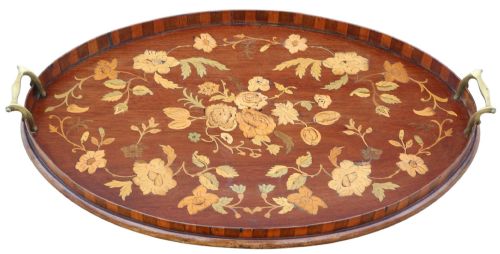
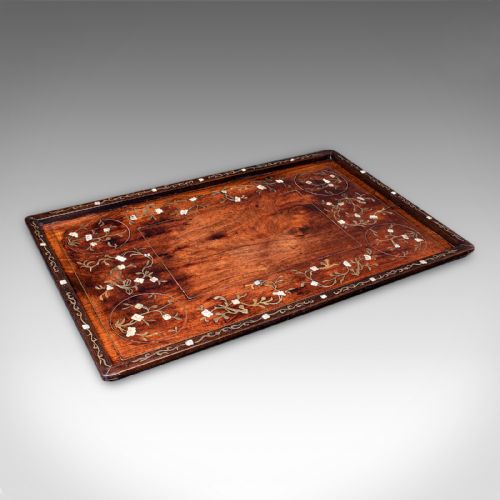
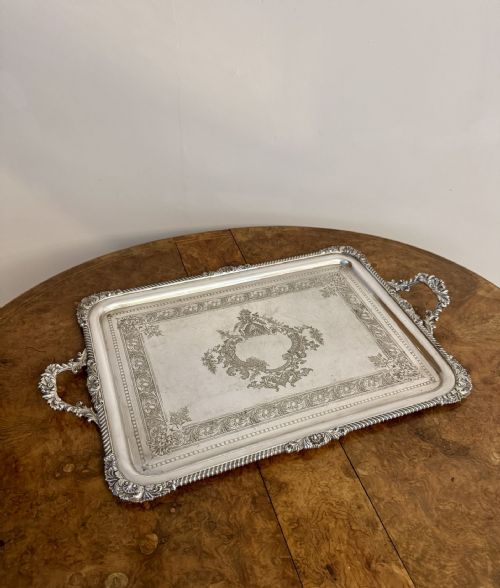
An edwardian decorative tray encompasses a range of serving and display vessels shaped by the aesthetics of the early twentieth century and the preceding decades. Examples appearing here emerge from periods spanning the Victorian era through the Edwardian years up to the nineteen-twenties, incorporating styles from Arts and Crafts to Art Nouveau and Anglo-Indian design.
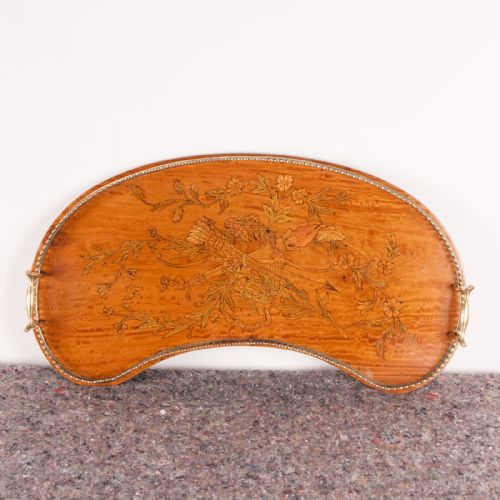
The forms vary between kidney-shaped satinwood boards, circular brass vessels, and inlaid wooden serving trays often utilised for afternoon tea or cabinet display. Makers and manufacturers of the period employed diverse materials, resulting in objects that function equally as portable servers and stationary decorative furnishings.
How They Were Made
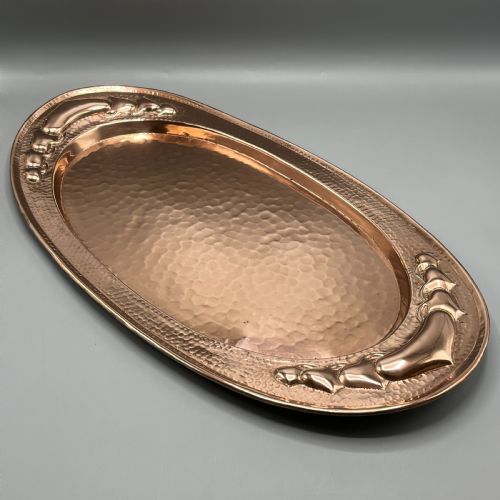
Artisans constructed these pieces using native and exotic woods such as mahogany and satinwood, frequently applying intricate marquetry inlay alongside brass galleries and handles. Metal variants rely on copper, brass, and pewter shaped through repoussé, beaten, and hammered techniques characteristic of the Arts and Crafts movement.
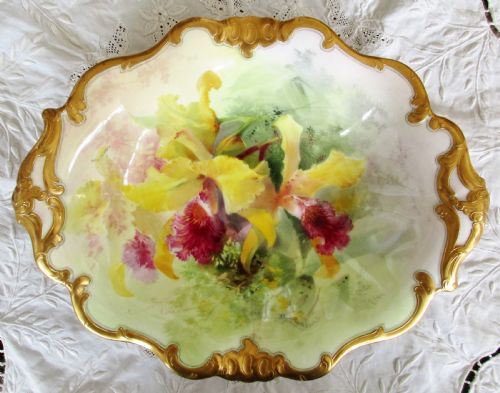
Porcelain and ceramic examples involve detailed hand-painting and transfer printing, executed by factories and individual artists who produced cabinet dishes and serving trays with floral or pictorial motifs. Enamel, ormolu, and toleware surfaces integrate additional decorative layers onto metallic and composite bases.
Edwardian Decorative Tray Retail Price Guide 2026
Typical asking prices for edwardian decorative tray among the pieces listed under this phrase on Sellingantiques today, from the lower quarter to the upper quarter. They describe what is for sale here now, not the wider market.
Card baskets in papier-mâché once stood ready in hallways to catch visiting calling cards.
What Varies in Quality
The standard of an edwardian decorative tray rests upon the precision of its woodworking inlay, the depth and crispness of metal repoussé work, and the skill evident in hand-painted ceramic motifs. Superior pieces demonstrate meticulous joinery, balanced proportions, and well-preserved surface decoration without obscuring the original material character.
Lesser examples display simpler construction methods, coarser metalwork, or worn surface finishes where the underlying ground shows significant degradation. The reputation of the producing pottery or metalwork studio also distinguishes standard domestic items from exceptional cabinet pieces.
Royal Crown Derby·Royal Doulton·Royal Worcester·Liberty & Co·Wedgwood
The Edwardian Decorative Tray Glossary
- Inlay
- A technique where pieces of contrasting timber, shell, or bone are inserted into a recessed wooden surface to form a decorative pattern. This method defines the ornamented borders of many satinwood and mahogany serving trays.
- Repoussé
- A metalworking method in which the artisan hammers a thin sheet of copper, brass, or pewter from the reverse side to create a raised design on the front. It is frequently seen on Arts and Crafts metal trays.
- Gallery
- A raised rim or pierced metal railing fitted around the edge of a tray to secure objects placed upon it. These galleries are often cast in brass or formed from shaped timber.
- Imari
- A style of ceramic decoration characterised by underglaze blue and overglaze iron red and gold, originating in Japan and adapted by British potteries. Such patterns appear on several porcelain dishes listed here.
- Toleware
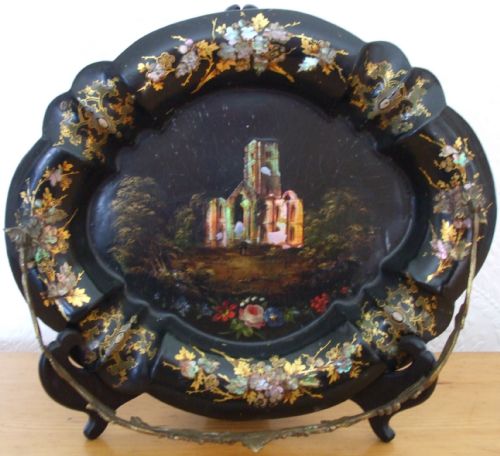
- Painted or lacquered sheet metal items produced in various European styles during the nineteenth and early twentieth centuries. These pieces utilise dark japanning grounds enriched with gilt embellishments.
Edwardian Decorative Tray: Frequently Asked Questions
What were these trays used for?
These trays served primarily for carrying tea services, holding calling cards, or displaying cabinet porcelain in formal reception rooms. Many examples also functioned as stationary decorative pieces on tables and sideboards.
Larger variations accommodated heavier serving vessels, while smaller kidney-shaped or pierced boards suited intimate afternoon tea settings and personal display.
How do I date an Edwardian tray?
Dating relies upon stylistic markers such as the organic floral motifs of Art Nouveau or the hand-beaten surfaces typical of the Arts and Crafts movement. Material choices, maker marks stamped on the base, and construction methods further narrow the period of origin.
Objects from this timeframe often blend Victorian structural weight with lighter Edwardian decorative tastes, particularly in inlaid satinwood and mahogany pieces.
How should I care for wooden trays?
Wooden surfaces require occasional treatment with suitable wax to preserve the polish and protect delicate marquetry inlay from drying out. Moisture and direct sunlight should be avoided to prevent timber warping and fading.
Gentle dusting with a soft cloth maintains the finish without introducing abrasives that might harm antique varnishes or lacquered details.
Are brass and copper trays polished?
Metal trays develop a natural patina over time that reflects their age and handling history. Excessive cleaning removes this desirable surface character and can thin the underlying metal.
Light dusting is generally sufficient, leaving deeper tarnish intact unless active corrosion threatens the integrity of the material.