

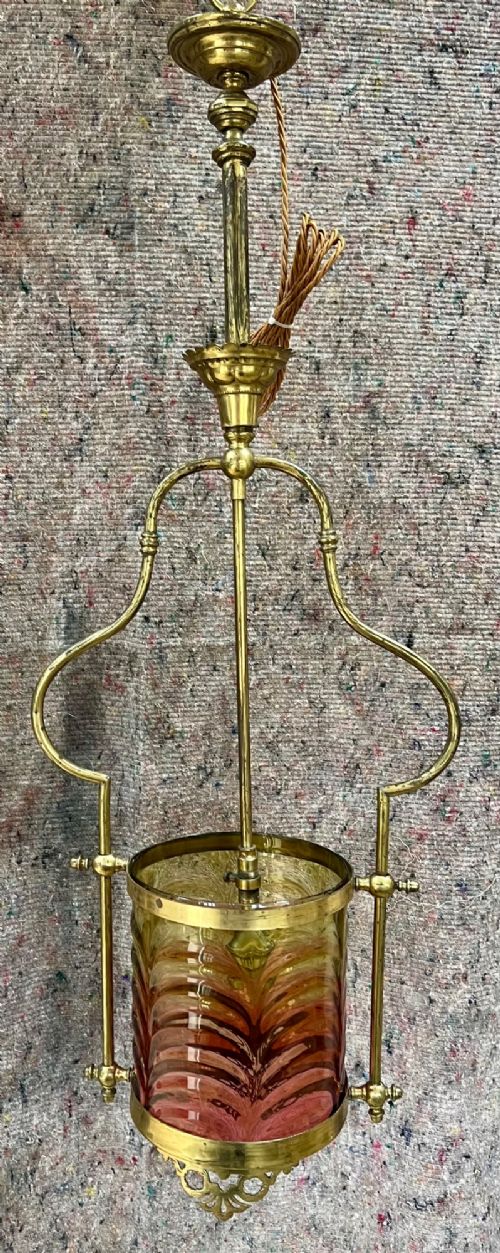
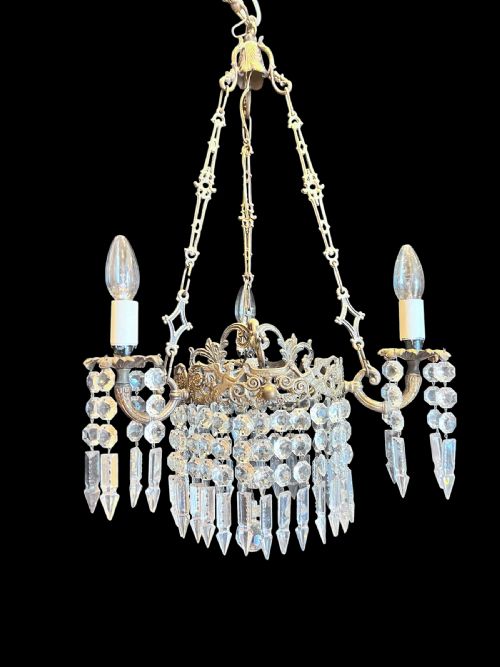


Edwardian Decorative Pendant
These edwardian decorative pendant lights combine period brass, glass, and bronze to illuminate historic interiors with distinctive character.
Edwardian Decorative Pendant
When searching for an edwardian decorative pendant, a buyer encounters hanging ceiling lights, lanterns, and chandeliers dating predominantly from the early twentieth century. These fixtures serve as central overhead illumination for hallways, porches, and rooms, suspended by chains or rods from matching ceiling roses.
The pieces appearing on this page span the Edwardian era alongside adjacent Victorian, nineteenth century, and 1920s or 1930s periods. Forms range from simple glass shades to elaborate multi-light chandeliers and heavy bronze or brass hall lanterns.
Makers and designers of the period embraced diverse aesthetics, yielding examples styled in French Art Nouveau, Arts and Crafts, Gothic Revival, and Aesthetic Movement designs. Brass and glass combinations dominate the available selection, frequently incorporating stained or cut crystal components.
Materials and construction methods
Construction relies heavily on cast and spun brass, bronze, copper, and steel to form the structural frames and decorative mounts of each hanging fixture. Metal components are frequently joined using traditional mechanical fasteners or soldered joints designed to support the weight of glass elements.
Glasswork forms an essential component, utilising leaded stained glass, mould-blown glass crystal, and heavy cut glass shades or bowls. Artisans shaped these glass elements to diffuse light effectively while displaying the distinct textures and tones characteristic of the period.
Edwardian Decorative Pendant Retail Price Guide 2026
Typical asking prices for edwardian decorative pendant among the pieces listed under this phrase on Sellingantiques today, from the lower quarter to the upper quarter. They describe what is for sale here now, not the wider market.
Keep an eye out for the occasional grumpy green man peering down from a copper lantern to supervise the hallway.
Qualities that distinguish finer examples
Quality in these hanging fixtures rests upon the weight and thickness of the metal frame, whether cast bronze, heavy brass, or copper. Substantial metalwork provides structural integrity and allows for crisper surface detailing in decorative motifs.
The refinement of the glass components further separates standard production from superior pieces. Hand-cut crystal, leaded stained glass, and unblemished coloured glass exhibit greater optical clarity and artistic ambition than plain pressed alternatives.
The Edwardian Decorative Pendant Glossary
- Edwardian
- Pertaining to the reign of King Edward VII, spanning from 1901 to 1910, though the style extends slightly either side. It is characterised by lighter, more refined domestic design than the preceding Victorian period.
- Art Nouveau
- An international style of art and architecture prominent between 1890 and 1910, notable for asymmetric organic lines and stylised plant motifs. This aesthetic heavily influenced decorative metalwork and glass shades of the era.
- Arts and Crafts
- A design movement championing traditional craftsmanship using simple forms and medieval, romantic, or folk styles of decoration. It emerged in the late nineteenth century as a reaction against machine-produced items.
- Ceiling Rose
- A circular decorative moulding or metal plate affixed to the ceiling from which a pendant light or chandelier hangs. It often conceals the electrical connection point.
- Cut Glass
- Glass that has been decoratively shaped and patterned by abrasive wheel cutting, producing faceted surfaces that refract light. This technique enhances the brilliance of chandeliers and pendant bowls.
Edwardian Decorative Pendant: Frequently Asked Questions
Where should I hang an Edwardian pendant light?
These hanging fixtures suit entrance halls, stairwells, and high-ceilinged period rooms where their drop can be fully appreciated.
Porch lanterns specifically work well in sheltered outdoor entranceways or vestibules using period-appropriate wiring.
How do I determine the date of a pendant light?
Dating relies on stylistic markers such as Art Nouveau curves, Arts and Crafts simplicity, or heavy Victorian brass casting techniques.
Examining construction methods like hand-soldered lead cames and cast metal thickness provides further clues to the period of manufacture.
Are these lights compatible with modern electrical systems?
Most antique fixtures can be adapted for modern electrical standards by a qualified electrician using appropriate wiring.
Original lamp holders are often upgraded for safety while retaining the historic exterior metal and glass components.
What distinguishes Arts and Crafts pendants from Art Nouveau examples?
Arts and Crafts pieces emphasise honest construction, hammered copper surfaces, and straightforward geometric or naturalistic forms.
Art Nouveau lighting favours fluid, whiplash lines, stylised floral motifs, and iridescent or coloured glass shades.