
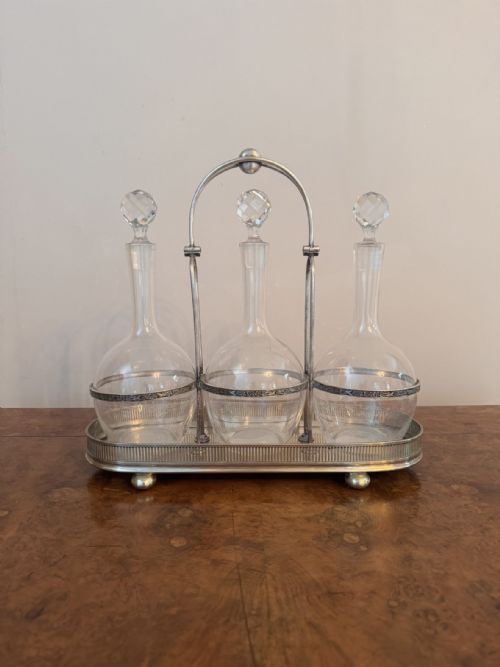
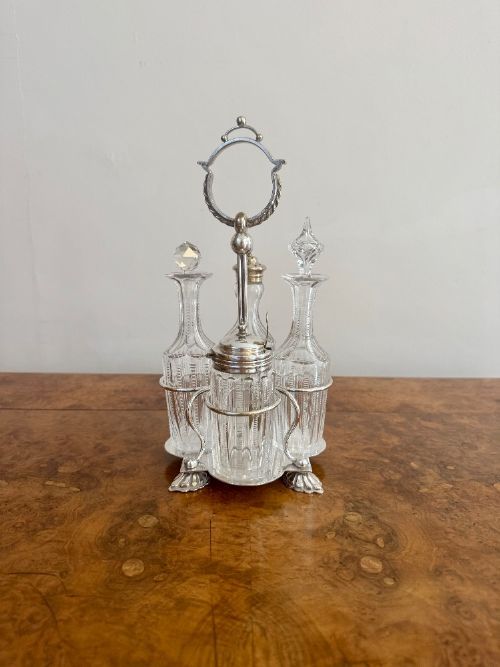
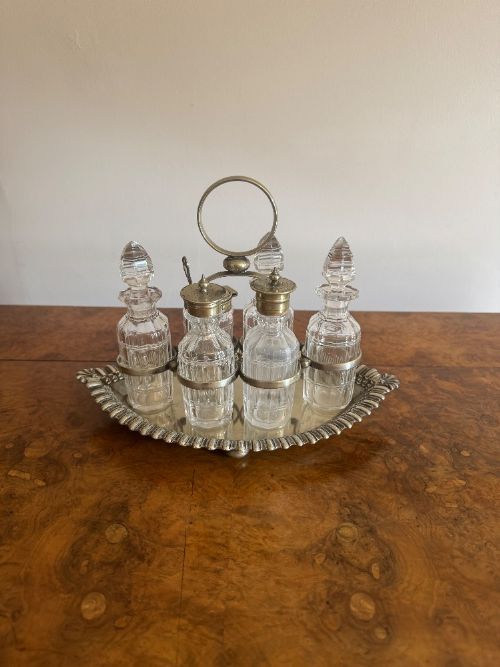
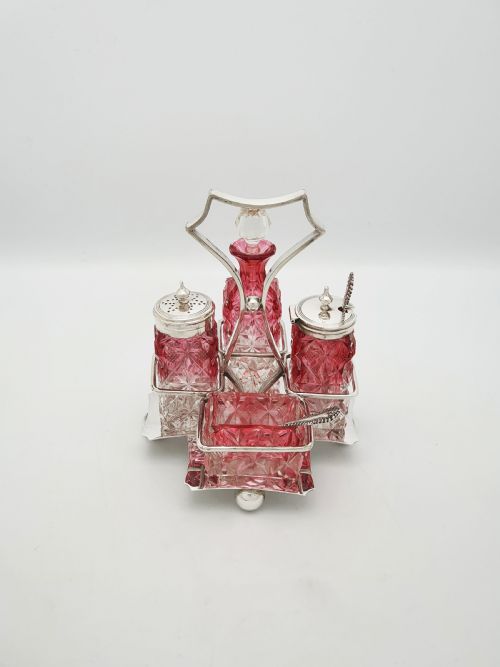


Edwardian Cut Glass Stand
These pieces combine heavy cut glass with polished metal frames to form a sturdy edwardian cut glass stand.
Edwardian Cut Glass Stand
An edwardian cut glass stand serves multiple domestic purposes, appearing frequently as a cruet set, a decanter tantalus, or an inkstand desk accessory. Buyers hunting for this specific form encounter various configurations designed to hold glass bottles, jars, or decanters securely within a metal or wooden frame.
The objects span periods from the late nineteenth century through to the nineteen twenties, though the core of the selection sits firmly in the Edwardian era. Cruet sets and inkstands dominate the current offerings, alongside locking tantalus frames that keep spirits safely contained.
Most examples pair cut glass or crystal receptacles with silver plate, brass, or oak frames. These combinations reflect the practical domestic requirements of the period, providing both utility on the dining table or desk and a decorative centrepiece for the room.
How they were made
Makers cut patterns into heavy glass blanks using wheels, creating deep facets that catch the light, and paired these vessels with cast or spun silver plate, brass, and solid oak frames. Metal components frequently received a coating of silver over a base metal, while wooden sections relied on sturdy joinery to support the weight of multiple glass bottles.
Frames often incorporated specialised mounts, handles, and bottle collars designed to fit specific glass vessels snugly. Engineering the locking mechanisms for tantalus stands required precise metalwork to secure the decanter stoppers in place.
Some Edwardian cruet sets grew large enough to hold eight distinct condiment bottles for the truly enthusiastic diner.
What varies in quality
The clarity and weight of the glass differentiate standard domestic items from finer productions, with deeper, crisper cutting on the facets indicating superior craftsmanship. Matching sets where every glass bottle belongs to the original frame command greater interest than assembled combinations.
The durability of the silver plating and the sturdiness of the supporting oak or walnut frames dictate the overall substance of the piece. Intricate casting on metal mounts and the presence of fully functioning locks with original keys elevate the standard of the stand.
Walker And Hall·William Hutton·Peter Henderson Deere·Clarke
The Edwardian Cut Glass Stand Glossary
- Tantalus
- A locked wooden or metal stand holding decanters of spirits to prevent unauthorised access while displaying the bottles. The frame grips the stoppers so the decanters cannot be removed until the locking bar is released with a key.
- Cruet set
- A matched collection of glass bottles and jars held within a framed stand for condiments like oil, vinegar, salt, and pepper. These sets sat at the dining table for easy access during meals.
- Inkstand
- A desk accessory comprising one or more inkwells, pen trays, and sometimes a sander or taperstick mounted on a base. They provided a stationary writing station for correspondence.
- Silver plate
- A layer of silver fused to a base metal such as copper, nickel brass, or Britannia metal. This technique allowed manufacturers to produce domestic items with the appearance of solid silver at a lower cost.
- Cut glass
- Glassware shaped and decorated by holding the vessel against a rotating abrasive wheel to carve patterns into the surface. The resulting facets scatter light and create a textured grip.
Edwardian Cut Glass Stand: Frequently Asked Questions
What is a tantalus?
A tantalus is a locking stand designed to hold glass decanters securely within a wooden or metal frame. The locking mechanism prevents the removal of the bottles until released with a key.
These pieces were typically placed in dining rooms or studies to display spirits while restricting access to guests or staff.
How do I clean cut glass?
Wash the glass pieces in warm, soapy water using a soft cloth or brush to reach into the deep cut facets. Avoid sudden temperature changes to prevent cracking the heavy material.
Dry the glass thoroughly with a lint-free cloth to restore the sparkle of the cut patterns.
Are the bottles original?
Many stands retain their original matching glass bottles, though replacements do occur due to breakages over decades of use. Checking whether the bases fit the frame compartments snugly helps determine originality.
Matching cut patterns across the set indicate that the bottles belong together.
How do I care for silver plate?
Clean silver plated frames with a gentle silver polish applied sparingly with a soft cloth. Avoid harsh scrubbing that might wear through the thin silver layer down to the base metal.
Store the items in a dry environment to slow down tarnishing.