

Edwardian Cut Glass Pendant
Edwardian cut glass pendant lights bring a bright, refractive clarity to ceilings through combinations of brass, bronze and lead crystal.
Edwardian Cut Glass Pendant
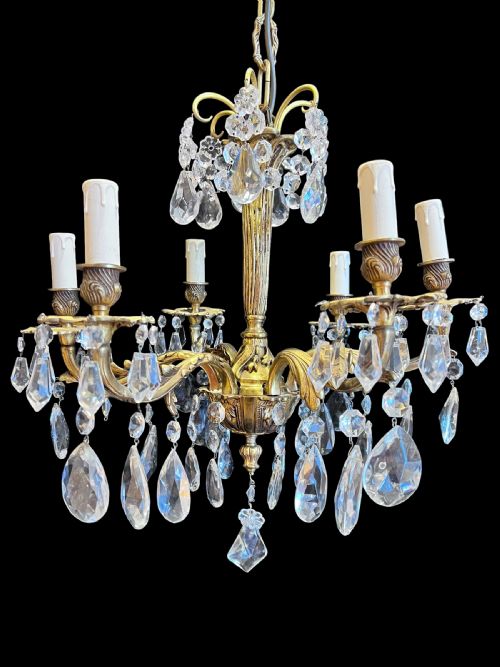
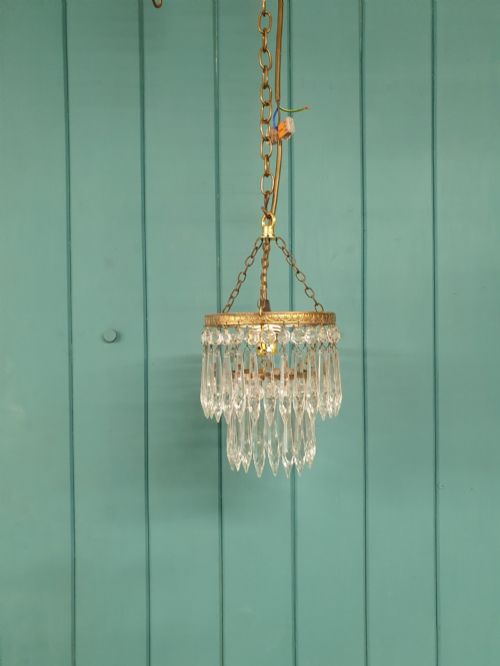
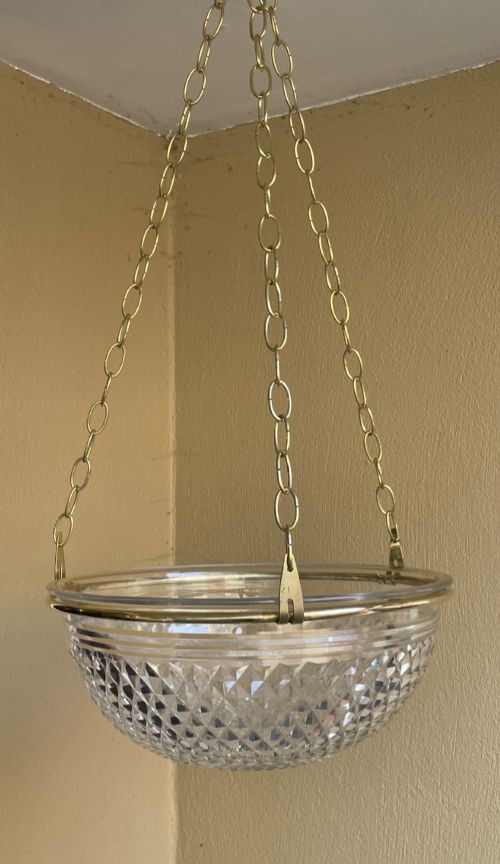
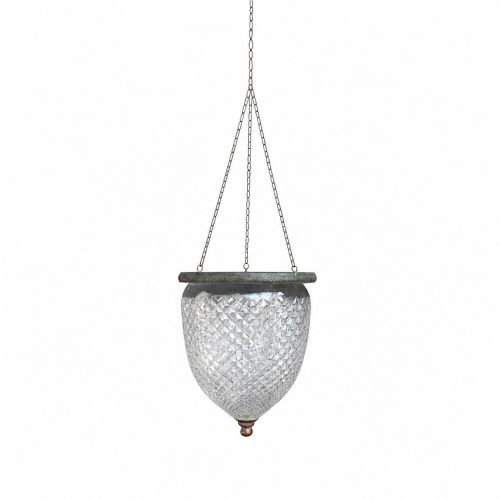
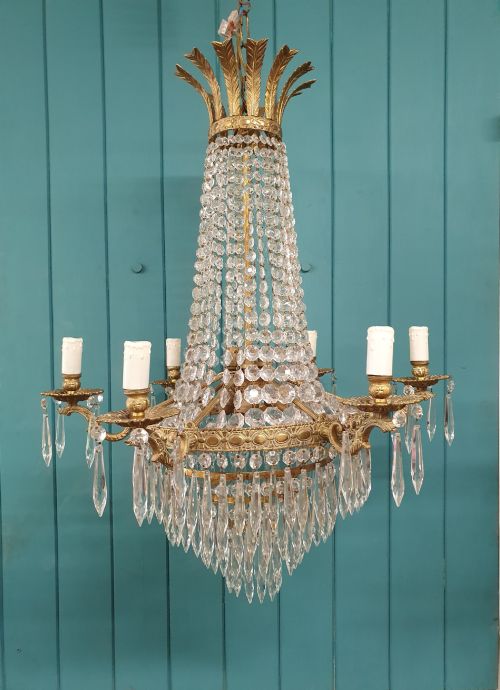
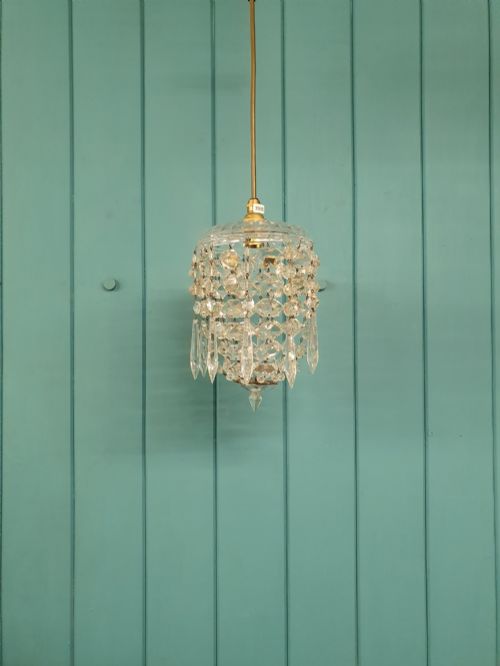
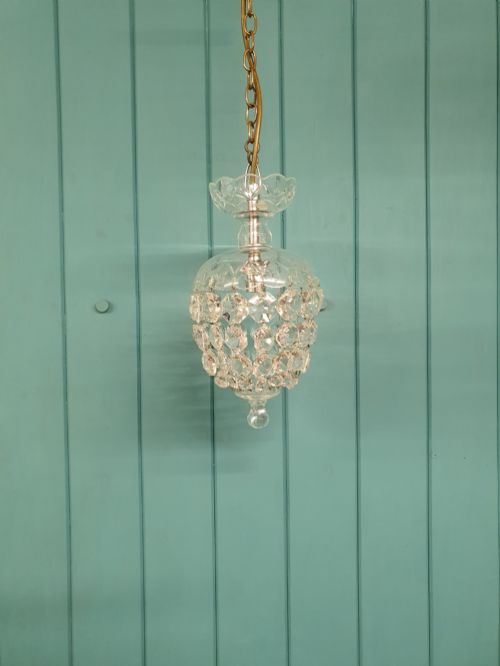
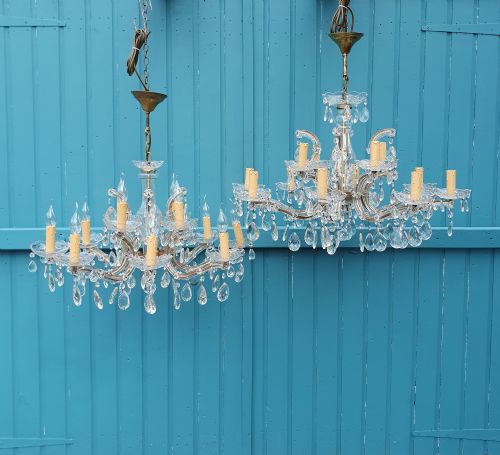
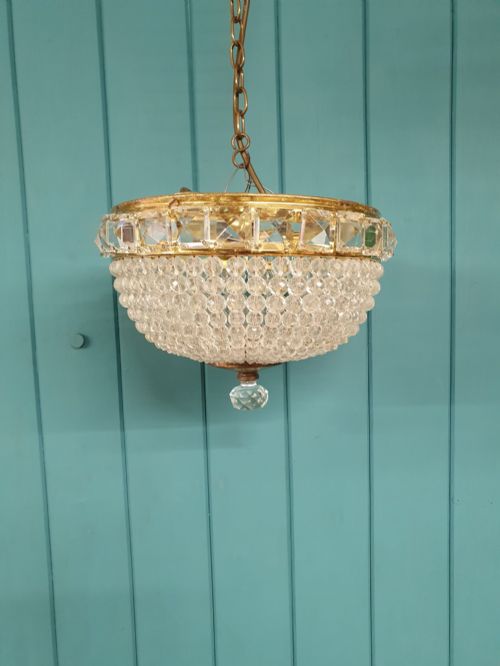
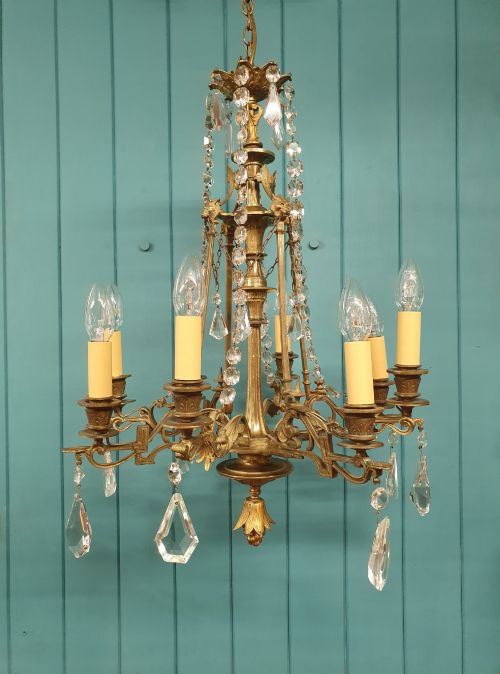
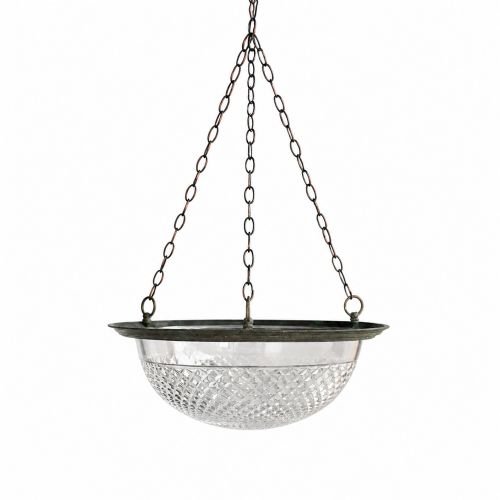
When you search for an edwardian cut glass pendant, you are looking at ceiling light fittings designed to refract light through faceted crystal and glass elements. These fixtures appear primarily as single pendants, plafonniers, and small bag or basket chandeliers from the early twentieth century.
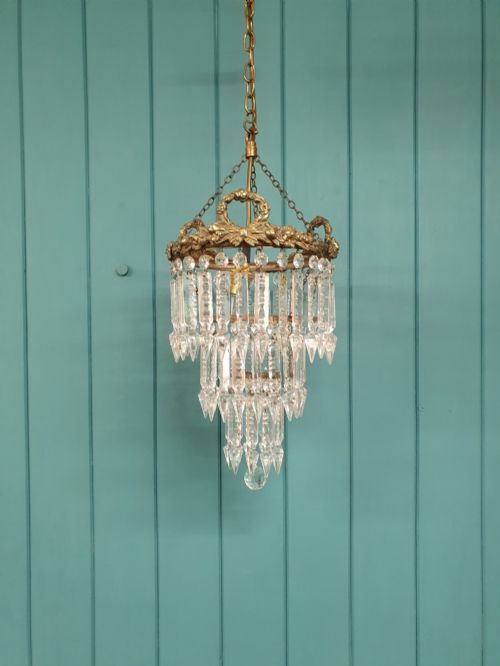
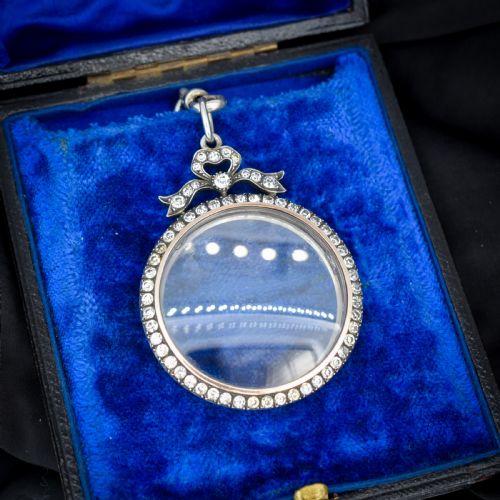
The materials span brass and bronze frames holding cut glass, crystal, and lead crystal drops, occasionally accompanied by silver or silver plate. Forms range from simple globes and acorn shapes to tiered tent and bag designs framed in brass.
How they were made
Makers constructed the primary framework using cast brass, bronze, or silver to support the weight of the glass components. Frames incorporated mounts, bands, and decorative motifs such as lion masks or leaf details.
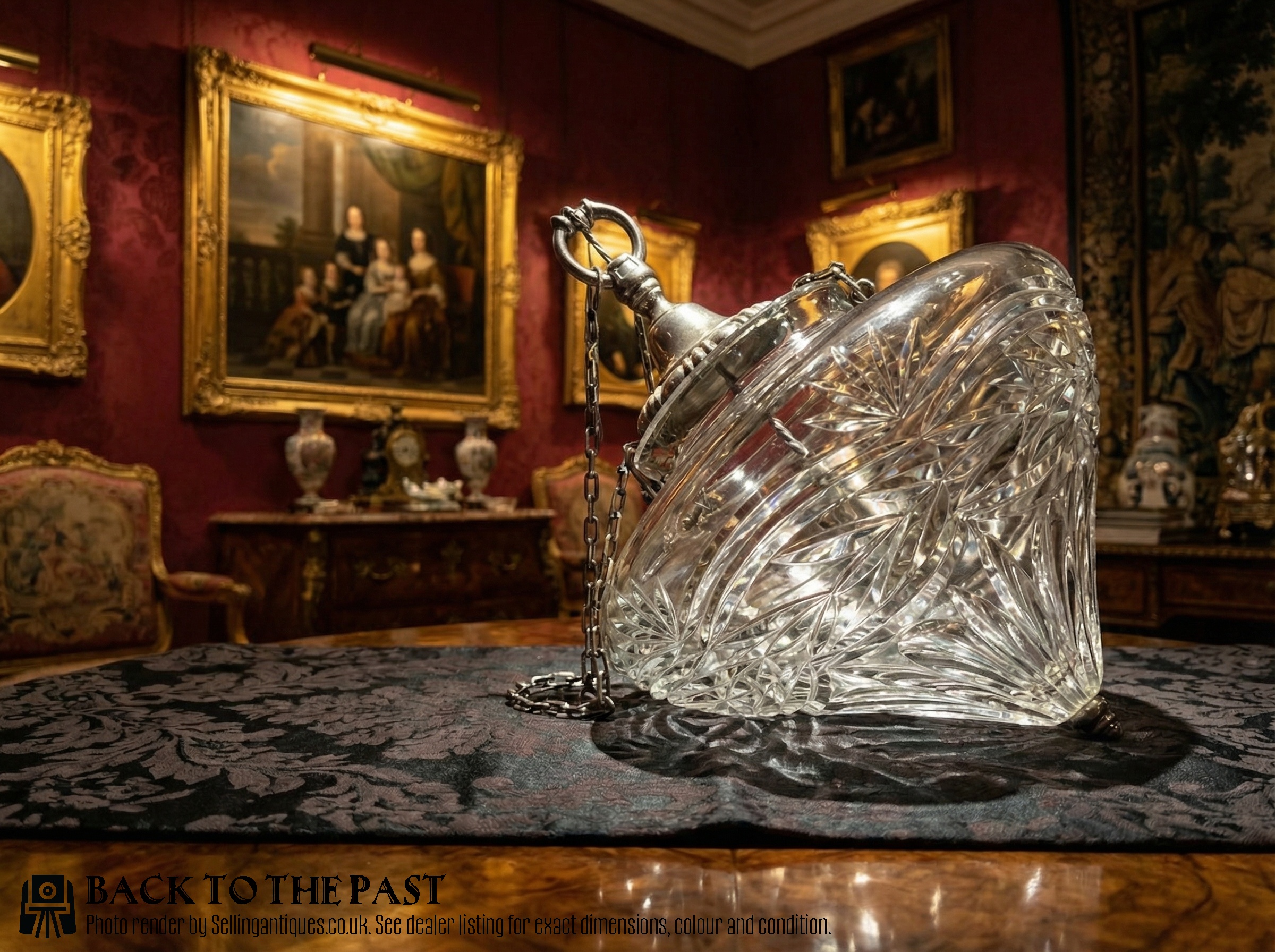
Cut glass and crystal elements were faceted by hand to maximise light refraction, then suspended from the metal armature using wire loops, pins, or beaded connectors to form domes, drops, and waterfall configurations.
The surviving pieces encompass single globe shades, basket chandeliers, and waterfall pendants equipped with original or replaced metal chains.
What varies in quality
The calibre of an edwardian cut glass pendant rests upon the depth and crispness of the facet cutting on the crystal, which dictates how sharply the light disperses. Heavier cast brass mounts and detailed metalwork such as leaf decoration or lion masks indicate superior construction.
Integrity of form also distinguishes pieces, seen in the completeness of original beaded strands, the matching uniformity of pendant drops, and the substantial weight of the lead crystal components relative to the frame size.
F&C Osler
The Edwardian Cut Glass Pendant Glossary
- Plafonnier
- A bowl-shaped ceiling light fixture mounted flush or close to the ceiling. These direct light downwards through cut or frosted glass.
- Bag Chandelier
- A lighting form shaped like a tapering bag or basket constructed from a metal frame draped in cascading crystal beads and prisms.
- Cut Glass
- Glass shaped and patterned by grinding wheels to create sharp facets. This technique increases optical refraction in pendant lighting.
- Lead Crystal
- Glass containing lead oxide, which adds weight, brilliance, and clarity. It is softer than standard glass, making it suitable for deep facet cutting.
- Tent Chandelier
- A lighting fixture featuring a conical upper section of strung crystals resembling a tent above a central tier of lights.
Edwardian Cut Glass Pendant: Frequently Asked Questions
What is an edwardian cut glass pendant?
An edwardian cut glass pendant is a ceiling light fixture from the early 1900s featuring faceted crystal glass supported by brass or bronze frames. These pieces were designed to hang from entrance halls, corridors, and principal rooms.
They utilise light bulbs or candles depending on their exact period conversion, diffusing illumination through hanging prisms, beads, and moulded shades.
How do I clean an edwardian cut glass pendant?
Cleaning requires removing individual crystal drops where possible and washing them in warm soapy water using a mild detergent. Metal frames should be wiped gently with a soft dry cloth to preserve the original brass or bronze finish.
Harsh chemical polishes must be kept away from the glass elements and aged metal surfaces to prevent permanent scratching or stripping of the patina.
Are these pendant lights safe for modern wiring?
Many surviving examples have been rewired with modern flex and lamp holders to comply with contemporary electrical safety standards. You should check the internal wiring of any prospective purchase before installation.
Professional electricians can easily update the internal components of brass and glass light fittings without altering the historic exterior appearance.
How do I identify an edwardian period light?
Edwardian lighting is identified by characteristic metal casting styles, specific brass frame assemblies, and the presence of early cut glass or lead crystal drops. Construction methods typically involve pinned crystal connections and solid brass components rather than stamped modern metal.
Stylistic cues bridge late Victorian ornamentation and early twentieth-century restraint, frequently showing neoclassical or French-influenced brass mounts alongside crystal beadwork.