


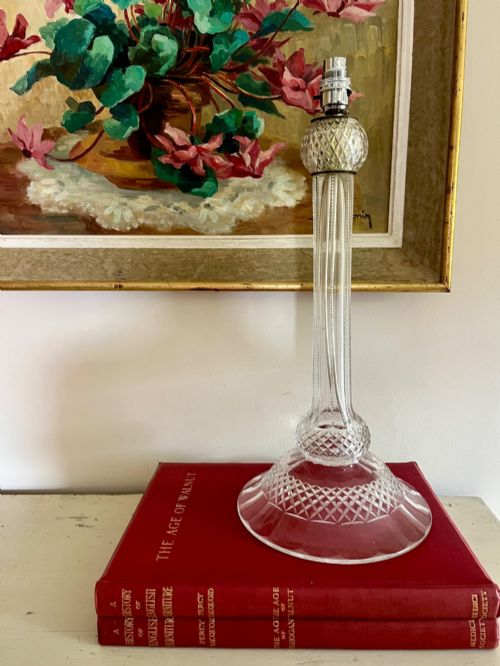


Clear Cut Glass Lamp
A clear cut glass lamp catches the daylight and holds the room together with crisp weight and sharp refraction.
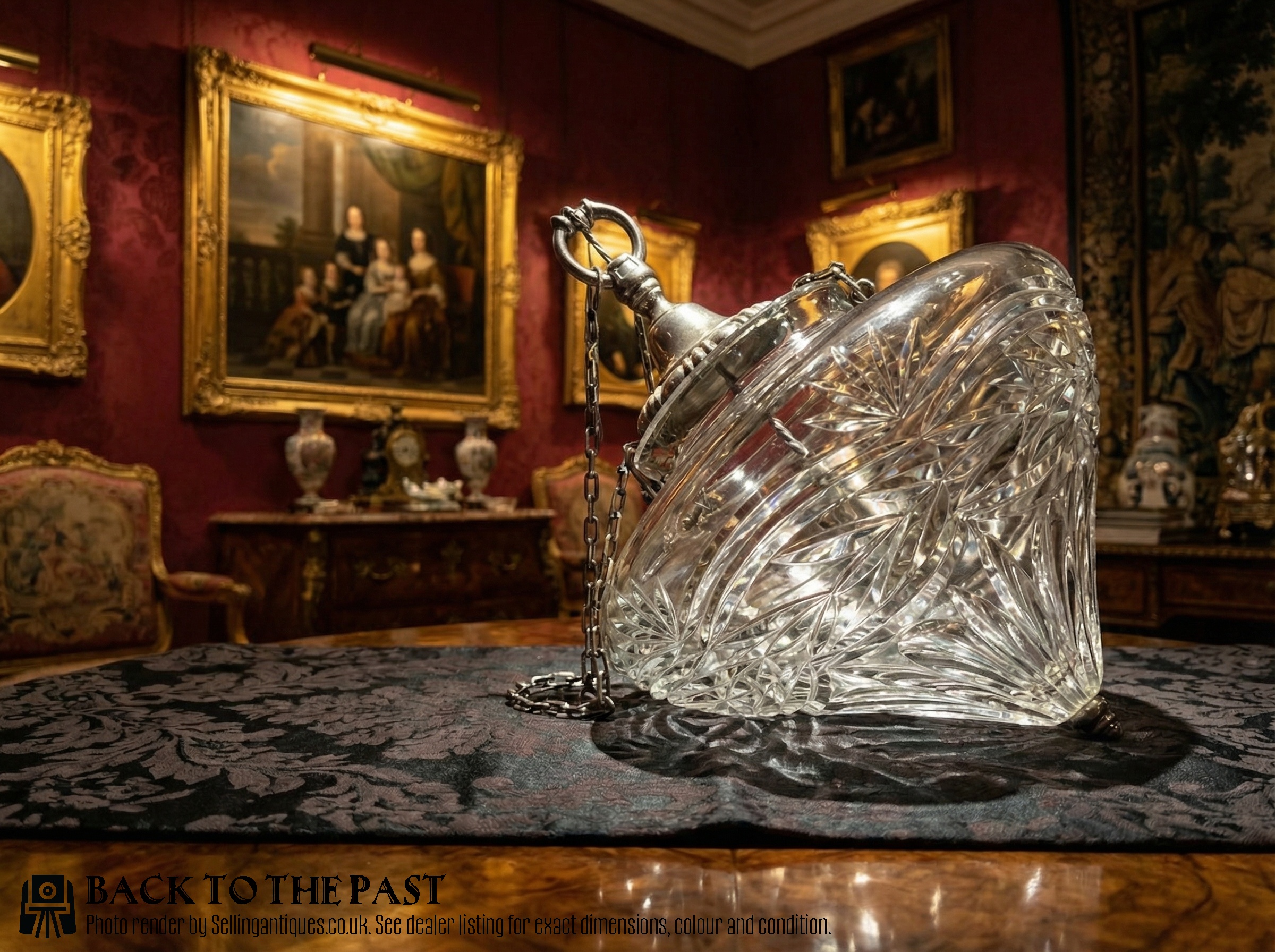
Clear Cut Glass Lamp
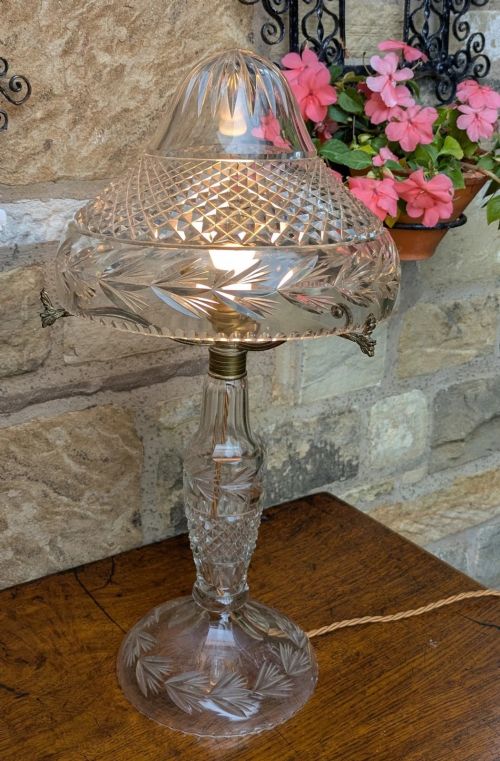
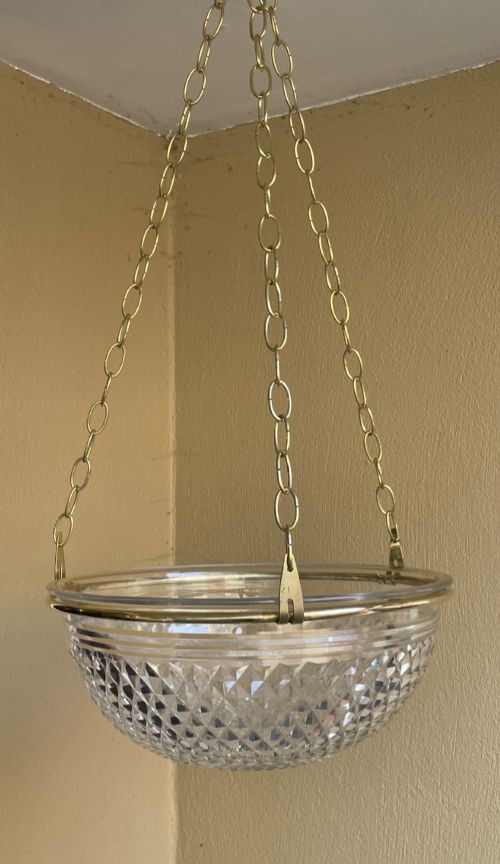
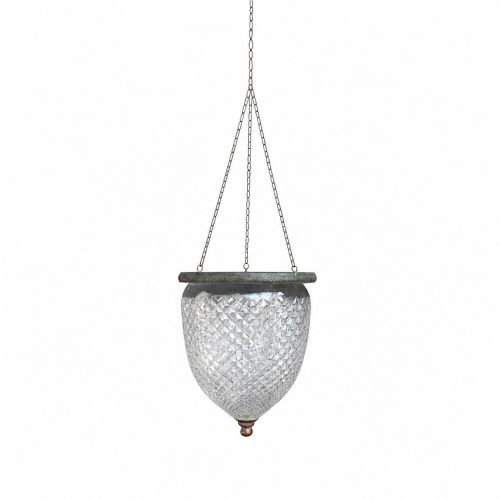
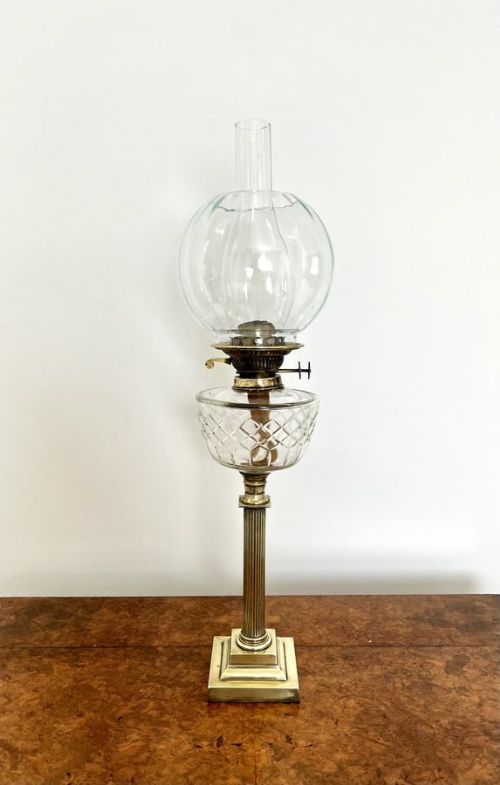
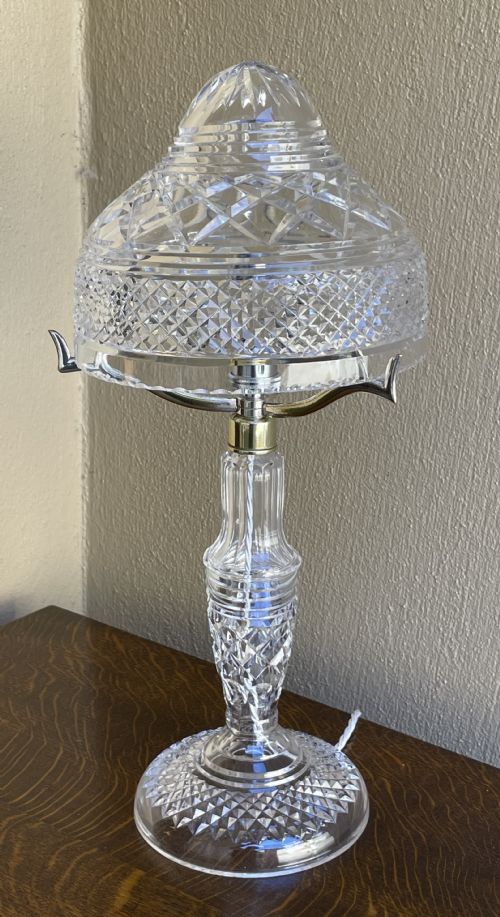
A clear cut glass lamp combines heavy refractive glass bodies with metal mounts, appearing across table lamps, oil lamps, and hanging light fittings. When handling a clear cut glass lamp, one notices how the faceted surfaces turn standard illumination into distinct patterns of light across a room.
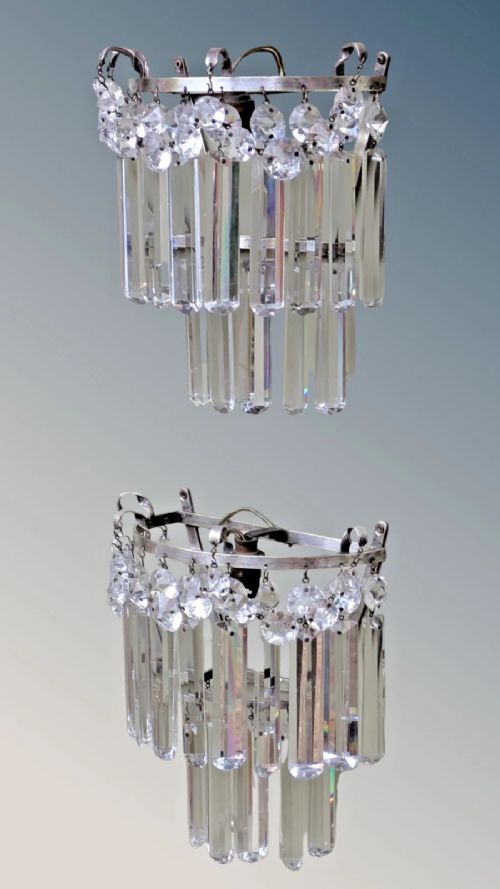
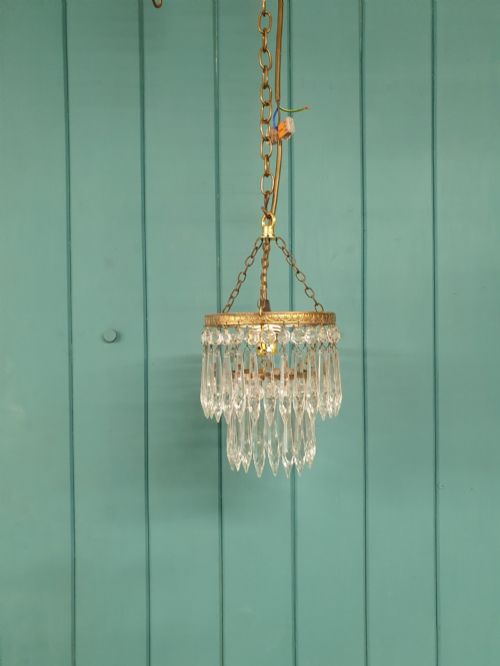
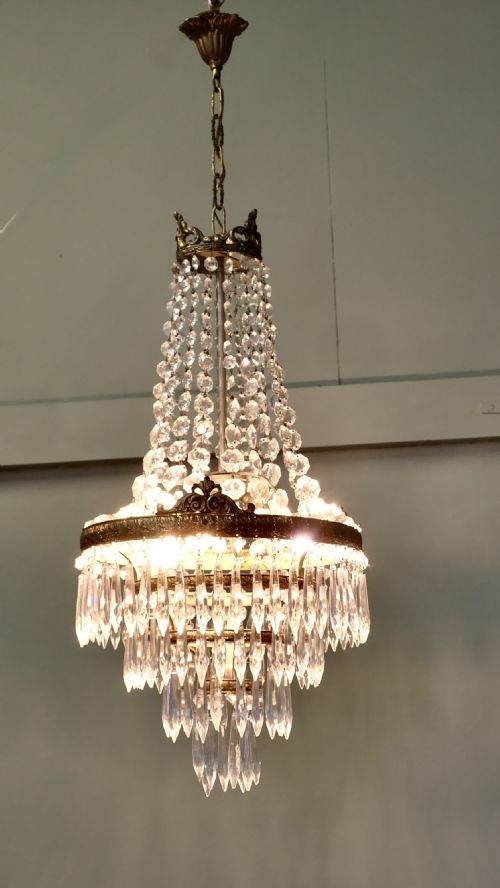
The pieces on this page span from the Victorian and Edwardian eras through to the Art Deco period of the 1930s. Table lamps and mushroom lamps sit alongside brass-mounted pendants, wall lights, and tiered chandeliers.
Victorian examples often pair cut glass with heavy brass Corinthian columns or oil lamp bases, whilst later twentieth-century pieces lean towards streamlined mushroom profiles and crystal drop fixtures. Buyers frequently encounter table lamps and ceiling lights featuring lead crystal or cut glass bodies supported by brass, silver plate, or gilt bronze.
Materials and construction
Makers utilised heavy lead crystal and cut glass, applying wheel-cut facets, flutes, and geometric patterns to blank vessels before hand-polishing the surface to a bright finish. The glass elements were then secured to structural metal components using threaded brass rods, collars, and collars.
The structural framework typically relies on cast brass, gilded bronze, or silver-plated mounts that anchor the heavy glass bodies securely. Prisms, drops, and beads are hung from wire loops or pinned directly into metal armatures to complete the cascading light fittings.
Several Victorian examples were originally designed to burn paraffin oil before receiving careful twentieth-century conversions to electricity.
Assessing quality and finish
Quality rests in the depth and crispness of the cutting, where sharper facets create cleaner light refraction and superior visual weight. The clarity of the glass itself matters greatly, distinguishing clear lead crystal from standard pressed or moulded glass imitations.
The engineering of the mounts dictates stability, with finer pieces using heavy gauge brass or gilt bronze rather than thin, pressed sheet metal. Well-made fittings retain tight joints, robust threading, and heavy bases that properly support the substantial weight of the cut glass.
Stuart Crystal·Baccarat·Osler·Messengers·Harrods
The Clear Cut Glass Lamp Glossary
- Cut glass
- Glass decorated by holding it against a rotating abrasive wheel to carve shallow or deep patterns into the surface. This technique produces sharp-edged facets that catch and scatter light.
- Lead crystal
- Glass containing a significant proportion of lead oxide, which increases density, softness for cutting, and refractive index. It gives these lamps their heavy feel and brilliant sparkle.
- Plafonnier
- A ceiling-mounted dome or bowl light fitted flush or semi-flush against the ceiling. These fixtures often feature cut glass or frosted bodies held by brass mounts.
- Tent and bag chandelier
- A lighting fixture featuring an upper conical tent of strung crystal beads falling down to a gathered bag shape at the base. This design was popular in grander interior schemes.
- Lustre
- A hanging glass pendant or drop suspended from a chandelier or wall light to increase light reflection. They are typically cut into spear, teardrop, or prism shapes.
Clear Cut Glass Lamp: Frequently Asked Questions
How do I wire an antique lamp?
Rewiring requires running modern heat-resistant flex through the internal brass channels or central rod of the lamp. A qualified electrician should handle the internal connections to ensure safety without altering the exterior metalwork.
Original brass shade holders and collars can usually be retained to accept modern bulb holders. Care must be taken not to overtighten threaded metal components against fragile glass necks.
Are these lamps heavy?
Solid lead crystal and thick cut glass possess a dense weight that requires sturdy placement surfaces. Table lamps need stable tables, whilst ceiling fixtures demand secure ceiling joists and appropriate fixings.
The substantial metal bases and thick glass bodies contribute to an overall heft that distinguishes them from lighter modern reproductions.
How do I date an antique lamp?
Dating relies on examining the mounting style, the wiring entry points, and the cutting patterns characteristic of specific decades. Victorian pieces frequently feature heavy brass columns, whilst 1930s examples often present mushroom profiles or streamlined Art Deco frames.
Maker marks stamped onto metal collars or moulded into the glass base also provide precise chronological markers. Patent names and registry numbers found on the hardware help narrow down the exact period of manufacture.