

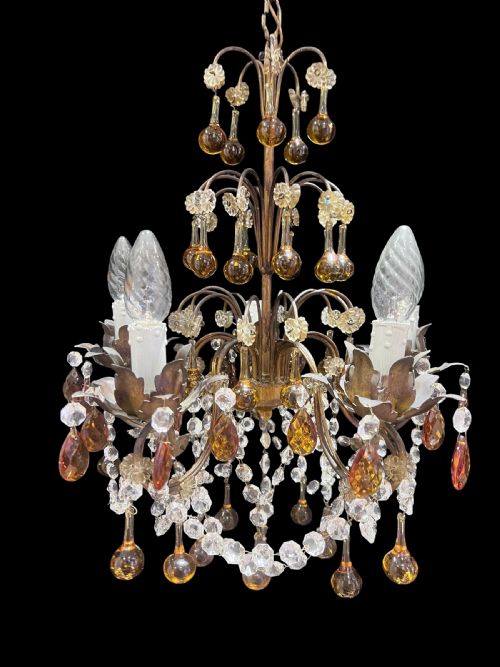


Edwardian Crystal Ceiling Lamp
An edwardian crystal ceiling lamp brings bright, refractive sparkle to a room through cut glass drops and brass or silver plated mounts.
Edwardian Crystal Ceiling Lamp
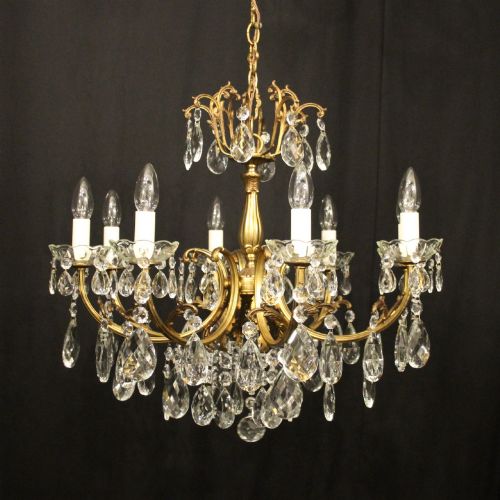
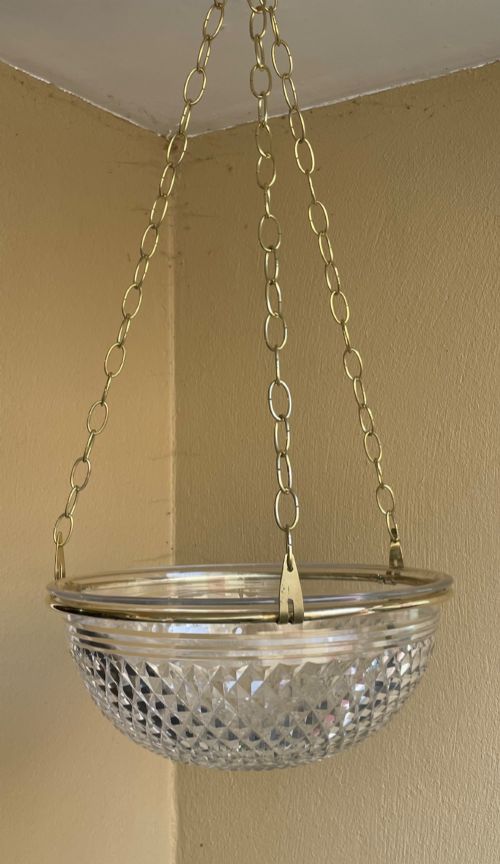
When you search for an edwardian crystal ceiling lamp, you find hanging light fixtures designed to cast patterned reflections across a ceiling and walls. These pieces include chandeliers, pendant lights, plafonniers, and bowl lights created to illuminate principal rooms during the early twentieth century.
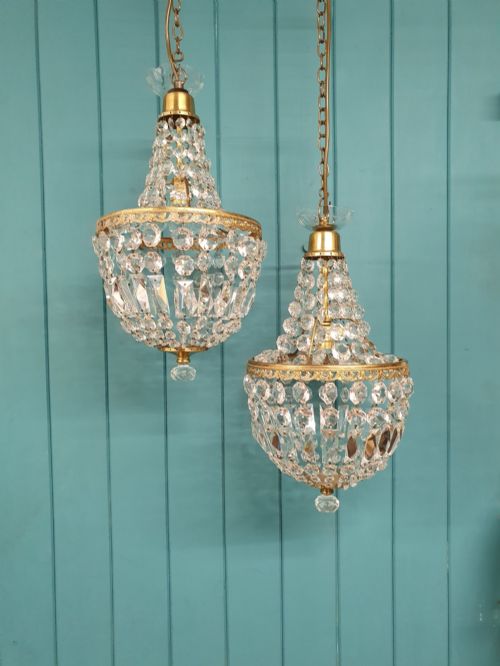
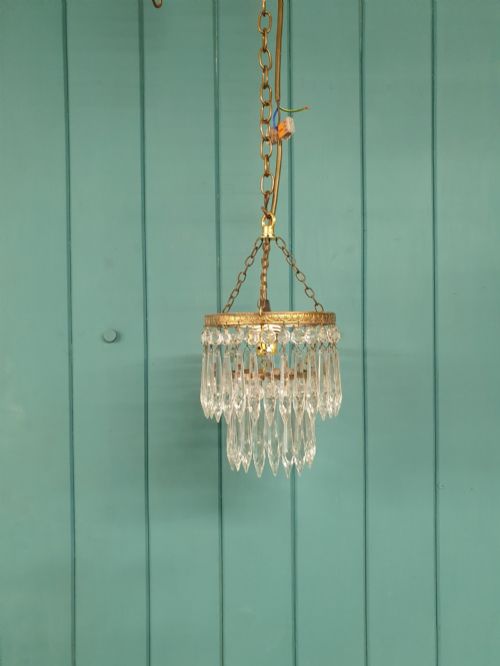
The most common versions on this page are small spike chandeliers, plafonniers, and cut glass pendant lights originating from the Edwardian period and the early twentieth century. You also encounter tent and bag chandeliers, basket chandeliers, and dome top designs that utilise various arrangements of glass drops and prisms.
Makers and designers from this era utilised forms ranging from simple acorn and pineapple cut crystal shades to elaborate multi-arm chandeliers with beaded arms and swag details. The selection spans straightforward single-bulb ceiling lights up to larger fixtures with numerous crystal drops.
Materials and construction
Makers built these lamps using a foundation of brass, silver plate, bronze, or other metals to form the visible frames, galleries, and mounts. Cut glass, lead crystal, and plain glass formed the shades, drops, lustres, and prisms that hang from these metal skeletons.
The glass components received manual cutting and polishing to create sharp facets that maximise light refraction from the internal bulbs. Metal elements were cast, spun, or soldered to support the weight of the crystal drops and secure the ceiling fixings.
Edwardian Crystal Ceiling Lamp Retail Price Guide 2026
Typical asking prices for edwardian crystal ceiling lamp among the pieces listed under this phrase on Sellingantiques today, from the lower quarter to the upper quarter. They describe what is for sale here now, not the wider market.
Listings on this page span the Edwardian period, Victorian era, and early twentieth century, utilising brass, silver plate, cut glass, and lead crystal.
Variations in quality
Quality in these lighting fixtures rests upon the depth and precision of the glass cutting, which determines how cleanly the crystal splits light. Heavy lead crystal with sharp, well-defined facets sits at the upper end of the scale, producing brighter and more complex refraction than simpler moulded glass.
The substance and finish of the metal mounts also distinguish finer examples, where solid brass or silver plate frames hold their shape securely and complement the glass work. Lesser pieces rely on thinner stamped metals or simpler fixings that lack the substantial presence of superior period work.
The Edwardian Crystal Ceiling Lamp Glossary
- Plafonnier
- A ceiling light designed to sit relatively flush against the ceiling rather than hanging on a long drop. These bowl-shaped or dome-shaped glass shades distribute diffused light evenly across smaller spaces.
- Lustre
- A cut glass pendant drop or hanging prism attached to a chandelier to catch and scatter light. Lustres often hang in rows around the perimeter of the metal frame.
- Tent and bag chandelier
- A lighting form featuring an upper conical tent of strung glass beads dropping down to a lower basket or bag containing further crystal elements. This traditional shape creates a dense cluster of reflective surfaces.
- Spike chandelier
- A compact hanging light featuring upward or outward pointing glass spikes and drops arranged around a central metal stem. They provide focused illumination in hallways or compact rooms.
Edwardian Crystal Ceiling Lamp: Frequently Asked Questions
How do I hang a heavy crystal lamp?
These ceiling lights require secure attachment to ceiling joists using a suitable metal hook or bracket capable of supporting the combined weight of the metal frame and glass components.
Because many period fixtures weigh considerably more than modern light fittings, professional installation by an electrician ensures the ceiling structure safely bears the load.
Were these lamps originally wired for electricity?
Edwardian ceiling lights often date from a transitional period when homes adopted electric lighting alongside gas, meaning original fixtures were frequently adapted or subsequently rewired for modern bulbs.
When purchasing a vintage lamp, check whether the internal wiring has been updated to meet current safety standards for domestic electrical circuits.
How do I clean cut glass drops?
Regular dusting with a soft cloth keeps the glass elements clear, while deeper cleaning involves removing individual crystal drops to wash them in lukewarm water with a mild detergent.
Careful handling prevents chipping the delicate facets, and drying each piece thoroughly before rehanging stops water spots from dulling the sparkle.
What rooms suit an edwardian ceiling lamp?
Compact spike chandeliers and plafonniers work well in hallways, vestibules, or bedrooms where ceiling height is moderate and the light can bounce off surrounding walls.
Larger tent and bag chandeliers or multi-arm fixtures suit reception rooms and dining spaces where their full span and numerous crystal drops become a central decorative feature.