
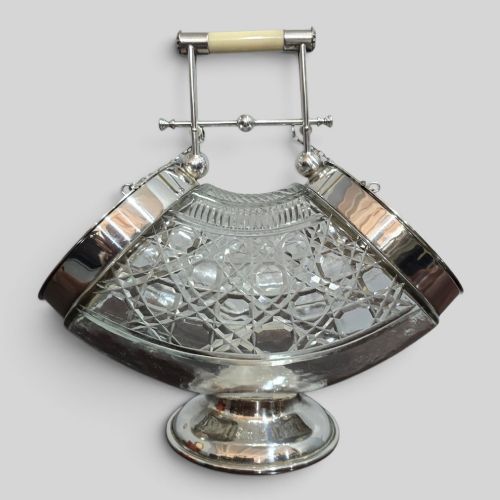


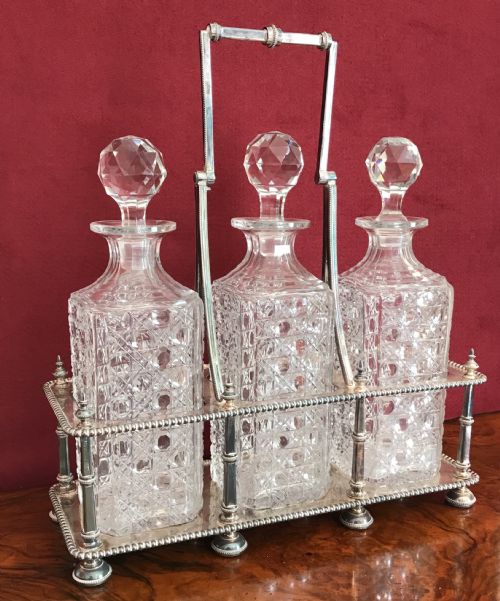

Edwardian Crystal Caddy
These edwardian crystal caddy selections bring brilliant cut glass and gleaming silver plate together for practical use and display.
Edwardian Crystal Caddy
An edwardian crystal caddy generally encompasses cut glass containers framed in silver plate or sterling silver, often designed for biscuits or tea storage. These vessels date primarily from the Edwardian period, alongside related Victorian and early twentieth-century examples.
The objects span several forms on this page, including biscuit barrels, tea caddies, and relish caddies. Buyers most frequently meet cut glass bodies paired with metal mounts or hinged lids during their search.
Materials and construction
Makers shaped heavy crystal and glass using deep cutting techniques to create hobnail and geometric patterns that catch the light. This glass combines with silver plate or sterling silver mountings, hinges, and swing handles.
Wooden frames in oak, walnut, and brass mountings also support multi-bottle arrangements and decanter sets. Metal plating covers base metals to provide a bright finish alongside the clear glass.
Listings feature periods spanning from the Victorian era through the Edwardian decade into the 1930s, utilising cut glass, oak, and silver plate.
Distinctions in quality
Quality rests on the depth and crispness of the glass cutting, where sharper facets and heavier crystal bodies create greater brilliance. The weight of the silver plate or sterling silver mountings also marks the distinction between standard and finer pieces.
Integration between the wooden or metal frames and the glass inserts shows the care taken in original assembly. Heavier mounts and secure locking mechanisms separate the more substantial pieces from simpler containers.
The Edwardian Crystal Caddy Glossary
- Edwardian
- Relating to the reign of King Edward VII from 1901 to 1910, often extending to encompass the broader stylistic era of the early twentieth century. Pieces from this time frequently favour lighter, more refined proportions than heavy Victorian designs.
- Silver Plate
- A thin layer of silver fused to a base metal core such as copper or brass. This technique allowed makers to produce durable decorative items at a lower cost than solid sterling silver.
- Hobnail Cut
- A raised, multi-faceted glass cutting pattern resembling the heavy hobnails used on boot soles. It creates a tactile, highly reflective surface across biscuit barrels and cruet bottles.
- Tantalus
- A locking wooden frame that holds decanters securely to prevent unauthorized access to the contents while still displaying them. The frame blocks the stoppers from being removed until the lock is released.
Edwardian Crystal Caddy: Frequently Asked Questions
How were crystal caddies used?
These pieces served practical roles in the dining room and drawing room for storing biscuits, dry tea, or condiments. They kept provisions protected while remaining presentable for guests.
Containers with locking mechanisms or hinged lids ensured household stores remained secure or fresh until required for tea service or dining.
What materials make up these caddies?
The primary components are heavy cut crystal or glass paired with silver plate or sterling silver mounts and lids. Some variations incorporate oak or walnut frames.
Internal supports and handles often utilise brass or plated metals to secure the glass bodies within their stands.
How do I date an edwardian piece?
Dating relies on stylistic markers, hallmarks on the silver elements, and construction methods. Edwardian items often feature lighter ornamentation than Victorian predecessors.
Makers' marks or registration numbers stamped onto the metal mounts can help narrow down the exact decade of manufacture.
How should I clean cut glass?
Wash cut glass gently in warm water using a mild detergent and a soft cloth or brush to reach the faceted recesses. Avoid sudden temperature changes to prevent cracking the heavy crystal.
Polish the silver-plated mounts separately with an appropriate cleaner, ensuring liquids do not seep into any wooden frames or glued joints.