


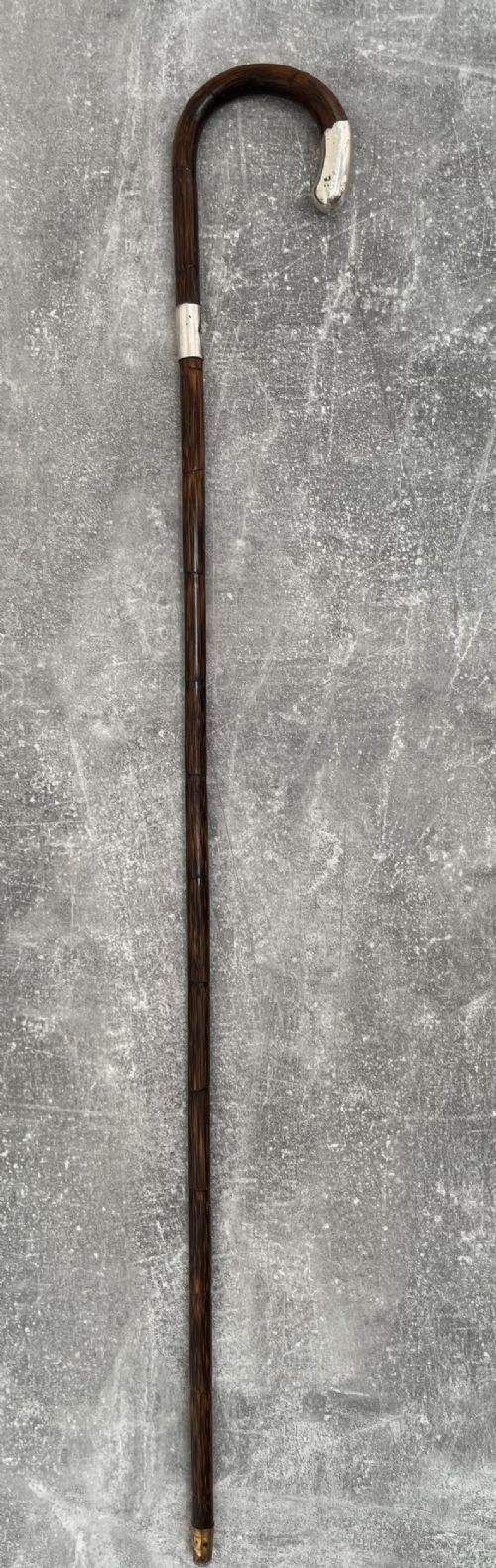
Edwardian Crook Cane
An edwardian crook cane offers a gentleman's support with a distinct curved handle, combining period utility with discreet craftsmanship.
Edwardian Crook Cane
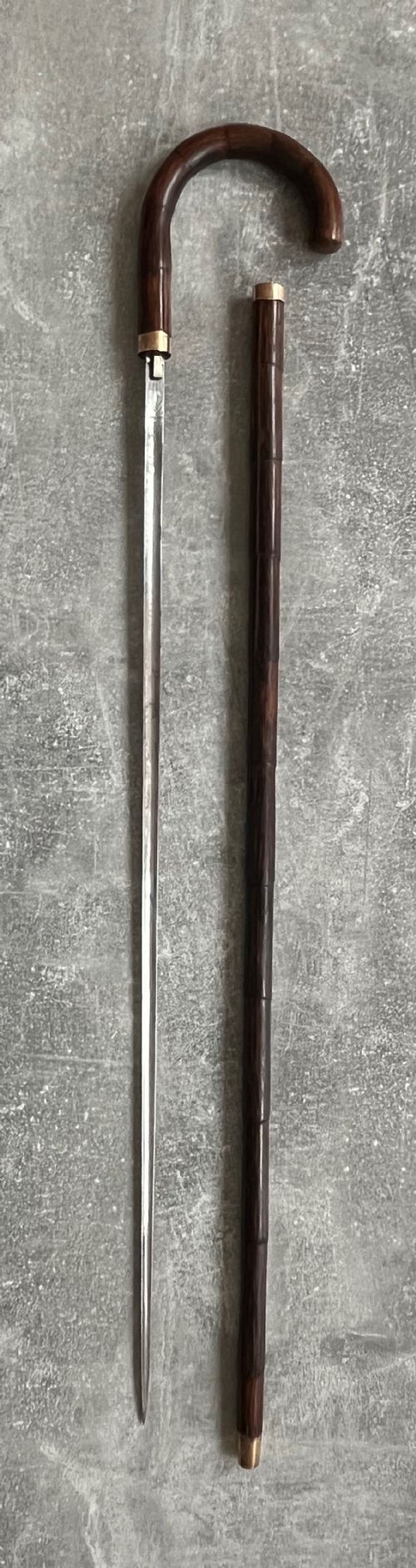
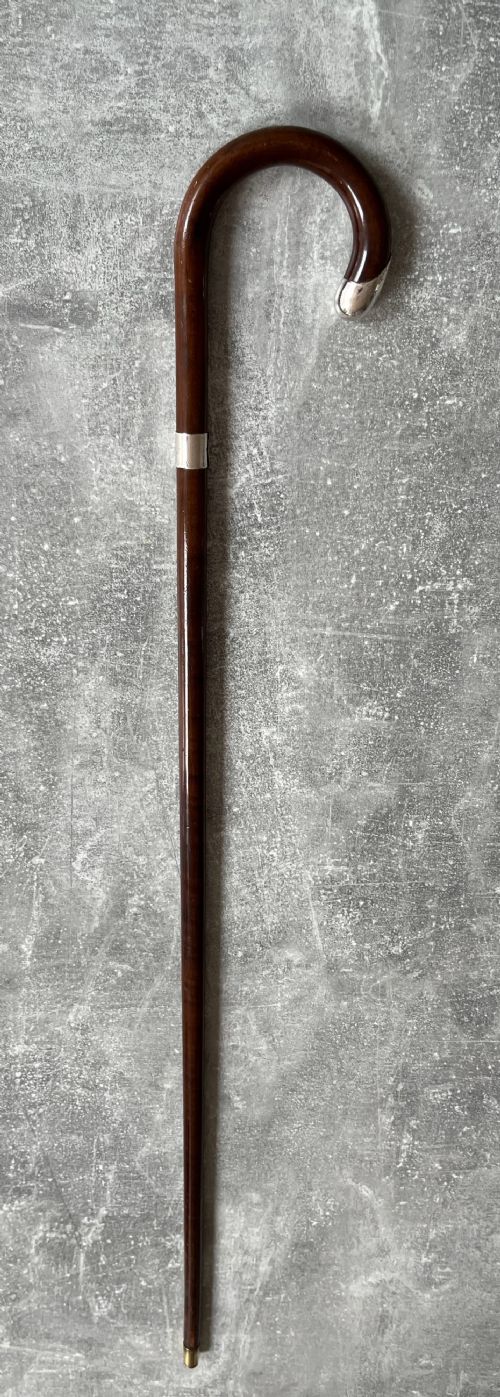
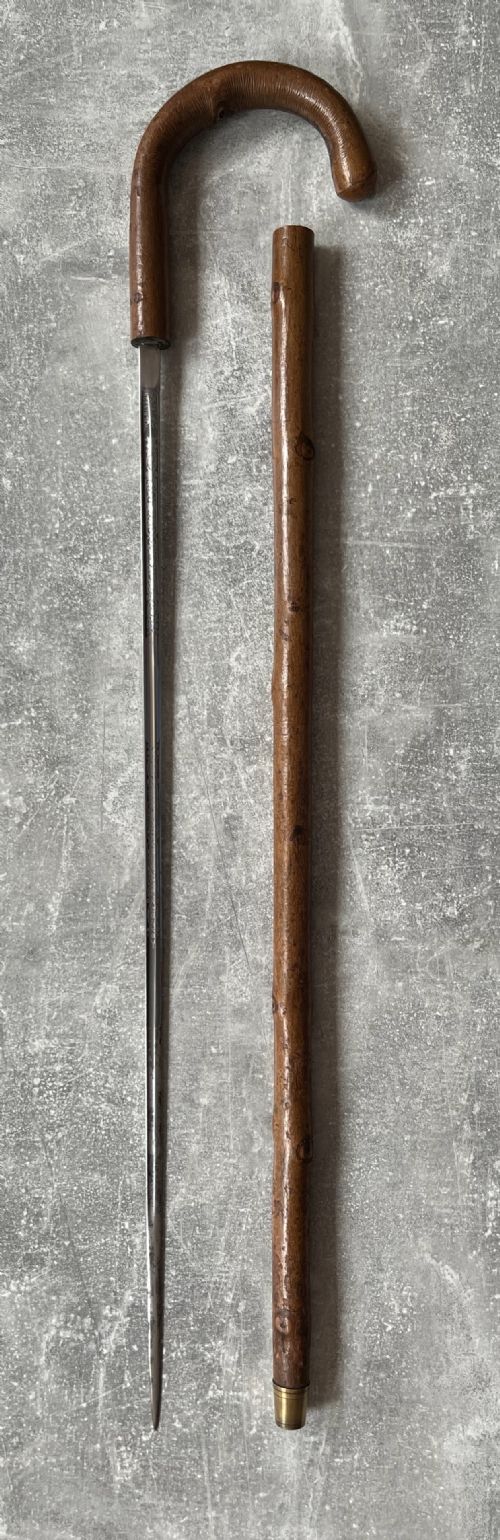
An edwardian crook cane represents a practical accessory from the turn of the twentieth century, appearing in forms such as standard walking sticks, canes, and dual-purpose sword sticks. These pieces often feature curved handles designed for hooking over the arm when not in use.
The selections on this page span the Edwardian era alongside late nineteenth-century Victorian and early twentieth-century periods. Walkers and collectors encounter both plain wooden shafts and examples fitted with substantial metal collars.
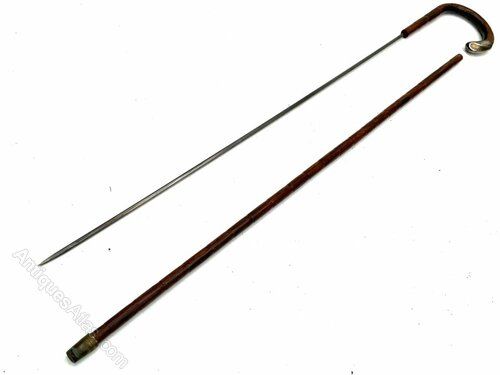
Many items in this category double as concealed blade weapons, housing blades signed by makers like Wilkinson or forged in Toledo. Others remain traditional walking sticks built for daily gentlemanly carriage.
Materials and construction methods
Makers utilised resilient natural materials such as partridge wood, malacca, hazel, and ebonised oak for the shafts. These woods were chosen for straightness and strength before being fitted with curved handles.
Metalwork played a structural and decorative role, with brass, steel, and embossed silver used for mounts, collars, and blades. Artisans integrated these metal components securely into the wooden bodies to ensure durability during daily use.
Some gentlemanly walking sticks secretly housed Toledo steel blades, allowing a quiet stroll to double as a discreet defensive outing.
Evaluating craftsmanship and condition
Superior examples distinguish themselves through the quality of the timber selection and the precision of the silver or metal mounting. Finely embossed collars and robust hook handles reflect higher workshops.
The integrity of the concealed mechanism in dual-purpose pieces separates standard utility items from finer specimens. Well-fitted blades that lock firmly into the wooden scabbard demonstrate superior original manufacture.
The Edwardian Crook Cane Glossary
- Crook handle
- A curved handle shaped like a shepherd's crook, designed for hooking over the arm. This shape provides a comfortable grip for daily walking.
- Sword stick
- A walking cane with a concealed blade hidden inside the wooden shaft. These were carried for personal defence during the nineteenth and early twentieth centuries.
- Silver mount
- A decorative or reinforcing band of silver fitted around the collar of the stick. These mounts frequently bear hallmarks indicating the assay office and date.
- Partridge wood
- A dense, heavily mottled tropical timber prized for walking stick shafts. Its distinctive pattern resembles partridge plumage.
Edwardian Crook Cane: Frequently Asked Questions
What is an edwardian crook cane?
An edwardian crook cane is a traditional walking support featuring a curved handle, produced during the early twentieth century. These accessories were standard attire for gentlemen.
Many examples from this period incorporate hidden steel blades beneath the wooden exterior, serving both as walking aids and concealed personal protection.
How do I date an edwardian crook cane?
Dating relies upon stylistic markers, hallmarks on silver collars, and recorded materials from the period. Pieces often align with late Victorian or Edwardian manufacturing trends.
Examining the blade maker marks, such as Toledo or Wilkinson signatures, also helps establish the production timeframe of concealed sword sticks.
Were all crook canes used as weapons?
No, the majority of walking sticks and canes functioned purely as walking supports or fashion accessories for gentlemen. Standard pieces lack internal blades entirely.
Only specific variants designed as sword sticks housed hidden blades, while others remained strictly traditional walking aids.
What woods were used for these canes?
Maker workshops utilised dense hardwoods capable of withstanding daily pressure and concealing internal mechanisms. Common timbers include partridge wood, malacca, hazel, and ebonised oak.
These woods provided both structural rigidity and attractive grain patterns suited to gentlemanly carriage.