


Edwardian Country Landscape
Edwardian country landscape works capture pastoral British scenes through delicate watercolours and rich oil paintings on canvas.
Edwardian Country Landscape
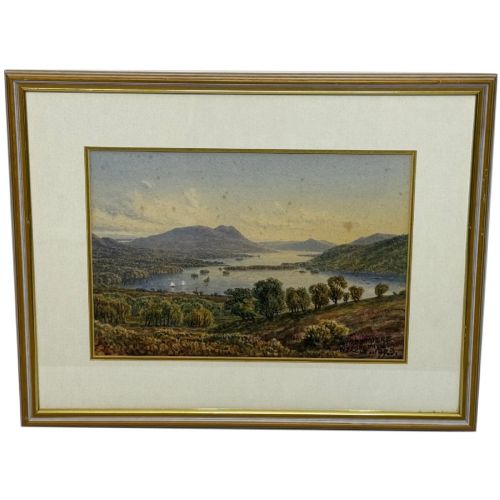
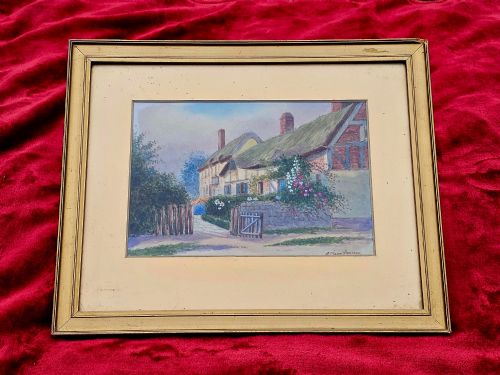
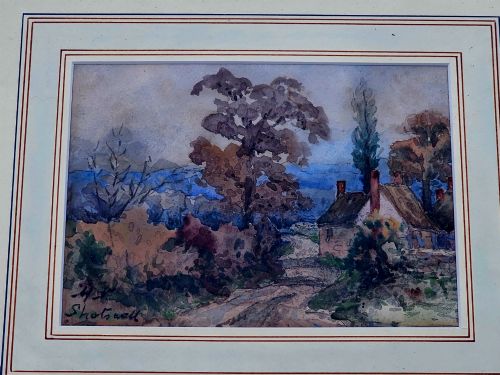
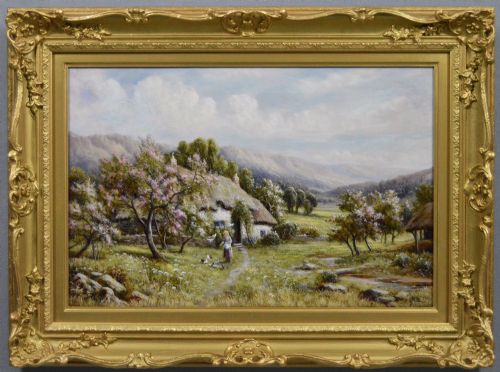
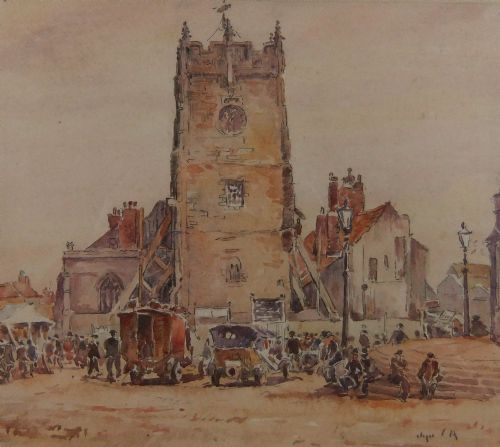
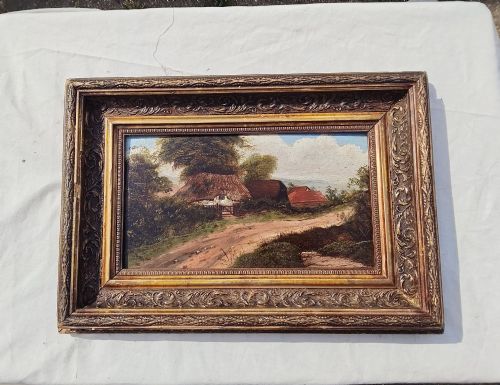
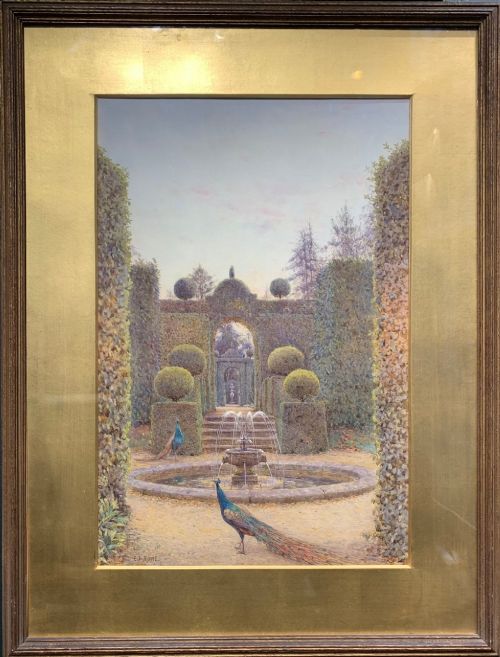
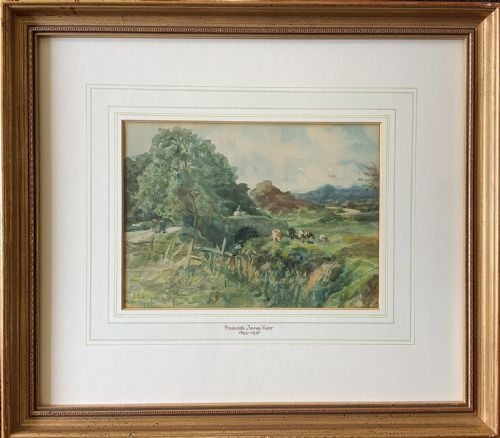
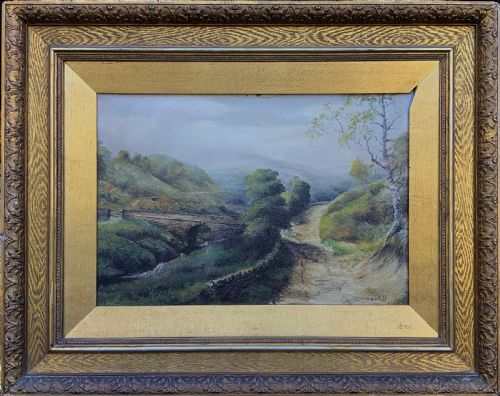
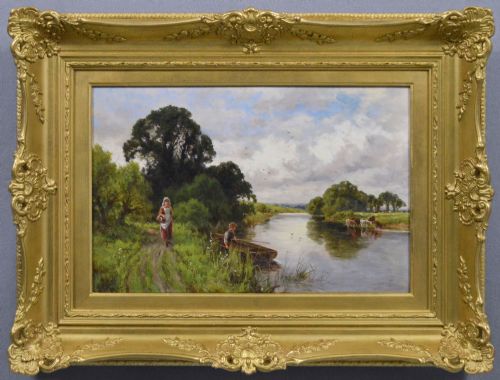
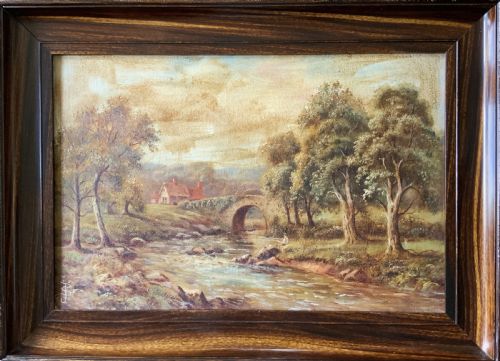
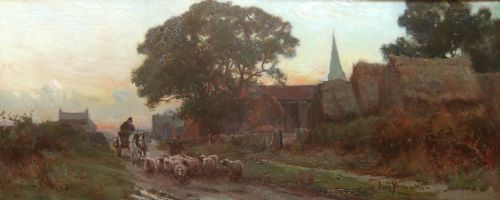
An edwardian country landscape depicts rural British life, featuring cottages, farmland, river scenes, and moorland views. These works capture a pastoral world through the lens of late nineteenth and early twentieth-century artists working in oil and watercolour.
Most pieces encountered on this page originate from the Edwardian period and the early twentieth century, though some extend into the Victorian era and the 1930s. Common formats include framed paintings on canvas, paper, and card, often showcasing rural settlements and agricultural scenes.
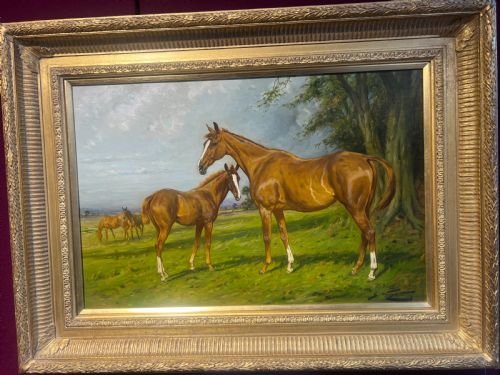
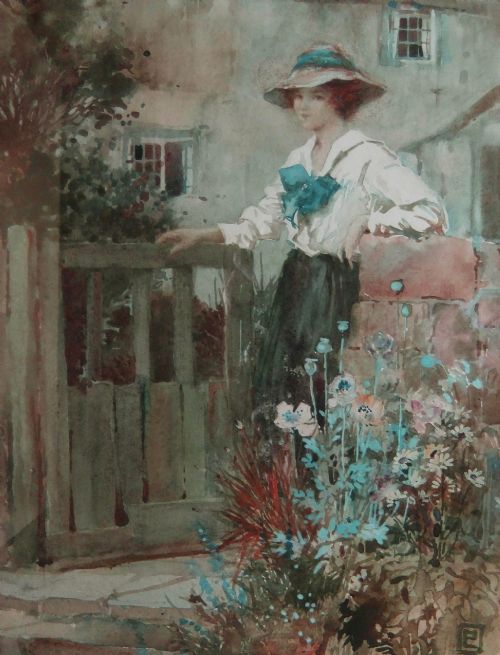
The subjects range from quiet cottage gardens and river banks to bustling horse fairs and cattle grazing by streams. Painters of this era focused heavily on natural light and atmospheric rural conditions, translating everyday countryside sights into finished gallery works.
Assessing Artistic Quality
Quality in these landscapes rests upon the artist's handling of light, brushwork confidence, and compositional depth. Superior examples demonstrate a strong command of tone and perspective, bringing immediate atmosphere to the depicted rural scene.
The distinction between standard works and finer pieces often lies in the vitality of the brush application and the precision of detail in figures and architecture. Stronger paintings convey texture in foliage and water with direct, purposeful strokes rather than generalized filling.
The selection includes British Impressionism and Victorian Pastoral styles alongside traditional landscapes.
Robert John Hammond·Ernest Arthur Rowe·Frederick James Kerr·George Wright·Percy Lancaster·Henry H Parker·Sydney Yates Johnson·Owen Bowen·Edgar Woollatt·Henry John Yeend King·William Greaves·Ernest Pile Bucknall·Philip Henry Rideout·Rowland Henry Hill·M. C. Hider·John Atkinson·Theresa Stannard·Linnie Watt·Ernest Higgins Rigg·Frederick G. Coulridge·William Langley·Herbert Royle
The Edwardian Country Landscape Glossary
- Watercolour
- A painting method where fine pigment is suspended in a water-based solution and applied to paper. This medium allows for transparent washes of colour that dry quickly.
- Canvas
- A heavy woven fabric stretched across a wooden frame to serve as a sturdy support for oil paintings. It provides a textured surface that holds thick applications of oil paint.
- Impressionism
- An art style characterised by relatively small, thin, yet visible brush strokes and an emphasis on accurate depiction of light. Practitioners sought to capture momentary visual effects.
- Pastoral
- A genre of art depicting the rural life of shepherds and country folk in an idealized, peaceful manner. These scenes typically feature rustic cottages, livestock, and open fields.
Edwardian Country Landscape: Frequently Asked Questions
What subjects appear in these paintings?
These works feature rural British subjects such as thatched cottages, farmland, rivers, moorlands, and farmyard animals. Artists recorded daily country life, including agricultural labour and village architecture.
The compositions often centre around recognizable regional landscapes, incorporating figures, horses, and pastoral settings typical of the early twentieth century.
How should I display watercolour works?
Watercolours require careful placement away from direct sunlight to prevent the pigments from fading over time. Framing behind glass protects the paper surface from atmospheric moisture and dust.
Maintaining stable indoor humidity levels also helps preserve both the paper support and the traditional wooden frame.
How do I identify an Edwardian painting?
Edwardian paintings often display distinct clothing styles, architectural details, and brushwork aligned with British Impressionism of the era. Signatures, dates, and framing styles frequently offer clues to the exact decade of creation.
Comparing the medium, whether oil on canvas or watercolour on paper, helps place the work within the broader context of nineteenth and twentieth-century production.
Were these painted outdoors?
Many artists worked directly outdoors to capture natural light and atmospheric conditions in real time. Others used preliminary watercolour sketches completed on site to produce finished oil paintings in the studio later.
This practice combined direct observation of rural light with traditional studio techniques.