
Edwardian Corinthian Lamp
An Edwardian corinthian lamp brings classical architecture into domestic interiors through fluted columns and detailed capitals.
Edwardian Corinthian Lamp
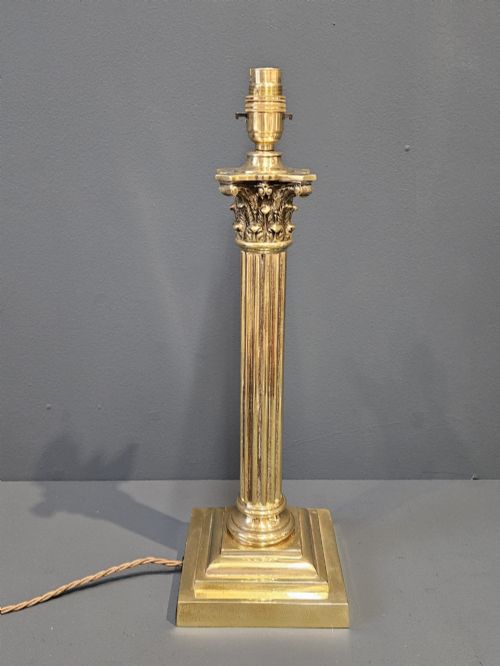
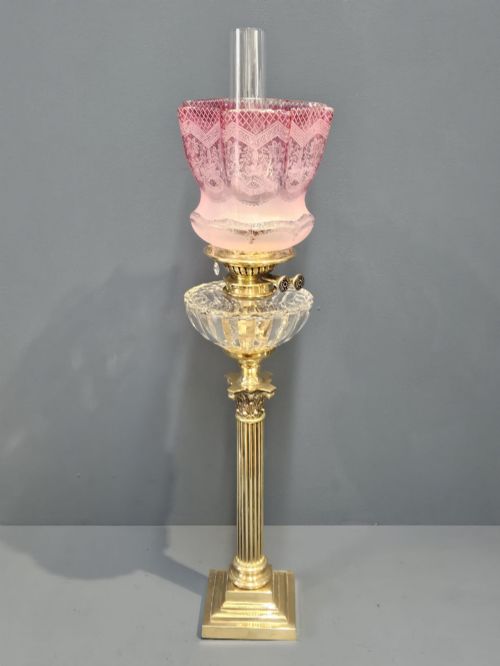
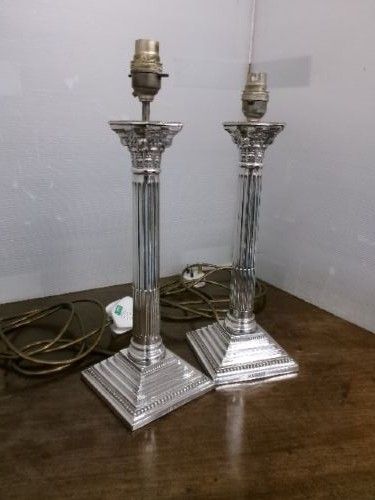
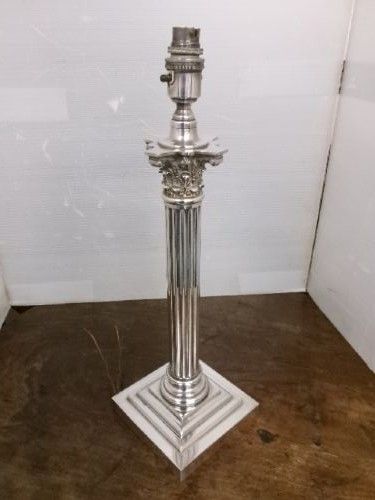
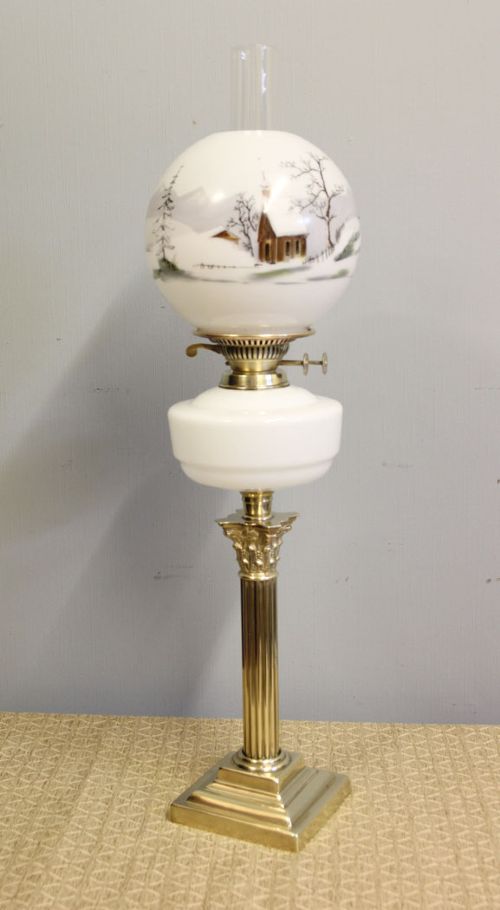
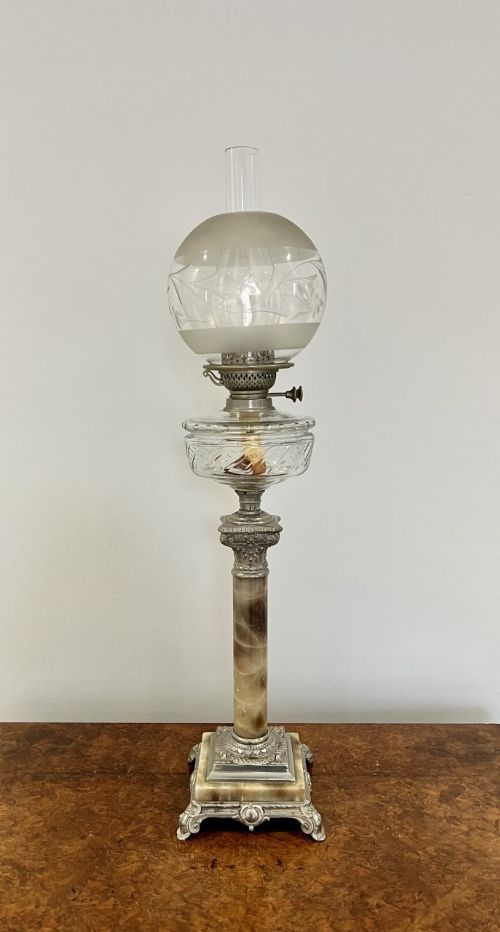
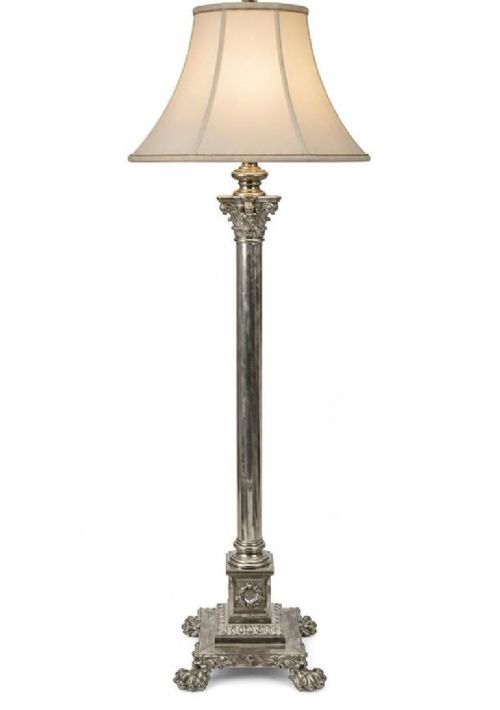
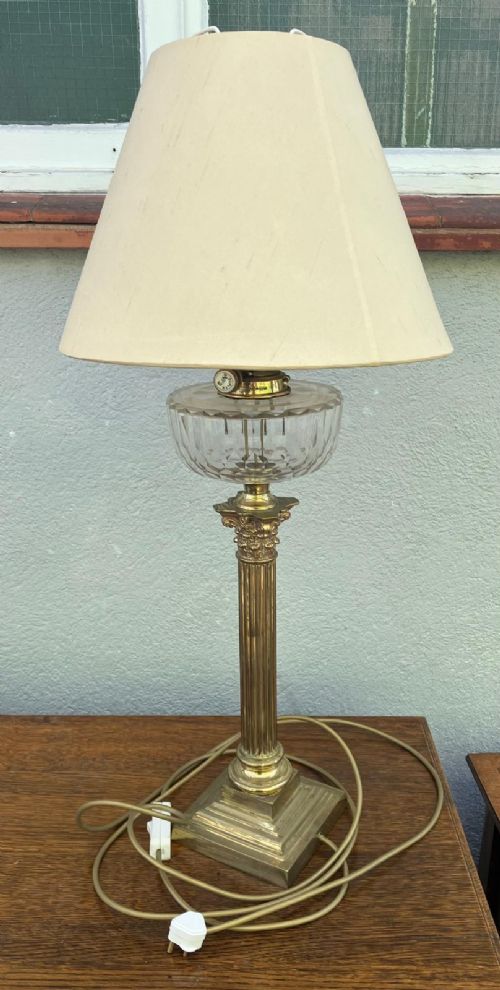
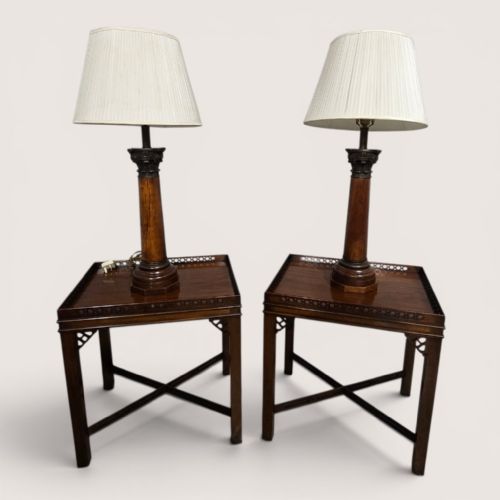
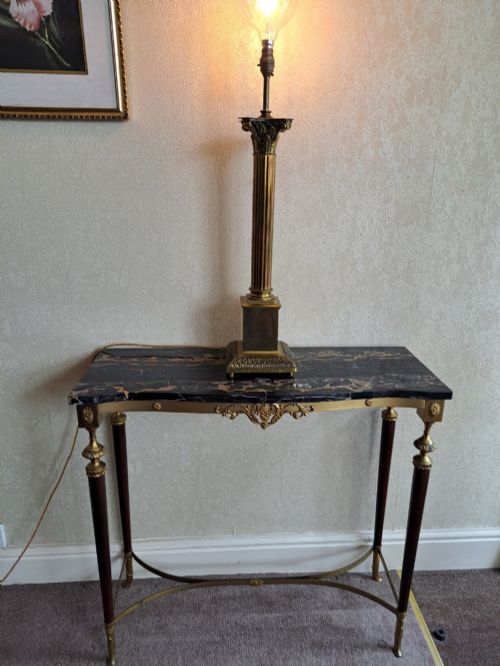
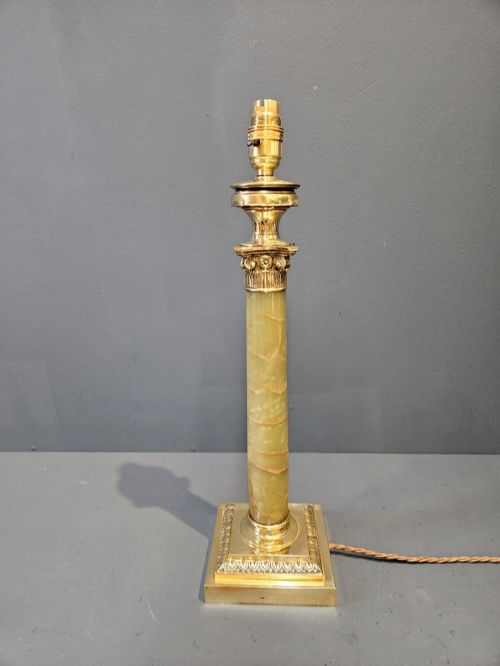
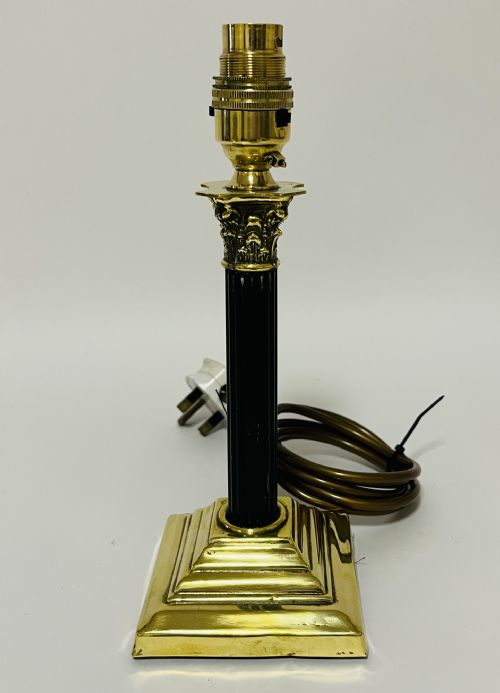
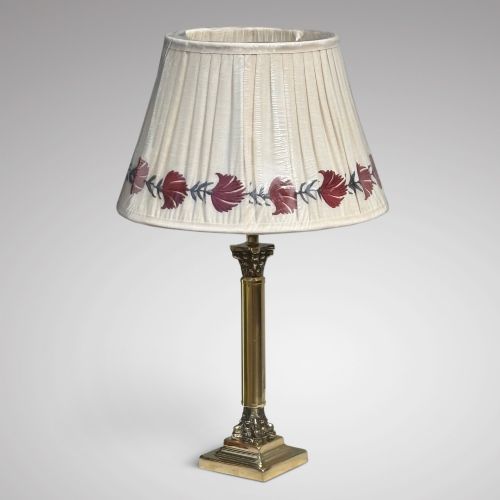
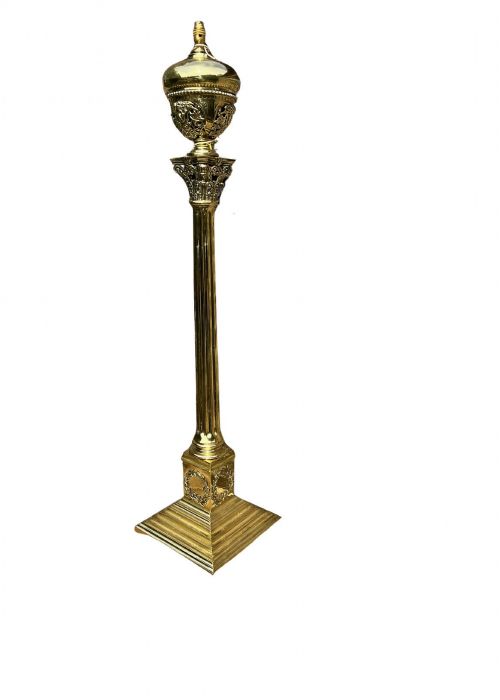
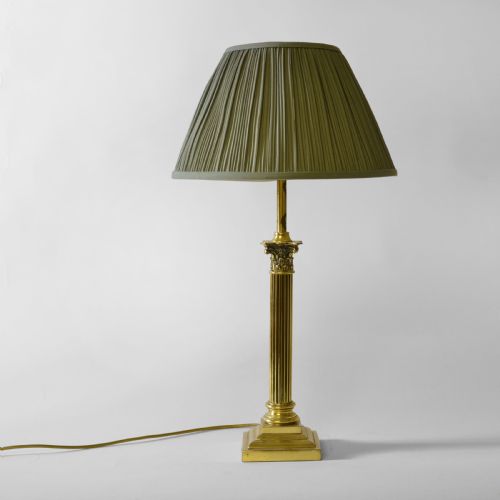
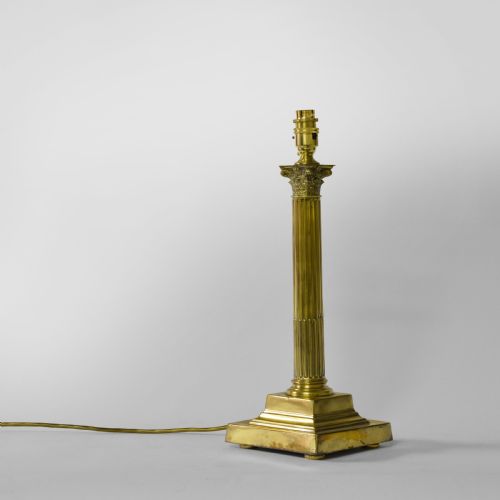
The edwardian corinthian lamp draws on classical architectural forms, adapting ancient temple columns for domestic lighting. These pieces take the shape of fluted columns topped with ornate acanthus leaf capitals, standing on stepped square bases. Table models and tall floor standards dominate the available selection.
Most examples originate from the late nineteenth and early twentieth centuries, spanning the Victorian and Edwardian eras. Makers utilised heavy cast metals to support the height of the column, frequently pairing them with fabric shades or glass reservoirs.
The aesthetic leans heavily into neoclassical revival styles, reflecting a period fascination with classical antiquity. Buyers encounter both smaller table lamps designed for sideboards and towering standard lamps intended for principal reception rooms.
Construction and Materials
Foundry workers cast brass, silver plate, and occasionally solid silver into modular components, assembling the columns around central weighted cores for stability. The detailed capitals require precise metal casting to render the delicate scrolls and acanthus foliage characteristic of the order.
Many surviving examples incorporate secondary materials such as marble bases, onyx sections, or contrasting dark metal finishes to add weight and visual depth. Oil lamp variants integrate hand-blown glass fonts, sometimes tinted in cranberry hues, which sit directly beneath fabric or glass shades.
Listings feature standard lamps, table lamps, and oil lamps produced in brass, silver plate, marble, and cut glass across the Edwardian era.
Quality and Execution
The crispness of the cast metalwork dictates the visual success of the capital, with superior pieces showing sharp relief in the carved foliage rather than softened outlines. Weight distribution also separates standard lamps, as heavier cast bases prevent tipping and provide a more substantial presence.
Surface finishing marks the difference between standard production and top tier pieces, seen in the thickness of the silver plating or the depth of the polished brass. Fine proportions across the fluted shaft and the stepped base ensure the classical column appears balanced rather than squat.
Walter Latham & Son
The Edwardian Corinthian Lamp Glossary
- Capital
- The topmost member of a column, carved with acanthus leaves and scrolls in the Corinthian order. This decorative element sits directly beneath the lamp fitting.
- Fluting
- The series of shallow, vertical grooves running down the length of the cylindrical column shaft. This technique originates from classical stone architecture.
- Standard Lamp
- A tall floor-standing lighting fixture designed to illuminate a wider area. These pieces often incorporate adjustable stems for height variation.
- Silver Plate
- A thin layer of silver bonded to a base metal core such as brass or copper. This method provided the luxury appearance of solid silver at a lower cost.
- Neoclassical
- A style reviving the architectural motifs and proportions of ancient Greece and Rome. It defines the aesthetic of the column lamp across the nineteenth and twentieth centuries.
Edwardian Corinthian Lamp: Frequently Asked Questions
What is an edwardian corinthian lamp?
An edwardian corinthian lamp is a lighting fixture modelled after ancient classical columns, featuring a fluted shaft and an ornate leaf-scrolled capital.
These pieces were produced primarily as table or floor lamps in brass, silver plate, and occasional solid silver during the early twentieth century.
How were these lamps used originally?
Original examples served as heavy table lamps or tall floor standards, burning oil before households widely adopted electrical wiring.
Owners placed them in principal rooms such as drawing rooms and libraries to provide both ambient illumination and a dignified decorative presence.
How do I distinguish Victorian from Edwardian examples?
Victorian versions often display heavier proportions and occasionally incorporate detailed feet such as lion's paws beneath stepped marble or metal bases.
Edwardian pieces tend toward slightly more slender profiles while maintaining the classical neoclassical vocabulary established in the previous century.
Can these lamps accommodate modern electrical standards?
Most surviving metal columns accommodate rewiring easily because the internal channel once held oil burner stems or early electrical flex.
Professional electricians can update the internal wiring safely while preserving the exterior antique metalwork and original switches.