


Edwardian Coffee Pot
An edwardian coffee pot brings the elegance of early twentieth-century dining to the table, offering both period charm and practical service.
Edwardian Coffee Pot
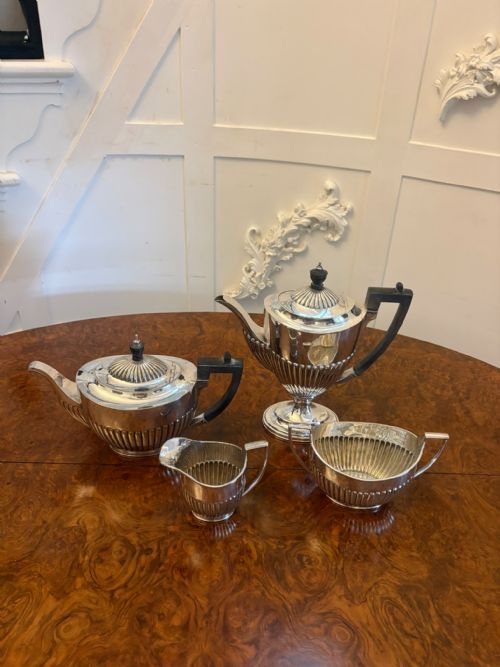
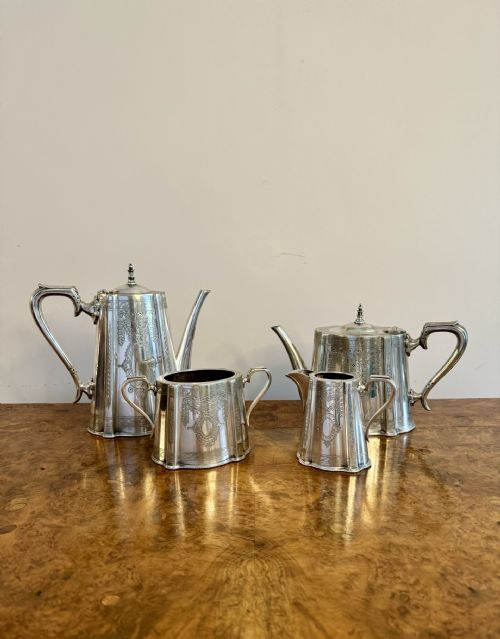
When you search for an edwardian coffee pot, you encounter pieces originating primarily from the early twentieth century, alongside occasional broader periods like the eighteenth and nineteenth centuries. The forms vary from standalone vessels to components of larger tea and coffee services, cafe au lait pots, and chocolate pots.
Most examples found here date strictly from the Edwardian era, often appearing in silver plate, electroplated nickel silver, or solid sterling silver. These pots frequently share space with related tableware, kitchen metalware, and matched tea services.
Makers working in this period employed specific regional styles, ranging from classic Edwardian forms and Edwardian Rococo Revival to Arts and Crafts designs. Buyers often select these pots to complete a set or to serve as a functional centrepiece on a dining table.
Materials and methods of construction
Makers constructed these vessels using metals such as solid silver, silver plate, electroplated nickel silver, copper, and brass. Insulating elements such as wood, ebonised wood, and ebony appear on handles to protect hands from heat.
Decoration techniques recorded in the evidence include hand-engraved floral designs, handpainting, and gilding. Certain pieces also incorporate woven handles or detailed chasing characteristic of the period's revival styles.
Materials documented across the inventory include silver, silver plate, brass, copper, porcelain, and ebonised wood.
What separates the best pieces
Quality in these pots rests upon the weight of the metal and the precision of the smithing or plating. Solid silver pieces and those produced by notable workshops exhibit sharper casting, crisper hand-engraving, and superior balance in the handle.
The integrity of the insulation materials on the handle and the preservation of original gilding or handpainted details influence the standing of a piece. Comprehensive sets retaining their fitted cases or matching companion jugs represent the upper tier of manufacture.
Walker and Hall·Harrison Brothers and Howson·William Vale·Elkington and Co·Mappin and Webb·Harry Atkin
The Edwardian Coffee Pot Glossary
- Silver plate
- A base metal, often nickel silver, coated with a thin layer of pure silver. This technique provided the appearance of solid silver at a lower cost.
- Electroplated nickel silver
- A common base alloy of copper, nickel, and zinc coated with silver via an electrical current. It formed the foundation of many Edwardian tableware items.
- Cafe au lait pots
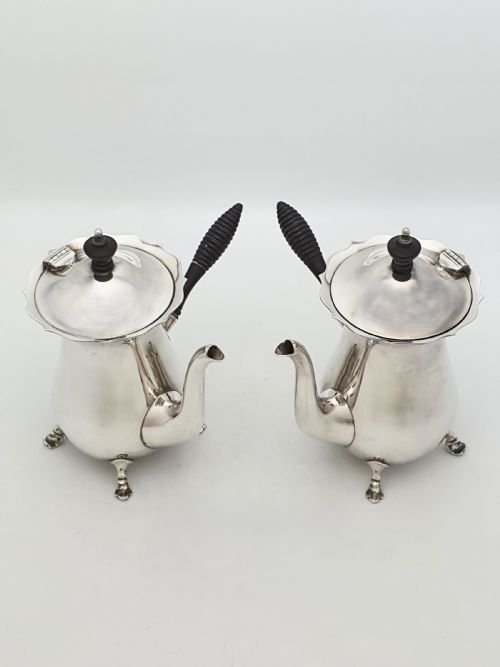
- Vessels designed for serving coffee and hot milk simultaneously. They frequently appear in matched pairs from the Edwardian period.
- Chocolate pot
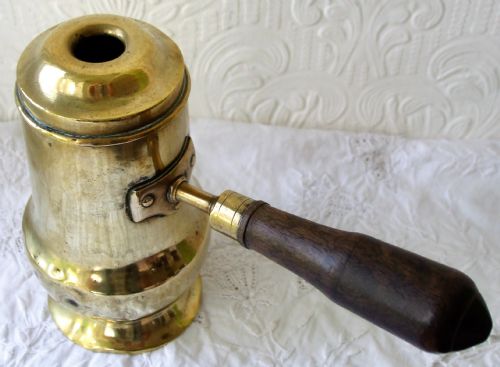
- A specialised vessel intended for serving hot chocolate, often featuring a small opening in the lid for a stirring stick or molinet. These appear in both silver and brass.
- Ebonised wood
- Timber treated to resemble ebony, a dense black wood. It is commonly found on the insulated handles and finials of metal coffee pots.
Edwardian Coffee Pot: Frequently Asked Questions
How do I clean an antique silver plated pot?
Use a soft cloth and a gentle silver polish formulated specifically for plated items. Avoid harsh scrubbing that can wear away the thin silver layer.
Wash the interior with warm soapy water and dry thoroughly to prevent water spots and tarnishing.
Can I use an edwardian coffee pot daily?
Many solid silver and silver plated pots remain sturdy enough for regular use. Ensure the handle insulation is secure and check for any internal leaks before filling.
Hand wash the vessel immediately after use and avoid putting antique metalware into an automatic dishwasher.
What is the difference between a coffee pot and a chocolate pot?
Chocolate pots generally feature a small removable lid or aperture at the top for a frothing stick. Coffee pots possess a standard hinged lid designed solely for pouring strained liquid.
Both forms appear in Edwardian dining collections but served distinct beverages during formal meals.
How do I identify an Edwardian piece?
Look for hallmarks on silver pieces that indicate the assay office, maker's mark, and date letter corresponding to the early 1900s. Stylistic cues include Edwardian Rococo Revival motifs and clean early twentieth-century lines.
Compare the form and decorative techniques against documented examples from makers active during that specific decade.