




Edwardian Coastal Scene
An edwardian coastal scene brings the salt air and historic harbours of Britain into a room through oil and watercolour.
Edwardian Coastal Scene
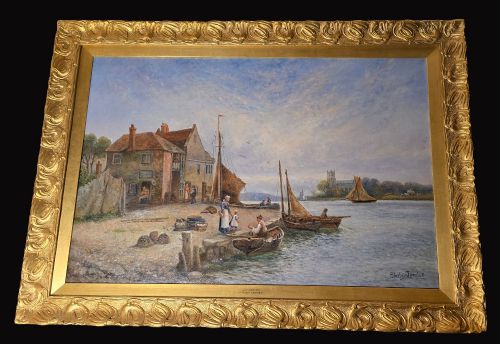
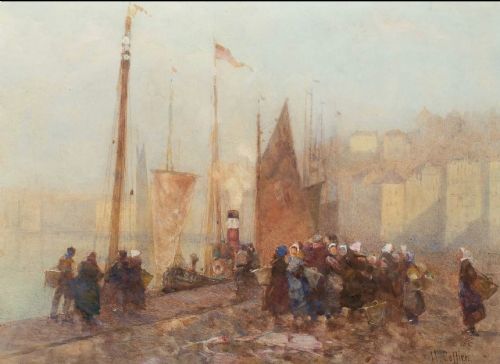
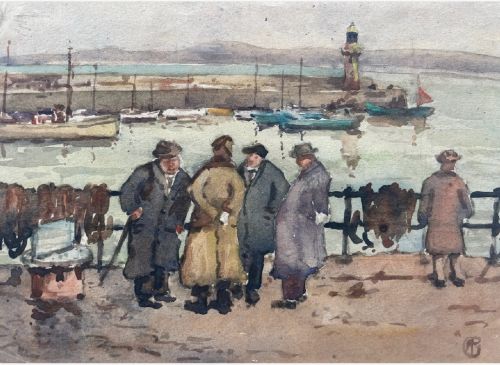
An edwardian coastal scene captures the maritime life, bustling fishing ports and quiet shores of Britain around the turn of the twentieth century. Collectors encounter works depicting familiar fishing docks, harbour walls and sandy beaches from Cornwall up to Yorkshire.
The selections span watercolours on paper and oil paintings on canvas, frequently showing artists at work in established colonies such as St Ives, Newlyn and Staithes. Most examples date from the broader Edwardian era and the early decades of the twentieth century, though nineteenth-century precursors also appear.
How they were made
Artists painted these coastal subjects using oil on canvas, oil on board, and watercolour pigment on paper, sometimes incorporating gouache for heightened opacity. Canvases were stretched over wooden frames, while works on paper utilised glass protection within framed presentations.
Techniques range from the loose brushwork of British Impressionism to the detailed realism favoured by maritime recorders. Pigments were applied to capture shifting coastal light upon choppy seas, harbour rocks and sandy shores.
Edwardian Coastal Scene Retail Price Guide 2026
Typical asking prices for edwardian coastal scene among the pieces listed under this phrase on Sellingantiques today, from the lower quarter to the upper quarter. They describe what is for sale here now, not the wider market.
Listings feature works spanning the nineteenth century, Edwardian period, and the 1920s and 1930s, executed in oil and watercolour.
What varies in quality
Quality rests upon the artist's ability to render atmospheric light and movement in the water rather than mere topographical accuracy. The strongest works display confident handling of pigment, whether in the loose strokes of an impressionist beach scene or the precise depiction of a trawling lugger.
Provenance and association with recognised regional art schools elevate certain works above standard topographical records. The distinction lies in the vitality of the brushwork and how effectively the composition conveys the atmosphere of the harbour or shore.
Stanley Leader·Hector Caffier·George F Pennington·Alfred George Morgan·Richard Harry Carter·James Watson·George Hamilton Constantine·John Bell·James Webb·James Thomas Watts·Leslie Rackham·Ernest F Hill·Frederick Stuart Richardson·E Tucker·Percy Brooke·William Lambert Bell·William Tatton Winter·Ralph Todd·Rowland Henry Hill·William Shayer·Harry Wanless·William Lee Hankey·Walter Sweet·Walter Henry Sweet·William Savage Cooper
The Edwardian Coastal Scene Glossary
- Watercolour
- A painting method in which the paints are made of pigments suspended in a water-based solution. These works are typically executed on paper.
- Oil on Canvas
- A traditional medium utilising pigments mixed with an oil binder applied to stretched woven fabric. This method allows for rich texture and deep colour saturation.
- Newlyn School
- An art colony based in Cornwall during the late nineteenth and early twentieth centuries. Artists here focused on plein air painting of local fisherfolk and coastal life.
- Trawling Lugger
- A traditional type of sailing fishing vessel common around the British coast. These boats frequently feature in maritime art from the period.
Edwardian Coastal Scene: Frequently Asked Questions
What periods do these coastal paintings represent?
The works primarily date from the Edwardian era and the early twentieth century, though pieces range from the mid nineteenth century up to the 1930s. Artists working during these decades recorded traditional maritime trades before mechanisation transformed the coast.
Influences from Victorian realism through to British Impressionism appear across the selection, reflecting changing artistic approaches to light and weather.
Where are the depicted locations?
Depicted locations concentrate heavily around renowned British fishing ports and coastal colonies, particularly in Devon and Cornwall. Common settings include St Ives, Whitby, Newlyn, Polperro, Mousehole and Staithes.
Artists also turned their attention to wider estuaries and broader seascape views along the English coastline and international waters such as Venice.
How should I frame and display works on paper?
Watercolours and works on paper require protection from direct sunlight to prevent fading of the delicate pigments. Framing behind conservation glass with suitable acid-free mounts safeguards the paper from humidity and deterioration.
Display these pieces in rooms with stable temperature and indirect light to preserve the integrity of the original medium.
What is the difference between oil and watercolour works here?
Oil paintings on canvas offer heavier texture, deeper colour saturation and greater resilience to environmental factors. They are traditionally displayed unframed beneath glass, relying on the varnished surface for protection.
Watercolours on paper provide a lighter, more luminous quality through translucent washes of pigment, requiring glass for physical protection and preservation.