

Edwardian Chippendale Chairs
Edwardian chippendale chairs combine eighteenth-century revival carving with early twentieth-century joinery, offering a sturdy seating option for dining rooms and libraries.
Edwardian Chippendale Chairs
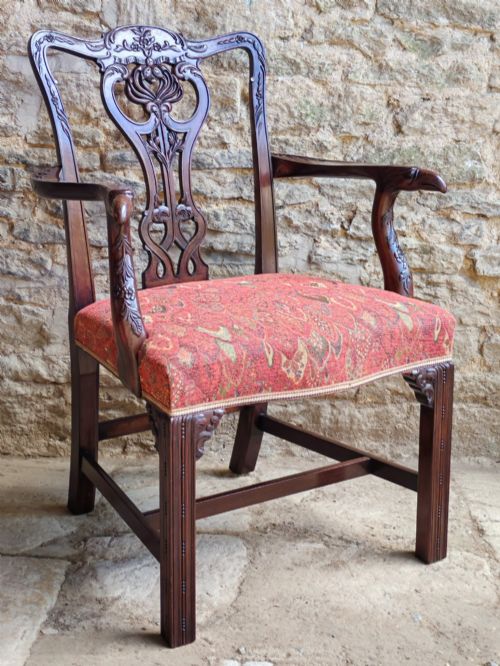
Edwardian chippendale chairs are revival pieces produced around the turn of the twentieth century, drawing heavily on eighteenth-century stylistic templates. Buyers seeking this phrase typically encounter dining sets, single side chairs, or open armchairs designed for formal rooms.
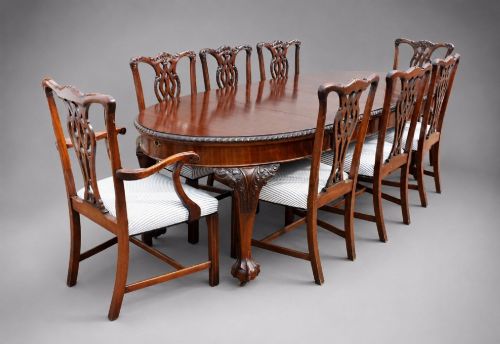
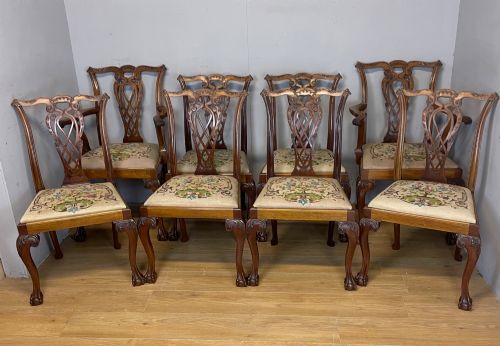
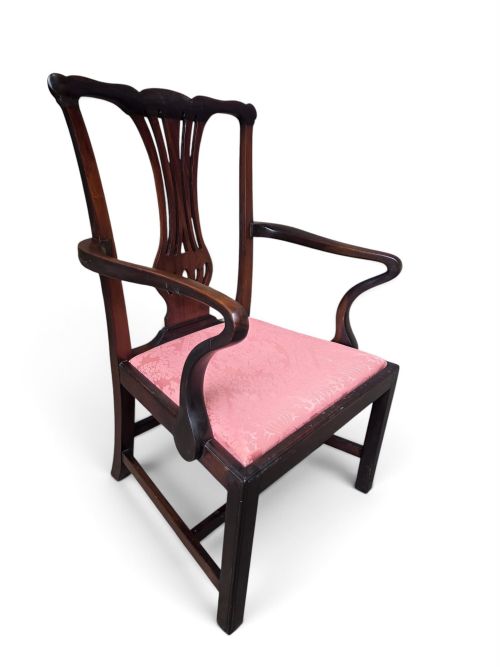
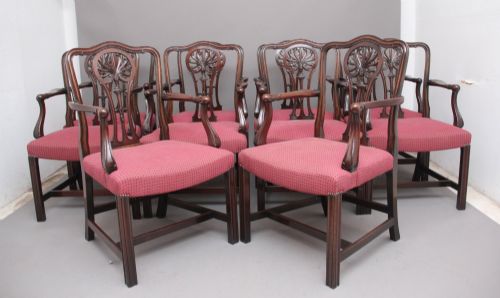
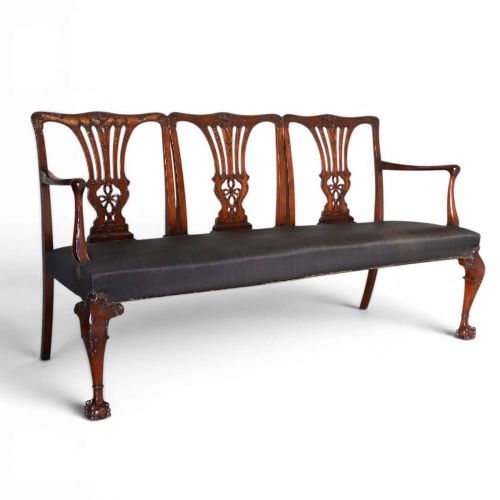
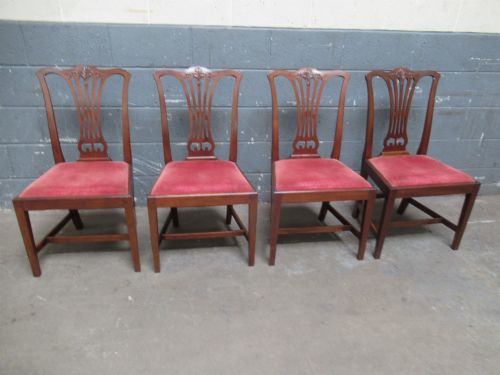
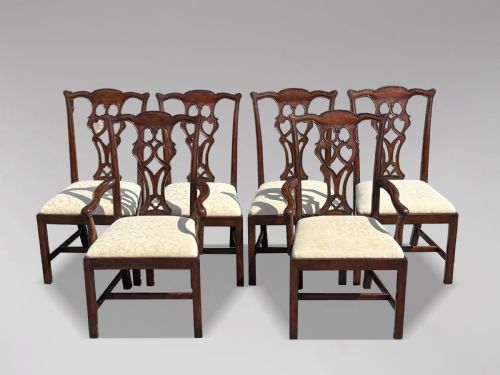
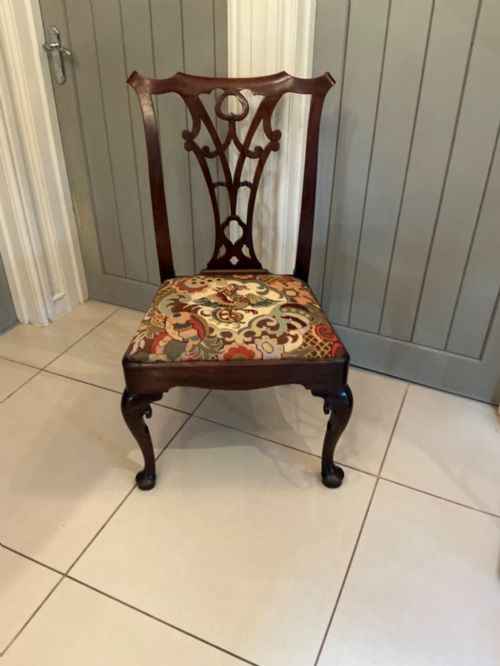
The most common variants on this page are sets of dining chairs made from solid mahogany, often featuring carved pierced splats and ball and claw feet. Makers of the period also produced occasional armchairs and desk chairs following the same design vocabulary.
These pieces bridge the gap between antique aesthetic weight and the practical need for robust daily seating in Edwardian households. They range from modest single chairs to large dining sets intended for extended tables.
What Varies In Quality
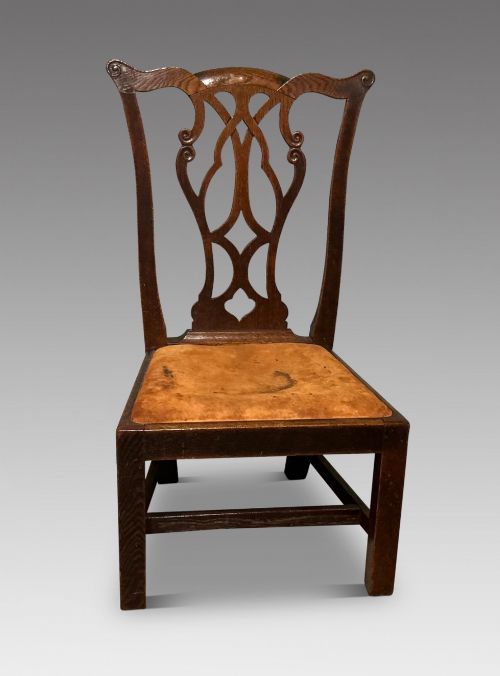
Quality in these chairs is determined by the depth and crispness of the wood carving on the top rail and splat, alongside the selection of timber grain. Superior examples display sharp, well-defined details without the softness often found in mass-produced later variants.
The integrity of the frame construction and the original matching of the wood within a dining set dictate overall value. Sets that retain uniform colour and grain across all pieces command greater attention than assembled groups.
Edwardian Chippendale Chairs Retail Price Guide 2026
Typical asking prices for edwardian chippendale chairs among the pieces listed under this phrase on Sellingantiques today, from the lower quarter to the upper quarter. They describe what is for sale here now, not the wider market.
Listings feature mahogany predominantly, alongside oak and walnut, upholstered in leather, fabric, tapestry, and velvet.
Howard and Sons·Warings·Alfred Allen of Birmingham
The Edwardian Chippendale Chairs Glossary
- Chippendale Revival
- A late nineteenth and early twentieth-century style imitating the mid-eighteenth-century designs of Thomas Chippendale. It is characterised by ornate pierced splats and carved cabriole legs.
- Carver
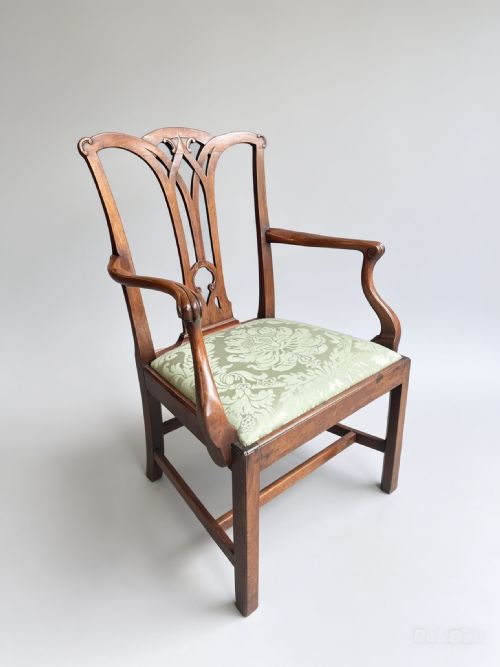
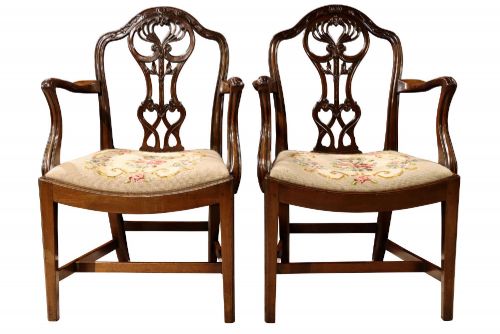
- A term used by dealers for an armchair, typically designed with elbows to match a set of dining side chairs. These were traditionally placed at the heads of the dining table.
- Splat
- The vertical wooden strip down the centre of a chair back. In these revival pieces, the splat is frequently pierced and intricately carved.
- Cabriole Leg
- A furniture leg that curves out at the knee and tapers in at the ankle, ending in a foot such as a ball and claw. This form derives from Chinese design via eighteenth-century English cabinetmakers.
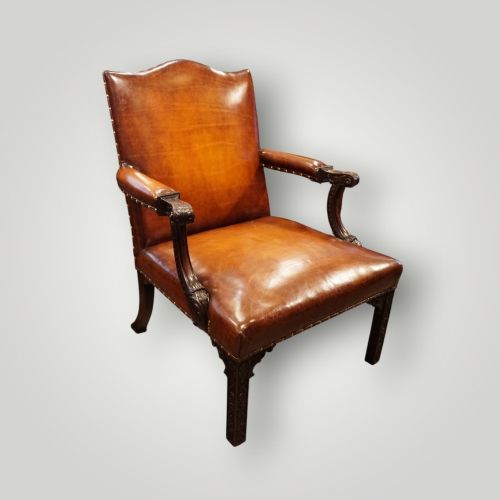
- Gainsborough Armchair
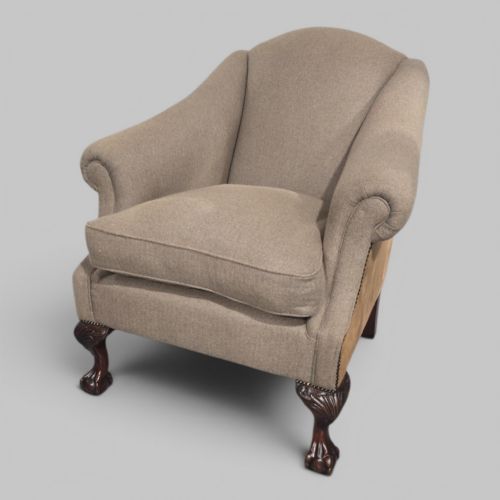
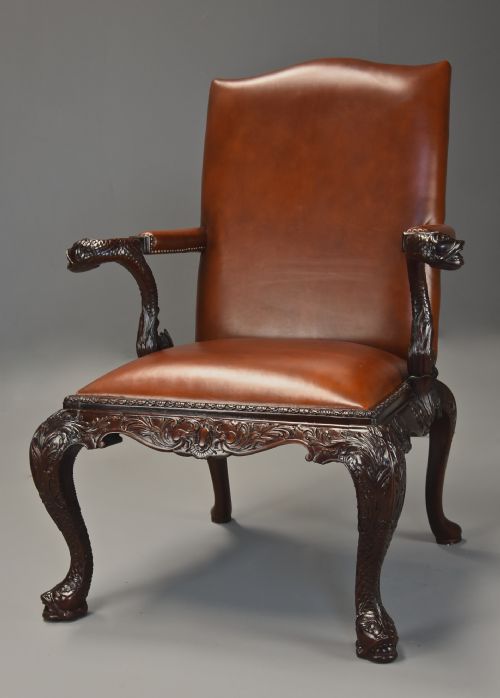
- A wide, low-seated open armchair with upholstered back and armrests, supported on a mahogany frame. They are frequently covered in leather for library or desk use.
Edwardian Chippendale Chairs: Frequently Asked Questions
How do I spot a revival piece?
Look closely at the underside of the frame, the tool marks on the wood, and the uniformity of the timber grain. Edwardian examples often display machine-sawn elements hidden beneath hand-finished carved surfaces.
Examine the upholstery webbing and internal blocks, which typically reflect early twentieth-century manufacturing standards rather than eighteenth-century workshop practices.
Are these chairs suitable for daily use?
Solid mahogany construction makes these chairs exceptionally durable and well-suited for everyday dining. Their sturdy joinery handles regular sitting without loosening easily.
Periodic checking of the leg joints ensures they remain stable over years of domestic service.
What is a carver chair?
A carver is an armchair designed with elbow supports to match a set of dining side chairs. Historically, two carvers accompanied a larger set of single chairs around the dining table.
They provided a more formal seat for the host and hostess while maintaining visual harmony with the rest of the furniture.
How should I care for leather seats?
Hand-dyed English hide requires gentle cleaning with a damp cloth and occasional application of traditional leather balm. Avoid placing the chairs in direct sunlight to prevent the hide from drying out.
Keeping the room at a stable humidity level preserves both the leather upholstery and the mahogany framework.