


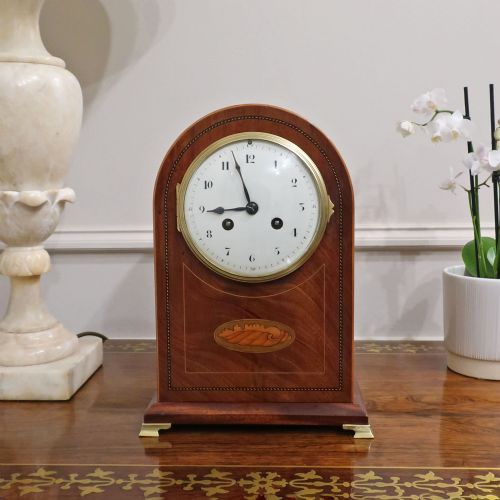
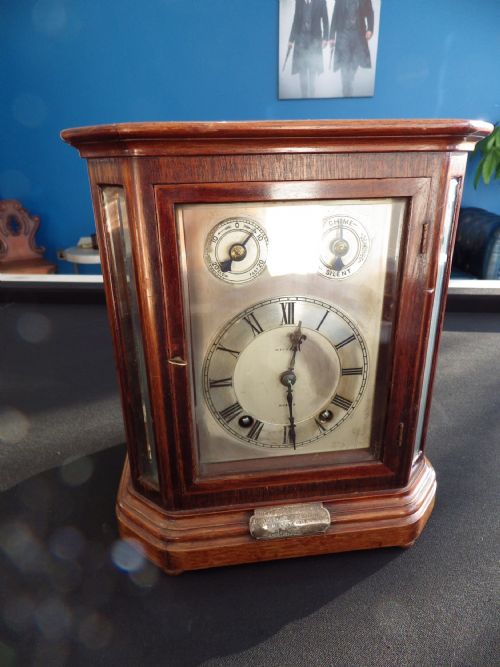
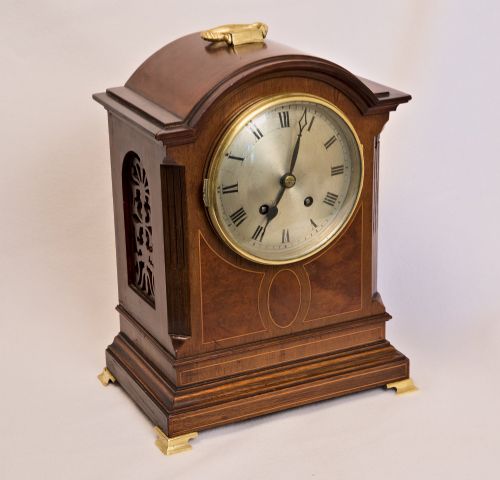


Edwardian Chiming Mantel Clock
An Edwardian chiming mantel clock brings acoustic depth and rich timber to a room, driven by precise mechanical movements.
Edwardian Chiming Mantel Clock
When you search for an edwardian chiming mantel clock, you encounter timepieces designed to sit on a shelf or sideboard, chiming the hours and quarters. The selection here spans Edwardian, Victorian, and Regency periods, alongside forms such as bracket clocks and table clocks.
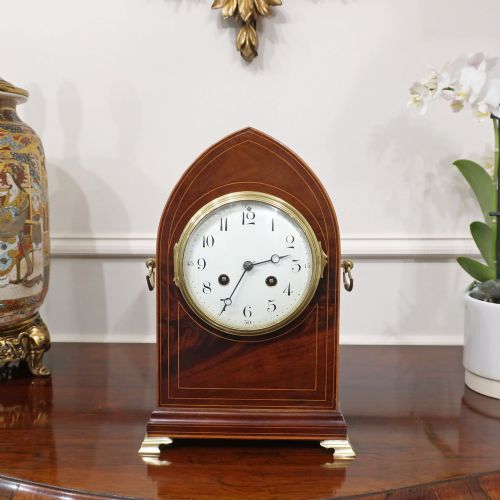
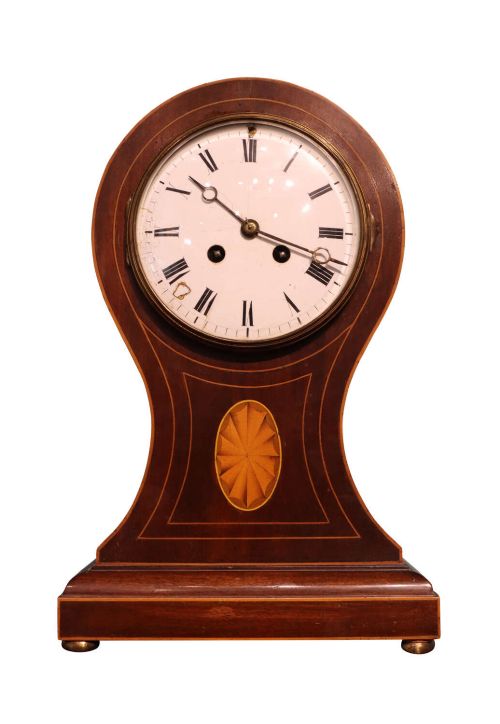
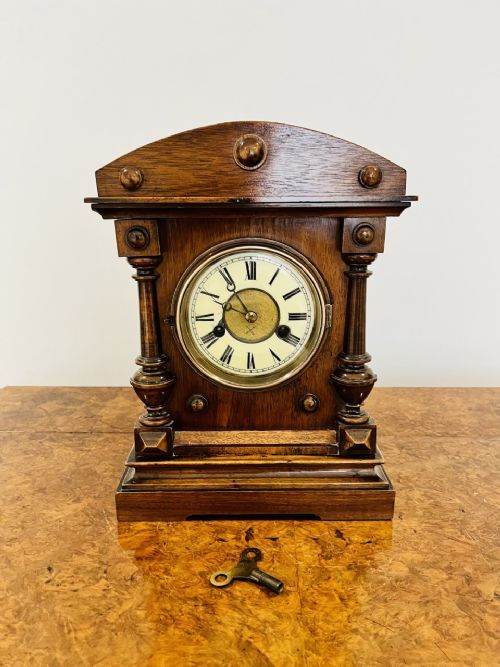
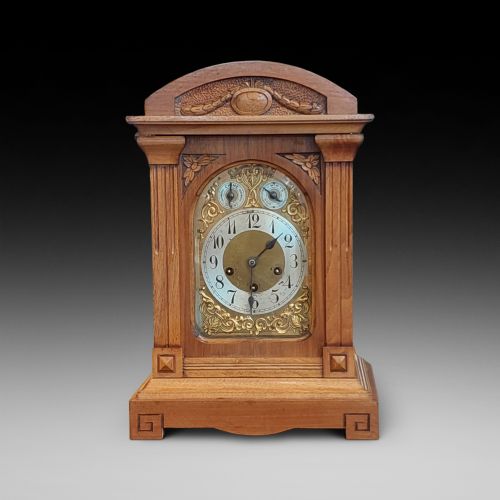
Most examples you meet are housed in timber cases, predominantly mahogany, oak, and walnut, often featuring inlaid details. These clocks range from small proportions intended for intimate spaces to substantial boardroom clocks with Westminster or ting-tang strikes.
Materials and construction
Clockmakers utilised seasoned timbers like mahogany, walnut, and oak to build sturdy cases, frequently enhancing them with satinwood inlay, brass mounts, and glass panels. Dials typically combine brass, silvered metal, and enamel chapters to display the time clearly.
Movements were engineered by specialist makers, incorporating brass gear trains, escapements, and gongs or bells to produce the chiming mechanism. Cases were joined with traditional cabinetmaking techniques to house the heavy mechanical works securely.
Edwardian Chiming Mantel Clock Retail Price Guide 2026
Typical asking prices for edwardian chiming mantel clock among the pieces listed under this phrase on Sellingantiques today, from the lower quarter to the upper quarter. They describe what is for sale here now, not the wider market.
Listings feature oak, mahogany, walnut, and rosewood cases housing movements from German and English makers across the nineteenth and twentieth centuries.
Judging quality in the range
The division between standard pieces and the finest examples lies in the refinement of the movement and the crispness of the case joinery. Maker attribution, particularly pieces bearing marks from established workshops like Winterhalder & Hofmeier or H.A.C., elevates the standing of a clock.
Cabinet work distinguishes the tier of a piece, observable in the precision of herringbone or satinwood inlay, the integration of multiple glass viewing panels, and the weight of cast brass fittings. Original surfaces and well-proportioned case architectures maintain higher desirability than altered examples.
Winterhalder & Hofmeier·Junghans·H.A.C.
The Edwardian Chiming Mantel Clock Glossary
- Ting-Tang
- A two-hammer chiming mechanism that strikes two different notes on bells or gongs to mark the quarters. This sound provides an audible distinction from standard hour-striking clocks.
- Bracket clock
- A portable spring-driven clock originally designed to sit on a wall bracket to aid projection of sound. Later examples function as large mantel clocks.
- Fusee
- A conical pulley used in spring-driven clocks to equalise the driving force as the mainspring unwinds. It ensures consistent timekeeping throughout the running period.
- Triple fusee
- A movement featuring three separate fusees to drive the timekeeping, striking, and chiming trains. This complex mechanism is typical of high-grade bracket clocks.
- Lancet top
- A case design featuring a pointed, arched apex resembling a lancet window. This silhouette is common in Edwardian mahogany mantel clocks.
Edwardian Chiming Mantel Clock: Frequently Asked Questions
What is a ting-tang movement?
A ting-tang movement uses two hammers and two gongs or bells to strike a two-note sequence at the quarter hours. It precedes the full melody chime.
This mechanism was frequently utilised by German and English makers during the Victorian and Edwardian eras.
Where should I place my mantel clock?
Position the clock on a stable, level surface such as a mantelpiece, sideboard, or sturdy table away from direct heat and moisture. A level base is essential for the pendulum or balance wheel to beat evenly.
Solid placement also enhances the resonance of the chiming gongs within the wooden case.
How do I tell an Edwardian clock from a Victorian one?
Edwardian clocks tend to show lighter timber tones, refined inlay work, and simpler architectural lines influenced by early twentieth-century design. Victorian examples frequently lean towards heavier carvings, ebonised finishes, or revival styles.
Examining the dial style and interior movement stamps helps confirm the manufacturing period.