
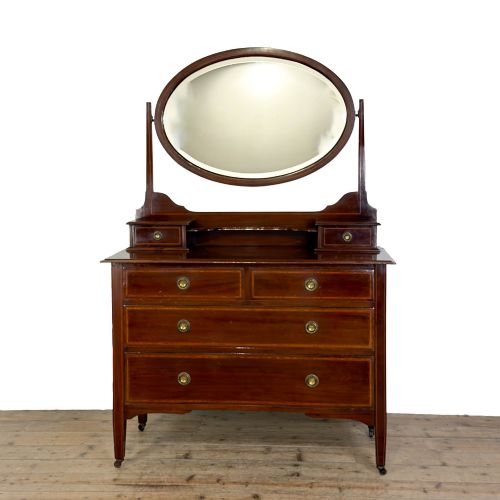
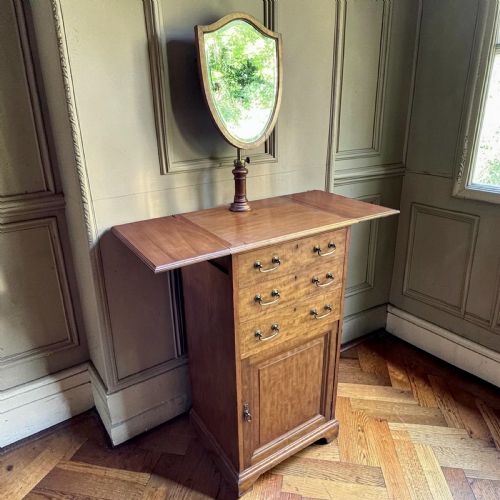


Edwardian Chest with Mirror
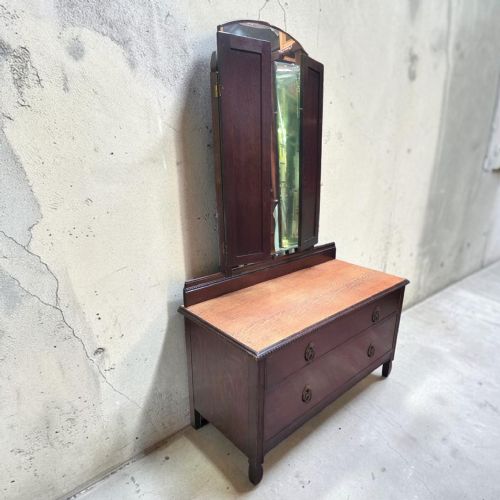
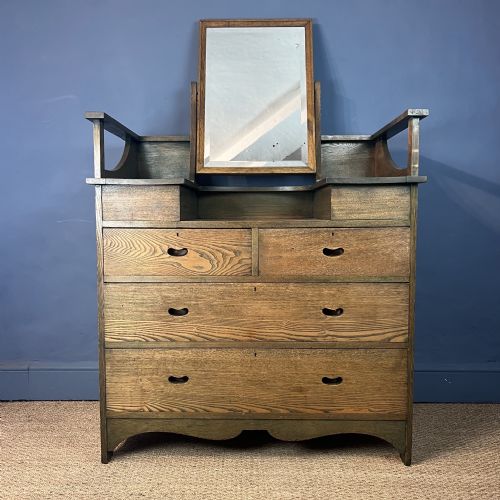
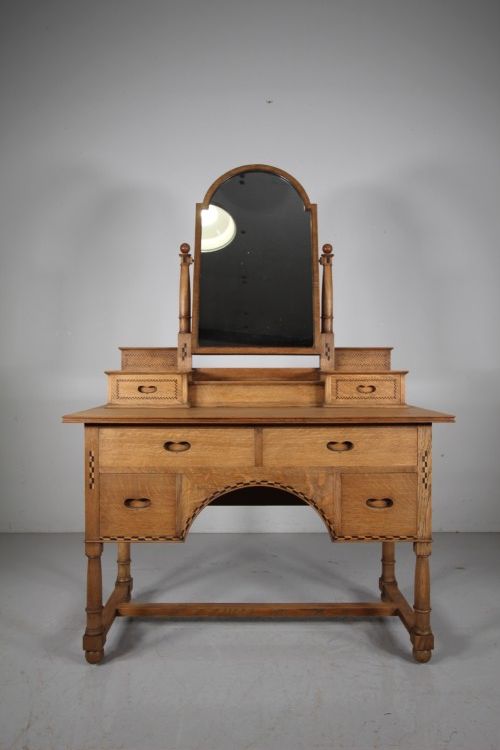
These pieces, found under edwardian chest with mirror, combine bedroom storage with a tilting looking glass for daily dressing.
Edwardian Chest with Mirror
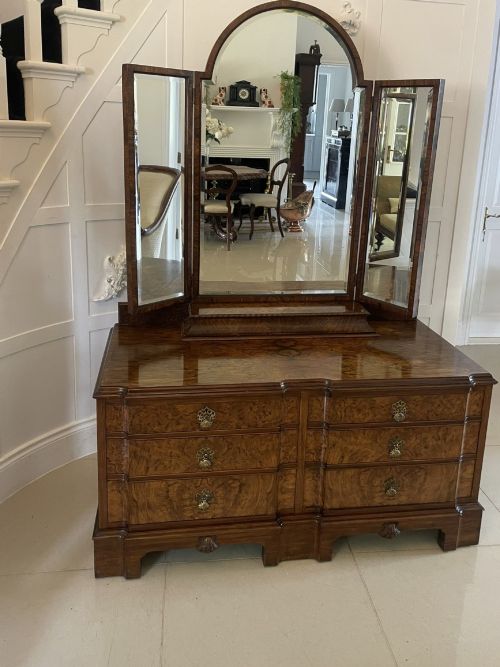
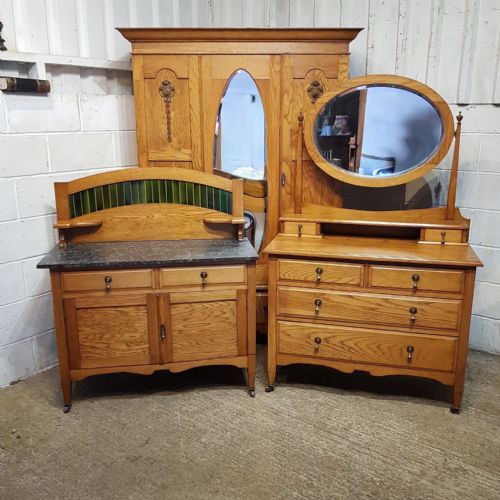
An edwardian chest with mirror unites a drawer base with an attached glass, commonly appearing in formats such as dressing tables, dressing chests, and dressing stands. The evidence shows these pieces span the Edwardian era, the nineteenth century, and the nineteen-twenties, incorporating revival styles like Queen Anne, Chippendale, and Jacobean alongside Arts and Crafts and Art Deco designs.
Makers and workshops of the period utilised timber frames fitted with adjustable shield, oval, or triple mirrors, while occasional variations include scumble glazing or painted finishes. Buyers frequently encounter mahogany, oak, satin walnut, and burr walnut constructions across these domestic bedroom furnishings.
How they were made
Cabinet makers built the structural carcases using solid hardwoods and selected veneers, incorporating wood inlay for decorative surface detail on drawer fronts and frames. Brass hardware such as swing handles and mirror pivots secured the moving elements to the wooden uprights.
Silvered mirror glass, protected by wooden framing, was mounted to swivel or tilt on adjustable brass brackets fixed above the top surface of the chest of drawers.
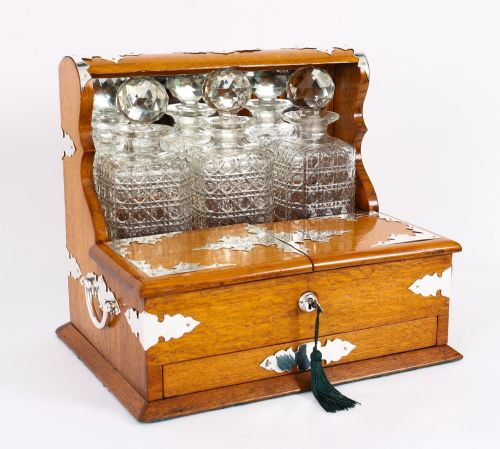
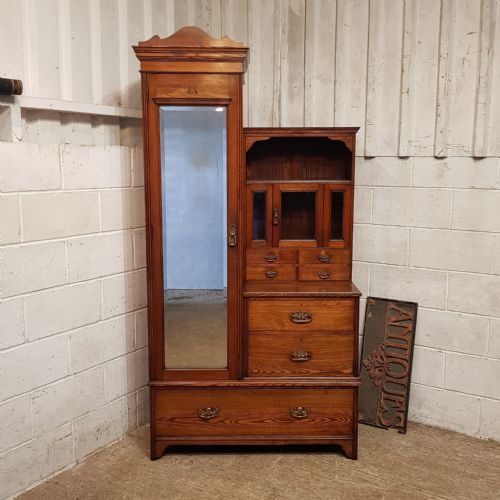
Miniature wardrobes and secret safe cabinets occasionally share showroom floor space with full-sized bedroom mirrors.
What varies in quality
The degree of distinction lies in the selection of timbers, such as burr walnut or figured mahogany, and the precision of the cabinet work in the drawer construction and inlay. Pieces bearing maker labels or attributed to notable workshops demonstrate higher levels of design ambition.
The survival of original mirror glass, brass fittings, and structural integrity without replacement parts separates standard domestic items from those of superior craftsmanship.
George Walton·Heals·Wright and Hunter of Belfast·Harris Lebus of London·Maurice Adams
The Edwardian Chest with Mirror Glossary
- Dressing chest
- A lower chest of drawers fitted with an upright mirror and sometimes small jewellery drawers on the top surface. It served as a compact bedroom unit for grooming.
- Shield mirror
- A looking glass shaped like a heraldic shield, suspended on pivots within a wooden frame. This form allowed the user to tilt the glass to various angles.
- Wood inlay
- Pieces of contrasting timber set flush into a recess to form decorative patterns on the surface of the wood. It was utilised extensively in Edwardian cabinet work.
- Scumble glazing
- A paint technique applied to imitate the grain of more expensive timbers or create a textured decorative finish on furniture. It appears on selected period pieces.
- Triple mirror
- An arrangement of three looking glasses where the two outer sections hinge forward. This design provided multiple angles of reflection for dressing.
Edwardian Chest with Mirror: Frequently Asked Questions
How do I date an edwardian chest with mirror?
Examine the timber species, construction methods inside the drawers, and the style of the mirror supports. Edwardian pieces often display lighter woods, satin walnut, or mahogany alongside simpler Arts and Crafts lines.
Compare the hardware, such as brass drop handles and escutcheons, with standard period patterns. Maker labels or stamps inside the drawer linings provide definitive attribution.
Are the mirrors original to these chests?
Many mirrors remain original, supported by matching timber frames and period brass pivot screws. Look for uniform ageing in the mirror glass and consistent wood patina between the chest and the mirror standards.
Replacements typically show modern mirror glass, mismatched timber tones, or altered mounting brackets on the back of the chest.
How do I care for the wood surface?
Dust the timber regularly with a dry, soft cloth and avoid placing the piece near direct heat sources or strong sunlight. Natural waxes applied occasionally help maintain the finish without building up heavy residue.
Protect the top surface from moisture by using coasters or mats beneath water vessels or metal objects.