


Edwardian Ceiling Lantern
An edwardian ceiling lantern brings period illumination to halls and vestibules through brass frames and glass panels.
Edwardian Ceiling Lantern
An edwardian ceiling lantern is a hanging light fixture designed primarily for entrance halls, vestibules, and stairwells, suspended by chains or rods from the ceiling. These fixtures provide functional downward illumination while serving as a decorative focal point in domestic interiors.
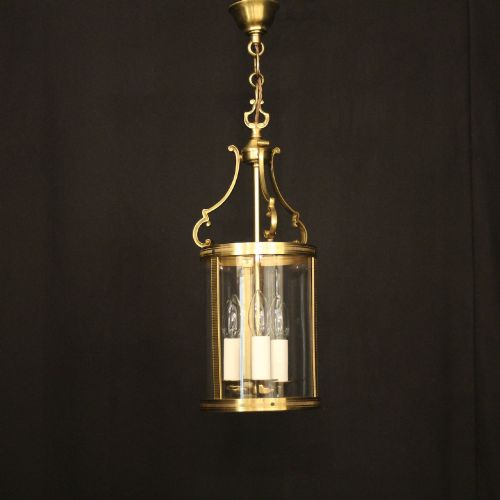
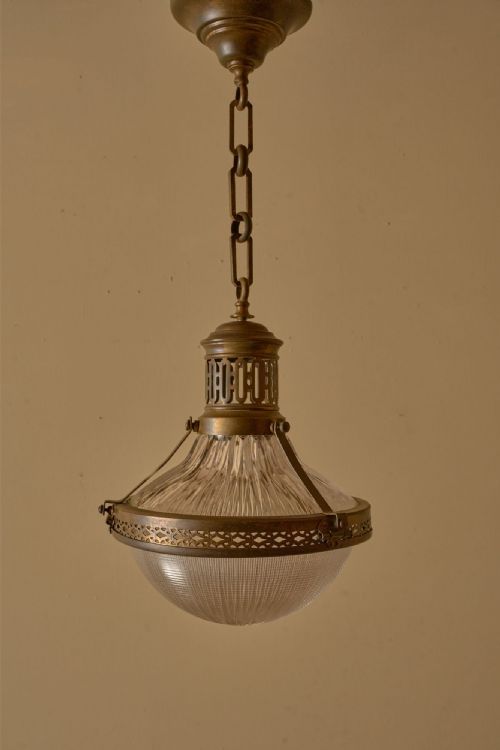
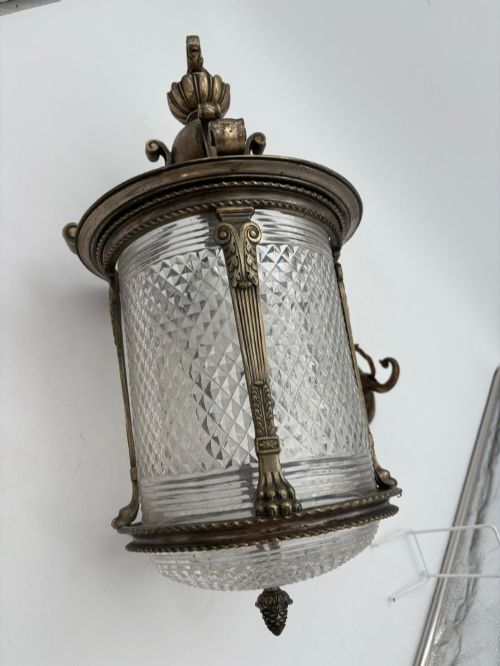
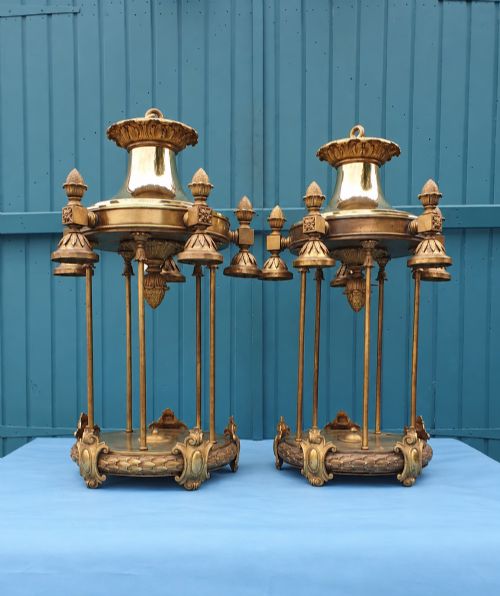
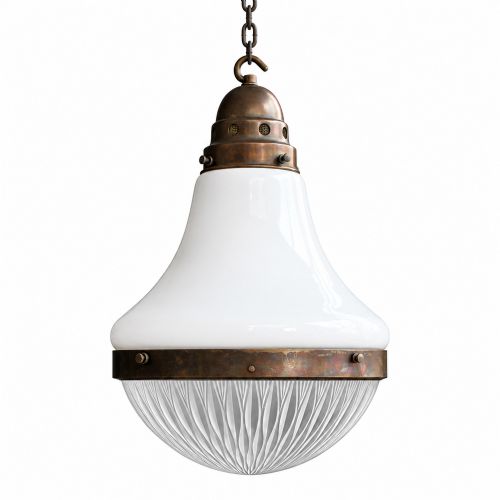
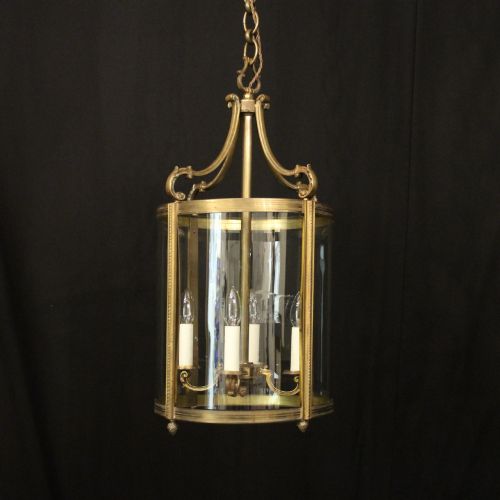
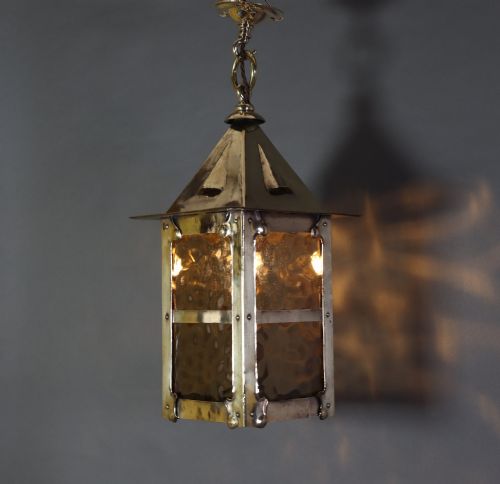
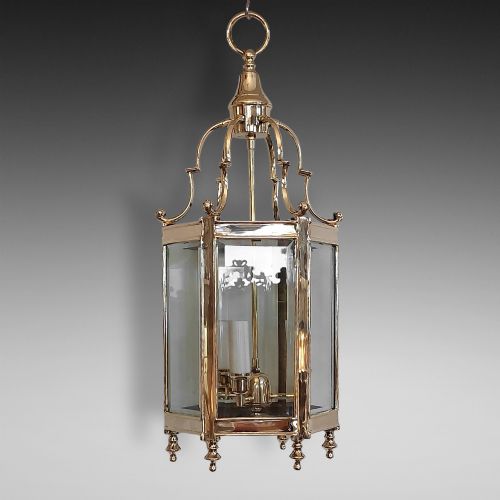
The pieces seen on this page span the Edwardian period, surrounding decades from the late nineteenth to the early twentieth century, and related revivals. Brass and bronze frames dominate the selection, housing glass panels in simple geometric shapes or more ornate artistic configurations.
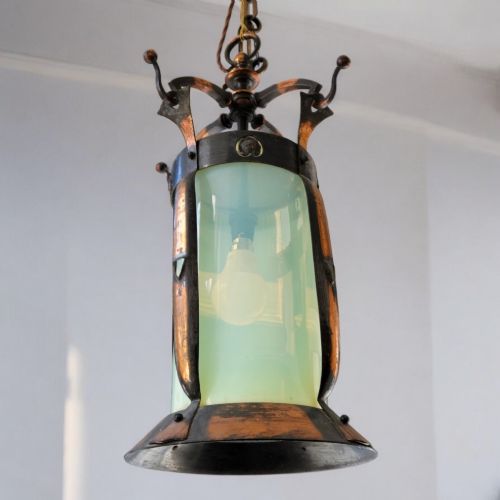
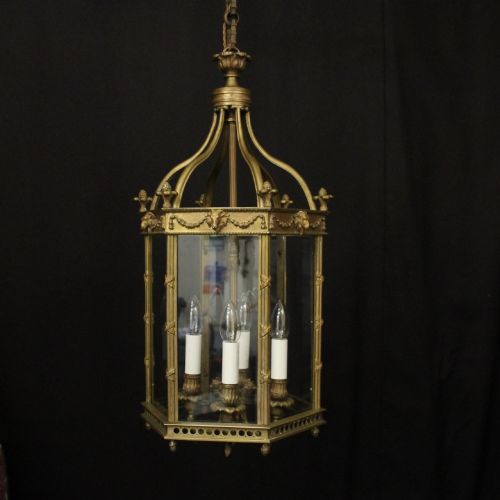
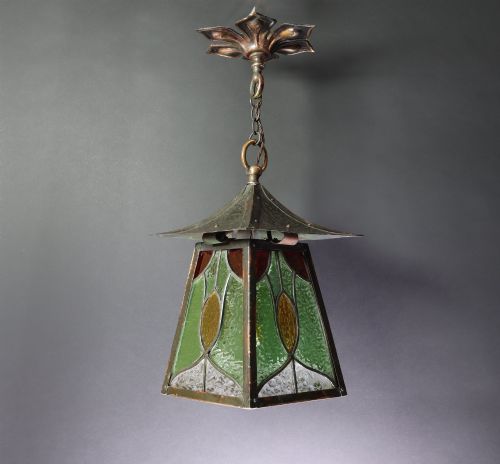
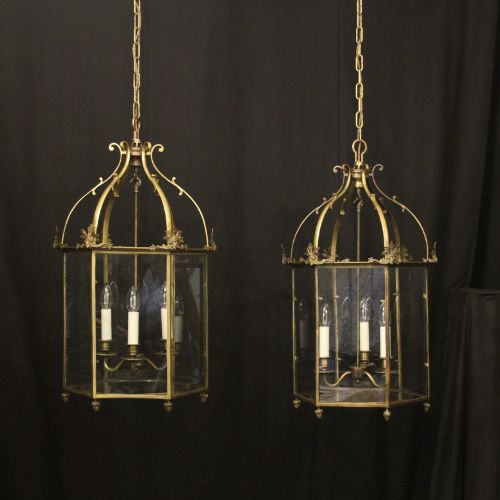
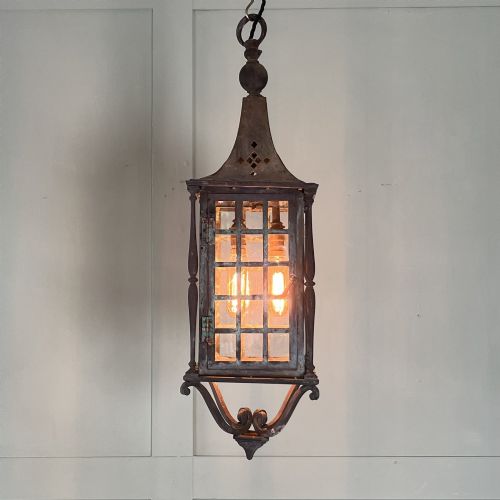
Hexagonal and square forms are most common among the survivors, often featuring leaded, bevelled, or frosted glass panes. Alongside standard Edwardian designs, variations emerge in the Arts and Crafts and Art Nouveau styles, reflecting the aesthetic movements of their origin.
Materials and construction
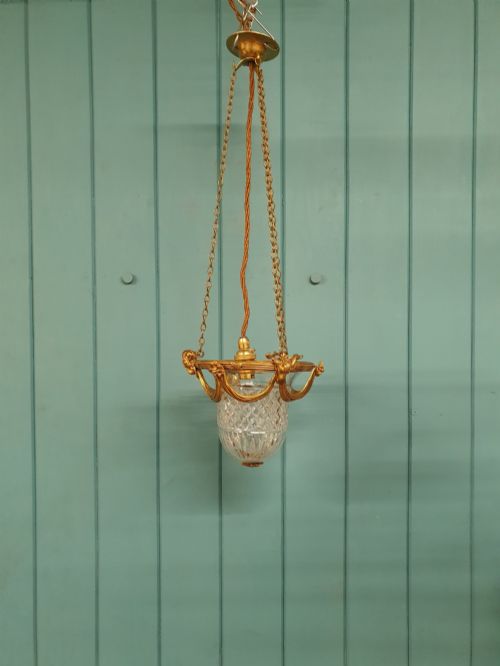
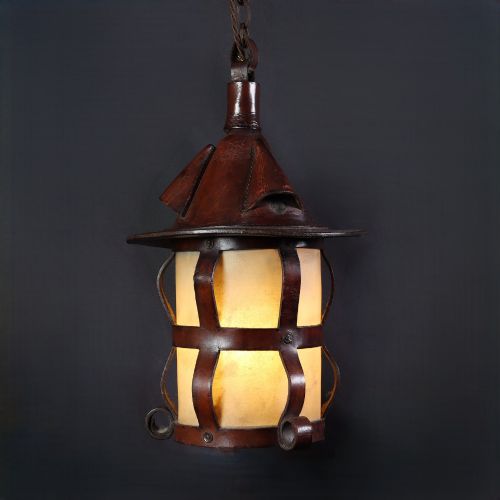
Frames are constructed from cast and sheet brass, bronze, gilt bronze, copper, and occasionally leather with vellum. These metals provide the structural skeleton required to support heavy glass components while tolerating the heat of early lighting elements.
Glazing techniques include bevelled glass, leaded stained glass, coloured glass, and frosted or moonstone panels held securely within metal cames or tracks. Gilded finishes and patinated bronze surfaces give these fixtures their characteristic period appearance.
Edwardian Ceiling Lantern Retail Price Guide 2026
Typical asking prices for edwardian ceiling lantern among the pieces listed under this phrase on Sellingantiques today, from the lower quarter to the upper quarter. They describe what is for sale here now, not the wider market.
Listings feature brass, bronze, copper, and gilt bronze framing glass panels in Edwardian, Victorian, and Arts and Crafts styles.
Separating quality across the range
Quality rests in the weight of the metal casting, the precision of the frame joints, and the treatment of the glass panes. Heavy cast brass or gilt bronze frames with crisp detailing and bevelled or stained glass sit firmly above thin spun metal frames with plain glass.
The presence of hand-stitched elements, distinct stylistic references to makers like Voysey, or attribution to notable glass houses elevates certain examples. Construction integrity and the survival of original patination distinguish superior specimens from routine utility lighting.
F and C Osler·Voysey
The Edwardian Ceiling Lantern Glossary
- Bevelled glass
- Glass panes with angled edges cut and polished to create a refractive border. This technique catches light and adds visual depth to the lantern walls.
- Arts and Crafts
- A design movement prioritising traditional craftsmanship, visible construction, and simple forms. Pieces in this style often use honest metalwork and unpretentious materials.
- Art Nouveau
- A style defined by organic, flowing lines and natural motifs. Lanterns following this aesthetic feature sinuous metal framing and plant-inspired curves.
- Gilt bronze
- Bronze coated with a thin layer of gold leaf or applied gold paint. This finish offers a durable metallic lustre that resists tarnishing over decades of exposure.
- Hexagonal
- A six-sided geometric form frequently utilised for lantern bodies. This shape allows multiple glass panels to distribute light evenly across a space.
Edwardian Ceiling Lantern: Frequently Asked Questions
Where should an edwardian ceiling lantern be hung?
These lanterns suit entrance halls, corridors, and high-ceilinged landings where they can hang freely as a central feature. Their downward light pattern works well in transitional spaces requiring both atmosphere and practical brightness.
Ensure adequate clearance beneath the fixture so that doors swing clear and movement remains unobstructed. Low ceilings call for shorter suspension chains to keep the lantern safely overhead.
How do I date an antique lantern?
Dating relies on examining the construction methods, screw threads, metal finishes, and glass types present in the piece. Edwardian examples often feature substantial brass or bronze framing paired with leaded or bevelled glass panels typical of the early twentieth century.
Compare stylistic cues against surrounding periods like late Victorian or Arts and Crafts movements. Patination and manufacturing marks also help narrow the decade of production.
Are these lanterns wired for modern electricity?
Many surviving lanterns have been rewired for contemporary electrical standards while retaining their historic metalwork and glass. Rewiring allows safe integration into modern domestic lighting circuits without altering the exterior appearance.
Consult a qualified electrician to inspect internal wiring and ensure the fixture safely accommodates current bulb types and household voltages.
What metals are typically used in these frames?
Brass and bronze form the primary structural materials for most period lanterns, offering durability and decorative potential. Gilt bronze and copper also appear, providing different surface tones and patinas.
Each metal reacts uniquely to age and environment, developing distinct surface characteristics over time that contribute to the authentic antique appearance.