
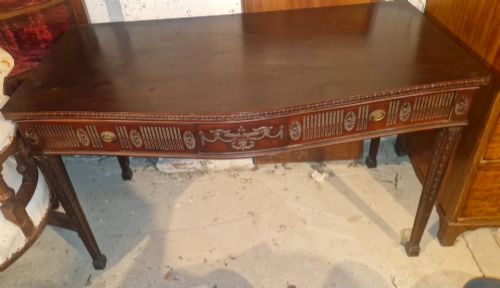
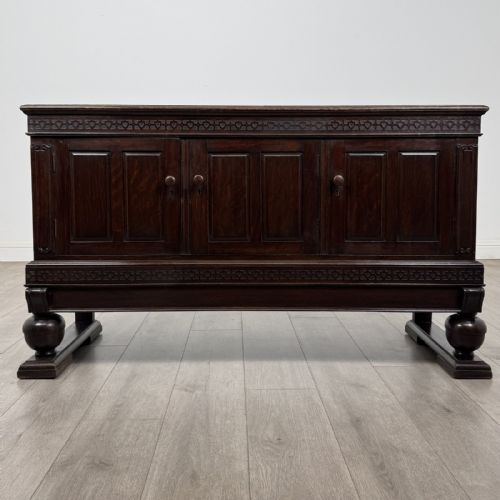
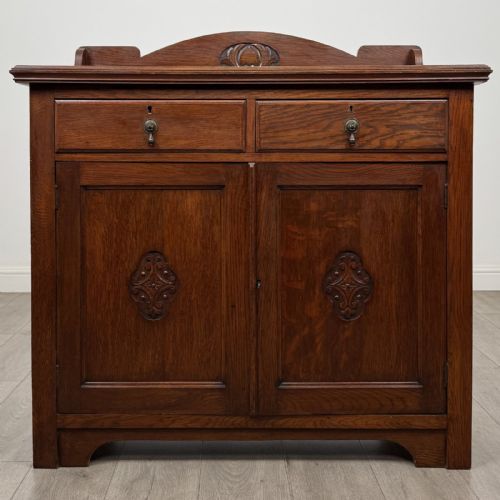
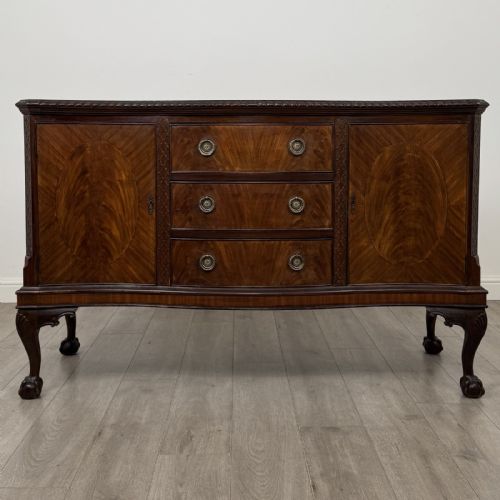
Edwardian Carved Server
An edwardian carved server offers practical dining room storage, combining period craftsmanship with carved timber details to anchor a traditional interior.
Edwardian Carved Server
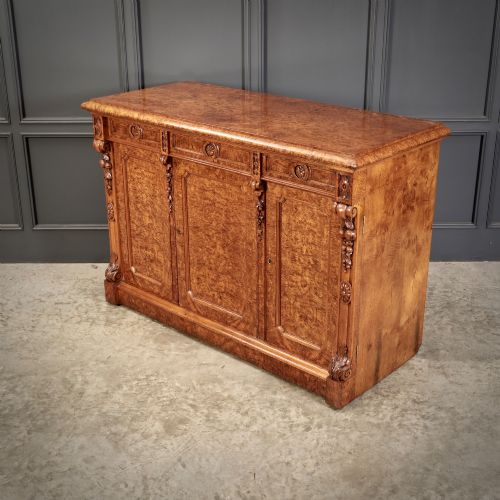
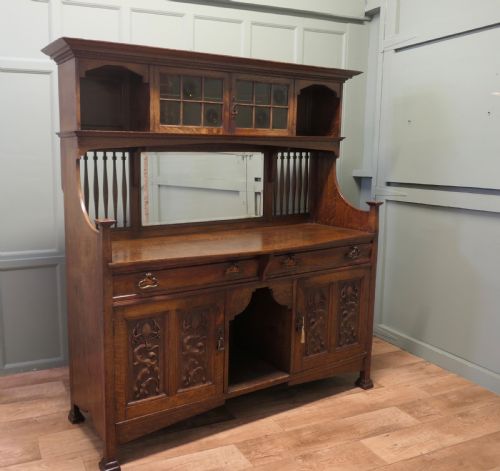
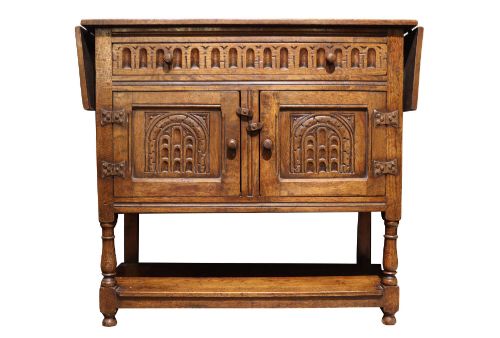
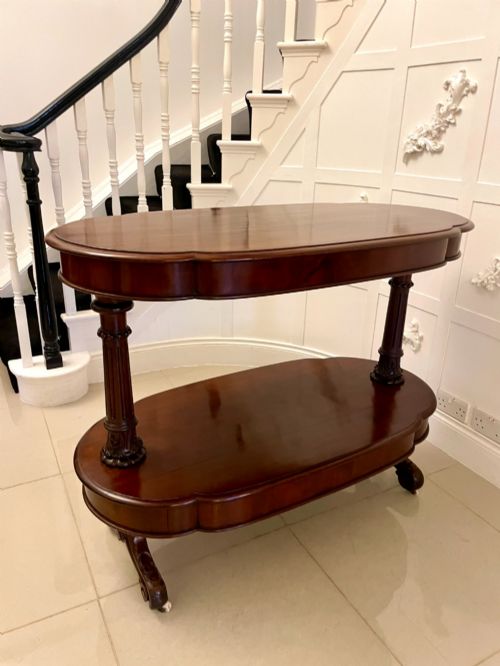
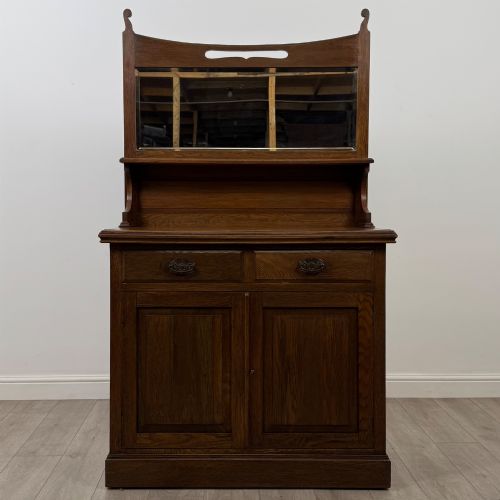
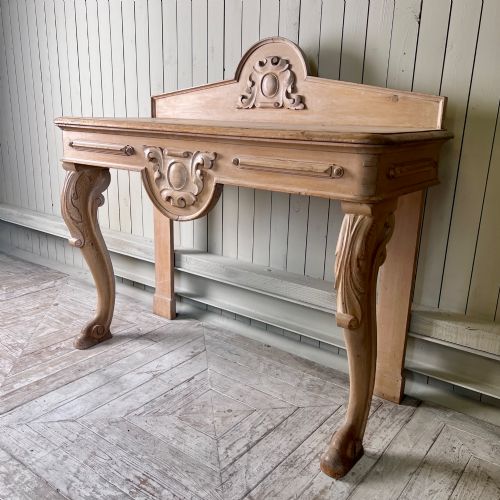
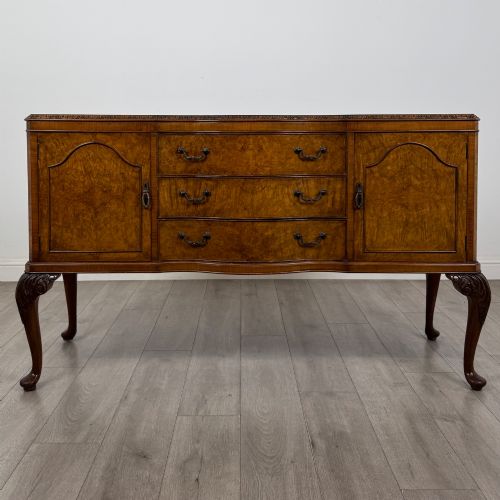
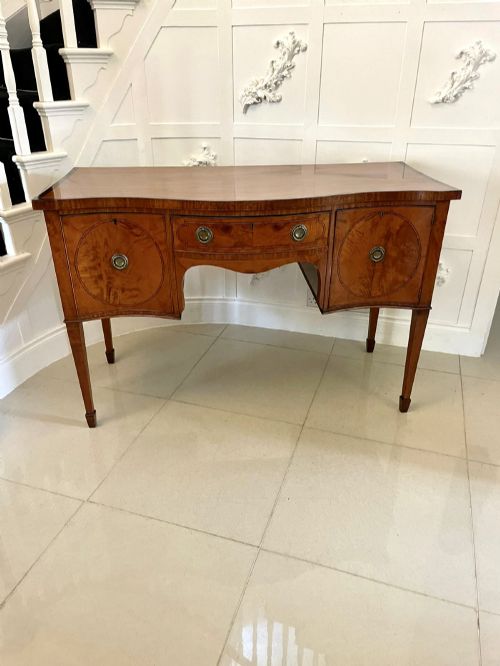
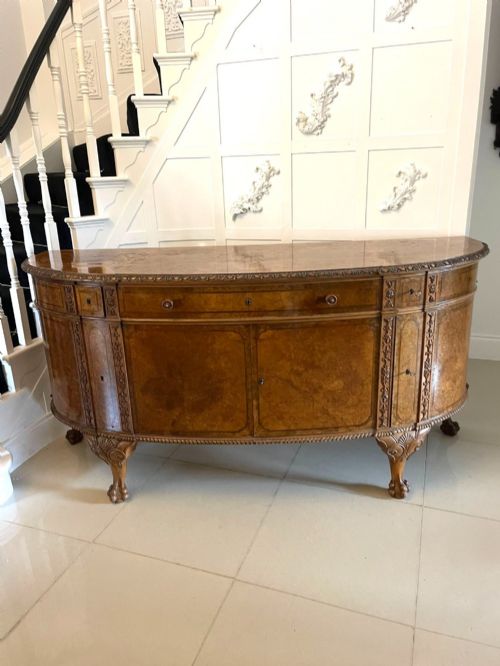
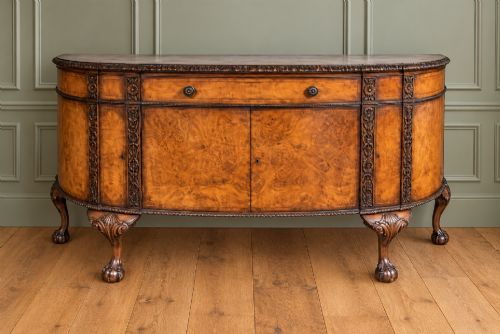
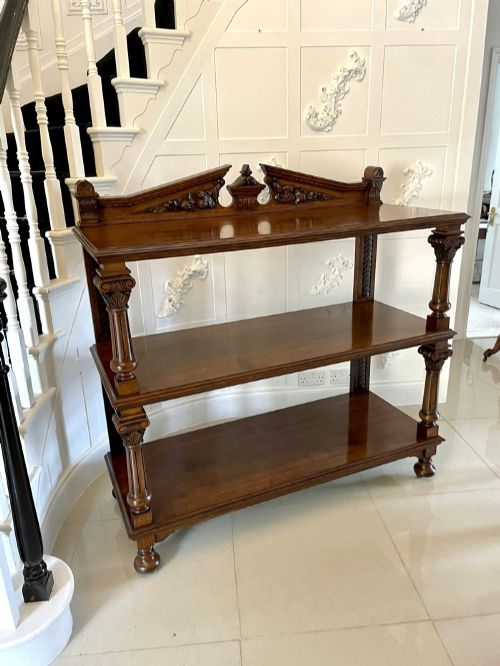
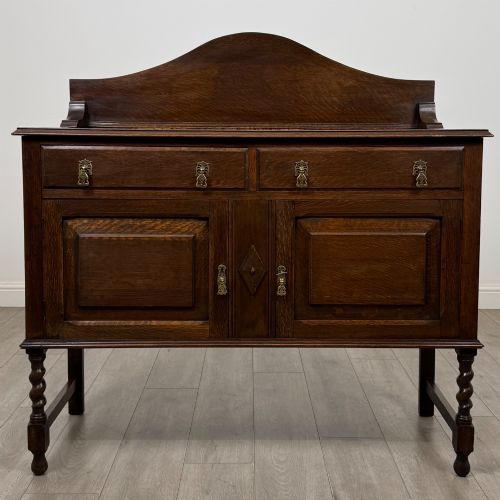
The edwardian carved server encompasses a variety of serving tables, buffet pieces, and dresser bases recorded across Edwardian, Victorian, and early twentieth century periods. These items serve dining spaces and hallways, functioning as surface display areas and storage units for tableware.
Oak and mahogany dominate the offerings, often appearing alongside burr walnut veneers. Buyers will encounter revival aesthetics such as Jacobean, Gothic, and Queen Anne styles, alongside functional Arts and Crafts designs.
The pieces listed reflect diverse regional workshop production, ranging from standard Edwardian oak servers to elaborate breakfront mahogany forms and simpler console tables.
Gradations in Standard
Quality separates ordinary utility furniture from pieces bearing refined craftsmanship through the depth of hand-carved details and the selection of timber figures. Superior examples employ carefully matched burr walnut veneers or dense, select oak and mahogany.
Design cohesion also distinguishes better items, where proportions, period revival detailing, and original hardware integrate harmoniously rather than appearing as generic additions.
Certain serving tables quietly hide twelve piece cutlery sets within their drawers, waiting to rescue an impromptu dinner party.
Ambrose Heal for Heal & Son·Beresford & Hicks London·Leonard Wyburd·M. D. Miller & Sons Nottingham
The Edwardian Carved Server Glossary
- Dresser base
- A low cabinet featuring drawers and cupboards, historically used for food preparation and serving in dining rooms.
- Breakfront
- A piece of furniture with a central section that projects forward from the flanking outer sections.
- Serpentine
- A curved line of furniture fronts, moving outward in the centre and inward at the sides, or vice versa.
- Pot board
- An open lower shelf fitted beneath a dresser base or server for storing pots and heavy utensils.
- Chiffonier
- A compact sideboard or low cupboard developed during the nineteenth century for dining room storage.
Edwardian Carved Server: Frequently Asked Questions
What is an edwardian carved server used for?
These pieces function as surface areas for serving food and drinks during meals while providing enclosed storage in cupboards and drawers for cutlery, linens, and dining accessories.
In modern homes, they frequently serve as display consoles in hallways, living rooms, and dining spaces to hold lamps and decorative objects.
How do I distinguish Edwardian pieces from Victorian ones?
Edwardian furniture generally exhibits lighter construction and brighter timber tones influenced by Arts and Crafts and revival movements, moving away from heavy ornamentation.
Victorian pieces often display darker finishes, more robust proportions, and denser carved detailing such as mirror backs and heavy Gothic or Jacobean motifs.
What woods were used for these servers?
Oak and mahogany form the structural foundation for the majority of these serving tables, offering durability and stable surfaces for carving and joinery.
Burr walnut appears frequently as a decorative veneer on door panels and drawer fronts to introduce rich grain patterns and warm tones.
Where should I place a server in my home?
Dining rooms remain the traditional location, positioned against a wall to hold serving dishes and store tableware close to the dining table.
They also adapt well to wide hallways and living rooms where surface display space and concealed storage are required.