

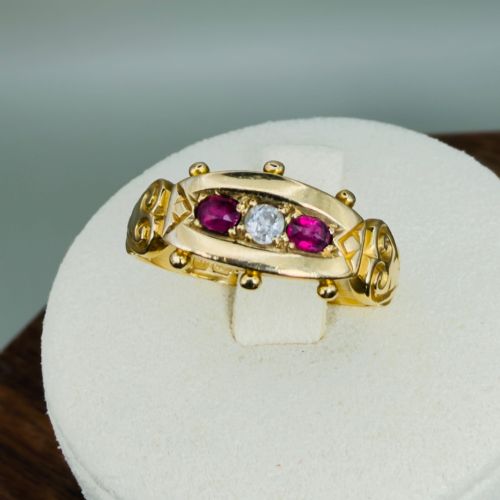

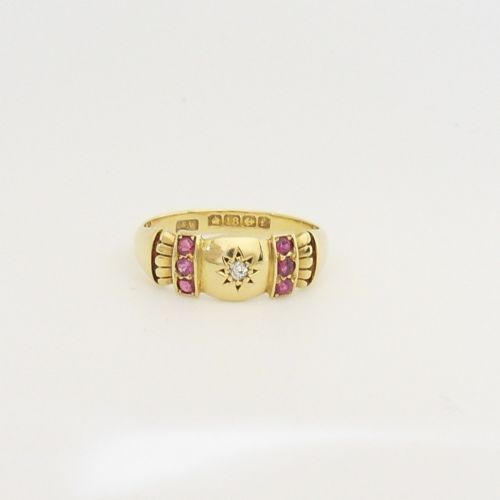
Edwardian Carved Band Ring
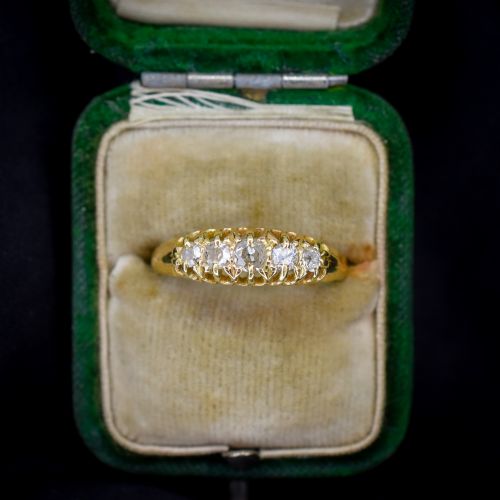
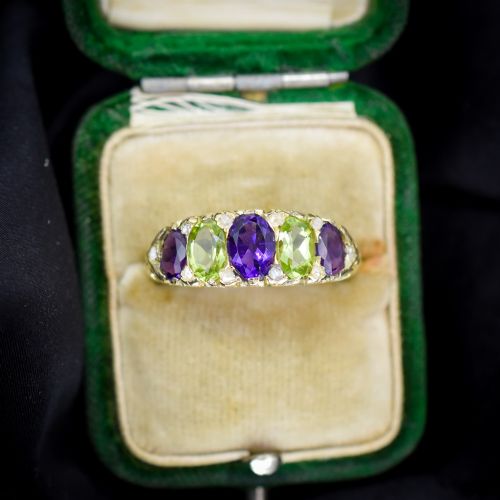
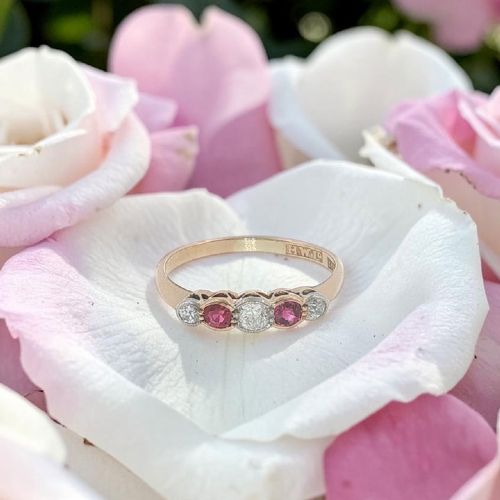
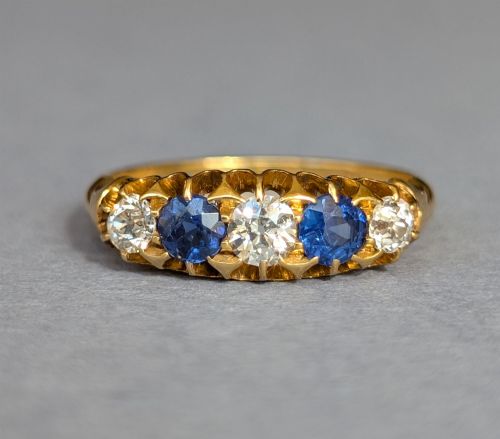
An edwardian carved band ring brings together period gemstones and yellow gold in forms crafted to sit flush to the finger.
Edwardian Carved Band Ring
Most examples found on this page date from the Edwardian period and the surrounding decades, incorporating yellow gold and rose gold alongside older Victorian survivals. These rings function primarily as everyday wearable jewellery carrying distinct period character.
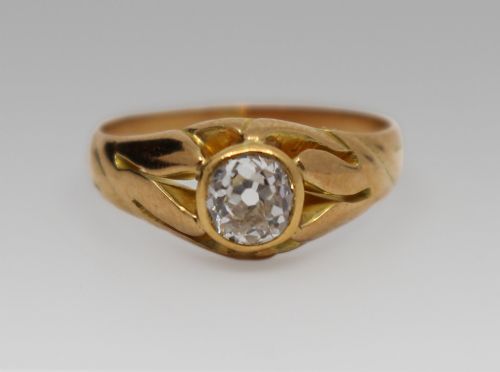
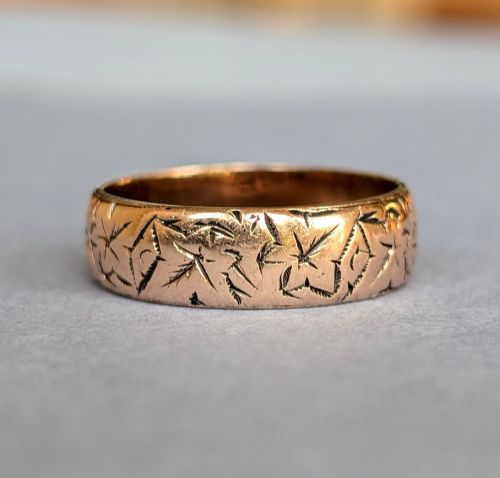
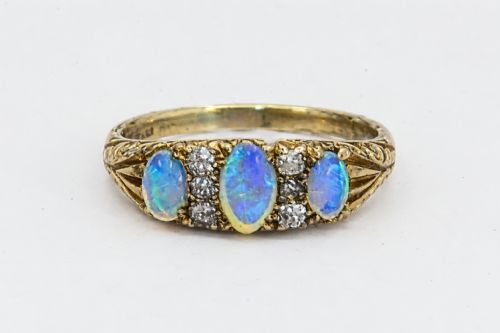
The defining characteristic is the integration of stones directly into the band through carved channel or star settings rather than high projecting claws. Buyers encounter variations ranging from simple plain bands to multi-stone half hoop configurations.
Materials and construction
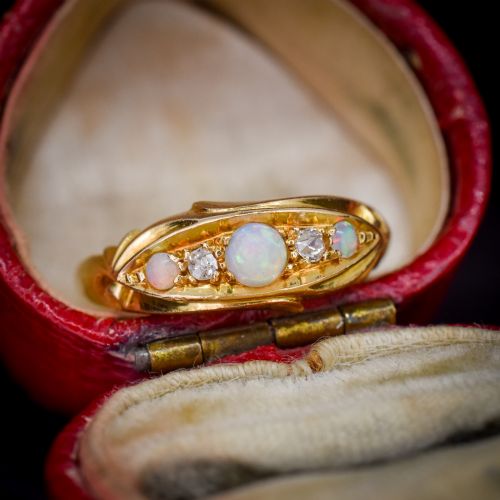
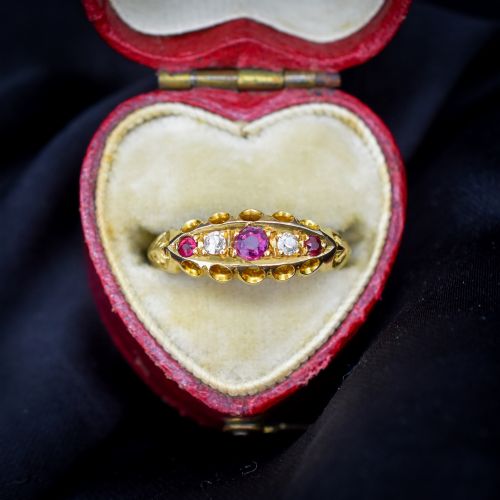
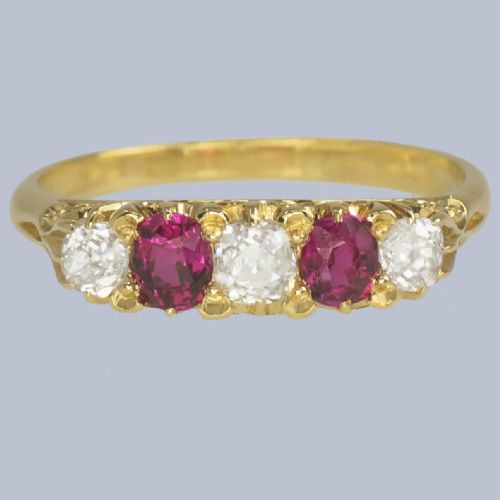
Makers utilised 18ct gold and 9ct gold as the primary foundation for these rings, often casting or forging the shank before hand-setting the gems. Old cut diamonds and natural rubies, sapphires, and opals were secured using flush star engravings or boat-shaped bezel mounts.
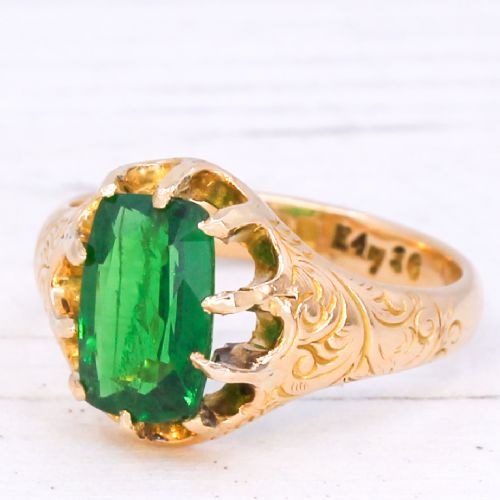
The construction relies on precision hand-tooling to carve the metal surrounding each stone, creating low-profile bands intended for daily wear. Assay office marks frequently stamp the precious metal content and city origin inside the hoop.
Certain rings hide secret messages or symbols carved into the gold, whispering sentiments from a century ago directly to the wearer's finger.
Distinctions in quality
Quality separates along the crispness of the hand-carved detailing in the metal and the matching of the set gemstones. Superior pieces display deep, sharp engraving around the star or boat settings without metal fatigue near the stones.
The choice and condition of the gems dictate the upper tier of the range, particularly where old mine cut diamonds or vibrant sapphires and rubies retain their original polish. Lesser examples show softened hand-work from decades of wear or replacement stones that disrupt the historical harmony.
The Edwardian Carved Band Ring Glossary
- Boat ring
- A ring mounting shaped like a symmetrical boat hull, tapering toward the ends to hold a row of graduated gemstones. This configuration was common during the late nineteenth and early twentieth centuries.
- Old cut
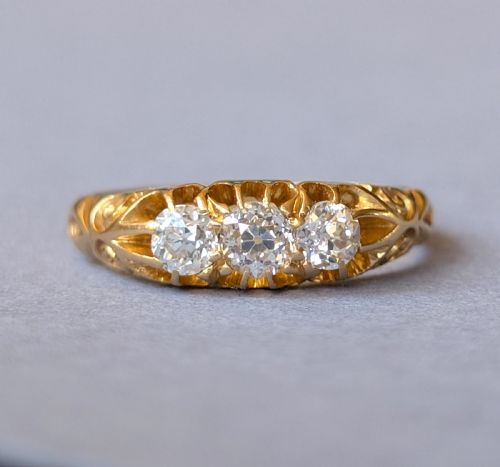
- A diamond cutting style preceding modern brilliant cuts, characterised by a small table, high crown, and open culet. These stones display distinct chunky facets under candlelight.
- Gypsy ring
- A band style where gemstones are flush-set directly into the thick gold hoop, often accented with star-shaped engravings. The smooth profile prevents snagging on clothing.
- Trilogy ring
- A ring featuring three primary gemstones set in a row, traditionally symbolising the past, present, and future. Edwardian versions frequently pair central diamonds with flanking rubies or sapphires.
Edwardian Carved Band Ring: Frequently Asked Questions
How do I care for an edwardian carved band ring?
Clean these pieces gently using warm water and a soft brush, avoiding harsh chemical ultrasonic cleaners that can damage softer gems like opal.
Store the ring separately in a fabric-lined box to prevent the gold and gemstones from scratching against harder jewellery.
Can these rings be resized easily?
Most gold bands can be adjusted by a skilled jeweller, though care is required around carved shoulders and flush-set stones.
Consult a specialist who understands antique settings to ensure the structural integrity of the band and engravings remains intact.
Are these rings suitable for daily wear?
The low-profile design of these bands makes them robust companions for regular daily use, provided the metal and settings are secure.
Period opals require extra mindfulness due to their softer composition, while diamond and sapphire variants handle everyday routines reliably.
How do I date an edwardian carved band ring?
Examine the inner band for British halligrams, maker marks, and date letters that pinpoint the exact assay office and year.
Stylistic clues such as old cut diamond facets and boat-shaped mountings also help confirm the manufacturing era.