






Edwardian Star Gypsy Ring
These edwardian star gypsy ring pieces are low-profile treasures featuring flush-set stones, designed for daily wear with a distinct celestial motif.
Edwardian Star Gypsy Ring
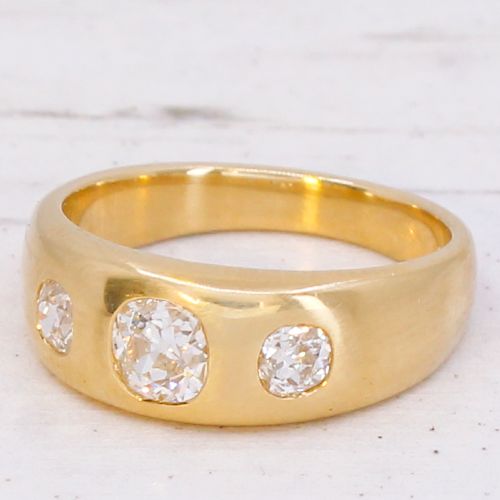
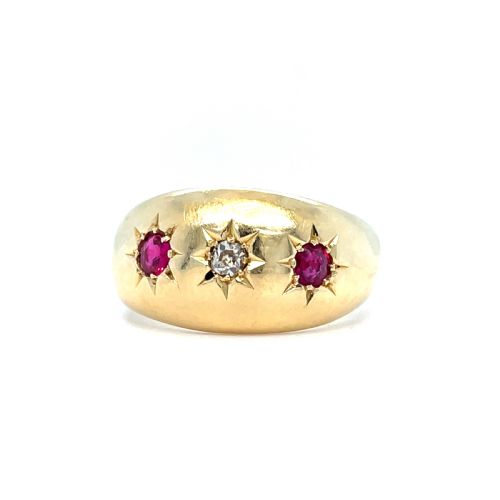
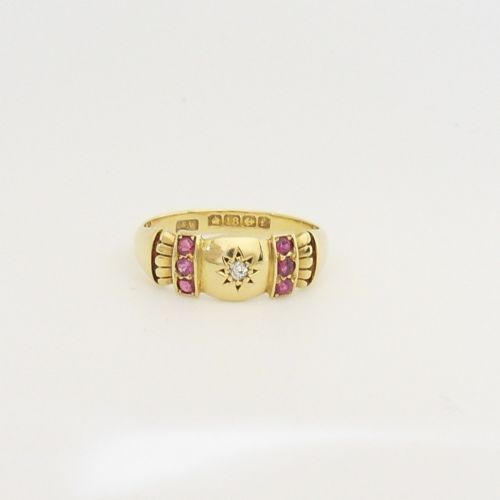
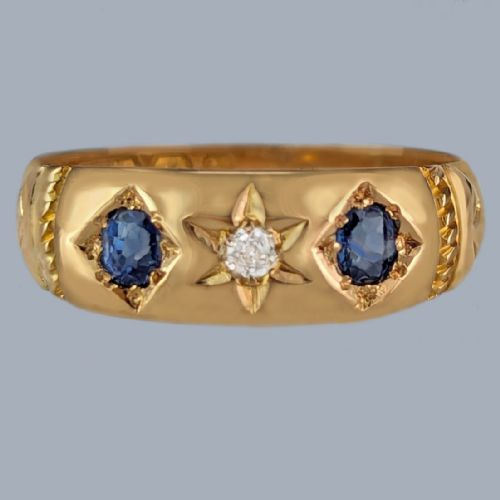
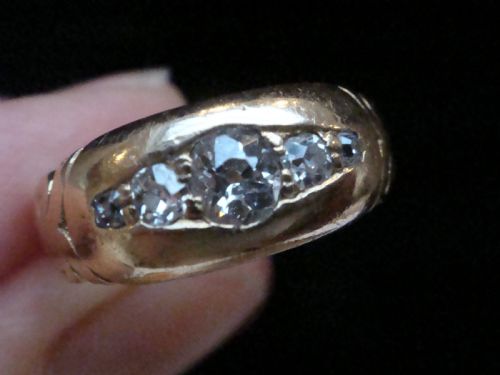
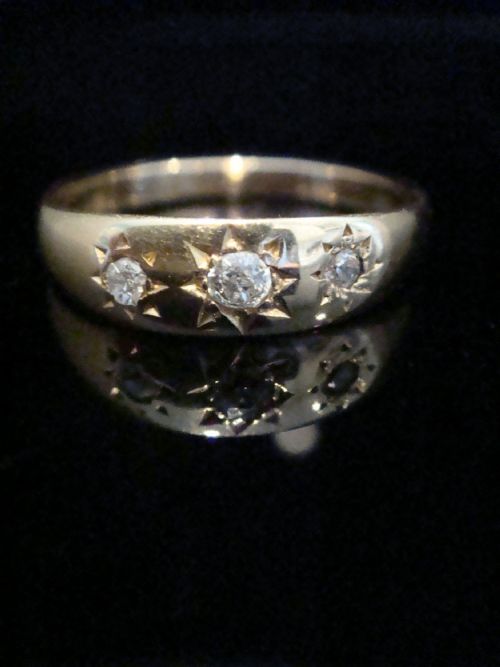
An edwardian star gypsy ring sits flush against the finger, featuring stones secured directly into a smooth band with hand-engraved starburst motifs radiating outward. This design protects the gems while offering a refined silhouette typical of the period.
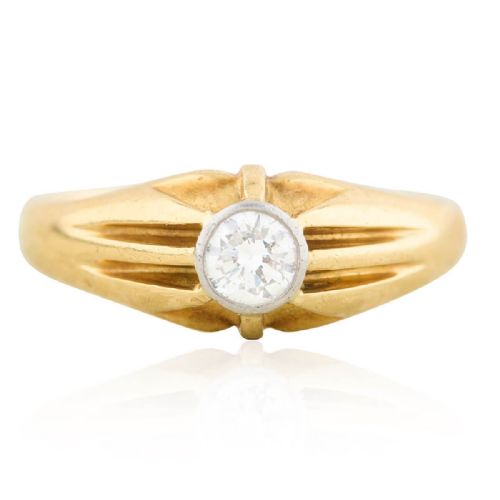
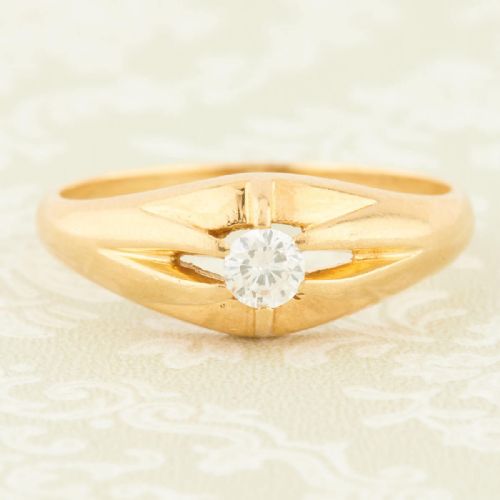
The selections span Edwardian and Victorian eras, incorporating 18ct yellow gold, 15ct yellow gold, and 9ct gold mounts. Alongside single diamond solitaires, traders encounter multi-stone arrangements set with rubies, sapphires, and emeralds.
Most examples originate from the early twentieth century or late nineteenth century, reflecting classic British jewelling traditions. Their low profile makes them exceptionally practical for continuous modern use.
How they were made
Goldsmiths cast or forged heavier bands in 18ct, 15ct, or 9ct yellow gold to ensure the metal could support flush stone settings without bending. Hand-cut starbursts were then meticulously chased around the stone gypsy settings using fine gravers.
Stones such as old cut diamonds, rubies, and sapphires were dropped into tapered recesses and held securely by pushing surrounding metal over the girdle. This technique created a smooth, snag-free surface ideal for daily hand movements.
Secret celestial skies wrapped around your finger, ready to sparkle every time you gesture.
What varies in quality
The crispness of the hand-engraved starburst surrounding each gem dictates much of the visual character, with sharper ray cuts delivering greater brilliance against the polished gold surface. Softer lines indicate wear or hurried initial production.
Metal weight and band thickness also determine longevity, as heavier 18ct yellow gold shanks resist thinning far better than lighter nine-carat versions over decades of wear.
The Edwardian Star Gypsy Ring Glossary
- Gypsy ring
- A ring style featuring stones set flush into a thick, tapered band where the metal tapers smoothly toward the back. This design became popular in the Victorian era.
- Starburst
- An engraved motif of radiating lines surrounding a flush-set gemstone, designed to mimic the twinkling rays of a star. It was widely used in Edwardian celestial jewellery.
- Old cut
- A traditional diamond cutting style from the nineteenth and early twentieth centuries featuring a small table, high crown, and large open culet. These stones catch candlelight and low light particularly well.
- Flush setting
- A stone setting technique where the gem is pressed into a drilled hole in the metal so that its table sits level with the surface. The surrounding metal is then burnished tightly over the edge.
Edwardian Star Gypsy Ring: Frequently Asked Questions
How do I clean my ring safely?
Warm soapy water and a very soft brush are best for lifting daily oils from beneath the flush-set stones without harming the antique gold.
Harsh chemical dips and ultrasonic cleaners should be avoided, as they can loosen older settings or damage softer gems like opals and emeralds.
Can an edwardian star gypsy ring be resized?
Most skilled jewellers can adjust the size of these gold bands by adding or removing a small section of metal from the back of the shank.
Care must be taken near the shoulders so that any engraving or the flush stone settings themselves remain entirely undistorted during heating.
How do I date an antique ring?
Hallmarks stamped inside the band provide official assay office symbols, date letters, and purity marks that pinpoint the exact year of manufacture.
Stylistic clues like hand-engraved starbursts, stone cuts, and metal purities such as 15ct gold further narrow down the production era.