


Edwardian Canvas Steamer Chest
An edwardian canvas steamer chest is a robust travel companion built for ocean liners, offering practical storage with historic character.
Edwardian Canvas Steamer Chest
An edwardian canvas steamer chest bridges the gap between historical luggage and functional modern storage. These trunks appear in forms such as fitted chests, dome top boxes, and wardrobe trunks designed for long journeys.
The pieces on this page span the late nineteenth century through the nineteen twenties, touching the Edwardian era, Victorian period, and early twentieth century. Trunks from makers like Louis Vuitton, Aux Etats Unis, and Drawco sit alongside unbranded travel chests.
Most examples combine utilitarian function with enduring craftsmanship, taking the shape of hat boxes, cabin trunks, and storage chests. Buyers often utilise them as coffee tables or statement storage pieces in contemporary rooms.
How they were made
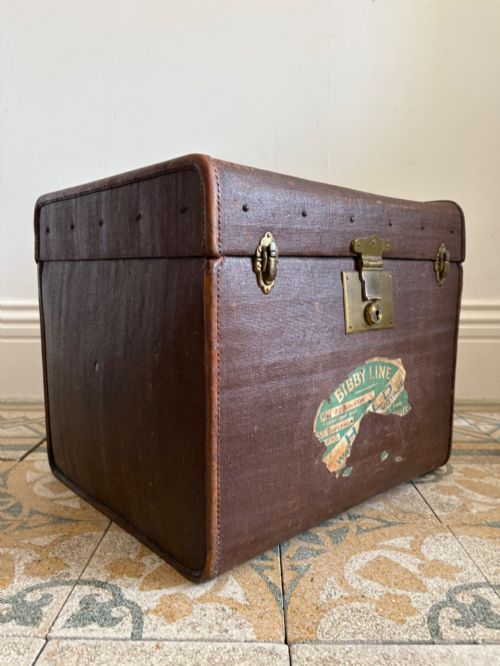
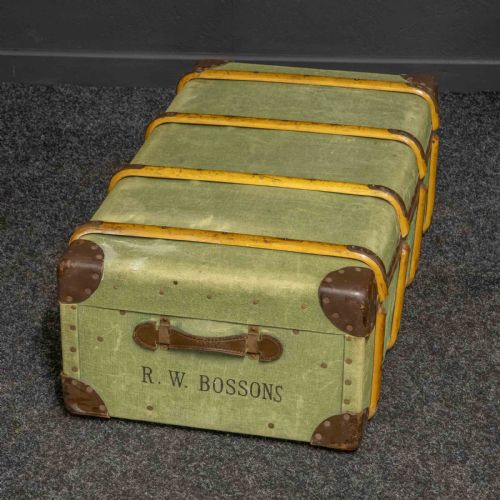
Construction relies on a sturdy core of wood or oak, reinforced with durable canvas and trimmed with leather. Metal, brass, and iron hardware provide structural strength to corners, latches, and handles.
Trunks feature riveted joints and protective slats designed to withstand the rigours of global transit. Interiors often incorporate fitted compartments, wooden framing, or specialised trays suited for specific garments.
Some trunks still retain faint travel labels from steamship lines and grand hotels, whispering of transatlantic voyages taken a century ago.
What varies in quality
The distinction between standard utility luggage and exceptional pieces lies in the hardware and maker provenance. Signed locks, stamped canvas, and high-end maker marks elevate certain trunks significantly.
Integrity of the canvas covering and the preservation of internal fittings determine the desirability of a piece. Original leather straps and functional brass or iron mechanisms preserve the historical authenticity of the trunk.
Army and Navy·Aux Etats Unis·Louis Vuitton·Drawco
The Edwardian Canvas Steamer Chest Glossary
- Steamer trunk
- A low-profile luggage chest designed to fit beneath the berth of an ocean liner. These pieces prioritize space efficiency without sacrificing durable exterior construction.
- Dome top
- A chest style featuring a rounded lid designed to shed water during travel. This form often appears on nineteenth-century canvas and wood models.
- Fitted chest
- A trunk containing internal compartments, trays, or specialised hanging space. These interiors catered to the organised packing of period garments.
- Canvas
- A heavy woven fabric used to sheath the wooden core of travel chests. It provides a waterproof and resilient exterior layer.
- Hardware
- The metal latches, brackets, handles, and locks securing the trunk. Brass and iron elements protect vulnerable corners from impact.
Edwardian Canvas Steamer Chest: Frequently Asked Questions
How do I clean canvas luggage?
Gently brush away surface dust with a soft, dry bristle brush to protect the aged fabric. Avoid harsh chemical cleaners that can degrade nineteenth-century textiles.
Test any mild soap solution on an inconspicuous area before touching the main body of the trunk. Keep leather trims nourished with suitable conditioning wax.
Can I use a steamer chest as a coffee table?
These sturdy chests make excellent coffee tables while providing hidden storage for blankets or books. Their flat or gently domed tops support everyday living room items easily.
Ensure the lid is secure and consider placing a glass top on uneven surfaces to protect fragile items. The low profile of steamer trunks suits modern seating arrangements well.
How do I date an antique trunk?
Examine the materials, lock types, and construction methods used in the piece. Brass latches, iron brackets, and oak framing often point towards specific decades.
Maker stamps and travel labels offer definitive clues to a trunk's manufacturing era. Comparing construction styles helps narrow down the period of origin.
Were these trunks used on ships?
Steamer trunks were specifically engineered for the luggage holds and cabins of early twentieth-century ocean liners. Their shallow height allowed them to slide under passenger bunks.
Travellers packed these chests for transatlantic voyages and extended railway journeys. The reinforced canvas and metal hardware protected belongings from rough handling.