


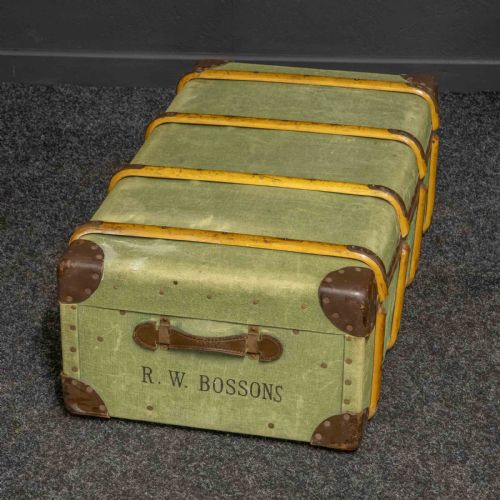


Vintage Canvas Blanket Box
A vintage canvas blanket box offers robust fabric-clad storage for textiles, combining travel-worn heritage with practical utility.
Vintage Canvas Blanket Box
When you search for a vintage canvas blanket box, you are looking at sturdy travel trunks and chests adapted for domestic storage of bedding and linens. The examples seen here span the Victorian era, the Edwardian period, and the 1920s, reflecting a long history of durable luggage conversion.
You are most likely to meet canvas-covered wooden chests featuring leather binding, metal hardware, and brass caps. These pieces originate from distinct periods including the late nineteenth century and the early twentieth century, presenting both dome-top and flat steamer trunk formats.
The forms range from fitted travel luggage to polished oak and canvas chests, alongside French steamer trunks and large storage trunks. Each piece demonstrates the heavy-duty construction originally intended for maritime or railway journeys.
How they were made
The foundation of these pieces relies upon sturdy wooden frames, often constructed from oak, clad in heavy canvas and secured with leather binding. Metal and brass reinforcements protect the corners and edges against the rigours of transit.
Fastenings and protective hardware utilise iron and brass components, including brass caps and structural bands riveted to the exterior. Interiors frequently incorporate fitted compartments or wooden battens to maintain structural integrity under weight.
Materials recorded across the inventory include canvas, wood, leather, metal, brass, oak, and iron.
What varies in quality
The distinction between standard utility luggage and finer pieces rests in the quality of the hardware, such as brass capping, and the integration of fitted internal compartments. Superior examples display meticulous attention to exterior leather binding and robust metal fastenings that survive centuries of use.
Material selection also dictates overall grade, where polished oak underpinnings and specialised Parisian or French manufacture elevate a trunk beyond basic industrial travel gear. The presence of authentic stencilled monograms and intact interior linings further separates ordinary trunks from distinguished specimens.
Aux Etats Unis·Louis Vuitton
The Vintage Canvas Blanket Box Glossary
- Canvas
- A heavy, plain-woven fabric utilised to cover wooden trunks, providing a durable and weather-resistant exterior shell. It takes paint and stencilling well, often displaying period monograms.
- Steamer trunk
- A low-profile travel chest designed to fit beneath a steamship berth. These pieces feature flat or slightly rounded tops to allow stacking in transit.
- Dome top chest
- A storage trunk featuring a rounded lid designed to shed water during travel. This early form provides additional vertical clearance inside the compartment.
- Brass capped
- Trunks finished with protective brass corners or edgings. This detail prevents wear on vulnerable junctions during long journeys.
Vintage Canvas Blanket Box: Frequently Asked Questions
What is a vintage canvas blanket box?
A vintage canvas blanket box is typically a repurposed travel trunk, steamer chest, or luggage piece from the Victorian era or the 1920s. These chests combine wooden frames with heavy canvas exteriors and leather or metal bindings.
Originally built for long-distance travel by ship or rail, their deep compartments and sturdy construction make them ideal for storing heavy blankets and linens at the foot of a bed.
How do I date a canvas trunk?
Dating these trunks involves examining the hardware, materials, and construction methods used by the maker. Victorian and late nineteenth-century pieces often feature black canvas, heavy leather bindings, and brass-capped corners.
Pieces from around 1920 frequently include steamer styles, fitted interior compartments, and maker stencils from French or international travel houses.
Are these trunks waterproof?
While the canvas exterior and metal or leather bindings offered protection against the elements during nineteenth and early twentieth-century transit, modern humidity control is necessary for linen storage. The tightly woven fabric combined with wood provides a robust barrier against dust.
Interior linings should be inspected to ensure they are clean and dry before storing delicate woolen blankets or vintage textiles inside.
Where should I place a blanket chest?
These low chests sit well at the end of a bed, serving as both a surface and a concealed storage cavity for spare duvets and cushions. Their industrial and Victorian aesthetic also suits hallways or living rooms as coffee tables.
Allowance must be made for the hinged lid to open fully, and placing them away from direct heat sources preserves the historic wood and leather bindings.