
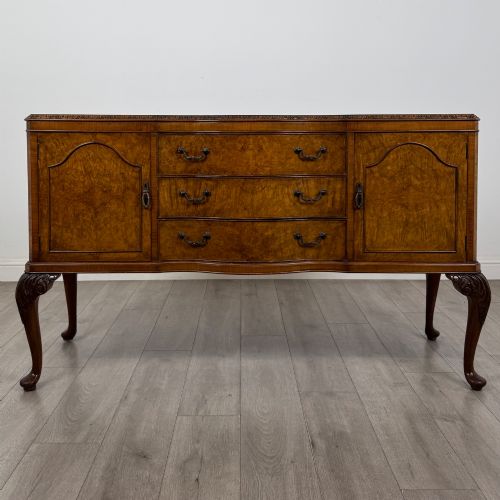
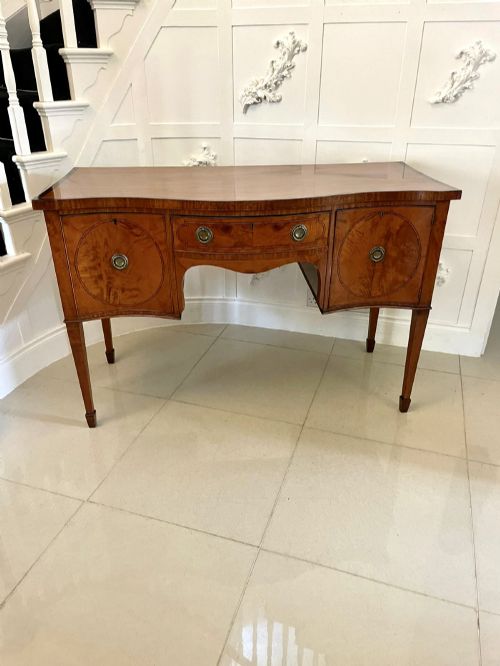
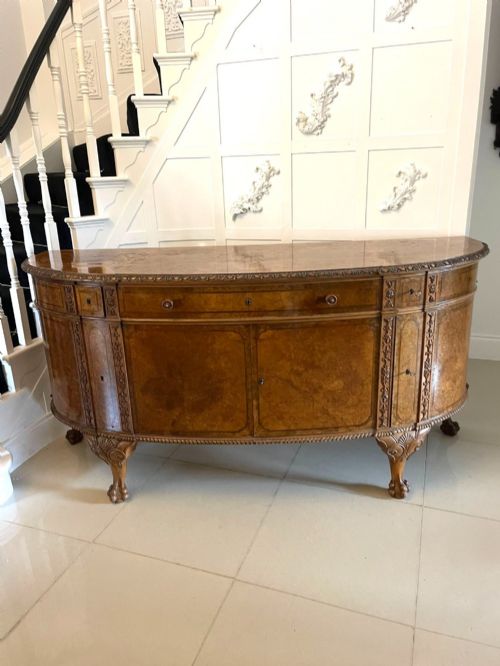
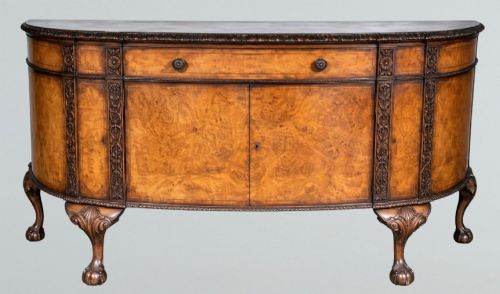
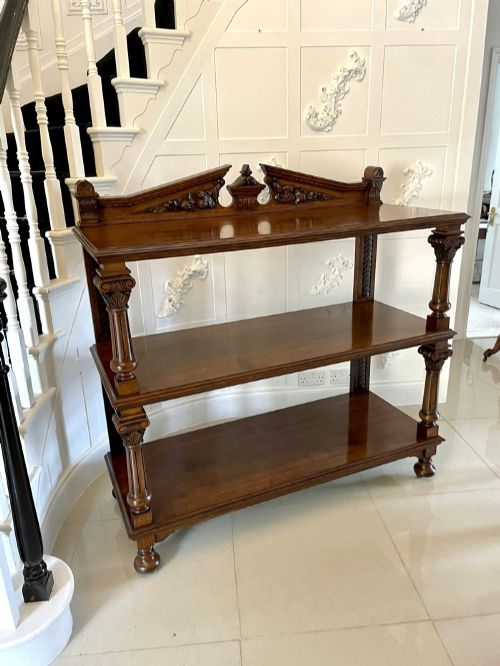
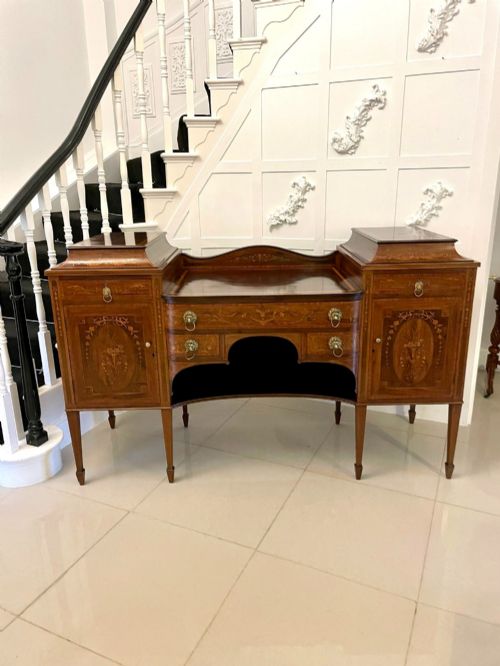
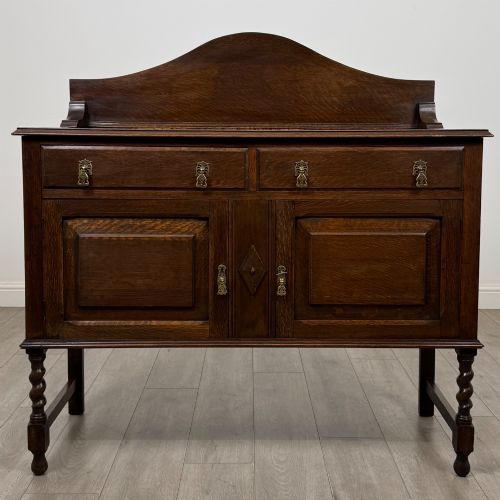
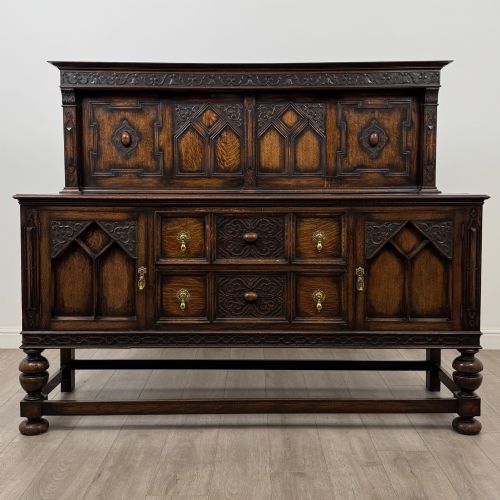
Edwardian Buffet Server
An edwardian buffet server is a formal dining room storage piece designed for serving food and displaying silver.
Edwardian Buffet Server
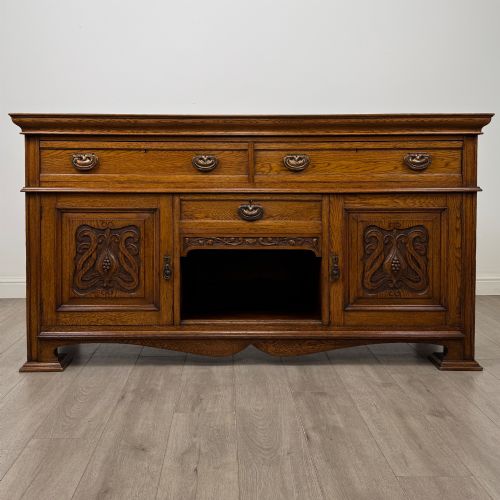
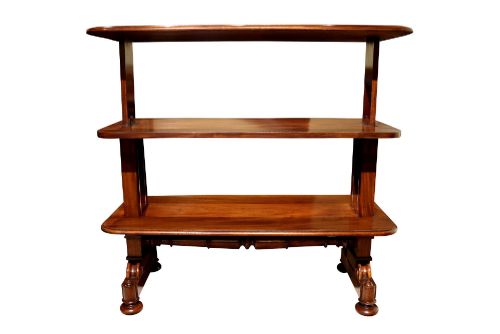
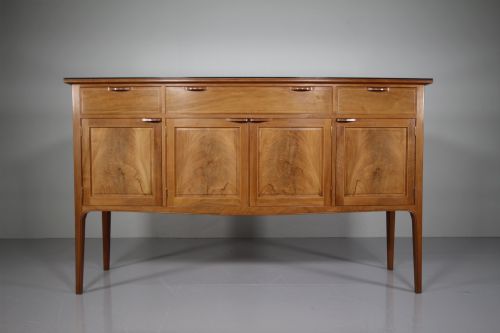
An edwardian buffet server brings substantial storage and formal presence to a dining space, taking the form of sideboards, cabinets, and serving tables. Buyers meet numerous oak and mahogany examples spanning the Edwardian period alongside related Victorian and later pieces.
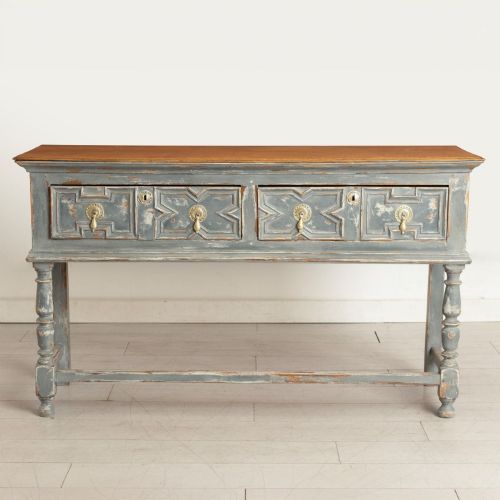
The category encompasses diverse revival styles, including Sheraton Revival, Jacobean Revival, and Arts and Crafts designs. These pieces function primarily as heavy-duty servers or display surfaces for dining rooms.
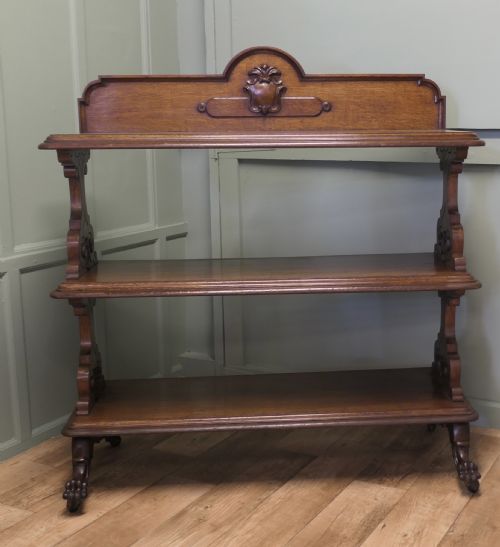
Makers utilised various configurations from simple cupboards and dresser bases to elaborate breakfront pieces with paw feet and barley twist legs. Each layout reflects the dining habits and interior fashions of the early twentieth century.
Materials and construction
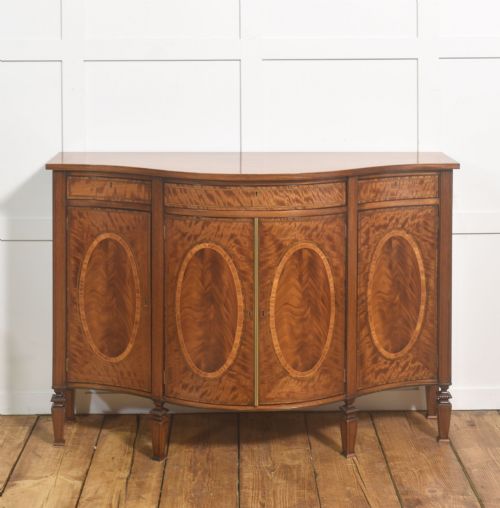
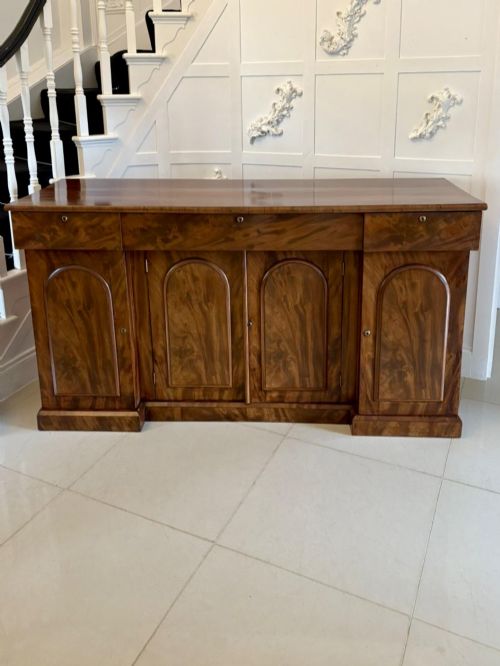
Cabinet makers relied heavily on solid and veneered timbers, particularly mahogany, oak, and burr walnut. Finer pieces incorporate satinwood inlay and marquetry work, whilst brass handles and iron fittings provide functional hardware.
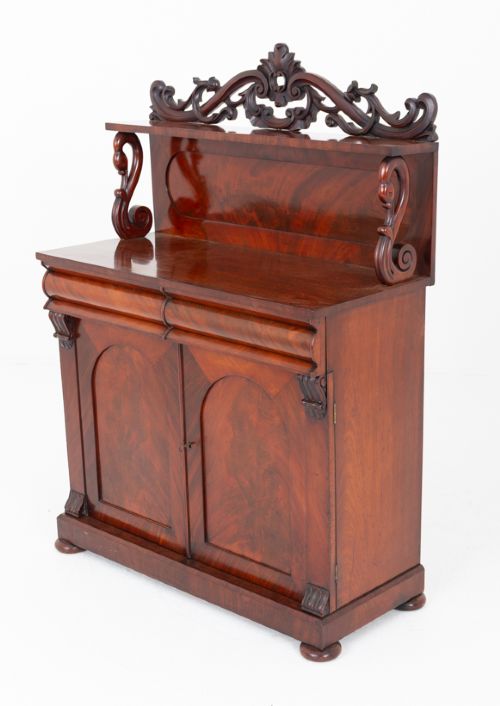
Construction techniques include deep carving, bow-front shaping, and serpentine profiling. Selected items feature glass elements and specialised internal compartments such as cutlery sets.
Several servers hide twelve-piece cutlery sets inside velvet-lined drawers, ready for forgotten guests.
Assessing craftsmanship
Superior examples display careful timber selection, evidenced by figured mahogany and matched burr walnut veneers. The depth and crispness of hand carving separate ordinary production items from exceptional workshop commissions.
Internal joinery and the precision of inlaid details dictate the tier of a piece. Robust secondary woods and signed maker stamps elevate specific items above standard regional cabinet work.
Hewetsons London·Edward Barnsley·Ambrose Heal·Whytock and Reid·Leonard Wyburd·M. D. Miller and Sons
The Edwardian Buffet Server Glossary
- Buffet server
- A low dining room cabinet intended for food preparation and serving. These pieces often incorporate drawers and cupboards.
- Bow front
- A convex curved cabinet front that projects outward in a smooth arc. This shape requires advanced timber bending or segment construction.
- Marquetry
- Decorative veneer patterns formed by fitting together small pieces of coloured wood and other materials. It creates pictorial or geometric surface designs.
- Dresser base
- A lower sideboard unit featuring cupboards and drawers without upper shelving. They provide robust storage in dining spaces and kitchens.
- Serpentine
- A shaped furniture front with a convex centre flanked by concave curves. The profile demands precise hand planning and joinery.
Edwardian Buffet Server: Frequently Asked Questions
What is an edwardian buffet server used for?
These servers provide essential storage for dining room linen, china, and heavy serving platters. The top surface acts as a staging area during meals.
Historically, servants prepared dishes on them before bringing food into the main dining room.
How do I care for an antique sideboard?
Keep wooden furniture away from direct sunlight and sudden temperature changes to prevent the timber from splitting. Regular dusting with a dry cloth maintains the finish.
Apply high quality beeswax sparingly to nourish polished mahogany and oak surfaces.
Are these pieces suitable for modern dining rooms?
Their substantial proportions make them practical storage solutions for contemporary homes. They easily accommodate modern dinnerware whilst adding historical character.
Many people also use them in hallways or living areas as media consoles.
How do I distinguish Edwardian pieces from Victorian ones?
Edwardian designs tend to be lighter and brighter, often favouring satinwood inlay and Sheraton Revival styling. Victorian examples generally feature darker, heavier timbers and deeper carvings.
Arts and Crafts pieces from the era emphasise plain grain oak and simpler structural forms.