
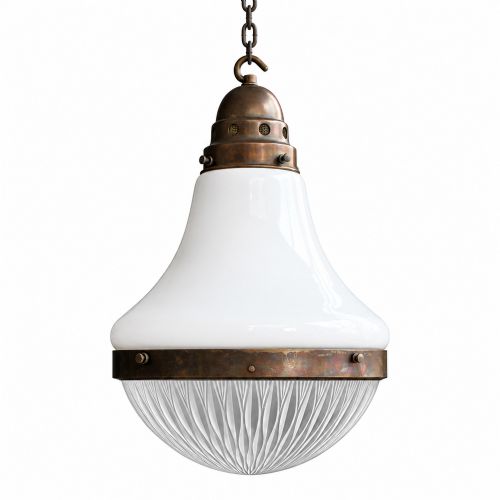
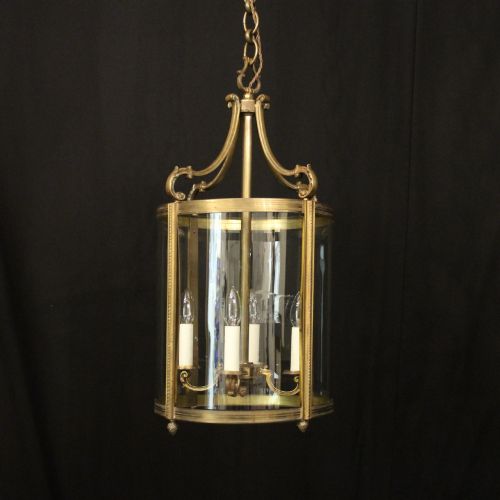
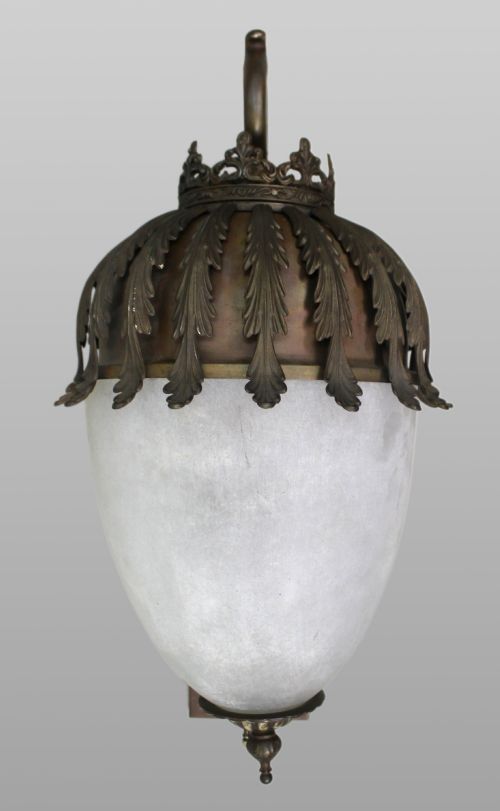
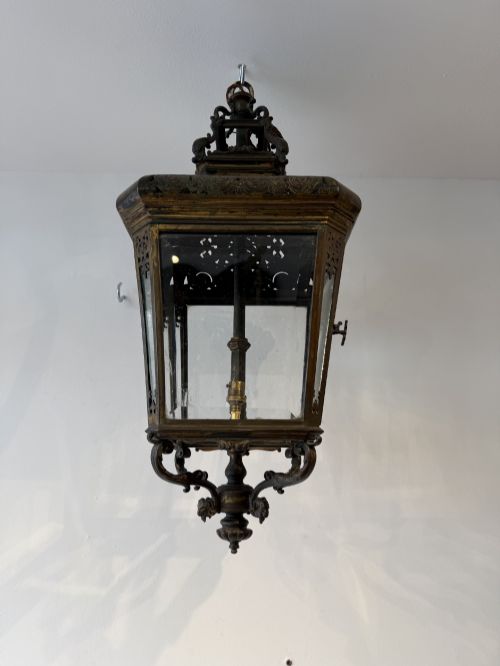


Edwardian Bronze Lanterns
Edwardian bronze lanterns bring period character and warm illumination to entrance halls and high ceilings.
Edwardian Bronze Lanterns
Edwardian bronze lanterns are substantial hanging light fittings designed primarily for hallways, vestibules, and principal reception rooms. The pieces encountered here span the Edwardian period alongside neighbouring Victorian, Art Nouveau, and early twentieth-century designs.
Buyers seeking edwardian bronze lanterns will find hall lanterns and hanging pendant lights fitted with various glass panels. These fixtures provide both architectural presence and functional lighting suited to period properties.
How they were made
Construction relies heavily on cast bronze, brass, and gilded or gilt bronze frames secured together to support glass panels. Metalwork techniques include intricate casting and chasing, which produce the decorative mounts, scrolling frames, and structural ribs characteristic of the period.
Glazing methods utilise bevelled glass, frosted glass, and cut glass panes fitted tightly within the metal frameworks. These glass elements diffuse the internal light source while adding textural depth and geometric clarity to the exterior silhouette.
Styles represented include French Louis XVI, Rococo Revival, Arts and Crafts Gothic, and Art Nouveau alongside classic English designs.
What varies in quality
Quality in these lanterns is determined by the crispness of the bronze casting and the depth of the original gilding or patination. Heavier metal gauge and finer hand-chasing separate standard production pieces from superior examples.
The sophistication of the glasswork equally dictates the standard of the piece, with thick bevelled or hand-cut panes indicating higher craftsmanship. Original matching glass panels and robust structural integrity preserve the intended proportion and visual weight of the fixture.
F and C Osler
The Edwardian Bronze Lanterns Glossary
- Bronze
- A copper and tin alloy prized for its strength and ability to take fine casting details. It forms the structural and decorative body of many period lanterns.
- Gilt Bronze
- Bronze that has been coated with a layer of gold using mercury amalgamation or electroplating. This finish imparts a rich metallic lustre that resists tarnishing.
- Bevelled Glass
- Glass panes featuring an angled edge ground down around the perimeter. This treatment refracts light and adds decorative refinement to the lantern housing.
- Hall Lantern
- A ceiling-hung lighting fixture specifically scaled for corridors, vestibules, and entrance halls. These fixtures often feature enclosed glass sides to protect the flame or bulb from drafts.
- Art Nouveau
- A decorative style prevalent around the turn of the twentieth century. It is characterised by fluid, organic lines and floral motifs derived from natural forms.
Edwardian Bronze Lanterns: Frequently Asked Questions
Where should I hang a bronze hall lantern?
These lanterns suit entrance halls, high-ceilinged landings, and vestibules where vertical space allows them to hang freely. Their enclosed design protects the light source while casting an inviting glow across transitional spaces.
Ensure the ceiling height accommodates the drop of the pendant, keeping the base high enough to clear foot traffic and open doors comfortably.
How do I clean an antique bronze lantern?
Dust the metal framework regularly with a soft, dry cloth to prevent grime accumulation. Avoid harsh chemical cleaners or abrasive polishes that can strip the original patination or gilding.
Glass panels can be removed carefully for washing with mild soapy water, provided they are dried thoroughly before being resecured in their metal channels.
Can these antique lanterns be rewired?
Most period hanging lanterns accept modern electrical internal fittings to comply with current safety standards. Professional electricians can adapt the internal wiring without altering the external historic appearance.
Retaining the original sockets or canopy adds authenticity, but hidden modern wiring ensures safe everyday use in a domestic setting.
How do I distinguish Edwardian from Victorian lanterns?
Edwardian lighting often exhibits lighter proportions and cleaner neoclassical lines compared to the heavier, ornate ornamentation typical of earlier Victorian and Gothic Revival pieces. The inclusion of Art Nouveau influences also points towards the turn of the century.
Examining the construction methods, glass cutting styles, and metal patination helps place a piece within its correct stylistic decade.