

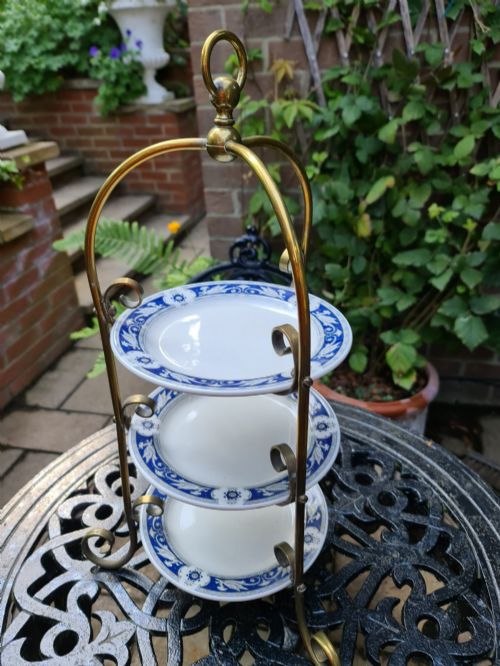
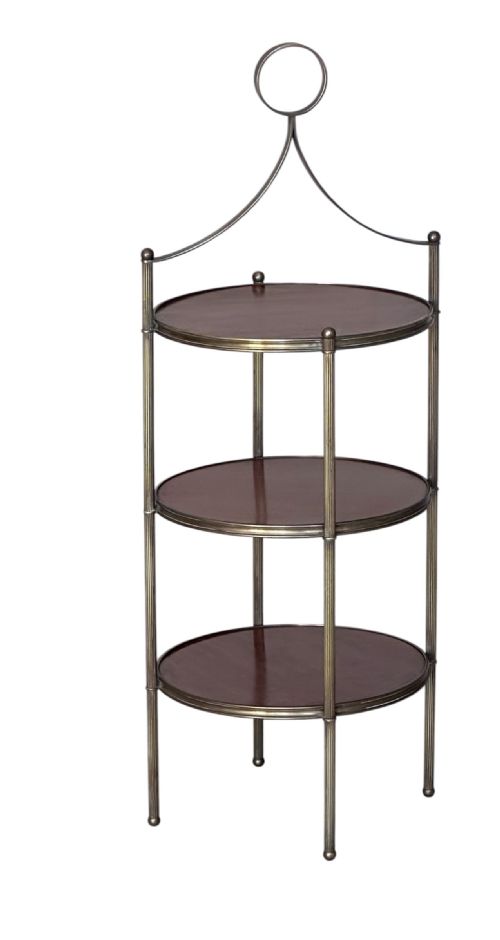


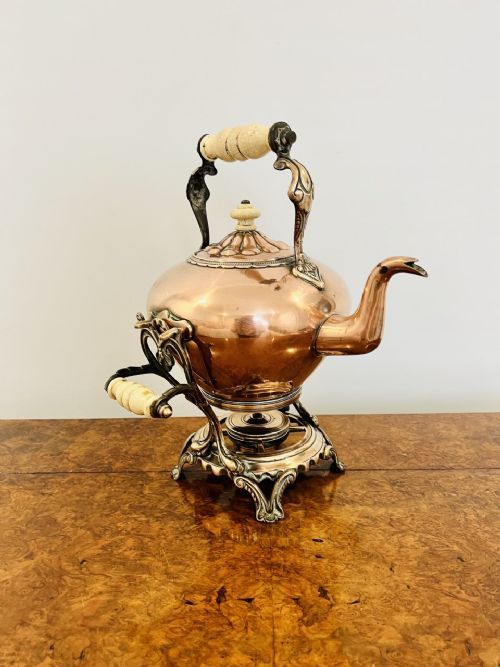


Edwardian Brass Tea Stand
An edwardian brass tea stand brings domestic hospitality into focus, combining metalwork and portable furniture for serving hot drinks in period interiors.
Edwardian Brass Tea Stand
An edwardian brass tea stand encompasses portable service furniture, incorporating kettles, spirit burners, and tray tables designed for parlour hospitality. These pieces reflect the formal routines of early twentieth-century domestic life, where entertaining guests demanded dedicated furniture for beverage service.
The versions most commonly met on this page span the Edwardian era alongside adjacent Victorian and later periods, often taking the form of spirit kettles, occasional tables, or etageres. Makers combined metal stands with wooden trays or ceramic components, producing functional items that doubled as decorative focal points in the reception room.
Constructed across varied workshops, these stands demonstrate how diverse stylistic influences - ranging from Sheraton Revival to Chinoiserie and Anglo-Indian designs - met standard British interior requirements. The resulting selection provides collectors with functional examples of period metalwork and occasional furniture.
Materials and construction methods
Brass forms the primary structural and decorative element across these stands, utilised for supporting frames, bells, kettles, and decorative mountings. Copper frequently appears alongside brass in kettle bodies, providing a contrasting warm metallic tone that complements the polished framework.
Edwardian Brass Tea Stand Retail Price Guide 2026
Typical asking prices for edwardian brass tea stand among the pieces listed under this phrase on Sellingantiques today, from the lower quarter to the upper quarter. They describe what is for sale here now, not the wider market.
Form variations include spirit kettles, etageres, occasional tables, and table gongs reflecting diverse stylistic revivals.
Distinctions in quality
Quality reveals itself in the precision of the metal casting and the crispness of any chased or engraved surface detail on the brass and copper components. Heavier gauge metals and sturdy framing indicate superior original manufacture, ensuring the stand supports heavy liquid-filled kettles without wobble.
The integration between mixed materials - such as the fit of a removable tray within a wooden stand or the stability of a spirit kettle upon its burner frame - separates standard production from finer workshop output. Marquetry work, satinwood banding, and carved wooden supports further elevate a piece through refined craftsmanship.
The Edwardian Brass Tea Stand Glossary
- Spirit kettle
- A water vessel mounted on a metal stand above a small burner fueled by spirit or alcohol. This apparatus kept water hot during tea service in the drawing room.
- Etagere
- A tiered piece of furniture with multiple open shelves for displaying or holding small objects. These structures maximise display space within compact footprints.
- Marquetry
- The art of applying fitted pieces of veneer to a structure to form decorative patterns or pictures. Craftsmen utilised diverse timbers to create contrasting pictorial designs on table and tray surfaces.
- Sheraton Revival
- A late nineteenth and early twentieth-century design movement inspired by the neoclassical furniture of George Sheraton. Pieces from this style typically display clean lines, satinwood, and subtle inlay.
Edwardian Brass Tea Stand: Frequently Asked Questions
What is an edwardian brass tea stand?
An edwardian brass tea stand is a specialised piece of furniture or apparatus designed to hold a kettle and serve tea during the early twentieth century. These items combined metal frames with ceramic, glass, or wooden elements to facilitate formal hospitality.
They function today as decorative antique furnishings that reflect period domestic rituals. Collectors value them for their combination of useful metalwork and decorative woodwork.
How were spirit kettles used?
Spirit kettles were filled with water and placed upon their stands directly above a small lit burner. This kept the water warm throughout the duration of a formal tea ceremony.
Servants or hosts could replenish teapots without leaving the room. The setup combined practical heating with polished presentation.
How do I date these stands?
Dating relies on examining the construction methods, prevailing styles, and material combinations recorded across the pieces. Edwardian examples often feature satinwood inlay or Sheraton Revival motifs characteristic of the early nineteen hundreds.
Earlier Victorian pieces display heavier copper construction or different revival styles such as French Rococo. Comparing the specific brass casting techniques helps narrow down the period of manufacture.
How do I care for brass and copper?
Maintaining brass and copper involves dusting regularly with a soft cloth to prevent the accumulation of grime. Avoid harsh abrasive cleaners that can strip away original patination accumulated over decades.
Preserving the aged surface protects the character of the metalwork. Gentle cleaning maintains the subtle lustre inherent to these antique pieces.